Global Dark Stores & Micro-Fulfillment Centers Market Set to Transform Retail Logistics with Rapid Growth
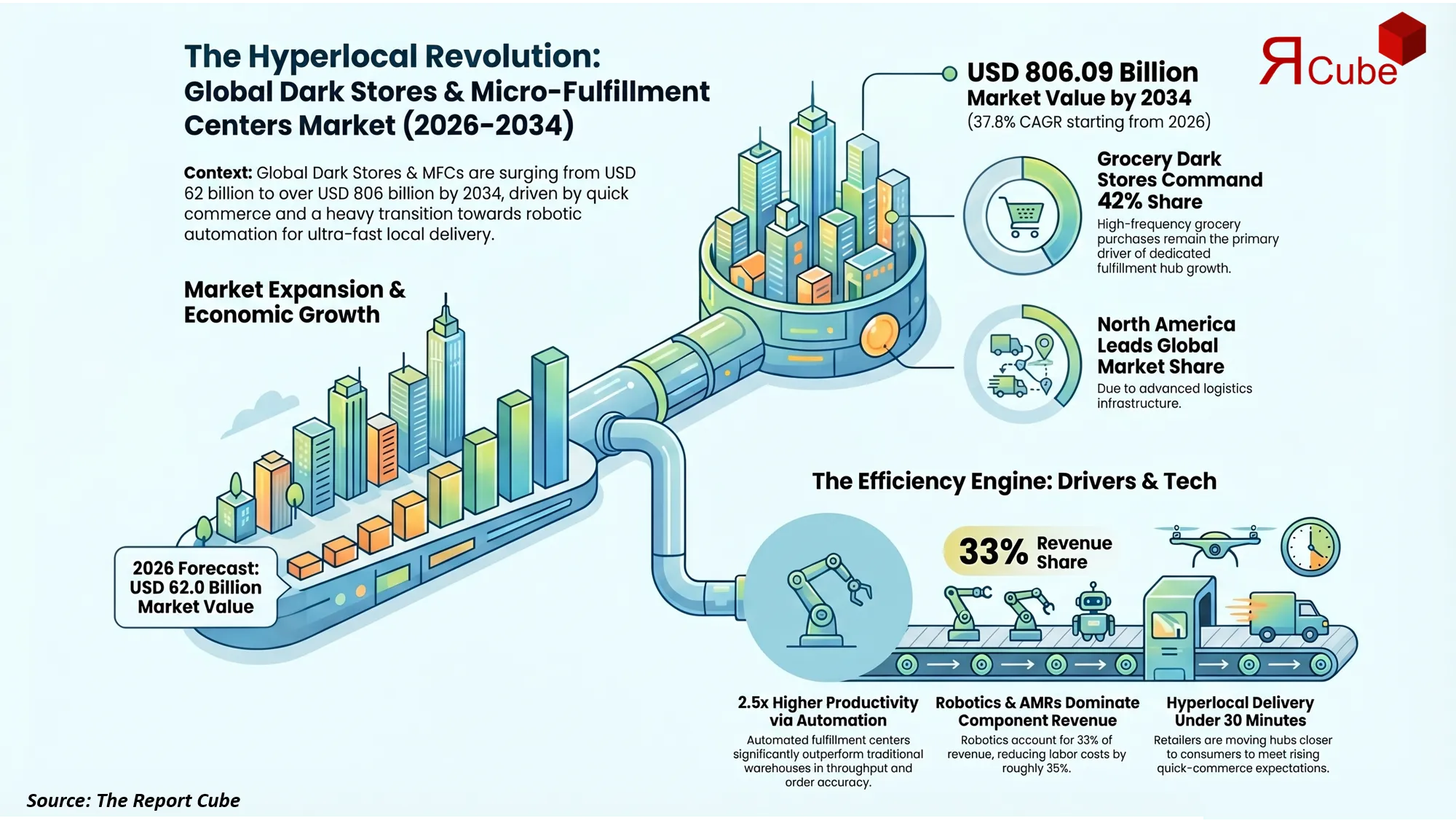
The Global Dark Stores & Micro-Fulfillment Centers Market is witnessing significant momentum as retailers worldwide shift toward faster, technology-driven fulfillment models. Driven by the rapid expansion of e-commerce and quick commerce (q-commerce), the market is projected to grow at a robust pace through 2032, reshaping traditional supply chains and retail operations.
The increasing demand for same-day delivery logistics and seamless customer experiences has accelerated the adoption of dark store retail models and micro fulfillment centers (MFCs). These facilities, designed exclusively for online order processing, are enabling businesses to build hyperlocal delivery infrastructure and improve last-mile fulfillment solutions. As a result, retailers are achieving higher efficiency and faster turnaround times in densely populated urban markets.
“Retailers are no longer competing on product availability alone—they are competing on speed, accuracy, and convenience,” said a senior analyst at The Report Cube. “Dark stores and micro-fulfillment centers are at the heart of this transformation, enabling scalable and efficient fulfillment ecosystems.”
The integration of advanced technologies such as warehouse automation systems, robotics in fulfillment centers, and AI-driven inventory management is further enhancing operational capabilities. Automated picking and packing, goods-to-person systems, and real-time inventory tracking are reducing human intervention while improving order accuracy and cost efficiency. These innovations are playing a crucial role in enabling omni-channel fulfillment and supporting the growth of online grocery fulfillment.
Need Specific Data, Let’s Customize the Report for You
Request CustomizationThe market is also benefiting from the rise of urban logistics hubs and proximity-based delivery systems, particularly in emerging economies where consumer demand for instant delivery is surging. Industries such as FMCG, grocery, and pharmaceuticals are increasingly leveraging automated fulfillment centers and distribution center automation to strengthen their supply chains and meet evolving customer expectations.
Regionally, North America continues to lead in adoption due to advanced infrastructure and early technology integration, while Asia-Pacific is emerging as the fastest-growing region, fueled by rapid urbanization, digital adoption, and the expansion of quick commerce platforms. Europe is also witnessing steady growth, supported by innovations in retail supply chain transformation and sustainability initiatives.
Despite strong growth prospects, the market faces challenges such as high initial investments in automation technologies, limited urban space for fulfillment centers, and complexities in managing real-time inventory across multiple locations. However, ongoing advancements in smart warehousing solutions and IoT in supply chain are expected to address these barriers over time.
Leading companies including Amazon, Walmart, Tesco, Carrefour, Ocado Group, Alibaba, and JD.com are investing heavily in scalable fulfillment infrastructure and next-generation logistics technologies to strengthen their market position. These players are driving innovation and setting new benchmarks for order fulfillment efficiency and customer satisfaction.
As the retail landscape continues to evolve, the Global Dark Stores & Micro-Fulfillment Centers Market is expected to play a pivotal role in shaping the future of commerce. Businesses that invest in automation, data-driven decision-making, and hyperlocal fulfillment strategies will be best positioned to capitalize on emerging opportunities.
About the Report
The latest report by The Report Cube provides an in-depth analysis of market trends, growth drivers, competitive landscape, and future outlook for the Global Dark Stores & Micro-Fulfillment Centers Market.