GCC Jewelry Market Report and Forecast 2026-2034: Industry Set to Reach USD 25.23 Billion
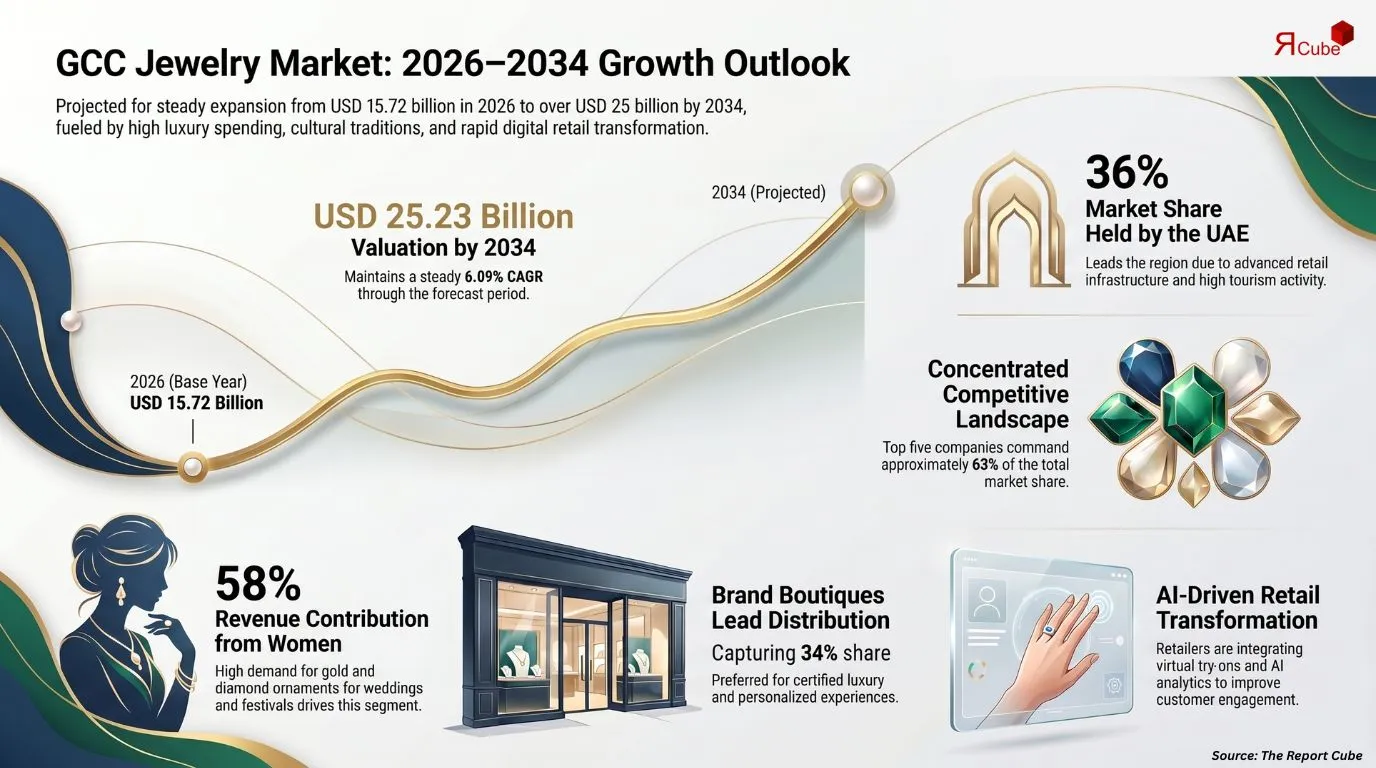
The GCC jewelry industry is entering a new phase of sustained growth, driven by rising affluence, surging tourism, and a generational shift in consumer tastes. According to a newly published research report, the GCC Jewelry Market is anticipated to register a 6.09% CAGR during 2026–2034. The market size was valued at USD 15.72 billion in 2026 and is projected to reach USD 25.23 billion by 2034. This expansion reflects the region's deepening appetite for both traditional and contemporary jewelry, spanning everyday fashion pieces to high-end investment-grade ornaments.
Strong Foundations Driving the GCC Jewelry Demand
The Middle East jewelry market is underpinned by several powerful growth catalysts. Gold continues to serve a dual function across the UAE, Saudi Arabia, Kuwait, Qatar, Bahrain, and Oman as a cultural asset and a financial hedge. Demand for the gold jewelry market GCC remains robust, particularly ahead of wedding seasons and religious festivals, where elaborate gifting traditions sustain consistent retail volumes. At the same time, diamond jewelry trends GCC are moving upward. Younger, high-income consumers are gravitating toward certified diamond pieces and designer collections, pushing fine jewelry purchases beyond conventional occasions into lifestyle expressions.
Need Specific Data, Let’s Customize the Report for You
Request CustomizationE-Commerce and Tourism Reshaping the Jewelry Retail Market in GCC
Digital channels are rewriting the rules of the jewelry retail market in GCC. Online jewelry sales GCC have expanded sharply as platforms invest in virtual try-on tools, certified gemstone sourcing, and seamless delivery networks. Millennial and Gen Z buyers, in particular, increasingly prefer browsing and purchasing through mobile-first retail experiences.
Tourism plays an equally critical role. Millions of visitors entering Dubai, Abu Dhabi, Riyadh, and Doha each year actively seek out jewelry purchases drawn to duty-free pricing, exclusive regional designs, and prestigious brand boutiques. Brand boutiques alone captured approximately 34% of total revenue in 2026, underscoring the continued dominance of in-store luxury experiences.
GCC Luxury Jewelry Market: A Premium-First Consumer Mindset
The GCC luxury jewelry market is expanding alongside a broader premiumization trend. Women account for nearly 58% of total market revenue, reflecting their central role in purchasing decisions across both bridal and lifestyle categories. The GCC fashion jewelry market is also gaining momentum among youth and millennial segments who seek stylish, lower price-point accessories alongside their premium purchases.
Competitive Landscape
The GCC jewelry industry features a mix of regional powerhouses and global luxury brands. Key players include Damas International Ltd., Malabar Group, LVMH Moët Hennessy Louis Vuitton SA, Joyalukkas Holdings, and Kalyan Jewellers, among others. The top five companies hold approximately 63% of the total market share, indicating a moderately consolidated landscape where brand trust and heritage carry significant commercial weight.
Future Outlook
The decade ahead looks favorable for the GCC Jewelry Market Report and Forecast 2026–2034. Ongoing economic diversification, rising female workforce participation, and expanding luxury retail infrastructure across GCC cities will continue to elevate consumer spending. As digital and physical retail converge, brands that invest in personalized experiences, ethical sourcing, and regional design identity are best positioned to capture the next wave of growth.