




Build Your Custom Market Intelligence Report
Customize Your ReportUK Antibiotic Resistance Market Key Takeaways
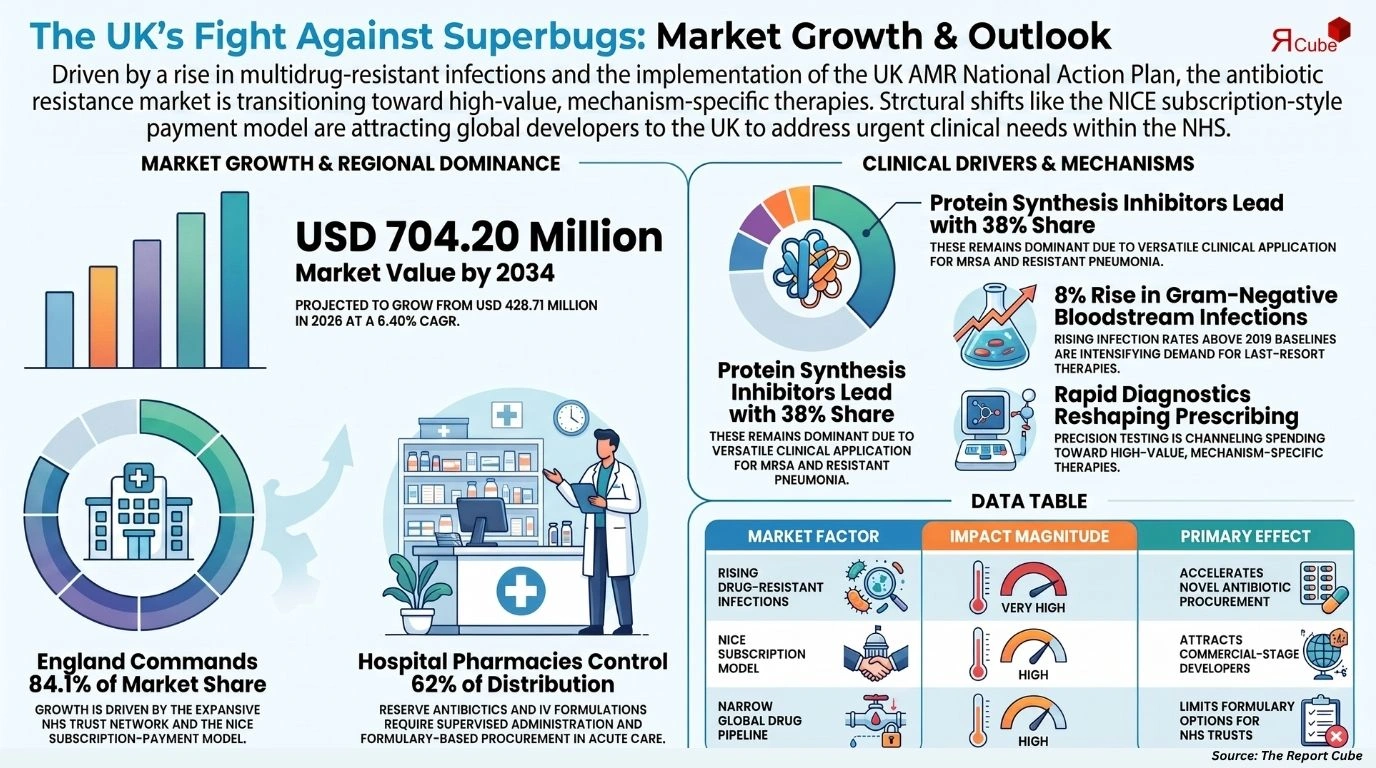
- Market valued at USD 428.71 million in 2026, reflecting strong antimicrobial pipeline investments.
- Industry projected to reach USD 704.20 million by 2034, expanding at a 6.40% CAGR.
- Protein Synthesis Inhibitors remain the leading mechanism segment due to versatile clinical application.
- Hospital Pharmacies dominate distribution, driven by high-acuity resistant infection management.
- England leads regional performance through robust NHS AMR stewardship and NICE subscription frameworks.
- Gram-negative bloodstream infections and MRSA continue accelerating novel antibiotic procurement across NHS Trusts.
- Key players include Paratek Pharmaceuticals, Melinta Therapeutics, Wockhardt, Basilea Pharmaceutica, and Seres Therapeutics.
- Rising multidrug-resistant infections and expanding NICE pull-incentive models sustain long-term market expansion.
UK Antibiotic Resistance Market Insights & Analysis
The UK Antibiotic Resistance Market is anticipated to register a 6.40% CAGR during 2026–2034. The market size was valued at USD 428.71 million in 2026 and is projected to reach USD 704.20 million by 2034. The market is expanding as drug-resistant infections continue rising across NHS acute care settings, with Gram-negative bloodstream infections running 8% above 2019–20 baselines as of March 2026. Government commitment through the 2024–2029 UK AMR National Action Plan reinforces investment in diagnostics, novel therapeutics, and the UK antimicrobial stewardship and subscription payment infrastructure that decouples reimbursement from volume.
The NICE subscription-style payment model - piloted with cefiderocol and ceftazidime-avibactam - represents a structural shift that continues attracting commercial-stage antibiotic developers to the UK market. A February–July 2025 survey across NHS acute Trusts found that 88.4% of lead antimicrobial stewardship pharmacists supported the model's expansion to antifungals and novel modalities. Antibacterial dispensing reached 36.8 million items in England in 2023–24, highlighting persistent clinical demand. With the Chief Medical Officer's 2025 annual report specifically prioritizing infection management, UK market participants are increasingly investing in pipeline assets, hospital formulary inclusion strategies, and rapid diagnostics to improve prescribing precision.
UK Antibiotic Resistance Market Dynamics
The UK market is evolving under compounding pressure from rising resistant pathogen burden, constrained novel antibiotic pipelines, and ambitious national stewardship targets. NHS England's AMR National Action Plan commits to achieving 70% or more of antibiotic use from the Access category by 2029, while simultaneously meeting benchmarks to prevent increases in drug-resistant infections. These twin objectives are generating structured demand for targeted, mechanism-specific antibiotic therapies backed by strong clinical evidence.
|
Factor |
Type |
Specific Impact on Market |
Magnitude |
|---|---|---|---|
|
Rising drug-resistant infections |
Driver |
Accelerates novel antibiotic procurement in NHS acute settings |
Very High |
|
NICE subscription payment model |
Opportunity |
Attracts commercial-stage antibiotic developers to the UK |
High |
|
AMR National Action Plan 2024–2029 |
Driver |
Reinforces AMS program funding and rapid diagnostic investment |
High |
|
Narrow antibiotic approval pipeline |
Challenge |
Limits formulary expansion options for resistant gram-negative pathogens |
High |
|
Rapid diagnostic technology adoption |
Trend |
Improves prescribing precision and reduces inappropriate antibiotic use |
Very High |
Key Market Driver: Rising Gram-Negative Bloodstream Infections
Gram-negative bloodstream infections within the NHS recorded an 8% increase above 2019–20 baseline levels through March 2026, intensifying demand for reserve antibiotics and last-resort therapies across hospital settings. The UK Health Security Agency's ESPAUR 2024–2025 report confirmed that specific drug-resistant infections rose 13% since 2018, far exceeding the original NAP reduction target. This creates direct procurement pressure within hospital pharmacies for mechanism-differentiated agents, including Cell Wall Synthesis Inhibitors and novel beta-lactam/beta-lactamase inhibitor combinations targeting multidrug-resistant Enterobacterales. Investment in the antibiotic pipeline and resistant gram-negative pathogen treatment remains a strategic priority for both government and commercial developers.
Major Industry Challenge: Narrow Novel Antibiotic Approval Pipeline
Despite growing demand, the UK market contends with a historically thin drug approval pipeline - averaging approximately two new antibiotic approvals globally per year across all territories since 2000. The FDA's rejection of certain manufacturing submissions and the consequent product rescues, such as Basilea Pharmaceutica's in-licensing of ceftibuten-ledaborbactam etzadroxil following Melinta's manufacturing issues in 2025, illustrate how pipeline fragility directly disrupts commercial availability. Without a broader volume of MHRA-approved novel agents entering the NHS formulary, hospital pharmacies face growing formulary gaps against emerging resistant strains.
Emerging Trend Shaping Outlook: Rapid Diagnostics Driving Prescribing Precision
NHS England's 2025–26 Standard Contract embedded quality requirements for NHS Trusts to reduce C. difficile and Gram-negative bloodstream infections, reinforcing rapid microbiological testing as a clinical and commercial priority. Diagnostic-guided prescribing narrows inappropriate antibiotic use - England's total antibiotic use achieved the 5% below 2019 baseline target by December 2025 - while simultaneously channeling demand toward high-value, mechanism-specific therapies for confirmed resistant infections. Adoption of UK infectious disease rapid diagnostic technologies is expected to significantly reshape hospital formulary composition and distributor procurement patterns through 2034.
Need Specific Data, Let’s Customize the Report for You
Request CustomizationUK Antibiotic Resistance Market Segment-wise Analysis
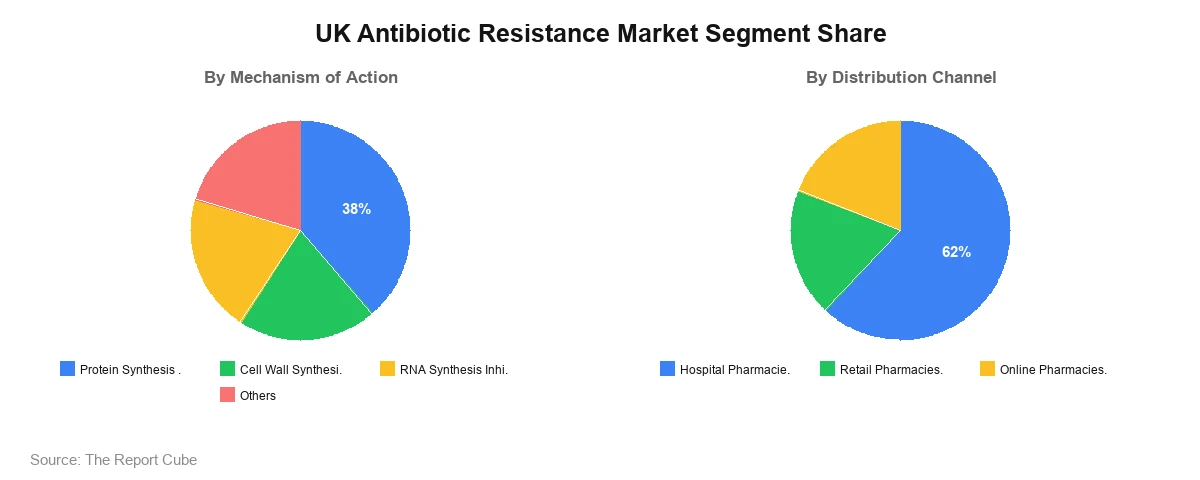
The UK market is structured around distinct antibiotic mechanisms and distribution channels, each reflecting different clinical priorities and procurement pathways. Mechanism of action drives hospital-level formulary decisions, while distribution channels determine how these therapies reach patients across primary and secondary care settings.
By Mechanism of Action
- Protein Synthesis Inhibitors
- Cell Wall Synthesis Inhibitors
- RNA Synthesis Inhibitors
- Others
Protein Synthesis Inhibitors represent the dominant mechanism segment, accounting for an estimated 38% of the UK Antibiotic Resistance Market in 2026. This segment includes oxazolidinones such as linezolid and tetracycline derivatives including omadacycline (NUZYRA, Paratek Pharmaceuticals), which are extensively deployed across NHS acute Trusts for the management of MRSA, acute bacterial skin and skin structure infections (ABSSSI), and community-acquired bacterial pneumonia (CABP) in patients with comorbidities or suspected resistant pathogens. The established safety profiles, oral-to-IV flexibility, and breadth of activity against Gram-positive resistant bacteria underpin continued clinical preference and formulary anchoring within hospital settings.
Cell Wall Synthesis Inhibitors represent the fastest-growing segment, driven by the expanding clinical deployment of advanced-generation beta-lactam/beta-lactamase inhibitor combinations targeting multidrug-resistant Gram-negative pathogens. Wockhardt's zidebactam-cefepime pipeline candidate (Zaynich) - submitted for US approval as a cUTI treatment - and Basilea Pharmaceutica's ceftobiprole (Zevtera), which received FDA approval in 2024 for SAB, ABSSSI, and CABP, exemplify next-generation agents advancing into clinical use. Growing Gram-negative bloodstream infection rates within the NHS are reinforcing procurement of these agents, while NICE's ongoing assessment framework creates additional pathways for formulary entry and subscription-model reimbursement.
By Distribution Channel
- Hospital Pharmacies
- Retail Pharmacies
- Online Pharmacies
Hospital Pharmacies account for approximately 62% of the UK Antibiotic Resistance Market by distribution value in 2026. The dominant share reflects the clinical nature of antibiotic resistance management - reserve antibiotics, intravenous formulations, and combination therapies for multidrug-resistant infections require supervised hospital administration and formulary-based procurement. NHS acute Trusts operate under antimicrobial stewardship team oversight, with formulary inclusion governed by NICE technology assessments and local AMS pharmacist recommendations. The 2025–26 NHS Standard Contract quality requirements linking reimbursement to CDI and Gram-negative bloodstream infection reduction further entrench hospital pharmacy as the primary procurement channel for high-value antibiotic resistance treatments across England.
Retail Pharmacies are experiencing gradual volume growth supported by the NHS Pharmacy First initiative, which expanded community pharmacist prescribing responsibilities from 2023 onward. A March 2025 study highlighted differential prescribing rates for sore throat between England and Wales, reflecting variation in community-level diagnostic testing adoption. Online Pharmacies remain a secondary channel primarily serving patients managing recurrent or chronic infection prophylaxis. The fastest growth within this channel is anticipated from digital prescription platforms integrated with NHS electronic patient records, supporting access to oral antibiotic formulations for post-discharge resistant infection management through 2034.
Regional Projection of UK Antibiotic Resistance Market
The UK antibiotic resistance market demonstrates clear regional variation across England, Scotland, Wales, and Northern Ireland, shaped by differences in NHS devolved structures, prescribing infrastructure, AMR surveillance maturity, and access to specialist infectious disease services.
|
Region |
Estimated Market Share |
Key Growth Factors |
Consumer Trends |
|---|---|---|---|
|
England |
84.1% |
Largest NHS Trust network, NICE subscription model, AMR NAP implementation |
High adoption of AMS programs and reserve antibiotic formularies |
|
Scotland |
7.4% |
Scottish AMR Action Plan 2024–2029, Health Protection Scotland surveillance |
Growing use of rapid diagnostics in secondary care |
|
Wales |
5.2% |
Wales AMR delivery plan, NHS Wales AMS programs |
Higher diagnostic testing rates for community prescribing |
|
Northern Ireland |
3.3% |
Regional AMR strategy alignment, Public Health Agency surveillance |
Expanding hospital pharmacy formulary access |
- England: England dominates the UK Antibiotic Resistance Market with approximately 84.1% share, underpinned by the highest volume of NHS acute Trusts, the NICE subscription-payment model, and the most expansive antimicrobial stewardship infrastructure in the UK.
- Scotland: Scotland maintains a distinct AMR action plan and robust surveillance through Health Protection Scotland, supporting structured formulary investment and growing rapid diagnostic adoption across secondary care hospitals.
- Wales: Wales demonstrates notably higher community-level diagnostic prescribing rates than England, a trend confirmed by a 2025 study showing lower antibiotic prescribing for sore throat in Wales relative to England pharmacist channels.
- Northern Ireland: Northern Ireland aligns its AMR strategy with the broader UK National Action Plan, with the Public Health Agency coordinating resistance surveillance and hospital pharmacy formulary development across its Trust network.
UK Antibiotic Resistance Market: Recent Development (2025)
- Paratek Pharmaceuticals presented NUZYRA omadacycline clinical data at ATS 2025 Conference expanding resistant pneumonia evidence.
- Basilea Pharmaceutica in-licensed ceftibuten-ledaborbactam etzadroxil targeting multidrug-resistant Enterobacterales cUTI treatment globally.
- Wockhardt advanced Zaynich zidebactam-cefepime US regulatory submission supporting international antibiotic resistance pipeline expansion.
- Seres Therapeutics progressed SER-155 biotherapeutic with Breakthrough Therapy designation reducing bloodstream infections in immunocompromised patients.
UK Antibiotic Resistance Market Future Outlook (2034)
The UK Antibiotic Resistance Market is projected to expand at a 6.40% CAGR, reaching approximately USD 704.20 million by 2034. Continued NHS investment in antimicrobial stewardship, the expected expansion of the NICE subscription model to cover additional novel antibiotics, antifungals, and phage therapy, and the ongoing burden of Gram-negative bloodstream infections will sustain demand for differentiated mechanism-specific therapies. Developers advancing pipeline assets through MHRA review and NHS formulary inclusion - particularly for resistant UTI and hospital-acquired pneumonia indications - stand to benefit most from the structured UK procurement environment.
Long-term market expansion will also be shaped by AI-assisted rapid diagnostics enabling precision prescribing, reducing total antibiotic volume while concentrating spending on high-value agents. Integration of antimicrobial resistance genomic surveillance data into NHS prescribing platforms is expected to refine pathogen-level treatment selection by 2030. Investment in microbiome-based live biotherapeutics and next-generation AMR treatment modalities will generate new commercial segments beyond conventional antibiotics. The UK's 2024–2029 AMR NAP remains the structural backbone supporting market confidence and long-range pipeline investment through the forecast period.
UK Antibiotic Resistance Market Report Coverage
|
Report Attribute |
Details |
|---|---|
|
Market Name |
UK Antibiotic Resistance Market |
|
Market Size (2026) |
USD 428.71 Million |
|
Market Size (2034) |
USD 704.20 Million |
|
Forecast Period |
2026–2034 |
|
CAGR |
6.40% |
|
Base Year |
2026 |
|
Historical Years |
2021–2025 |
|
Forecast Years |
2026–2034 |
|
Segments Covered |
By Mechanism of Action, By Distribution Channel, By Drug Class, By Pathogen, By Disease |
|
Regions Covered |
England, Scotland, Wales, Northern Ireland |
|
Key Companies |
Paratek Pharmaceuticals, Tetraphase Pharmaceuticals, Entasis Therapeutics, Wockhardt, Hubsan, Seres Therapeutics Inc., Theravance Biopharma Inc., Basilea Pharmaceutica Ltd., Melinta Therapeutics, Others |
|
Report Format |
PDF, Excel, PPT |
|
Customization |
Available as per client requirements |
Why Choose This Report?
- Comprehensive analysis of UK AMR dynamics under the 2024–2029 National Action Plan.
- Accurate market sizing with a reliable 6.40% CAGR forecast through 2034.
- Detailed segmentation covering mechanism of action and distribution channel revenue.
- Regional breakdown across England, Scotland, Wales, and Northern Ireland.
- Coverage of NICE subscription model impact on commercial antibiotic market access.
- Competitive profiling of leading pipeline developers and commercial-stage players.
- Analysis of rapid diagnostic adoption reshaping hospital formulary procurement.
- Data-driven EEAT-compliant research aligned with NHS stewardship program priorities.
Table of Contents
- Introduction
- Objective of the Study
- Product Definition
- Market Segmentation
- Study Variables
- Research Methodology
- Secondary Data Points
- Companies Interviewed
- Primary Data Points
- Breakdown of Primary Interviews
- Secondary Data Points
- Executive Summary
- Market Dynamics
- Drivers
- Challenges
- Opportunity Assessment
- Recent Trends and Developments
- Policy and Regulatory Landscape
- UK Antibiotic Resistance Market Overview and Forecast Analysis (2021-2034)
- Market Size, By Value, By Growth Rate (CAGR/USD Millions)
- Demand – Supply Trends
- Market Share, By Disease
- HABP
- cIAI
- CDI
- ABSSSI
- BSI
- Others
- Market Share, By Pathogen
- A. baumannii
- H. influenzae
- Enterococcus fecium
- CDI
- Others
- Market Share, By Drug Class
- Tetracyclines
- Combination therapies
- Other drug classes
- Cephalosporins
- Oxazolidinones
- Others
- Market Share, By Mechanism of Action
- Protein Synthesis Inhibitors
- Cell Wall Synthesis Inhibitors
- RNA Synthesis Inhibitors
- Others
- Market Share, By Distribution Channel
- Hospital Pharmacies
- Retail Pharmacies
- Online Pharmacies
- Market Share, By Region
- England
- Scotland
- Wales
- Northern Ireland
- Market Share, By Competitors
- Competition Characteristics
- Revenue Shares
- HABP UK Antibiotic Resistance Market Overview, 2021-2034F
- By Value (USD Million)
- By Pathogen – Market Size & Forecast 2021-2034, USD Million
- A. baumannii
- H. influenzae
- Enterococcus fecium
- CDI
- Others
- cIAI UK Antibiotic Resistance Market Overview, 2021-2034F
- By Value (USD Million)
- By Pathogen – Market Size & Forecast 2021-2034, USD Million
- A. baumannii
- H. influenzae
- Enterococcus fecium
- CDI
- Others
- CDI UK Antibiotic Resistance Market Overview, 2021-2034F
- By Value (USD Million)
- By Pathogen – Market Size & Forecast 2021-2034, USD Million
- A. baumannii
- H. influenzae
- Enterococcus fecium
- CDI
- Others
- ABSSSI UK Antibiotic Resistance Market Overview, 2021-2034F
- By Value (USD Million)
- By Pathogen – Market Size & Forecast 2021-2034, USD Million
- A. baumannii
- H. influenzae
- Enterococcus fecium
- CDI
- Others
- BSI UK Antibiotic Resistance Market Overview, 2021-2034F
- By Value (USD Million)
- By Pathogen – Market Size & Forecast 2021-2034, USD Million
- A. baumannii
- H. influenzae
- Enterococcus fecium
- CDI
- Others
- Others UK Antibiotic Resistance Market Overview, 2021-2034F
- By Value (USD Million)
- By Pathogen – Market Size & Forecast 2021-2034, USD Million
- A. baumannii
- H. influenzae
- Enterococcus fecium
- CDI
- Others
- Competitive Outlook (Company Profile - Partial List)
- Paratek Pharmaceuticals
- Company Overview
- Business Segments
- Strategic Alliances/Partnerships
- Recent Developments
- Tetraphase Pharmaceuticals
- Company Overview
- Business Segments
- Strategic Alliances/Partnerships
- Recent Developments
- Entasis Therapeutic
- Company Overview
- Business Segments
- Strategic Alliances/Partnerships
- Recent Developments
- Wockhardt
- Company Overview
- Business Segments
- Strategic Alliances/Partnerships
- Recent Developments
- Hubsan
- Company Overview
- Business Segments
- Strategic Alliances/Partnerships
- Recent Developments
- Seres Therapeutics Inc
- Company Overview
- Business Segments
- Strategic Alliances/Partnerships
- Recent Developments
- Theravance Biopharma Inc
- Company Overview
- Business Segments
- Strategic Alliances/Partnerships
- Recent Developments
- Basilea Pharmaceutica Ltd
- Company Overview
- Business Segments
- Strategic Alliances/Partnerships
- Recent Developments
- Melinta Therapeutics
- Company Overview
- Business Segments
- Strategic Alliances/Partnerships
- Recent Developments
- Others
- Paratek Pharmaceuticals
- Contact Us & Disclaimer
Top Key Players & Market Share Outlook
- Paratek Pharmaceuticals
- Tetraphase Pharmaceuticals
- Entasis Therapeutic
- Wockhardt
- Hubsan
- Seres Therapeutics Inc
- Theravance Biopharma Inc
- Basilea Pharmaceutica Ltd
- Melinta Therapeutics
- Others
Frequently Asked Questions






