




Build Your Custom Market Intelligence Report
Customize Your ReportIndia Herbal Tea Market Key Takeaways
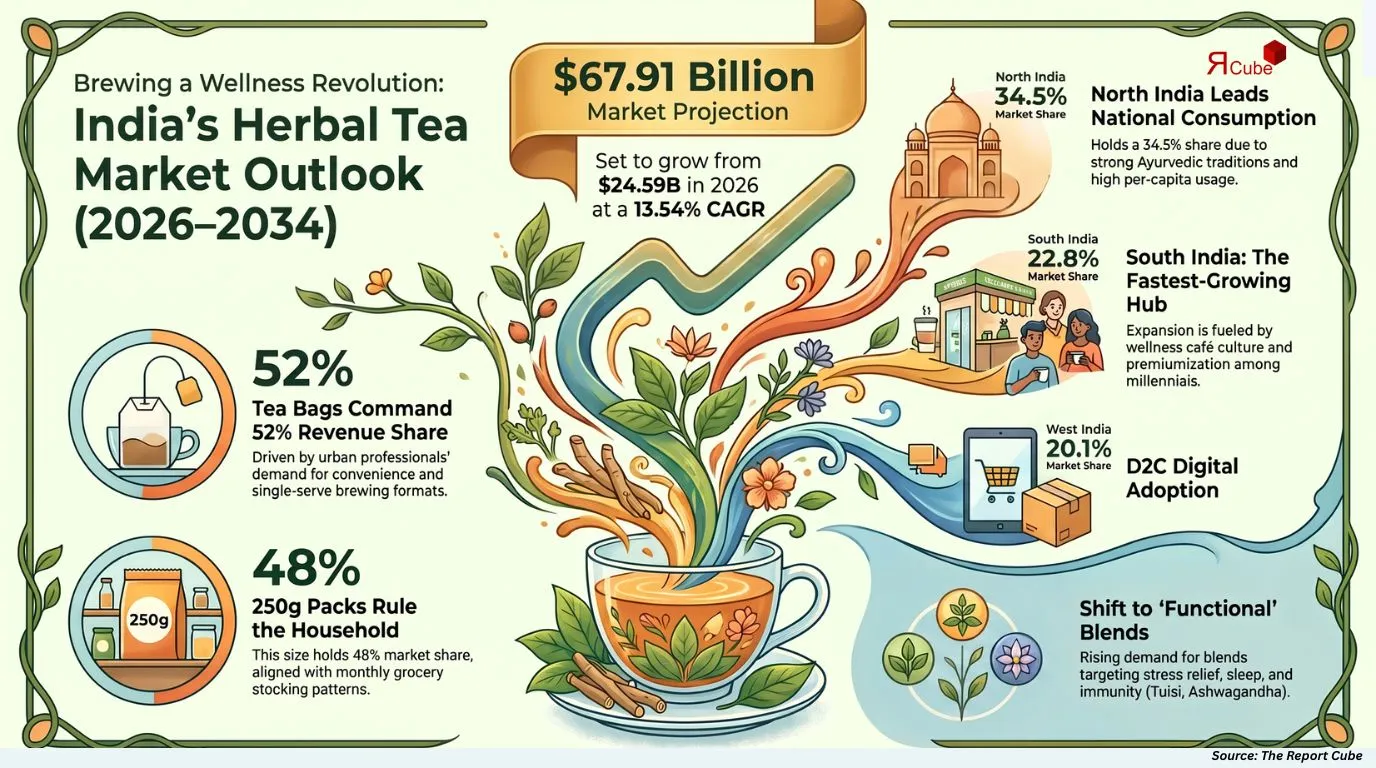
- India Herbal Tea Market was valued at USD 24.59 billion in 2026, reflecting strong health-driven demand.
- The market is projected to reach USD 67.91 billion by 2034, expanding at 13.54% CAGR.
- Tea bag sub-segment leads by pack type, driven by convenience and single-serve consumption formats.
- The 250 Grams pack size dominates household purchasing patterns across urban and semi-urban India.
- North India maintains regional leadership through high per-capita herbal tea consumption and Ayurvedic affinity.
- South India emerges as the fastest-growing regional market, driven by wellness café proliferation and premiumization.
- Leading companies include Amar Tea, Assam Company India, Brooke Bond Taj Mahal, Girnar, and Chaayos.
- Rising preference for tulsi, ginger, and ashwagandha blends continues shaping India's functional beverage segment.
India Herbal Tea Market Insights & Analysis
The India Herbal Tea Market is anticipated to register a 13.54% CAGR during 2026–2034. The market size was valued at USD 24.59 billion in 2026 and is projected to reach USD 67.91 billion by 2034. The sector is benefiting from accelerating consumer inclination toward caffeine-free wellness beverages, expanded Ayurvedic formulation offerings, and growing institutional investments in domestic herbal sourcing and processing infrastructure. Government-backed initiatives under the FSSAI's functional food regulation framework have further legitimized health claims around adaptogenic and immunity-boosting herbal blends, propelling both organized and unorganized players to invest aggressively in product development and distribution scale-up.
India's post-pandemic health consciousness permanently elevated demand for functional herbal infusions, with urban millennials and working professionals driving the fastest adoption cycles. The India green tea and wellness beverage market occupies adjacent consumer territory, and herbal tea brands are increasingly differentiating through GI-tagged regional ingredients such as Kashmiri Kahwa, Darjeeling first-flush chamomile, and Nilgiri lemongrass. Investment in D2C digital retail channels, premium sustainable packaging, and Ayurveda-certified blend portfolios is creating structural long-term growth momentum that extends well beyond metropolitan consumption corridors.
India Herbal Tea Market Dynamics
India's herbal tea industry continues gaining consumption momentum as health-conscious urban consumers, post-wellness-movement rural audiences, and institutional buyers increasingly favor plant-based beverage alternatives over conventional caffeinated products. Rising disposable incomes, expanding modern retail penetration, and a deeply embedded cultural affinity for Ayurvedic botanicals collectively underpin sustained demand. Strategic product innovations incorporating adaptogens, nootropic botanicals, and digestive herbs are further widening the market's addressable consumer base across demographic segments.
|
Factor |
Type |
Specific Impact on Market |
Magnitude |
|---|---|---|---|
|
Rising health consciousness |
Driver |
Accelerates adoption of immunity and adaptogen blends |
Very High |
|
Ayurvedic ingredient sourcing |
Driver |
Expands GI-tagged botanical product portfolios |
High |
|
Premiumization of packaging |
Trend |
Boosts willingness-to-pay for sustainable pack formats |
High |
|
Counterfeit and adulteration risk |
Challenge |
Undermines consumer trust in unorganized supply chains |
Medium |
|
D2C and e-commerce penetration |
Opportunity |
Increases national reach for specialty herbal brands |
High |
Key Market Driver: Ayurvedic Wellness and Immunity Demand
Rising demand for tulsi, ashwagandha, ginger, and brahmi infusions reflects a structurally sustained shift in Indian consumer health priorities. The Ministry of AYUSH's continued promotion of plant-based immunity solutions following 2020–2021 pandemic cycles has cemented consumer acceptance of herbal tea as a functional daily health supplement. Brands incorporating Ayurvedic botanical certification frameworks into their labeling and formulation strategies are experiencing above-average category growth, particularly among health-literate urban consumers aged 25 to 45, who represent the market's highest-value repeat-purchase demographic.
Major Industry Challenge: Raw Material Adulteration and Quality Inconsistency
India's herbal tea supply chain remains vulnerable to adulteration, inconsistent botanical grading, and sourcing opacity across unorganized procurement channels. A significant proportion of regional herbal tea producers rely on informal herb aggregators who lack traceability certification, creating product quality variability that undermines brand credibility and regulatory compliance. The FSSAI's ongoing tightening of maximum residue limits for pesticides in herbal infusions adds compliance pressure, particularly for small and mid-tier manufacturers who have not yet invested in standardized Good Manufacturing Practice facilities and third-party quality auditing systems.
Emerging Trend Shaping Outlook: Functional Blend Personalization
India's herbal tea brands are increasingly deploying functional segmentation strategies that target specific health outcomes including stress relief, sleep improvement, gut health, and cognitive enhancement. Brands such as Chaayos and new-generation D2C startups are offering customized blend builders, subscription-based wellness tea kits, and cold-brew herbal infusion formats targeting younger demographic cohorts. The growing intersection of herbal tea with nutraceutical positioning - incorporating prebiotic fibers, nootropic mushrooms, and clinical-grade adaptogen extracts — is reshaping competitive differentiation while elevating average selling prices across the premium herbal segment.
Need Specific Data, Let’s Customize the Report for You
Request CustomizationIndia Herbal Tea Market Segment-wise Analysis
India's herbal tea market demonstrates distinctive consumption patterns across pack type and pack size dimensions, driven by channel-specific retail dynamics, evolving consumer lifestyle preferences, and the contrasting needs of household and institutional buyers operating across urban and rural geographies.
By Pack Type
- Pouches
- Jars/Cans
- Tea Bag
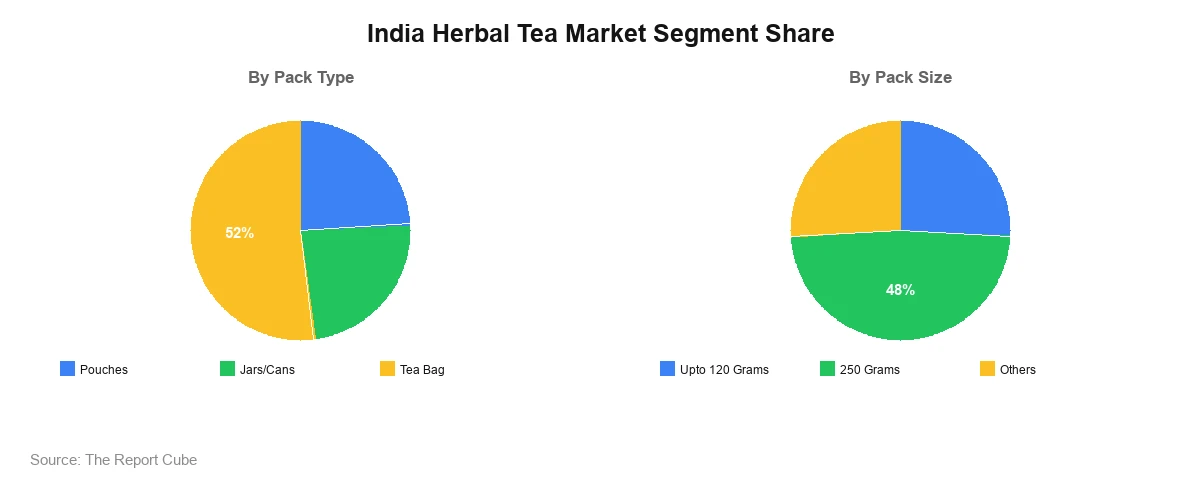
Tea bags dominate the By Pack Type segment, commanding an estimated 52% revenue share owing to their alignment with the convenience-first consumption behavior of urban working professionals, hospitality operators, and institutional buyers. The format's compatibility with single-serve brewing, premium gifting packaging, and premium retail positioning makes it the default choice for Brooke Bond Taj Mahal, Girnar, and new-generation wellness brands. Individually foil-wrapped bags incorporating Ayurvedic herb variants such as tulsi-ginger, chamomile-lavender, and peppermint-brahmi have become the most actively innovated SKUs across both organized retail and e-commerce channels.
Pouches maintain substantial market presence as the preferred format for value-seeking and bulk-purchasing household consumers across tier-2 and tier-3 Indian cities. The loose-leaf herbal packaging and retail formats market is evolving rapidly as brands invest in resealable zip-lock and aroma-sealed pouch formats to improve shelf-life perception and reduce at-home storage friction. Jars and cans occupy a growing premium gifting niche, with specialty brands such as Darjeeling Tea Boutique and Assam Company India Limited increasingly targeting corporate gifting cycles and festive retail seasons with aesthetically curated, reusable canister packaging.
By Pack Size
- Upto 120 Grams
- 250 Grams
- Others
The 250 Grams pack size commands the dominant position in the By Pack Size segment, holding an estimated 48% market share driven by household stocking patterns, favorable price-per-gram economics, and its alignment with monthly grocery purchasing cycles in Indian urban and semi-urban households. The format is widely distributed through kiranas, supermarkets, and quick-commerce platforms, making it the most accessible volume tier for brands targeting mid-market household penetration. Girnar and Amar Tea Pvt. Ltd. have leveraged this format extensively to build household loyalty across Maharashtra, Gujarat, and the Hindi-speaking belt.
Upto 120 Grams packs represent the fastest-growing size segment, fueled by trial-driven e-commerce purchases, gifting applications, and the expanding segment of millennial consumers experimenting with specialty or artisanal herbal blend formats before committing to larger volumes. The Others category — encompassing 500-gram bulk packs and institutional catering sizes — gains traction through foodservice operator supply chains and corporate wellness programs. Overall, premium specialty herbal tea gifting formats are influencing pack size innovation, with brands increasingly launching curated multi-blend assortment boxes that span multiple pack size tiers within single retail SKUs.
Regional Projection of India Herbal Tea Market
India's herbal tea consumption landscape reflects pronounced regional heterogeneity shaped by agroclimatic herbal sourcing proximity, cultural wellness traditions, literacy in Ayurvedic practices, and varying retail infrastructure maturity across the country's diverse geographic zones.
|
Region |
Estimated Market Share |
Key Growth Factors |
Consumer Trends |
|---|---|---|---|
|
North India |
34.5% |
Ayurvedic affinity, high household penetration, Kashmir Kahwa culture |
Strong demand for tulsi, ginger, and masala herbal blends |
|
South India |
22.8% |
Wellness café expansion, urban millennial premiumization |
Rising adoption of lemongrass, hibiscus, and cold-brew herbal formats |
|
West India |
20.1% |
D2C retail adoption, Gujarati health consciousness |
Growing penetration of premium jars and gifting pack formats |
|
East India |
13.6% |
Proximity to Assam and Darjeeling herbal sourcing belts |
Traditional blend consumption with expanding organized retail reach |
|
Central India |
9.0% |
Rising middle-class incomes, e-commerce accessibility growth |
Increasing trial purchasing of immunity-focused herbal varieties |
- North India: North India leads with approximately 34.5% revenue share, anchored by deep Ayurvedic wellness traditions, high household consumption of tulsi and ginger-based herbal blends, and strong penetration of branded herbal tea across urban markets in Delhi NCR, Uttar Pradesh, and Punjab.
- South India: South India is the fastest-growing region, driven by proliferating wellness cafés, millennial-led premiumization, and growing adoption of specialty herbal formats including hibiscus, lemongrass, and ashwagandha infusions across Bengaluru, Chennai, and Hyderabad.
- West India: West India sustains strong market presence through high D2C digital retail adoption, cultural inclination toward preventive health among Gujarati and Maharashtrian consumer segments, and Girnar's extensive regional distribution infrastructure.
- East India: East India benefits from direct proximity to premier herbal and botanical sourcing geographies in Assam and the Darjeeling foothills, supporting cost-competitive local manufacturing and a strong base of traditional blend consumers.
- Central India: Central India represents an emerging consumption corridor as rising disposable incomes, expanding quick-commerce delivery coverage, and increasing health awareness in Madhya Pradesh and Chhattisgarh attract organized herbal tea brands.
India Herbal Tea Market: Recent Development (2025)
- Hindustan Unilever launched Pukka Herbal Infusion in India targeting premium health-conscious urban consumers.
- Chull Wali Chai introduced ChamoMint, Blue Voltage, and Hibiscus herbal tea lines with bold new packaging.
- Wagh Bakri launched Royale Tea at World Food India 2025 elevating the premium Assam herbal blend segment.
- Tata Global Beverages announced a partnership with an organic producer to expand its premium organic herbal portfolio.
India Herbal Tea Market Future Outlook (2034)
The India Herbal Tea Market is projected to expand at a 13.54% CAGR, reaching approximately USD 67.91 billion by 2034. Structural demand drivers including India's expanding health-conscious middle class, government promotion of Ayurvedic food systems, increasing penetration of organized retail and quick-commerce platforms, and growing exports of GI-tagged Indian herbal blends to global markets will sustain above-average category growth throughout the forecast period. Brands investing in clinical-grade adaptogen sourcing, traceability certification, and premium sustainable packaging will capture disproportionate revenue share as market premiumization accelerates.
Future growth will be further shaped by artificial intelligence-enabled personalization platforms that recommend customized herbal tea blends based on consumer wellness profiles, purchase history, and real-time health monitoring data. End-of-season botanical sourcing and supply chain traceability will become a critical competitive differentiator as FSSAI regulatory rigor intensifies. Brands deploying D2C subscription models, functional wellness positioning, and clinical collaboration frameworks for adaptogenic blend validation are expected to achieve the fastest revenue compounding while elevating the category's overall consumer perception from a traditional beverage to an evidence-backed daily wellness ritual.
India Herbal Tea Market Report Coverage
|
Report Attribute |
Details |
|---|---|
|
Market Name |
India Herbal Tea Market |
|
Market Size (2026) |
USD 24.59 Billion |
|
Market Size (2034) |
USD 67.91 Billion |
|
Forecast Period |
2026–2034 |
|
CAGR |
13.54% |
|
Base Year |
2026 |
|
Historical Years |
2021–2025 |
|
Forecast Years |
2026–2034 |
|
Segments Covered |
By Pack Type, By Pack Size, By Distribution Channel, By Type |
|
Regions Covered |
North India, South India, West India, East India, Central India |
|
Key Companies |
Amar Tea Pvt. Ltd, Assam Company India Limited, Brooke Bond Taj Mahal, Darjeeling Tea Boutique, Girnar, Chaayos, Others |
|
Report Format |
PDF, Excel, PPT |
|
Customization |
Available as per client requirements |
Why Choose This Report?
- Comprehensive analysis of India's herbal tea pack type and size dynamics.
- Accurate market sizing with a reliable 13.54% CAGR forecast through 2034.
- Detailed segmentation identifying dominant and fastest-growing sub-segment opportunities.
- Regional insights covering all five major Indian consumption zones with share data.
- Profiling of leading herbal tea brands and their 2025 strategic developments.
- Analysis of Ayurvedic ingredient trends and functional blend premiumization trajectories.
- Regulatory context covering FSSAI quality standards and AYUSH wellness promotion frameworks.
- Data-driven research enabling strategic investment, distribution, and product planning decisions.
Table of Contents
- Introduction
- Objective of the Study
- Product Definition
- Market Segmentation
- Study Variables
- Research Methodology
- Secondary Data Points
- Companies Interviewed
- Primary Data Points
- Breakdown of Primary Interviews
- Secondary Data Points
- Executive Summary
- Market Dynamics
- Drivers
- Challenges
- Opportunity Assessment
- Recent Trends and Developments
- Policy and Regulatory Landscape
- India Herbal Tea Market Overview and Forecast Analysis (2021-2034)
- Market Size, By Value, By Growth Rate (CAGR/USD Billions)
- Demand – Supply Trends
- Market Share, By Type
- Mixed Blend
- Single Blend
- Market Share, By Pack Type
- Pouches
- Jars/Cans
- Tea Bag
- Market Share, By Pack Size
- Upto 120 Grams
- 250 Grams
- Others
- Market Share, By Distribution Channel
- Supermarket and Hypermarket
- Online Store
- Convenience Store
- Specialty Store
- Others
- Market Share, By Region
- North India
- South India
- West India
- East India
- Central India
- Market Share, By Competitors
- Competition Characteristics
- Revenue Shares
- Mixed Blend India Herbal Tea Market Overview, 2021-2034F
- By Value (USD Million)
- By Pack Type – Market Size & Forecast 2021-2034, USD Million
- Pouches
- Jars/Cans
- Tea Bag
- Single Blend India Herbal Tea Market Overview, 2021-2034F
- By Value (USD Million)
- By Pack Type – Market Size & Forecast 2021-2034, USD Million
- Pouches
- Jars/Cans
- Tea Bag
- Competitive Outlook (Company Profile – Partial List)
- Amar Tea Pvt. Ltd
- Company Overview
- Business Segments
- Strategic Alliances/Partnerships
- Recent Developments
- Assam Company India Limited
- Company Overview
- Business Segments
- Strategic Alliances/Partnerships
- Recent Developments
- Brooke Bond Taj Mahal
- Company Overview
- Business Segments
- Strategic Alliances/Partnerships
- Recent Developments
- Darjeeling Tea Boutique
- Company Overview
- Business Segments
- Strategic Alliances/Partnerships
- Recent Developments
- Girnar Chaayos
- Company Overview
- Business Segments
- Strategic Alliances/Partnerships
- Recent Developments
- Others
- Amar Tea Pvt. Ltd
- Contact Us & Disclaimer
Top Key Players & Market Share Outlook
- Amar Tea Pvt. Ltd
- Assam Company India Limited
- Brooke Bond Taj Mahal
- Darjeeling Tea Boutique
- Girnar Chaayos
- Others
Frequently Asked Questions






