



Build Your Custom Market Intelligence Report
Customize Your ReportGlobal MASH Diagnostics Market Key Highlights
By Diagnostic Workflow Stage:
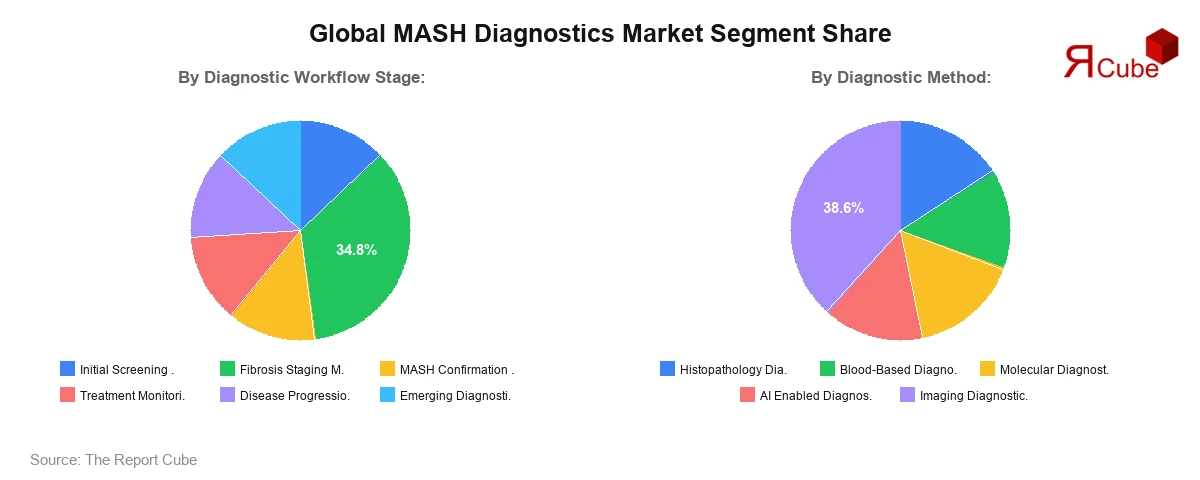
Fibrosis Staging Methods segment leads the market with nearly 34.8% share.
By Diagnostic Method:
Imaging Diagnostics segment dominates the market with approximately 38.6% of total revenue.
Regional Outlook:
North America dominates the Global MASH Diagnostics Market with around 41.7% market share.
Global MASH Diagnostics Market Insights & Analysis
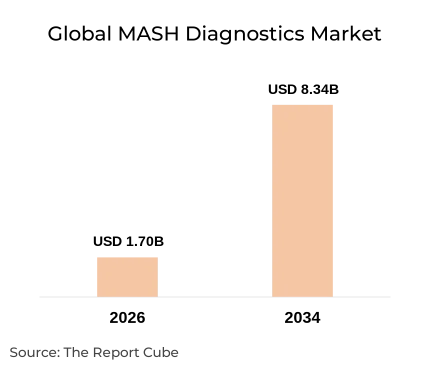
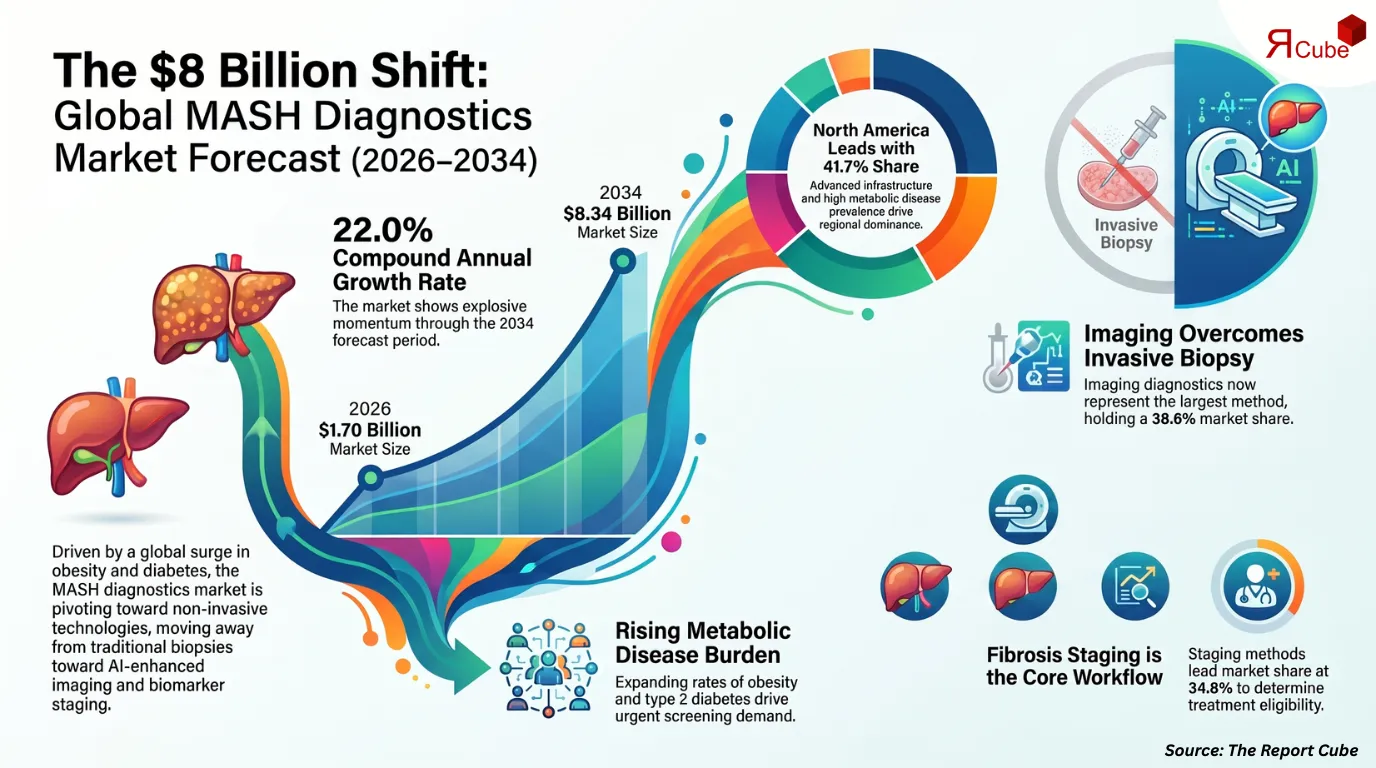
The Global MASH Diagnostics Market is anticipated to register a CAGR of around 22.0% during the forecast period 2026-2034. The market size is valued at USD 1.70 billion in 2026 and is projected to reach USD 8.34 billion by 2034. Market momentum is being shaped by the rapid evolution of clinical management for metabolic dysfunction-associated steatohepatitis (MASH), where timely diagnosis has become essential for preventing irreversible liver damage and improving long-term patient outcomes. The expanding prevalence of obesity, type 2 diabetes, dyslipidemia, and metabolic syndrome has significantly increased the number of patients requiring liver fibrosis evaluation across both developed and emerging healthcare systems. As a result, clinicians are steadily replacing invasive diagnostic pathways with validated non-invasive imaging modalities, blood-based biomarker panels, and digital assessment platforms that enable earlier disease detection and more efficient patient management.
The commercialization of disease-modifying MASH therapies is fundamentally reshaping the diagnostic landscape. Physicians increasingly require reliable fibrosis staging, disease confirmation, and longitudinal monitoring to determine therapy eligibility and evaluate treatment response. This shift has accelerated investment in MRI-based liver imaging, vibration-controlled transient elastography, enhanced serum fibrosis biomarkers, AI-assisted pathology, and multiomics-based diagnostic platforms. Healthcare providers are also integrating diagnostic data into multidisciplinary liver care programs, improving coordination among hepatologists, radiologists, endocrinologists, and primary care physicians. Continuous collaboration between diagnostic developers, pharmaceutical manufacturers, and academic research institutions is expected to strengthen clinical validation, improve diagnostic accuracy, and support broader adoption of precision medicine throughout the MASH diagnostics and treatment ecosystem.
Global MASH Diagnostics Market Impact Analysis
| Factor | Type | Specific Impact on Market | Magnitude | Business Implication |
|---|---|---|---|---|
| Rising Obesity and Diabetes Burden | Market | Higher MASH prevalence expands pool needing diagnostic assessment | High | Supports sustained growth in screening and risk stratification tests |
| Shift Toward Non Invasive Liver Testing | Technological | Ultrasound, elastography and biomarkers reduce reliance on biopsy | High | Drives demand for advanced imaging and blood based diagnostic panels |
| Approval of Targeted MASH Therapies | Market | New treatments increase need for accurate staging and monitoring tools | High | Encourages companion diagnostics and longitudinal disease tracking solutions |
| Reimbursement and Guideline Evolution | Regulatory | Coverage for non invasive tests improves access and testing volumes | Medium | Requires alignment with clinical pathways and health economic evidence |
| AI Enabled Risk Stratification Platforms | Technological | Algorithms integrate multi parameter data for early detection of fibrosis | Medium | Creates scope for digital diagnostics partnerships and data driven services |
| Regional Disparities in Testing Capacity | Environmental | Limited infrastructure in emerging markets constrains test adoption | Medium | Needs scalable low cost diagnostics tailored for resource constrained settings |
| Competition Between Imaging and Biomarker Firms | Competitive | Multiple modalities vie for standard of care positioning in MASH diagnosis | Medium | Pushes players to differentiate on accuracy, cost and workflow integration |
Global MASH Diagnostics Market Dynamics
Key Driver: Expansion of fibrosis-directed treatment pathways is increasing demand for accurate patient stratification
Clinical decision-making for MASH has become increasingly dependent on precise fibrosis assessment, particularly as new pharmacological therapies enter commercial practice. Physicians must accurately distinguish patients with clinically significant fibrosis from those with early-stage disease before initiating treatment, making diagnostic precision a central component of patient management. This requirement has substantially increased the use of validated non-invasive tools such as FibroScan, magnetic resonance elastography, Enhanced Liver Fibrosis testing, FIB-4 scoring, and MRI-derived biomarkers. These technologies reduce the reliance on liver biopsy while providing reproducible clinical information that supports treatment planning and ongoing disease monitoring.
Healthcare systems are simultaneously expanding screening efforts among individuals living with obesity, diabetes, hypertension, and other metabolic disorders that substantially increase MASH risk. Earlier identification of liver fibrosis allows clinicians to introduce lifestyle interventions and therapeutic management before irreversible liver damage develops. As reimbursement policies gradually recognize the long-term economic value of early diagnosis, hospitals and specialty liver centers are investing in integrated diagnostic workflows that improve patient access, reduce unnecessary invasive procedures, and enhance overall clinical outcomes.
Industry Trend: Integrated non-invasive diagnostics are becoming the preferred standard of care
Clinical practice is steadily moving toward diagnostic strategies that combine imaging technologies, serum biomarkers, and artificial intelligence to improve diagnostic confidence across multiple stages of disease assessment. Rather than depending on a single test, hepatology specialists increasingly utilize complementary diagnostic information to evaluate liver fat accumulation, inflammation, fibrosis severity, and disease progression. This integrated approach improves diagnostic accuracy while minimizing patient discomfort and reducing procedure-related risks associated with liver biopsy.
Technology developers continue to strengthen this transition through advanced MRI quantification techniques, AI-assisted pathology platforms, digital image interpretation, and predictive analytics capable of identifying subtle disease changes. Companion diagnostics are also gaining greater importance as pharmaceutical companies develop targeted therapies requiring standardized patient selection criteria. These technological advances are creating more efficient diagnostic pathways while supporting personalized treatment strategies for patients with metabolic liver disease.
Book your FREE 30-minute expert consultation today
Contact UsMajor Challenge: Unequal access to advanced diagnostic technologies continues to limit clinical adoption
Although non-invasive liver assessment technologies have demonstrated strong clinical utility, widespread implementation remains uneven across global healthcare systems. High acquisition costs for magnetic resonance elastography systems, specialized MRI protocols, and advanced diagnostic software create financial barriers for many hospitals, particularly in middle-income and resource-constrained regions. Smaller healthcare facilities often lack dedicated hepatology expertise, limiting the interpretation of complex diagnostic findings and delaying appropriate patient referral.
Variation in reimbursement frameworks and clinical practice guidelines further complicates market expansion. Diagnostic availability differs considerably between countries, with several healthcare systems continuing to rely on conventional laboratory testing because of funding limitations. Standardization of biomarker thresholds, imaging protocols, and pathology interpretation also remains an ongoing priority for clinical organizations seeking greater consistency across routine practice and multinational clinical trials.
Opportunity: Precision medicine is creating long-term growth opportunities for advanced diagnostic platforms
The expanding pipeline of targeted MASH therapeutics is increasing demand for companion diagnostics capable of identifying patients who are most likely to benefit from treatment. Pharmaceutical developers now require highly reproducible fibrosis staging methods, validated biomarkers, and quantitative imaging technologies throughout every phase of drug development, creating new commercial opportunities for diagnostic manufacturers. Companies offering integrated diagnostic solutions that combine imaging, pathology, molecular testing, and AI-driven clinical decision support are expected to gain a competitive advantage over standalone technology providers.
Future market growth will also be supported by broader adoption of digital health infrastructure, cloud-based diagnostic platforms, and real-world evidence programs that facilitate longitudinal disease monitoring. Investments in genomic profiling, RNA biomarkers, multiomics diagnostics, and predictive risk modeling continue to expand the clinical value of diagnostic testing beyond disease confirmation alone. As precision hepatology becomes increasingly integrated into routine care, diagnostic innovation will remain one of the strongest contributors to sustained expansion of the Global MASH Diagnostics Market throughout the forecast period.
Global MASH Diagnostics Market Segment-wise Analysis
By Diagnostic Workflow Stage:
- Initial Screening Methods
- Fibrosis Staging Methods
- FIB-4 Score
- NAFLD Fibrosis Score
- Enhanced Liver Fibrosis Test
- FibroScan
- Magnetic Resonance Elastography
- APRI Score
- Liver Biopsy Staging
- Histological Fibrosis Grading
- Others
- MASH Confirmation Methods
- Treatment Monitoring Methods
- Disease Progression Surveillance Methods
- Emerging Diagnostic Technologies
Fibrosis Staging Methods held the largest share of the Global MASH Diagnostics Market, accounting for approximately 34.8% in 2026. The segment serves as the foundation of the MASH diagnostic pathway because fibrosis severity remains the strongest predictor of liver-related complications and treatment eligibility. Physicians increasingly rely on non-invasive tools such as FibroScan, Magnetic Resonance Elastography (MRE), Enhanced Liver Fibrosis (ELF) Test, FIB-4 Score, and NAFLD Fibrosis Score to evaluate disease progression without exposing patients to the risks associated with liver biopsy. These technologies improve clinical efficiency by enabling rapid patient stratification while reducing procedure-related costs and improving patient compliance.
Growing availability of disease-modifying therapies is further increasing the clinical importance of fibrosis staging. Regulatory agencies and pharmaceutical companies require standardized fibrosis assessment to enroll patients in clinical trials and monitor therapeutic response over time. Hospitals and specialty liver centers are integrating advanced imaging with validated serum biomarkers to improve diagnostic accuracy and reduce unnecessary invasive procedures. Continuous improvements in quantitative imaging, biomarker validation, and AI-assisted fibrosis interpretation are expected to reinforce the leadership of this segment throughout the forecast period as precision hepatology becomes an integral part of routine clinical practice.
By Diagnostic Method:
- Histopathology Diagnostics
- Blood-Based Diagnostics
- Molecular Diagnostics
- AI Enabled Diagnostics
- Imaging Diagnostics
Imaging Diagnostics represented the largest diagnostic method, contributing nearly 38.6% of global market revenue in 2026. The segment continues to gain momentum as healthcare providers shift toward non-invasive technologies capable of evaluating liver fat accumulation, inflammation, stiffness, and fibrosis with high diagnostic confidence. Widely adopted solutions such as FibroScan, Magnetic Resonance Elastography, MRI-Proton Density Fat Fraction (MRI-PDFF), and ultrasound elastography allow clinicians to assess liver disease repeatedly without biopsy-related complications. These advantages have made imaging an essential component of screening, disease confirmation, fibrosis staging, treatment monitoring, and long-term surveillance.
Technological innovation continues to strengthen the competitive position of imaging diagnostics across the MASH care pathway. Modern imaging platforms increasingly incorporate artificial intelligence for automated image interpretation, standardized fibrosis quantification, and improved reporting consistency. Growing investments by healthcare providers in advanced MRI infrastructure, combined with expanding reimbursement support in several developed countries, are accelerating clinical adoption. As pharmaceutical companies require reliable imaging biomarkers to evaluate therapeutic effectiveness, imaging diagnostics are expected to remain the preferred diagnostic modality across hospitals, imaging centers, and specialty hepatology clinics.
Regional Projection of Global MASH Diagnostics Industry
- North America
- Europe
- Asia Pacific
- Middle East and Africa
- South America
North America accounted for the largest share of the Global MASH Diagnostics Market, representing approximately 41.7% of total revenue in 2026. Regional leadership is supported by the high prevalence of obesity, type 2 diabetes, metabolic syndrome, and chronic liver disease, all of which substantially increase the risk of MASH. The United States remains the primary revenue contributor due to its advanced diagnostic infrastructure, extensive hepatology specialist network, and strong participation in global clinical trials evaluating novel MASH therapies. Healthcare providers across the region have increasingly adopted non-invasive fibrosis assessment technologies to enable earlier diagnosis and improve patient management while reducing dependence on liver biopsy.
Strong collaboration between diagnostic developers, pharmaceutical companies, academic medical centers, and regulatory agencies continues to accelerate innovation throughout North America. Investments in AI-assisted pathology, quantitative MRI technologies, blood-based biomarker panels, and digital diagnostic platforms are expanding the availability of precision liver diagnostics across hospitals and specialty clinics. Favorable reimbursement for several non-invasive diagnostic procedures, combined with growing physician awareness regarding early fibrosis detection, is supporting sustained market growth. Continued regulatory progress for companion diagnostics and expanding commercialization of MASH therapies are expected to strengthen North America's leadership throughout the 2026-2034 forecast period.
Need insights for a specific region within this market?
Request Regional DataRegional Analysis of Global MASH Diagnostics Market
The global MASH diagnostics market is expanding rapidly, with regional growth shaped by disease burden, healthcare access, and adoption of advanced non‑invasive liver tests.
| Region | Demand Level | Key Areas | System Dominance | Core Demand Logic | Growth Nature |
|---|---|---|---|---|---|
| North America | Very High | U.S., Canada | Imaging and blood biomarkers | High MASH burden, strong payor support | Innovation‑driven, steady expansion |
| Europe | High | Germany, UK, France, Italy | Non‑invasive panels and elastography | Policy focus on MASLD and screening | Guideline‑led, moderate growth |
| Asia Pacific | Rising | China, India, Japan, South Korea | Hospital‑based and point‑of‑care tests | Metabolic surge and access expansion | Fastest‑growing, catch‑up phase |
| Middle East and Africa | Moderate | Gulf states, South Africa | Tertiary center MASH diagnostics | High obesity, selective access | Emerging, capacity‑build driven |
| South America | Emerging | Brazil, Argentina, Chile | Public hospital and private labs | Growing MASLD, constrained budgets | Gradual, payer‑dependent growth |
Government Initiatives & Policies
- U.S. FDA AI Medical Device Framework (2025): The U.S. Food and Drug Administration continued expanding regulatory support for AI-enabled medical devices, encouraging the qualification and clinical adoption of artificial intelligence-based pathology and imaging tools for liver disease assessment and MASH clinical research.
- European Medicines Agency Biomarker Qualification Program (2025): The European Medicines Agency continued advancing biomarker qualification procedures that support the development of validated diagnostic biomarkers and non-invasive assessment methods for metabolic liver diseases, helping improve patient selection for clinical trials and therapeutic decision-making.
Global MASH Diagnostics Industry Recent Developments
- 2025: PathAI, Inc. received FDA qualification for its AIM-MASH AI Assist platform, making it the first AI-powered pathology tool qualified for use in MASH clinical trials. The solution standardizes fibrosis staging and disease activity assessment, improving consistency across clinical research and supporting broader adoption of AI-enabled pathology.
- 2025: Perspectum Limited announced that its LiverMultiScan corrected T1 technology continues to strengthen its position as a non-invasive, non-contrast MRI-based solution capable of assessing liver inflammation, fat, and iron content. The technology supports wider MASH diagnosis and patient monitoring through existing MRI infrastructure.
- 2025: Perspectum Limited published multinational clinical study findings demonstrating that MRI-based liver diagnostics can provide a cost-effective approach for diagnosing and managing steatotic liver disease. The results reinforce the growing role of advanced imaging technologies within modern MASH diagnostic pathways and long-term disease monitoring.
Why Choose This Report?
- Provides a comprehensive overview of the overall market analysis, encompassing key trends, consumer behavior analysis, and risk assessment to support strategic decision-making.
- Provides accurate, up-to-date insights into market size, segmentation, and emerging opportunities, helping to minimize risk while capitalizing on growth.
- Gives deep understanding of target audience preferences, investment habits, and communication channels for enhanced product development and marketing effectiveness.
- Delivers competitive analysis and benchmarking, uncovering the strengths and weaknesses of market competitors to guide strategies.
- Consolidates comprehensive market intelligence, reducing research effort and streamlining strategic planning.
- Facilitates customized market segmentation and risk mitigation strategies, fine-tuned to business objectives.
- Aids in identifying both market challenges and untapped opportunities within the industry to drive long-term business growth.
- Provides valuable information based on actual customer data and search trends.
Table of Contents
- Introduction
- Objective of the Study
- Product and Category Definition
- Market Segmentation
- Study Variables
- Research Methodology
- Secondary Data Points
- Breakdown of Secondary Sources
- Primary Data Points
- Breakdown of Primary Interviews
- Secondary Data Points
- Executive Summary
- Market Dynamics
- Emerging Opportunities
- Adoption Trends
- Demand Drivers
- Disruption Analysis (Challenges)
- Industry Analysis & Strategic Insights
- Supply/Value Chain Analysis
- Pricing Analysis
- Go-To-Market (GTM) Strategy
- BCG Matrix
- Recent Trends and Developments
- Regulatory and Policy Landscape
- Region-wise Policies
- Government Initiatives
- Global MASH Diagnostics Market Overview and Forecast Analysis (2021-2034)
- Market Size, By Value, By Growth Rate (CAGR/USD Billion)
- Market Share, By Diagnostic Workflow Stage
- Treatment Monitoring Methods
- ALT Monitoring
- AST Monitoring
- FibroScan Follow Up
- MRI PDFF Follow Up
- Biomarker Monitoring
- Repeat Liver Function Testing
- Disease Regression Tracking
- MASH Confirmation Methods
- Liver Biopsy
- MRI PDFF
- Magnetic Resonance Elastography
- FibroScan Confirmation
- Histopathology Confirmation
- Biomarker Based Confirmation
- Combined Imaging and Biomarker Confirmation
- Disease Progression Surveillance Methods
- Fibrosis Monitoring
- Cirrhosis Risk Tracking
- Repeat Imaging Assessment
- Liver Function Monitoring
- Hepatology Follow Up
- Longitudinal Biomarker Tracking
- Initial Screening Methods
- Fibrosis Staging Methods
- FIB 4 Score
- NAFLD Fibrosis Score
- Enhanced Liver Fibrosis Test
- FibroScan
- Magnetic Resonance Elastography
- APRI Score
- Liver Biopsy Staging
- Histological Fibrosis Grading
- Others
- Emerging Diagnostic Technologies
- AI Based Risk Scoring
- AI Imaging Interpretation
- Multiomics Diagnostics
- Genomic Risk Profiling
- RNA Biomarkers
- Digital Pathology
- Predictive Analytics Platforms
- Companion Diagnostics
- Others
- Treatment Monitoring Methods
- Market Share, By Diagnostic Method
- Histopathology Diagnostics
- Blood Based Diagnostics
- Molecular Diagnostics
- AI Enabled Diagnostics
- Imaging Diagnostics
- Market Share, By Diagnostic Purpose
- Therapy Eligibility Diagnostics
- Disease Confirmation Diagnostics
- Fibrosis Staging Diagnostics
- Treatment Monitoring Diagnostics
- Progression Tracking Diagnostics
- Disease Surveillance Diagnostics
- Screening Diagnostics
- Companion Diagnostics
- Market Share, By Disease Severity
- Mild Fibrosis
- Early MASH
- Moderate Fibrosis
- Advanced Fibrosis
- Severe Fibrosis
- Cirrhosis Stage
- MASLD
- High Risk Progression Population
- Market Share, By End-User
- Diagnostic Laboratories
- Imaging Centers
- Hepatology Clinics
- Gastroenterology Clinics
- Specialty Liver Centers
- Academic Research Centers
- Hospitals
- Ambulatory Diagnostic Centers
- Market Share, By Region
- North America
- Europe
- Asia Pacific
- Middle East and Africa
- South America
- Market Share, By Company
- Revenue Shares & Analysis
- Competitive Landscape
- North America MASH Diagnostics Market Overview and Forecast Analysis (2021-2034)
- Market Size, By Value, By Growth Rate (CAGR/USD Billion/Million)
- Market Share, By Diagnostic Workflow Stage
- Market Share, By Diagnostic Method
- Market Share, By Diagnostic Purpose
- Market Share, By Disease Severity
- Market Share, By End-User
- Market Share, By Country
- The US
- Canada
- Mexico
- Rest of North America
- Europe MASH Diagnostics Market Overview and Forecast Analysis (2021-2034)
- Market Size, By Value, By Growth Rate (CAGR/USD Billion/Million)
- Market Share, By Diagnostic Workflow Stage
- Market Share, By Diagnostic Method
- Market Share, By Diagnostic Purpose
- Market Share, By Disease Severity
- Market Share, By End-User
- Market Share, By Country
- Germany
- The UK
- France
- Italy
- Spain
- Netherlands
- Russia
- Poland
- Belgium
- Sweden
- Rest of Europe
- Asia Pacific MASH Diagnostics Market Overview and Forecast Analysis (2021-2034)
- Market Size, By Value, By Growth Rate (CAGR/USD Billion/Million)
- Market Share, By Diagnostic Workflow Stage
- Market Share, By Diagnostic Method
- Market Share, By Diagnostic Purpose
- Market Share, By Disease Severity
- Market Share, By End-User
- Market Share, By Country
- China
- India
- Japan
- South Korea
- Australia
- Indonesia
- Thailand
- Malaysia
- Vietnam
- Philippines
- Singapore
- New Zealand
- Rest of Asia-Pacific
- Middle East and Africa MASH Diagnostics Market Overview and Forecast Analysis (2021-2034)
- Market Size, By Value, By Growth Rate (CAGR/USD Billion/Million)
- Market Share, By Diagnostic Workflow Stage
- Market Share, By Diagnostic Method
- Market Share, By Diagnostic Purpose
- Market Share, By Disease Severity
- Market Share, By End-User
- Market Share, By Country
- Saudi Arabia
- The UAE
- South Africa
- Egypt
- Nigeria
- Morocco
- Turkey
- Rest of the Middle East & Africa
- South America MASH Diagnostics Market Overview and Forecast Analysis (2021-2034)
- Market Size, By Value, By Growth Rate (CAGR/USD Billion/Million)
- Market Share, By Diagnostic Workflow Stage
- Market Share, By Diagnostic Method
- Market Share, By Diagnostic Purpose
- Market Share, By Disease Severity
- Market Share, By End-User
- Market Share, By Country
- Brazil
- Argentina
- Chile
- Colombia
- Peru
- Rest of South America
- Competitive Analysis, 2026
- Market Share of Key Players
- Competitive Mapping for Each Segment and Companies Operating Regionally
- North America MASH Diagnostics Companies Share & Competitive Analysis, 2026
- Europe MASH Diagnostics Companies Share & Competitive Analysis, 2026
- Asia Pacific MASH Diagnostics Companies Share & Competitive Analysis, 2026
- Middle East and Africa MASH Diagnostics Companies Share & Competitive Analysis, 2026
- South America MASH Diagnostics Companies Share & Competitive Analysis, 2026
- Company Profile (Partial List)
- PathAI, Inc.
- Company Overview
- Product Portfolio
- Strategic Alliances/Partnerships
- Recent Developments
- Nordic Bioscience
- Company Overview
- Product Portfolio
- Strategic Alliances/Partnerships
- Recent Developments
- Koninklijke Philips N.V.
- Company Overview
- Product Portfolio
- Strategic Alliances/Partnerships
- Recent Developments
- GE HealthCare
- Company Overview
- Product Portfolio
- Strategic Alliances/Partnerships
- Recent Developments
- BioPredictive
- Company Overview
- Product Portfolio
- Strategic Alliances/Partnerships
- Recent Developments
- Echosens
- Company Overview
- Product Portfolio
- Strategic Alliances/Partnerships
- Recent Developments
- F. Hoffmann-La Roche Ltd.
- Company Overview
- Product Portfolio
- Strategic Alliances/Partnerships
- Recent Developments
- Perspectum Limited
- Company Overview
- Product Portfolio
- Strategic Alliances/Partnerships
- Recent Developments
- Rubió Metabolomics
- Company Overview
- Product Portfolio
- Strategic Alliances/Partnerships
- Recent Developments
- HistoIndex Pte Ltd.
- Company Overview
- Product Portfolio
- Strategic Alliances/Partnerships
- Recent Developments
- Siemens Healthineers AG
- Company Overview
- Product Portfolio
- Strategic Alliances/Partnerships
- Recent Developments
- Others (Partial List)
- PathAI, Inc.
- Contact Us and Disclaimer
Top Key Players & Market Share Outlook
- PathAI, Inc.
- Nordic Bioscience
- Koninklijke Philips N.V.
- GE HealthCare
- BioPredictive
- Echosens
- F. Hoffmann-La Roche Ltd.
- Perspectum Limited
- Rubió Metabolomics
- HistoIndex Pte Ltd.
- Siemens Healthineers AG
- Others
Frequently Asked Questions






