



Build Your Custom Market Intelligence Report
Customize Your ReportUK Peripheral Neuropathy Market Key Takeaways
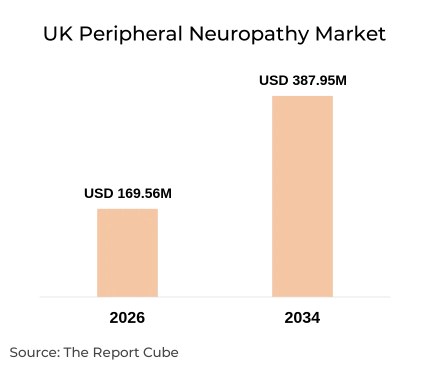
- Market valued at USD 169.56 million in 2026, reflecting sustained treatment demand expansion.
- Industry projected to reach USD 387.95 million by 2034, expanding at a 10.90% CAGR.
- Diabetic peripheral neuropathy remains the dominant type segment due to rising UK diabetes rates.
- Hospitals and clinics lead end-user adoption owing to specialist neurology and diabetes care infrastructure.
- England and Wales concentrate the highest treatment volumes driven by NHS network density.
- Suzetrigine and next-generation Nav1.8 sodium channel blockers represent the most significant pipeline opportunity.
- Leading companies include Pfizer, Eli Lilly, Johnson & Johnson, AstraZeneca, Novartis, Teva, Sanofi, and Bristol-Myers Squibb.
- Aging UK population and expanding cancer survivorship rates continue accelerating peripheral neuropathy diagnosis and treatment.
UK Peripheral Neuropathy Market Insights & Analysis
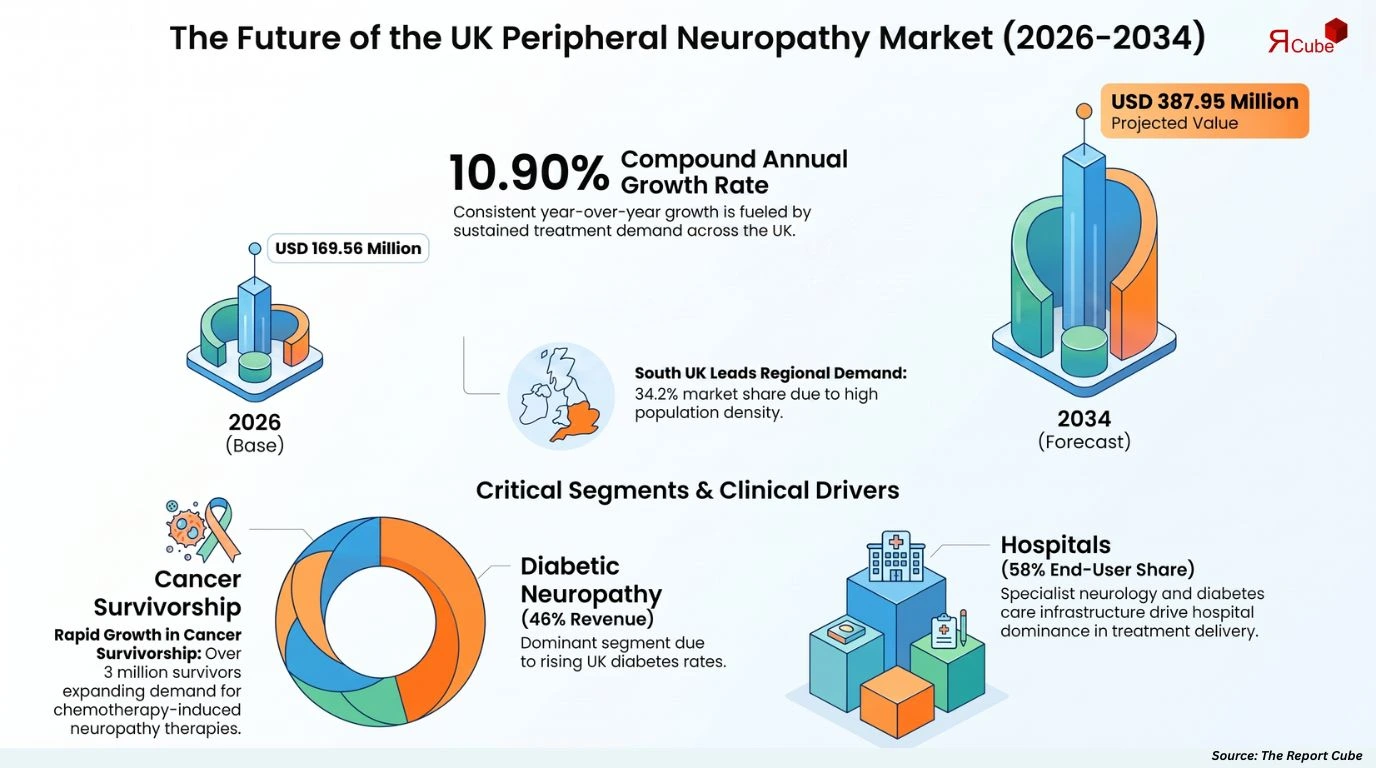
The UK Peripheral Neuropathy Market is anticipated to register a 10.90% CAGR during 2026–2034. The market size was valued at USD 169.56 million in 2026 and is projected to reach USD 387.95 million by 2034. Growth is underpinned by a rapidly expanding diabetic population, rising chemotherapy survivorship rates, and increasing awareness of neuropathic pain among primary care physicians across England, Scotland, Wales, and Northern Ireland. NHS commissioning bodies and NICE continue refining treatment protocols for peripheral neuropathy, supporting consistent prescription volumes for duloxetine, pregabalin, and gabapentin while encouraging evidence-based adoption of emerging non-opioid therapies.
The UK market benefits from an established pharmaceutical distribution infrastructure and a concentrated hospital network through which specialist neurology and diabetology services are delivered. Major global players including Eli Lilly, Pfizer, Teva, and Novartis maintain strong UK commercial presences, supporting diabetic peripheral neuropathy drug access and market penetration. NHS England's Long Term Plan has further committed to improving diabetes complication management, directly channeling investment toward neuropathy screening and treatment services. The growing cancer survivor population - with over 3 million individuals now living post-treatment in the UK - is simultaneously expanding demand for chemotherapy-induced peripheral neuropathy therapies, diversifying the market's revenue base.
UK Peripheral Neuropathy Market Dynamics
The UK Peripheral Neuropathy Market continues to expand across hospital, ambulatory, and community care settings as the national burden of diabetes, cancer, and idiopathic nerve disease rises. Growing physician recognition of peripheral neuropathy as a standalone clinical priority, rather than merely a secondary complication, is contributing to higher diagnosis rates and earlier pharmacological intervention. NHS structural reforms promoting integrated care systems further reinforce systematic neuropathy screening within routine diabetes and oncology follow-up pathways.
|
Factor |
Type |
Specific Impact on Market |
Magnitude |
|---|---|---|---|
|
Rising UK diabetes prevalence |
Driver |
Expands diabetic peripheral neuropathy patient pool and treatment demand |
Very High |
|
Cancer survivorship growth |
Driver |
Increases chemotherapy-induced peripheral neuropathy diagnosis and management |
High |
|
NICE guideline adherence |
Driver |
Standardizes duloxetine and pregabalin prescribing across NHS primary care |
High |
|
Non-opioid pipeline advancement |
Opportunity |
Accelerates adoption of Nav1.8 inhibitors and targeted neuropathy therapies |
High |
|
Generic drug penetration |
Challenge |
Compresses branded pharmaceutical margins across established neuropathy treatments |
Medium |
Key Market Driver: Surging Diabetic Neuropathy Patient Burden
The United Kingdom has over 4.4 million people diagnosed with diabetes, with Type 2 diabetes comprising the overwhelming majority of cases. Clinical data from multi-centre UK hospital studies confirms that diabetic peripheral neuropathy affects approximately 28.5% of diabetic patients attending NHS specialist clinics, with prevalence rising sharply to over 44% among individuals aged 70 to 79 years. This demographically driven expansion in the at-risk population, combined with NHS Long Term Plan priorities targeting earlier diabetes complication detection, is directly increasing prescription volumes for first-line analgesics including duloxetine and pregabalin while stimulating demand for novel pharmacological alternatives.
Major Industry Challenge: Generic Pricing Erosion on Established Therapies
The UK peripheral neuropathy treatment market faces sustained margin compression as generic versions of pregabalin, duloxetine, and gabapentin - the three cornerstone pharmacological agents recommended by NICE - dominate NHS formularies. Teva Pharmaceutical Industries and Mylan maintain significant generic market share within the UK, offering cost-effective alternatives that limit branded revenue growth for originators. While this dynamic improves affordability and access within the NHS setting, it incentivizes pharmaceutical companies to redirect investment toward differentiated pipeline assets and non-opioid mechanisms, with Nav1.8 sodium channel blocker therapeutics representing the most commercially significant emerging segment.
Emerging Trend Shaping Outlook: Non-Opioid Mechanistic Innovation
A structural shift is underway in UK peripheral neuropathy treatment as the field moves beyond centrally acting agents toward therapies that directly target peripheral nervous system mechanisms. Suzetrigine, approved by the FDA in January 2025 under the brand name Journavx as the first selective Nav1.8 sodium channel blocker, represents a paradigm shift in neuropathic pain pharmacology. Unlike gabapentin or duloxetine, which exert effects through central nervous system pathways, Nav1.8 inhibitors selectively dampen aberrant pain signalling at the peripheral nerve level, reducing central side effects including sedation and cognitive impairment. UK regulatory and prescribing bodies are expected to evaluate these agents within NICE appraisal frameworks across the forecast period, creating high-value commercial opportunities for Pfizer, Eli Lilly, and pipeline entrants.
Need Specific Data, Let’s Customize the Report for You
Request CustomizationUK Peripheral Neuropathy Market Segment-wise Analysis
The UK peripheral neuropathy market is segmented by type and by end user, with each dimension reflecting distinct clinical pathways, prescribing dynamics, and service delivery models across England, Scotland, Wales, and Northern Ireland. A combination of chronic disease burden and expanding oncology survivorship continues reshaping the type distribution, while NHS structural reform drives end-user evolution.
By Type
- Diabetic Peripheral Neuropathy
- Chemotherapy-induced Peripheral Neuropathy
- Idiopathic Peripheral Neuropathy
- HIV/AIDS Associated Peripheral Neuropathy
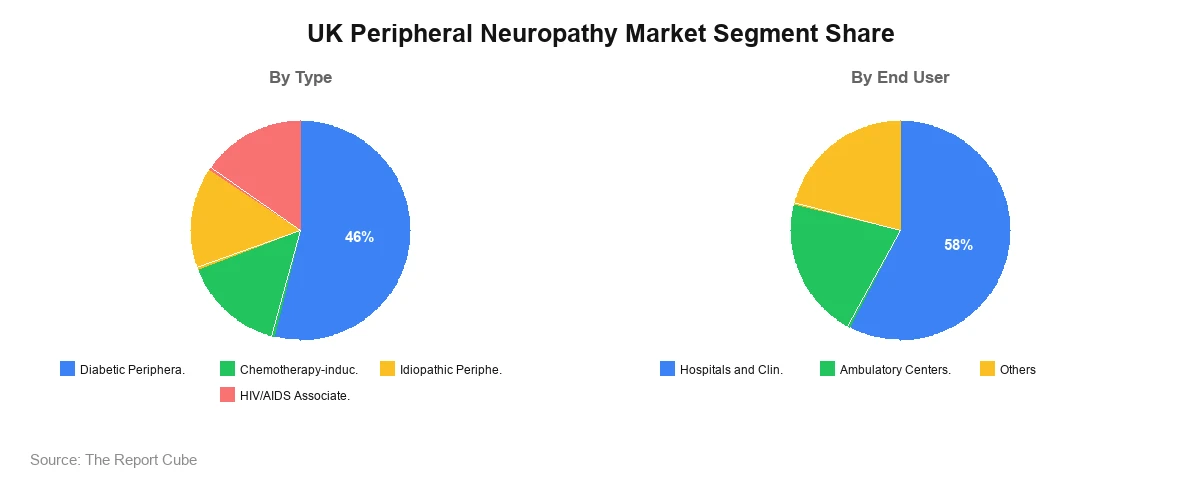
Diabetic peripheral neuropathy (DPN) is the dominant type segment, accounting for an estimated 46% of the UK Peripheral Neuropathy Market revenue in 2026. This dominance reflects the UK's substantial and growing diabetic population, where more than one in four diabetic patients attending NHS hospital clinics demonstrate clinically confirmed neuropathy. The condition's high prevalence among older Type 2 diabetic patients - escalating from approximately 5% in those aged 20 to 29 years to over 44% in the 70 to 79 age cohort - creates a structurally large and age-compounding treatment base. First-line therapies including duloxetine, pregabalin, and amitriptyline are prescribed under NICE guidance CG173, driving consistent NHS prescription revenues. Eli Lilly's duloxetine franchise and Pfizer's pregabalin legacy continue anchoring this segment, supplemented by an expanding generic supply chain managed by Teva and Mylan across UK pharmacy networks.
Chemotherapy-induced peripheral neuropathy (CIPN) is the fastest-growing type segment, driven by the UK's rising cancer incidence and improving oncological survival rates. With over 3 million cancer survivors currently living in the UK - a figure projected to increase substantially through 2034 - the population developing CIPN as a consequence of platinum-based and taxane chemotherapy regimens continues to expand. Idiopathic peripheral neuropathy represents a meaningful share of undiagnosed and under-treated cases, as NHS primary care encounters difficulty attributing neuropathic symptoms to a single causative pathway. HIV/AIDS associated peripheral neuropathy, while the smallest segment, is supported by antiretroviral therapy improvement programmes that extend patient life expectancy, maintaining a defined and monitored treatment population across UK genitourinary medicine clinics.
By End User
- Hospitals and Clinics
- Ambulatory Centers
- Others
Hospitals and clinics dominate the UK Peripheral Neuropathy Market by end user, representing an estimated 58% revenue share in 2026. NHS acute hospital trusts across England, Scotland, Wales, and Northern Ireland concentrate specialist neurology outpatient services, multidisciplinary diabetology teams, and dedicated pain management clinics that provide the primary point of diagnosis, pharmacological initiation, and long-term neuropathy monitoring. Hospitals also anchor the delivery of second-line interventional treatments including transcutaneous electrical nerve stimulation (TENS), peripheral nerve stimulation, and referrals to specialist pain management programmes. The introduction of Integrated Care Systems under NHS England's structural reform model has further consolidated neuropathy service delivery within hospital networks.
Ambulatory centers are emerging as a significant and growing end-user segment as NHS England's Long Term Plan prioritizes care closer to patients' homes and reduces avoidable hospital outpatient attendances. Ambulatory and community pharmacy settings are increasingly involved in prescription monitoring, medication adherence counselling, and titration support for patients on gabapentinoid therapies - particularly following the reclassification of pregabalin and gabapentin as Schedule 3 controlled substances under the UK Misuse of Drugs Regulations. The Others segment, comprising general practice settings, community care teams, and specialist pain clinics, supports a material volume of initial neuropathy assessments and long-term prescription management, particularly for diabetic patients who receive holistic chronic disease management within primary care.
Region Insights of UK Peripheral Neuropathy Market
The UK peripheral neuropathy market demonstrates meaningful regional variation based on NHS Integrated Care System priorities, diabetes prevalence rates, cancer service concentration, and demographic aging patterns across East UK, West UK, North UK, South UK, and Central UK.
|
Region |
Estimated Market Share |
Key Growth Factors |
Consumer Trends |
|---|---|---|---|
|
South UK |
34.2% |
High population density, major NHS teaching hospitals, diabetes concentration |
Rising adoption of duloxetine and emerging non-opioid therapies |
|
Central UK |
22.8% |
Strong NHS Midlands ICS infrastructure, high Type 2 diabetes prevalence |
Increasing specialist neurology referrals and pain clinic utilization |
|
North UK |
19.5% |
NHS Northern ICS expansion, elevated diabetic neuropathy burden in industrial regions |
Growing generic pregabalin and gabapentin prescribing volumes |
|
West UK |
13.1% |
Welsh and West England chronic pain strategies, rural care expansion |
Expanding community pharmacy and ambulatory neuropathy management |
|
East UK |
10.4% |
Growing NHS East ICS network, rising cancer survivorship in East England |
Increasing CIPN treatment demand and outpatient clinic growth |
- East UK: East UK is an emerging market driven by growing NHS Integrated Care System investment in East England, rising cancer survivorship volumes, and expanding outpatient neurology services supporting chemotherapy-induced peripheral neuropathy treatment demand.
- West UK: West UK demonstrates steady growth supported by the Welsh Government's Chronic Pain Policy Implementation Plan and West England NHS ICS strategies, with increasing ambulatory care and community pharmacy involvement in neuropathy prescribing and monitoring.
- North UK: North UK maintains a significant market share owing to elevated Type 2 diabetes prevalence across Northern England and Scotland, with high generic pregabalin and gabapentin prescription volumes through NHS primary care and GP-led chronic disease management pathways.
- South UK: South UK leads the UK peripheral neuropathy market with approximately 34.2% share, reflecting the region's highest population concentration, density of NHS teaching hospitals and specialist pain management centres, and strong diabetology and neurology outpatient infrastructure across London and the South East.
- Central UK: Central UK holds a strong market position driven by the NHS Midlands Integrated Care System network, which serves one of the UK's highest regional concentrations of Type 2 diabetic patients, supporting consistent prescription volumes for first-line neuropathy therapies and rising referrals to specialist pain clinics.
UK Peripheral Neuropathy Market: Recent Development (2025)
- Eli Lilly announced a partnership with BioXcel Therapeutics to co-develop next-generation duloxetine formulations for diabetic peripheral neuropathy.
- Vertex Pharmaceuticals advanced its Phase II trial of VX-993 targeting chemotherapy-induced peripheral neuropathy pain management outcomes.
- Lexicon Pharmaceuticals formed a strategic partnership with a European OEM to develop next-generation neuromodulation devices for chronic neuropathic pain.
- Pfizer progressed its neuroscience pipeline through Trimtech Therapeutics collaboration targeting peripheral neurodegenerative disease mechanisms.
UK Peripheral Neuropathy Market Future Outlook (2034)
The UK Peripheral Neuropathy Market is projected to expand at a sustained 10.90% CAGR, reaching approximately USD 387.95 million by 2034. This trajectory reflects the compounding effects of the UK's aging population, rising Type 2 diabetes prevalence, growing cancer survivorship rates, and the expected introduction of mechanistically novel pharmacological agents within NHS prescribing frameworks. Non-opioid therapies targeting Nav1.8 sodium channels, monoclonal antibodies addressing neuropathic pain pathways, and neuromodulation devices receiving regulatory clearance are expected to diversify the treatment landscape beyond the established gabapentinoid and SNRI categories, creating new high-value revenue streams for both originator and specialty pharmaceutical companies.
Artificial intelligence is poised to reshape UK peripheral neuropathy care delivery across the forecast period, enabling earlier identification of at-risk diabetic patients through predictive analytics integrated within GP electronic health record systems and NHS Integrated Care System data platforms. Digital pain monitoring tools, AI-assisted diagnostic algorithms using nerve conduction study data, and remote patient management applications are expected to shorten the time-to-diagnosis gap - currently estimated at up to 50% underdiagnosis in asymptomatic early-stage neuropathy - substantially expanding the addressable treatment population. Biosimilar and generic competition will maintain accessible pharmacological management within NHS formularies throughout the forecast period while pipeline innovation drives premium-tier segment growth.
UK Peripheral Neuropathy Market Report Coverage
|
Report Attribute |
Details |
|---|---|
|
Market Name |
UK Peripheral Neuropathy Market |
|
Market Size (2026) |
USD 169.56 Million |
|
Market Size (2034) |
USD 387.95 Million |
|
Forecast Period |
2026–2034 |
|
CAGR |
10.90% |
|
Base Year |
2026 |
|
Historical Years |
2021–2025 |
|
Forecast Years |
2026–2034 |
|
Segments Covered |
By Type, By End User, By Treatment |
|
Regions Covered |
England, Scotland, Wales, Northern Ireland |
|
Key Companies |
Pfizer Inc., Johnson & Johnson, Bristol-Myers Squibb, AstraZeneca PLC, Novartis AG, Teva Pharmaceutical Industries Ltd., Eli Lilly and Company, Sanofi S.A., Mylan N.V., Others |
|
Report Format |
PDF, Excel, PPT |
|
Customization |
Available as per client requirements |
Why Choose This Report?
- Comprehensive analysis of UK peripheral neuropathy treatment demand across all four nations.
- Accurate market sizing anchored to 10.90% CAGR with reliable 2034 forecast projections.
- Detailed type segmentation covering diabetic, chemotherapy-induced, idiopathic, and HIV-associated neuropathy.
- Sub-national regional insights reflecting NHS commissioning and integrated care system dynamics.
- Competitive profiling of leading global and UK-active pharmaceutical companies.
- Assessment of non-opioid pipeline innovations including Nav1.8 sodium channel inhibitors.
- Analysis of NICE guideline evolution and its prescribing impact on established therapies.
- Strategic intelligence supporting pharmaceutical investment and market entry planning.
Table of Contents
- Introduction
- Objective of the Study
- Product Definition
- Market Segmentation
- Study Variables
- Research Methodology
- Secondary Data Points
- Companies Interviewed
- Primary Data Points
- Breakdown of Primary Interviews
- Secondary Data Points
- Executive Summary
- Market Dynamics
- Drivers
- Challenges
- Opportunity Assessment
- Recent Trends and Developments
- Policy and Regulatory Landscape
- UK Peripheral Neuropathy Market Overview and Forecast Analysis (2021-2034)
- Market Size, By Value, By Growth Rate (CAGR/USD Millions)
- Demand – Supply Trends
- Market Share, By Type
- Diabetic Peripheral Neuropathy
- Chemotherapy-induced Peripheral Neuropathy
- Idiopathic Peripheral Neuropathy
- HIV/AIDS Associated Peripheral Neuropathy
- Market Share, By End User
- Hospitals and Clinics
- Ambulatory Centers
- Others
- Market Share, By Treatment
- Pharmacological Therapies
- Non-Pharmacological Therapies
- Others
- Market Share, By Region
- South UK
- Central UK
- North UK
- West UK
- East UK
- Market Share, By Competitors
- Competition Characteristics
- Revenue Shares
- Diabetic Peripheral Neuropathy UK Peripheral Neuropathy Market Overview, 2021-2034F
- By Value (USD Million)
- By End User – Market Size & Forecast 2021-2034, USD Million
- Hospitals and Clinics
- Ambulatory Centers
- Others
- Chemotherapy-induced Peripheral Neuropathy UK Peripheral Neuropathy Market Overview, 2021-2034F
- By Value (USD Million)
- By End User – Market Size & Forecast 2021-2034, USD Million
- Hospitals and Clinics
- Ambulatory Centers
- Others
- Idiopathic Peripheral Neuropathy UK Peripheral Neuropathy Market Overview, 2021-2034F
- By Value (USD Million)
- By End User – Market Size & Forecast 2021-2034, USD Million
- Hospitals and Clinics
- Ambulatory Centers
- Others
- HIV/AIDS Associated Peripheral Neuropathy UK Peripheral Neuropathy Market Overview, 2021-2034F
- By Value (USD Million)
- By End User – Market Size & Forecast 2021-2034, USD Million
- Hospitals and Clinics
- Ambulatory Centers
- Others
- Competitive Outlook (Company Profile – Partial List)
- Pfizer Inc
- Company Overview
- Business Segments
- Strategic Alliances/Partnerships
- Recent Developments
- Johnson & Johnson
- Company Overview
- Business Segments
- Strategic Alliances/Partnerships
- Recent Developments
- Bristol-Myers Squibb
- Company Overview
- Business Segments
- Strategic Alliances/Partnerships
- Recent Developments
- AstraZeneca PLC
- Company Overview
- Business Segments
- Strategic Alliances/Partnerships
- Recent Developments
- Novartis AG
- Company Overview
- Business Segments
- Strategic Alliances/Partnerships
- Recent Developments
- Teva Pharmaceutical Industries Ltd
- Company Overview
- Business Segments
- Strategic Alliances/Partnerships
- Recent Developments
- Eli Lilly and Company
- Company Overview
- Business Segments
- Strategic Alliances/Partnerships
- Recent Developments
- Sanofi S.A.
- Company Overview
- Business Segments
- Strategic Alliances/Partnerships
- Recent Developments
- Mylan N.V.
- Company Overview
- Business Segments
- Strategic Alliances/Partnerships
- Recent Developments
- Others
- Pfizer Inc
- Contact Us & Disclaimer
Top Key Players & Market Share Outlook
- Pfizer Inc
- Johnson & Johnson
- Bristol-Myers Squibb
- AstraZeneca PLC
- Novartis AG
- Teva Pharmaceutical Industries Ltd
- Eli Lilly and Company
- Sanofi S.A.
- Mylan N.V.
- Others
Frequently Asked Questions






