



Build Your Custom Market Intelligence Report
Customize Your ReportUS Pet Food Ingredients Market Key Highlights
By Pet:
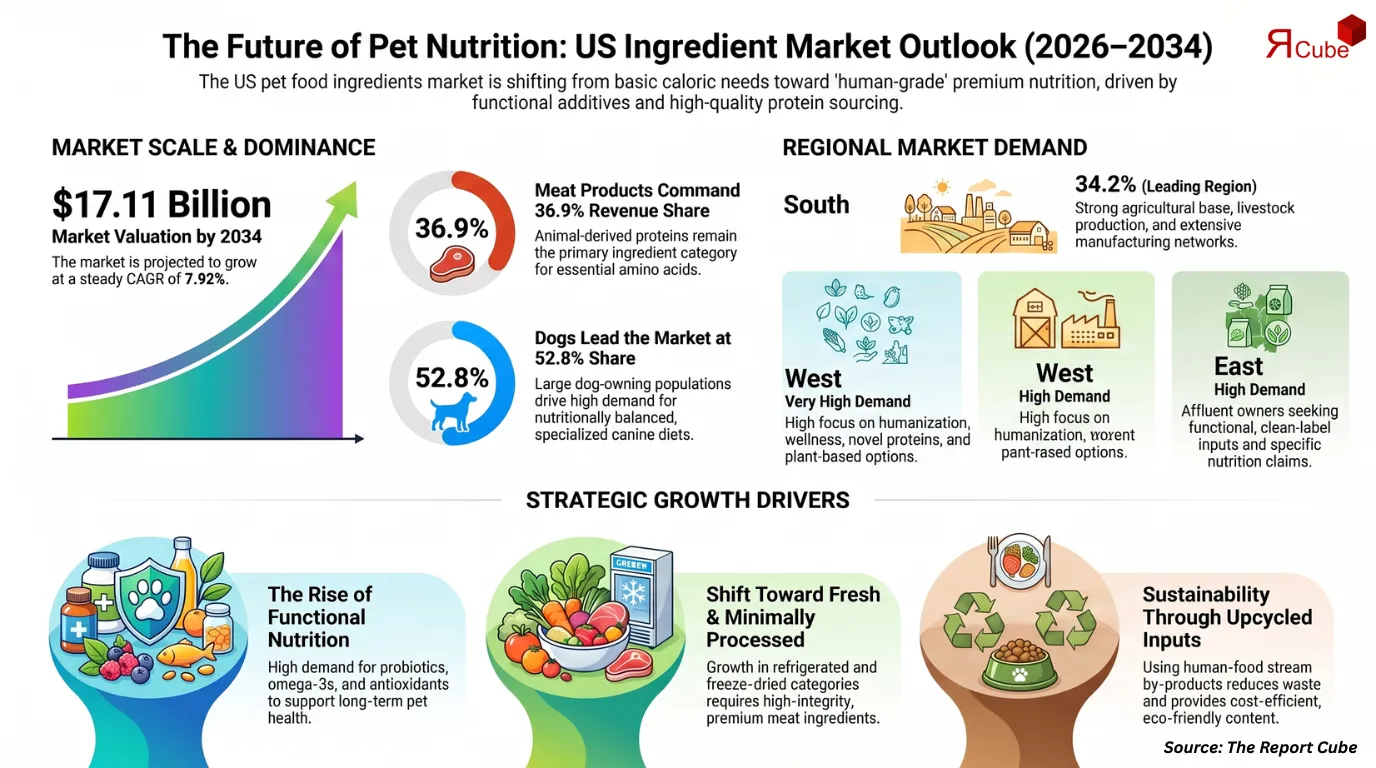
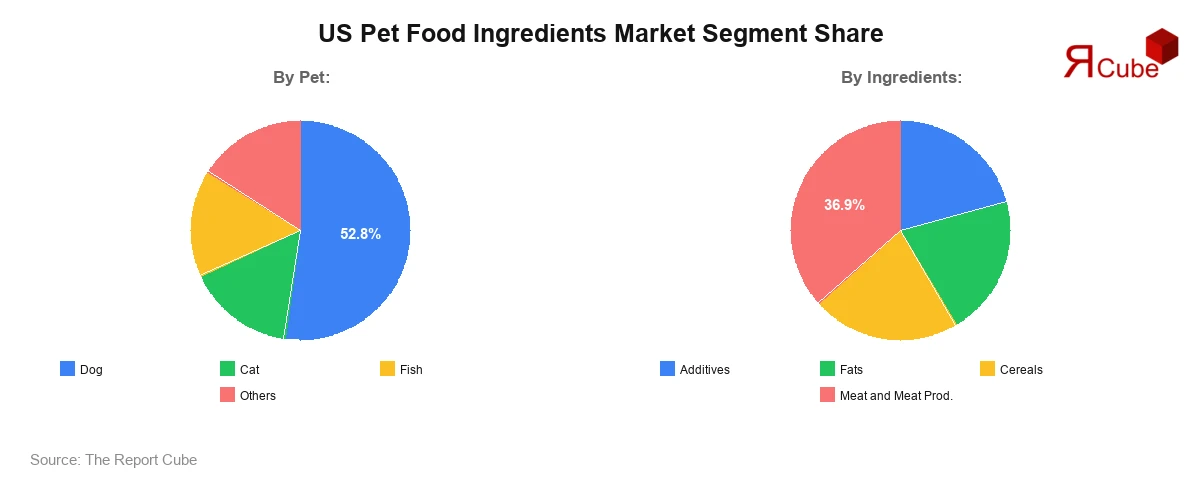
Dog segment leads the market with nearly 52.8% share.
By Ingredients:
Meat and Meat Products dominate the market with approximately 36.9% of total revenue.
Regional Outlook:
The South region dominates the US Pet Food Ingredients Market with around 34.2% market share.
US Pet Food Ingredients Market Insights & Analysis
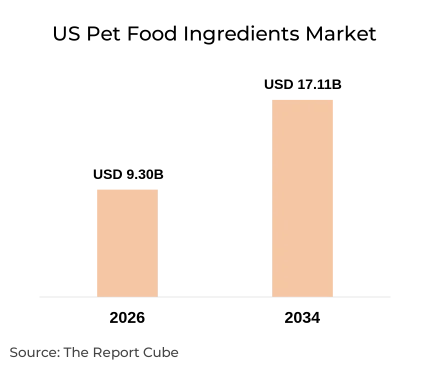
The US Pet Food Ingredients Market is anticipated to register a CAGR of around 7.92% during the forecast period of 2026-2034. The market size is valued at USD 9.30 billion in 2026 and is projected to reach USD 17.11 billion by 2034. Strong demand for premium pet nutrition continues to reshape ingredient sourcing across the country. Pet owners are spending more on products formulated with high-quality proteins, functional lipids, specialty grains, vitamins, minerals, and scientifically developed nutritional additives that support long-term health. This shift has encouraged pet food manufacturers to reformulate existing products while introducing recipes focused on digestive health, immunity, mobility, cognitive function, and healthy aging. Ingredient suppliers are responding through investments in advanced processing technologies, traceability systems, and quality assurance programs that satisfy both regulatory requirements and evolving customer expectations.
Business expansion across the US pet nutrition supply chain is creating additional opportunities for ingredient manufacturers. Production facilities are increasing investments in rendering technologies, customized premix solutions, precision blending, and sustainable sourcing practices to strengthen supply reliability. Premium fresh, freeze-dried, refrigerated, and gently cooked pet food categories are generating greater demand for minimally processed meat ingredients, specialty fats, botanical extracts, probiotics, and natural antioxidants. At the same time, veterinary nutrition continues to influence product development as preventive healthcare becomes a higher priority among pet owners. Major ingredient companies are strengthening strategic partnerships with pet food manufacturers to develop application-specific nutritional solutions that improve product performance, ingredient functionality, and formulation flexibility. These developments are expected to support consistent market growth throughout the forecast period.
US Pet Food Ingredients Market Impact Analysis
| Factor | Type | Specific Impact on Market | Magnitude | Business Implication |
|---|---|---|---|---|
| Rising Pet Ownership | Market | Expanding dog and cat population lifts ingredient demand | High | Supports long term growth in core meat and grain inputs |
| Premium Nutrition Preference | Consumer | Owners seek high quality proteins and functional additives | High | Boosts use of omega rich, immune support and digestive ingredients |
| Use of Upcycled Inputs | Environmental | Upcycled by products reduce waste and supply cost efficient content | Medium | Encourages sourcing from human food streams for sustainable blends |
| Support to US Agriculture | Market | Ingredient purchases generate strong demand for farm outputs | High | Strengthens ties with local farmers and stabilizes raw material access |
| Regulatory Compliance Needs | Regulatory | Strict safety and labeling rules shape ingredient selection | Medium | Requires robust quality systems and traceable multi source supply |
| Ingredient Cost Inflation | Market | Higher protein and grain prices pressure manufacturer margins | Medium | Drives reformulation and pricing actions to protect profitability |
| Competitive Innovation Intensity | Competitive | New fresh and functional formats accelerate ingredient shifts | Medium | Pushes suppliers to develop novel, label friendly ingredient lines |
US Pet Food Ingredients Market Dynamics
Key Driver: Premium Pet Nutrition Reshaping Ingredient Demand Across the United States
Pet ownership patterns across the United States have evolved considerably during the past decade, with companion animals increasingly receiving nutrition comparable to human food standards. This shift has elevated demand for ingredients that deliver measurable health benefits while maintaining high standards for safety, digestibility, and ingredient transparency. Premium animal proteins, functional fats, probiotics, vitamins, minerals, amino acids, and naturally derived antioxidants have become essential components of modern pet food formulations. Veterinary recommendations and greater awareness of preventive nutrition are also encouraging households to invest in diets designed to support digestive function, immune health, joint mobility, skin condition, and healthy aging throughout a pet's life cycle.
Pet food manufacturers are adapting their product portfolios by sourcing higher-value ingredients with verified quality and consistent nutritional performance. Suppliers are expanding investments in research, ingredient testing, and manufacturing technologies that improve nutrient stability and formulation efficiency. Clean-label product positioning, responsible sourcing practices, and traceable supply chains have become important competitive advantages for ingredient producers serving premium pet food brands. As spending on companion animal health continues to rise, demand for specialized nutritional ingredients is expected to remain a central force supporting long-term growth across the US Pet Food Ingredients Market.
Industry Trend: Functional Ingredients and Fresh Nutrition Continue to Gain Commercial Momentum
Product innovation across the US pet food sector increasingly centers on nutritional functionality rather than basic dietary requirements. Manufacturers are introducing formulations enriched with probiotics, prebiotics, omega-3 fatty acids, glucosamine, collagen peptides, amino acids, herbal extracts, and customized vitamin blends that address specific health conditions. Products formulated for digestive wellness, immune support, cognitive performance, stress management, weight control, and healthy aging are becoming a standard offering across premium pet food portfolios. This transition has encouraged ingredient suppliers to invest in clinical research, formulation science, and application testing that validates ingredient performance in companion animal nutrition.
Fresh and minimally processed pet food continues to capture a larger share of premium product launches across the United States. Refrigerated meals, freeze-dried recipes, gently cooked diets, and fresh protein formulations require ingredients that maintain nutritional integrity while meeting strict food safety standards. This has increased demand for premium meat ingredients, functional lipids, natural preservatives, antioxidants, and customized nutritional premixes designed for fresh processing applications. Ongoing investment in advanced ingredient technologies and premium product development is strengthening the competitive position of suppliers serving the evolving US pet nutrition industry.
Book your FREE 30-minute expert consultation today
Contact UsMajor Challenge: Cost Volatility and Regulatory Compliance Continue to Pressure Ingredient Suppliers
Maintaining a stable supply of high-quality raw materials has become increasingly challenging for companies operating in the US Pet Food Ingredients Market. Prices of meat proteins, rendered ingredients, animal fats, grains, vitamins, and specialty additives fluctuate with livestock production, crop yields, transportation costs, and broader commodity market conditions. Periodic outbreaks of animal diseases, adverse weather conditions, and disruptions in logistics can quickly affect ingredient availability and procurement costs. Since premium pet food formulations require consistent nutritional specifications, manufacturers often have limited flexibility to substitute raw materials without affecting product quality or formulation performance.
Compliance with stringent food safety and manufacturing standards adds another layer of complexity across the industry. Ingredient producers must continuously invest in laboratory testing, supplier qualification, traceability systems, and modern processing equipment to satisfy regulatory expectations and customer quality requirements. Large manufacturers can often absorb these investments through economies of scale, whereas smaller suppliers face greater financial pressure. Companies are therefore strengthening long-term sourcing partnerships, improving inventory management, and diversifying procurement strategies to reduce operational risks while maintaining reliable product quality.
Opportunity: Functional Nutrition and Sustainable Ingredient Development Open New Revenue Streams
Innovation in companion animal nutrition is creating attractive growth opportunities for ingredient manufacturers across the United States. Pet food brands are expanding portfolios with products formulated for digestive balance, immune resilience, healthy aging, cognitive support, skin health, and joint mobility. This product diversification has accelerated demand for probiotics, postbiotics, amino acids, collagen peptides, omega fatty acids, botanical extracts, yeast-derived ingredients, and advanced vitamin and mineral premixes. Suppliers with expertise in nutritional science and formulation support are increasingly collaborating with pet food manufacturers to develop differentiated products for premium and veterinary nutrition applications.
Sustainability has also become an important factor influencing purchasing decisions throughout the pet food value chain. Ingredient companies are investing in responsible animal protein sourcing, upcycled food materials, resource-efficient manufacturing processes, and lower-emission production technologies. Advances in ingredient processing have improved digestibility, nutrient retention, and shelf stability while reducing waste during production. These developments allow manufacturers to align product innovation with environmental objectives without compromising nutritional quality, creating long-term commercial opportunities across the US Pet Food Ingredients Market.
US Pet Food Ingredients Market Segment-wise Analysis
By Pet:
- Dog
- Cat
- Fish
- Others
The Dog segment accounted for nearly 52.8% of the US Pet Food Ingredients Market in 2026, making it the largest pet category by revenue. The United States has one of the world's largest dog-owning populations, resulting in consistently high demand for nutritionally balanced pet food. Dog owners are increasingly choosing products formulated with premium animal proteins, functional fats, vitamins, minerals, probiotics, and other specialty ingredients that support digestive health, joint mobility, immune function, and healthy aging. This trend has encouraged ingredient manufacturers to expand production of high-quality nutritional components specifically designed for canine diets.
Product innovation continues to strengthen the segment as manufacturers introduce breed-specific, life-stage, and condition-specific formulations. Premium dry food, fresh meals, freeze-dried products, and functional treats require advanced ingredient blends that deliver both nutritional performance and product stability. Veterinary recommendations promoting preventive nutrition have further influenced purchasing decisions, encouraging greater adoption of scientifically formulated diets. As spending on companion animal healthcare continues to increase, demand for specialized ingredients used in dog food is expected to remain strong throughout the forecast period.
By Ingredients:
- Additives
- Antimicrobials
- Flavors
- Vitamins and Minerals
- Others (Antioxidants, Preservatives, etc.)
- Fats
- Plant Fat
- Animal Fat
- Cereals
- Oats
- Wheat
- Barley
- Maize
- Meat and Meat Products
- Animal Part and Bone Meal
- Animal Meat
Meat and Meat Products represented approximately 36.9% of total market revenue, maintaining their position as the largest ingredient category within the US Pet Food Ingredients Market. Animal-derived proteins remain the primary source of essential amino acids required for muscle development, energy metabolism, and overall health in companion animals. Premium pet food manufacturers continue to prioritize fresh meat, poultry, fish, and high-quality rendered ingredients to improve digestibility, palatability, and nutritional value. Growing consumer preference for protein-rich diets has reinforced demand for carefully sourced meat ingredients across both dry and fresh pet food formulations.
Advancements in rendering technologies, ingredient traceability, and quality assurance programs have improved the consistency and safety of meat-based ingredients supplied to pet food manufacturers. Animal meat is widely used in premium recipes, while animal part and bone meal provide valuable sources of protein, calcium, and phosphorus in balanced formulations. Rising demand for fresh, refrigerated, and minimally processed pet food products is further increasing the need for premium meat ingredients that meet strict quality and food safety standards. These factors are expected to support continued growth of the segment during the forecast period.
Regional Projection of US Pet Food Ingredients Industry
- West
- East
- South
- Midwest
- Others
The South region held around 34.2% of the US Pet Food Ingredients Market in 2026, making it the leading regional market. The region benefits from a strong agricultural base, abundant livestock production, and an extensive network of pet food manufacturing and ingredient processing facilities. States such as Texas, Georgia, Missouri, Arkansas, and Florida play an important role in supplying meat products, animal fats, cereals, and specialty ingredients used in commercial pet food production. Strong transportation infrastructure and efficient distribution networks further support the region's competitive position.
Rising pet ownership and higher household spending on premium pet nutrition continue to strengthen demand across the Southern United States. Pet food manufacturers operating in the region are investing in production capacity, sustainable ingredient sourcing, and advanced processing technologies to meet evolving quality standards. Growing demand for functional nutrition, fresh pet food, and clean-label formulations has encouraged ingredient suppliers to expand their product portfolios with premium proteins, nutritional additives, and specialty premixes. These ongoing investments are expected to help the South maintain its leadership throughout the forecast period.
Need insights for a specific region within this market?
Request Regional DataRegional Analysis of US Pet Food Ingredients Market
The US pet food ingredients market shows strong growth with regional differences in pet ownership, income, and product premiumization.
| Region | Demand Level | Key Areas | Ingredient Dominance | Core Demand Logic | Growth Nature |
|---|---|---|---|---|---|
| West | Very High | California, Washington, Oregon | Novel proteins & plant-based | Humanization and wellness focus | Premiumization-led expansion |
| East | High | New York, New Jersey, Massachusetts | Functional, clean-label inputs | Affluent owners seek nutrition claims | Innovation-driven premium growth |
| South | High | Texas, Florida, Georgia | Animal proteins & dry kibble | Large dog ownership, value focus | Volume growth with trade-up |
| Midwest | Medium | Illinois, Ohio, Minnesota | Grains, meat meals, pulses | Manufacturing base and stable demand | Steady, cost-efficient growth |
| Others | Medium | Mountain & rural states | Commodity proteins & grains | Price-sensitive, mainstream diets | Gradual expansion with rising pets |
Government Initiatives & Policies
- FDA Human Foods Program Modernization (2025): The U.S. Food and Drug Administration continued strengthening oversight of animal food safety through enhanced inspection, ingredient evaluation, and preventive control measures under the modernized Human Foods Program. These initiatives improve ingredient quality, traceability, and manufacturing compliance across the pet food supply chain.
- AAFCO Ingredient Definition Updates (2025): The Association of American Feed Control Officials continued updating ingredient definitions and scientific review procedures during 2025, improving consistency, safety, and regulatory clarity for ingredients used in commercial pet food manufactured and marketed across the United States.
US Pet Food Ingredients Industry Recent Developments
- 2025: General Mills expanded its premium pet nutrition portfolio by launching a fresh version of its Blue Buffalo dog food brand in the United States. The new product targets the rapidly growing fresh pet food category using high-quality, minimally processed ingredients and nutritionally balanced formulations. The launch is expected to increase demand for premium proteins, functional fats, vitamin premixes, and specialty ingredients while encouraging suppliers to develop solutions specifically designed for fresh pet food manufacturing.
- 2025: Central Garden & Pet introduced the Calm Paws Lickable Cat Supplement under its Four Paws brand, strengthening its presence in the companion animal wellness segment. The formulation incorporates functional ingredients designed to promote relaxation and behavioral wellness in cats. The product launch reinforces growing demand for probiotics, amino acids, botanical extracts, functional additives, and scientifically formulated nutritional ingredients that support preventive pet healthcare and overall feline wellness.
Why Choose This Report?
- Provides a comprehensive overview of the overall market analysis, encompassing key trends, consumer behavior analysis, and risk assessment to support strategic decision-making.
- Provides accurate, up-to-date insights into market size, segmentation, and emerging opportunities, helping organizations minimize business risk while capitalizing on future growth potential.
- Gives a deep understanding of target audience preferences, purchasing behavior, premiumization trends, and distribution strategies for stronger product development and marketing effectiveness.
- Delivers competitive analysis and benchmarking, highlighting the strategic positioning, product innovation, expansion initiatives, and business strengths of leading market participants.
- Consolidates comprehensive market intelligence into a single report, reducing research time and enabling faster business planning and investment decisions.
- Facilitates customized market segmentation and risk mitigation strategies tailored to changing consumer preferences, regulatory developments, and evolving industry requirements.
- Helps identify both current market challenges and untapped growth opportunities across ingredients, pet categories, distribution channels, and regional markets.
- Provides valuable business intelligence supported by industry developments, consumer purchasing trends, regulatory updates, and market-driven insights.
Table of Contents
- Introduction
- Objective of the Study
- Product and Category Definition
- Market Segmentation
- Study Variables
- Research Methodology
- Secondary Data Points
- Breakdown of Secondary Sources
- Primary Data Points
- Breakdown of Primary Interviews
- Secondary Data Points
- Executive Summary
- Market Dynamics
- Emerging Opportunities
- Adoption Trends
- Demand Drivers
- Disruption Analysis (Challenges)
- Industry Analysis and Strategic Insights
- Supply and Value Chain Analysis
- Pricing Analysis
- Go-To-Market Strategy
- BCG Matrix
- Recent Trends and Developments
- Import and Export Analysis
- Regulatory and Policy Landscape
- Region-wise Policies
- Government Initiatives
- US Pet Food Ingredients Market Overview and Forecast Analysis (2021-2034)
- Market Size, By Value, By Growth Rate (CAGR/USD Billion)
- Market Share, By Pet
- Dog
- Cat
- Fish
- Others
- Market Share, By Form
- Dry
- Wet
- Market Share, By Ingredients
- Additives
- Antimicrobials
- Flavors
- Vitamins and Minerals
- Others (Antioxidants, Preservatives, etc.)
- Fats
- Plant Fat
- Animal Fat
- Cereals
- Oats
- Wheat
- Barley
- Maize
- Meat and Meat Products
- Animal Part and Bone Meal
- Animal Meat
- Additives
- Market Share, By Distribution Channel
- Online Procurement
- Distributors and Wholesalers
- Direct Sales
- Market Share, By Region
- West
- East
- South
- Midwest
- Others
- Market Share, By Company
- Revenue Shares and Analysis
- Competitive Landscape
- West US Pet Food Ingredients Market Overview and Forecast Analysis (2021-2034)
- Market Size, By Value, By Growth Rate (CAGR/USD Billion/Million)
- Market Share, By Pet
- Market Share, By Form
- Market Share, By Ingredients
- Market Share, By Distribution Channel
- East US Pet Food Ingredients Market Overview and Forecast Analysis (2021-2034)
- Market Size, By Value, By Growth Rate (CAGR/USD Billion/Million)
- Market Share, By Pet
- Market Share, By Form
- Market Share, By Ingredients
- Market Share, By Distribution Channel
- South US Pet Food Ingredients Market Overview and Forecast Analysis (2021-2034)
- Market Size, By Value, By Growth Rate (CAGR/USD Billion/Million)
- Market Share, By Pet
- Market Share, By Form
- Market Share, By Ingredients
- Market Share, By Distribution Channel
- Midwest US Pet Food Ingredients Market Overview and Forecast Analysis (2021-2034)
- Market Size, By Value, By Growth Rate (CAGR/USD Billion/Million)
- Market Share, By Pet
- Market Share, By Form
- Market Share, By Ingredients
- Market Share, By Distribution Channel
- Competitive Analysis, 2026
- Market Share of Key Players
- Competitive Mapping for Each Segment and Companies Operating Regionally
- West US Pet Food Ingredients Companies Share and Competitive Analysis, 2026
- East US Pet Food Ingredients Companies Share and Competitive Analysis, 2026
- South US Pet Food Ingredients Companies Share and Competitive Analysis, 2026
- Midwest US Pet Food Ingredients Companies Share and Competitive Analysis, 2026
- Company Profile (Partial List)
- Ingredion Incorporated
- Company Overview
- Product Portfolio
- Strategic Alliances/Partnerships
- Recent Developments
- DSM-Firmenich AG
- Company Overview
- Product Portfolio
- Strategic Alliances/Partnerships
- Recent Developments
- Kemin Industries, Inc.
- Company Overview
- Product Portfolio
- Strategic Alliances/Partnerships
- Recent Developments
- Darling Ingredients Inc.
- Company Overview
- Product Portfolio
- Strategic Alliances/Partnerships
- Recent Developments
- AFB International
- Company Overview
- Product Portfolio
- Strategic Alliances/Partnerships
- Recent Developments
- Balchem Corporation
- Company Overview
- Product Portfolio
- Strategic Alliances/Partnerships
- Recent Developments
- Archer Daniels Midland Company
- Company Overview
- Product Portfolio
- Strategic Alliances/Partnerships
- Recent Developments
- Symrise AG
- Company Overview
- Product Portfolio
- Strategic Alliances/Partnerships
- Recent Developments
- Bunge Global SA
- Company Overview
- Product Portfolio
- Strategic Alliances/Partnerships
- Recent Developments
- Cargill, Incorporated
- Company Overview
- Product Portfolio
- Strategic Alliances/Partnerships
- Recent Developments
- Others (Partial List)
- Ingredion Incorporated
- Contact Us and Disclaimer
Top Key Players & Market Share Outlook
- Ingredion Incorporated
- DSM-Firmenich AG
- Kemin Industries, Inc.
- Darling Ingredients Inc.
- AFB International
- Balchem Corporation
- Archer Daniels Midland Company
- Symrise AG
- Bunge Global SA
- Cargill, Incorporated
- Others
Frequently Asked Questions






