



Build Your Custom Market Intelligence Report
Customize Your ReportGlobal Air Conditioners Market Statistics and Insights
Market Size Statistics
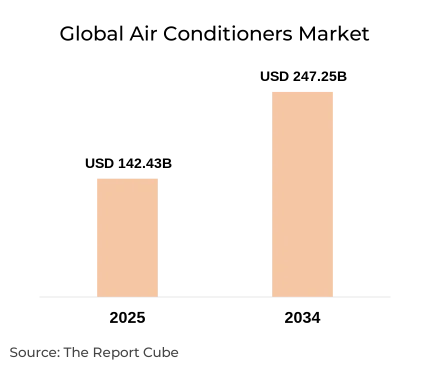
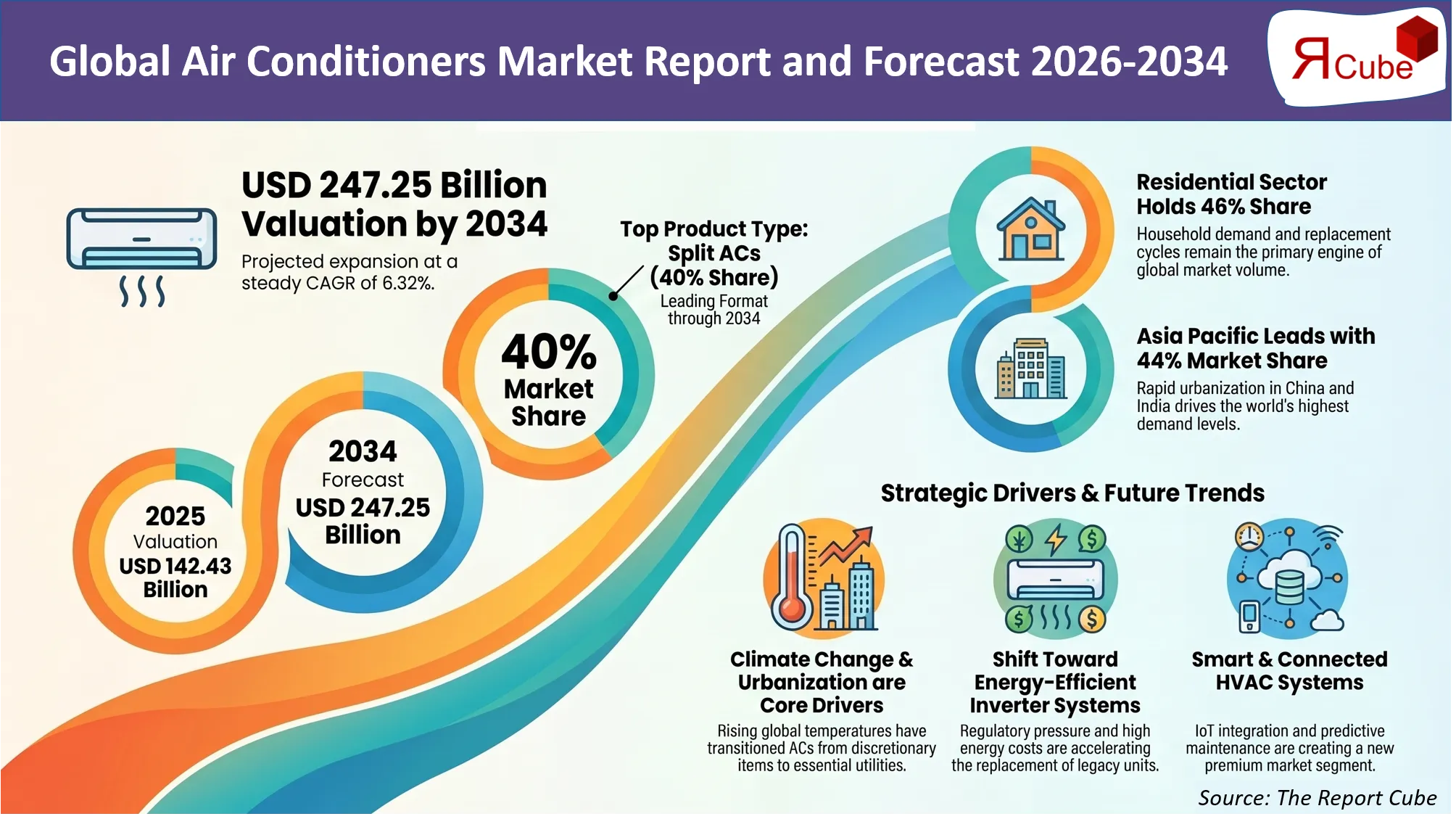
- Global air conditioners market reached USD 142.43 billion during 2025 valuation
- Market projected to achieve USD 247.25 billion by 2034 globally
- Market expected to expand at 6.32% CAGR
By End-User Industry
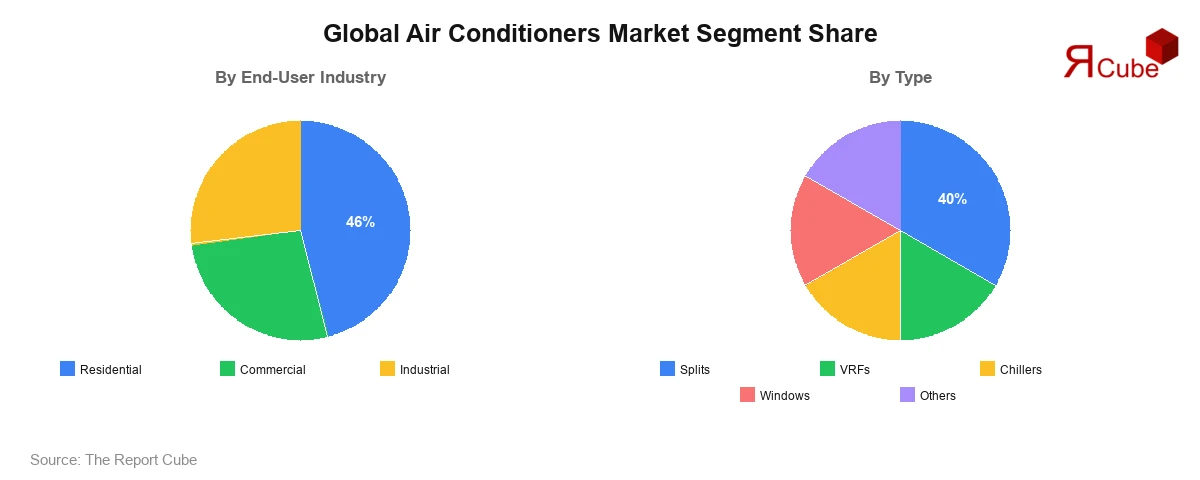
- Residential segment dominates holding approximately 46% market share
Competition
- More than 15 companies are actively engaged in producing Global Air Conditioners Market
- Top 5 companies acquired around 55% of the market share
- Daikin Industries, Ltd., Gree Electric Appliances Inc., Midea Group Co., Ltd., Carrier Global Corporation, Samsung Electronics Co., Ltd., and others
By Type
- Split air conditioners lead accounting for nearly 40% market share
Global Air Conditioners Market Insights & Analysis
The Global Air Conditioners Market is anticipated to register a 6.32% during 2026–2034. The market size was valued at USD 142.43 billion and is projected to reach USD 247.25 billion by 2034. The Global Air Conditioners Market is expanding steadily due to rising global temperatures, rapid urbanization, and growing demand for indoor comfort across residential, commercial, and industrial sectors. Air conditioning has transitioned from a discretionary appliance to an essential utility in many regions, particularly in emerging economies experiencing population growth and urban expansion.
Growth in residential construction, commercial real estate, data centers, healthcare facilities, and hospitality infrastructure continues to drive demand. Increasing penetration of air conditioners in developing countries, coupled with replacement demand in mature markets, supports consistent volume growth.
Technological advancements such as inverter technology, smart controls, and energy-efficient systems are reshaping purchasing decisions. Government regulations promoting energy efficiency and environmentally friendly refrigerants further strengthen long-term growth prospects of the Global Air Conditioners Market.
Global Air Conditioners Market Impact Analysis
| Factor | Type | Specific Impact on Market | Magnitude | Business Implication |
|---|---|---|---|---|
| Urbanisation and rising global incomes | Market Driver | Accelerates first time AC adoption in emerging markets | High | Prioritise Asia Pacific, LATAM and MEA expansion |
| Rising temperatures and climate change | Environmental Driver | Increases cooling needs in residential and commercial stock | High | Expand capacity and heatwave targeted product campaigns |
| Shift toward energy efficient inverter systems | Technological Driver | Drives replacement of legacy units with efficient models | High | Scale inverter portfolio and promote lifecycle energy savings |
| Stringent energy efficiency and eco regulations | Regulatory Driver | Imposes higher MEPS and labelling in major economies | High | Align designs early and use compliance as value lever |
| Global phase down of high GWP refrigerants | Environmental Regulation | Pushes shift to low GWP and natural refrigerant systems | Medium | Invest in new refrigerant platforms and service training |
| Dominance of room and split AC formats | Market Structure | Room and split units command bulk of global shipments | High | Optimise high volume platforms and modular global designs |
| Growth of commercial real estate and infra | Demand Driver | Boosts central, VRF and large capacity system demand | Medium | Strengthen project sales and turnkey HVAC capabilities |
| Adoption of smart and connected HVAC systems | Technological Trend | Creates premium segment with software and data services | Medium | Develop IoT ecosystems and recurring digital revenue models |
| Intense competition among global OEMs | Competitive Structure | Drives price pressure and rapid feature innovation cycles | High | Differentiate via brand, service, and channel partnerships |
| Economic cycles and consumer affordability | Market Constraint | Macroeconomic shocks delay purchases in price sensitive segments | Medium | Offer financing, tiered product lines and flexible promotions |
Global Air Conditioners Market Dynamics
Key Market Driver: Rising temperatures and urbanization worldwide
The Global Air Conditioners Market is strongly driven by rising global temperatures and accelerating urbanization. Increasing frequency of heatwaves, climate variability, and growing awareness of thermal comfort have made air conditioning essential across households and workplaces. Rapid expansion of urban housing, commercial buildings, and industrial facilities further boosts demand. Emerging economies in Asia Pacific, the Middle East, and Africa are witnessing significant increases in air conditioner adoption due to improving living standards and infrastructure development.
Major Industry Challenge: High energy consumption and environmental concerns
High energy consumption associated with air conditioning systems poses a major challenge for the Global Air Conditioners Market. Air conditioners contribute significantly to peak electricity demand and greenhouse gas emissions. Regulatory pressure to reduce carbon footprints and phase out high global warming potential refrigerants increases compliance requirements for manufacturers. Additionally, high upfront costs of energy-efficient systems can limit adoption in price-sensitive markets, slowing replacement cycles and impacting overall market growth.
Emerging Trend Shaping Outlook: Shift toward energy-efficient and smart cooling solutions
A key emerging trend in the Global Air Conditioners Market is the growing adoption of energy-efficient and smart air conditioning systems. Inverter-based technology, VRF systems, and IoT-enabled air conditioners offering remote control and predictive maintenance are gaining popularity. Manufacturers are increasingly focusing on eco-friendly refrigerants and high-efficiency ratings to meet regulatory standards. Integration with smart home and building management systems is shaping future product development and market competitiveness.
Need Specific Data, Let’s Customize the Report for You
Contact UsGlobal Air Conditioners Market Segment-wise Analysis
Segment-wise evaluation highlights how end-user requirements and cooling capacity needs influence product selection, pricing strategies, and technology adoption across global markets.
By End-User Industry
- Residential
- Commercial
- Retail
- Corporate Buildings
- Education
- Healthcare
- Others
- Industrial
The residential segment dominates the Global Air Conditioners Market with approximately 46% market share, driven by rising household penetration and replacement demand. Commercial applications account for nearly 34%, supported by offices, retail spaces, hotels, and healthcare facilities. The industrial segment contributes around 20%, driven by manufacturing plants, warehouses, and process cooling requirements.
By Type
- Splits
- VRFs
- Chillers
- Windows
- Others
- Ducted AC
- Ductless AC
- Window AC
- Portable AC
Split air conditioners lead with approximately 40% market share due to affordability, ease of installation, and suitability for residential and small commercial applications. VRF systems account for nearly 22%, driven by large commercial buildings and high-efficiency requirements. Chillers contribute around 18%, widely used in industrial and large-scale commercial facilities. Other air conditioning types collectively account for the remaining share.
Regional Projection of Global Air Conditioners Market
Regional performance reflects differences in climate conditions, urbanization rates, income levels, and regulatory frameworks across global markets.
- Asia Pacific
- North America
- Europe
- Middle East & Africa
- Latin America
Asia Pacific leads the Global Air Conditioners Market with approximately 44% market share, driven by high population density, rapid urbanization, and strong demand from China and India. North America accounts for nearly 21%, supported by replacement demand and commercial infrastructure. Europe holds around 18%, driven by energy-efficient system adoption. Middle East & Africa and Latin America collectively contribute the remaining share, supported by climate conditions and infrastructure growth.
Global Air Conditioners Market Regional Analysis
The global air conditioners market shows strong regional contrasts.
| Region | Demand Level | Key Areas | System Dominance | Core Demand Logic | Growth Nature |
|---|---|---|---|---|---|
| Asia Pacific | Very High | China, India, Japan, Southeast Asia | Split and multi split AC | Urban heat, rising incomes, new builds | Fast, led by first time buyers |
| North America | High | USA Sunbelt, Canada urban corridors | Central and ducted systems | Large homes, mature install base | Replacement and efficiency driven |
| Europe | Medium | Southern Europe, major EU cities | Split, VRF, reversible systems | Heatwaves and office comfort | Steady, climate change supported |
| Middle East & Africa | Very High | GCC cities, North and West Africa | Central, ducted and split AC | Hot climate and rapid urban growth | High, construction and infra led |
| Latin America | Medium High | Brazil, Mexico, Andean and coastal | Split and window AC units | Warm zones and growing middle class | Upward, but price sensitive |
Global Air Conditioners Market: Recent Development (2025)
- Daikin Industries, Ltd. expanded inverter and energy-efficient air conditioner portfolios
- Gree Electric Appliances Inc. increased global manufacturing capacity for residential AC units
- Midea Group Co., Ltd. launched smart air conditioners integrated with IoT platforms
- Samsung Electronics Co., Ltd. strengthened premium and energy-efficient AC offerings
Government Initiatives/Programs
- Governments promoted energy efficiency standards and labeling programs for air conditioners
- Regulatory bodies encouraged adoption of low global warming potential refrigerants
Global Air Conditioners Market Future Outlook (2034)
The Global Air Conditioners Market is expected to reach USD 247.25 billion by 2034, expanding at a CAGR of 6.32%. Growth will be driven by increasing demand for indoor comfort, urban expansion, and climate-related cooling needs. Energy-efficient technologies, smart systems, and environmentally friendly refrigerants will dominate future product innovation. Expansion of residential housing, commercial infrastructure, and industrial facilities will remain key demand drivers. Long-term market growth will be reinforced by regulatory support, technological advancement, and rising global living standards.
Why Choose This Report?
- Provides comprehensive insights into Global Air Conditioners Market dynamics
- Offers accurate market size, segmentation, and growth forecasts
- Supports strategic planning with competitive benchmarking
- Enhances understanding of cooling technology trends
- Consolidates market intelligence for efficient research
- Identifies emerging opportunities and industry challenges
- Supports investment and expansion strategies
- Based on real market behavior and global analysis
Table of Contents
- Introduction
- Objective of the study
- Product Definition
- Market Segmentation
- Study Variables
- Research Methodology
- Secondary Data Points
- Companies Interviewed
- Primary Data Points
- BreakDown of Primary Interviews
- Secondary Data Points
- Executive Summary
- Market Dynamics
- Drivers
- Challenges
- Opportunity Assessment
- Recent Trends and Developments
- Policy and Regulatory Landscape
- Global Air Conditioners Market Overview (2021-2034)
- Market Size, By Value (in USD Billions)
- Market Share, By Product Type
- Unitary Air Conditioners
- Split Air Conditioners
- Packaged Terminal ACs (PTACs)
- Rooftop Packaged Units (RTUs)
- Variable Refrigerant Flow (VRF) Systems
- Chillers
- Air-Cooled
- Water-Cooled
- Fan Coil Units (FCUs)
- Others
- Window Air Conditioners
- Portable Air Conditioners
- Unitary Air Conditioners
- Market Share, By End-User Industry
- Residential
- Commercial
- Retail
- Corporate Buildings
- Education
- Healthcare
- Others
- Industrial
- Market Share, By Type
- Splits
- VRFs
- Chillers
- Windows
- Others
- Ducted AC
- Ductless AC
- Window AC
- Portable AC
- Market Share, By Capacity
- Up to 1 Ton
- 1 Ton to 3 Ton
- 3 Ton to 5 Ton
- 5 Ton to 10 Ton
- 10 Ton to 15 Ton
- 15 Ton to 20 Ton
- 20 Ton to 25 Ton
- 25 Ton to 30 Ton
- 30 Ton and Above
- Market Share, By Mode of Operation
- Conventional
- Smart
- Market Share, By Distribution Channel
- Online
- Brand Websites
- E-commerce Websites
- Offline
- Multi-Brand Stores
- Exclusive Stores
- Distributors
- Others
- Online
- Market Share, By Region
- Asia Pacific
- North America
- Europe
- Middle East & Africa
- Latin America
- Market Share, By Company
- Revenue Shares
- Competition Characteristics
- North America Air Conditioners Market Overview (2021-2034)
- Market Size, By Value (in USD Billions)
- Market Share, By Product Type
- Market Share, By End-User Industry
- Market Share, By Type
- Market Share, By Capacity
- Market Share, By Mode of Operation
- By Country
- The US
- Canada
- Mexico
- The US Air Conditioners Market Overview (2021-2034)
- Market Share, By Product Type
- Market Share, By End-User Industry
- Market Share, By Type
- Market Share, By Capacity
- Market Share, By Mode of Operation
- Canada Air Conditioners Market Overview (2021-2034)
- Market Share, By Product Type
- Market Share, By End-User Industry
- Market Share, By Type
- Market Share, By Capacity
- Market Share, By Mode of Operation
- Mexico Air Conditioners Market Overview (2021-2034)
- Market Share, By Product Type
- Market Share, By End-User Industry
- Market Share, By Type
- Market Share, By Capacity
- Market Share, By Mode of Operation
- South America Air Conditioners Market Overview (2021-2034)
- Market Size, By Value (in USD Billions)
- Market Share, By Product Type
- Market Share, By End-User Industry
- Market Share, By Type
- Market Share, By Capacity
- Market Share, By Mode of Operation
- By Country
- Brazil
- Argentina
- Rest of South America
- Brazil Air Conditioners Market Overview (2021-2034)
- Market Share, By Product Type
- Market Share, By End-User Industry
- Market Share, By Type
- Market Share, By Capacity
- Market Share, By Mode of Operation
- Argentina Air Conditioners Market Overview (2021-2034)
- Market Share, By Product Type
- Market Share, By End-User Industry
- Market Share, By Type
- Market Share, By Capacity
- Market Share, By Mode of Operation
- Europe Air Conditioners Market Overview (2021-2034)
- Market Size, By Value (in USD Billions)
- By Product Type
- By End-User Industry
- By Type
- By Capacity
- By Mode of Operation
- By Country
- Germany
- The UK
- France
- Spain
- Italy
- Rest of Europe
- Germany Air Conditioners Market Overview (2021-2034)
- Market Share, By Product Type
- Market Share, By End-User Industry
- Market Share, By Type
- Market Share, By Capacity
- Market Share, By Mode of Operation
- France Air Conditioners Market Overview (2021-2034)
- Market Share, By Product Type
- Market Share, By End-User Industry
- Market Share, By Type
- Market Share, By Capacity
- Market Share, By Mode of Operation
- The UK Air Conditioners Market Overview (2021-2034)
- Market Share, By Product Type
- Market Share, By End-User Industry
- Market Share, By Type
- Market Share, By Capacity
- Market Share, By Mode of Operation
- Spain Air Conditioners Market Overview (2021-2034)
- Market Share, By Product Type
- Market Share, By End-User Industry
- Market Share, By Type
- Market Share, By Capacity
- Market Share, By Mode of Operation
- Italy Air Conditioners Market Overview (2021-2034)
- Market Share, By Product Type
- Market Share, By End-User Industry
- Market Share, By Type
- Market Share, By Capacity
- Market Share, By Mode of Operation
- The Middle East & Africa Air Conditioners Market Overview (2021-2034)
- Market Size, By Value (in USD Billions)
- By Product Type
- By End-User Industry
- By Type
- By Capacity
- By Mode of Operation
- By Country
- The UAE
- Saudi Arabia
- South Africa
- Rest of the Middle East & Africa
- The UAE Air Conditioners Market Overview (2021-2034)
- Market Share, By Product Type
- Market Share, By End-User Industry
- Market Share, By Type
- Market Share, By Capacity
- Market Share, By Mode of Operation
- Saudi Arabia Air Conditioners Market Overview (2021-2034)
- Market Share, By Product Type
- Market Share, By End-User Industry
- Market Share, By Type
- Market Share, By Capacity
- Market Share, By Mode of Operation
- South Africa Air Conditioners Market Overview (2021-2034)
- Market Share, By Product Type
- Market Share, By End-User Industry
- Market Share, By Type
- Market Share, By Capacity
- Market Share, By Mode of Operation
- Asia-Pacific Air Conditioners Market Overview (2021-2034)
- Market Size, By Value (in USD Billions)
- By Product Type
- By End-User Industry
- By Type
- By Capacity
- By Mode of Operation
- By Country
- China
- India
- Japan
- South Korea
- Australia
- Rest of Asia-Pacific
- China Air Conditioners Market Overview (2021-2034)
- Market Share, By Product Type
- Market Share, By End-User Industry
- Market Share, By Type
- Market Share, By Capacity
- Market Share, By Mode of Operation
- India Air Conditioners Market Overview (2021-2034)
- Market Share, By Product Type
- Market Share, By End-User Industry
- Market Share, By Type
- Market Share, By Capacity
- Market Share, By Mode of Operation
- Japan Air Conditioners Market Overview (2021-2034)
- Market Share, By Product Type
- Market Share, By End-User Industry
- Market Share, By Type
- Market Share, By Capacity
- Market Share, By Mode of Operation
- South Korea Air Conditioners Market Overview (2021-2034)
- Market Share, By Product Type
- Market Share, By End-User Industry
- Market Share, By Type
- Market Share, By Capacity
- Market Share, By Mode of Operation
- Austraila Air Conditioners Market Overview (2021-2034)
- Market Share, By Product Type
- Market Share, By End-User Industry
- Market Share, By Type
- Market Share, By Capacity
- Market Share, By Mode of Operation
- Competitive Outlook (Company Profile - Partial List)
- Daikin Industries, Ltd.
- Company Overview
- Business Segments
- Strategic Alliances/Partnerships
- Recent Developments
- Gree Electric Appliances Inc.
- Company Overview
- Business Segments
- Strategic Alliances/Partnerships
- Recent Developments
- Midea Group Co., Ltd.
- Company Overview
- Business Segments
- Strategic Alliances/Partnerships
- Recent Developments
- Carrier Global Corporation
- Company Overview
- Business Segments
- Strategic Alliances/Partnerships
- Recent Developments
- Samsung Electronics Co., Ltd.
- Company Overview
- Business Segments
- Strategic Alliances/Partnerships
- Recent Developments
- Panasonic Corporation
- Company Overview
- Business Segments
- Strategic Alliances/Partnerships
- Recent Developments
- Mitsubishi Electric Corporation
- Company Overview
- Business Segments
- Strategic Alliances/Partnerships
- Recent Developments
- Johnson Controls-Hitachi Air Conditioning Limited
- Company Overview
- Business Segments
- Strategic Alliances/Partnerships
- Recent Developments
- Toshiba Corporation
- Company Overview
- Business Segments
- Strategic Alliances/Partnerships
- Recent Developments
- Trane Technologies plc
- Company Overview
- Business Segments
- Strategic Alliances/Partnerships
- Recent Developments
- Voltas, Inc.
- Company Overview
- Business Segments
- Strategic Alliances/Partnerships
- Recent Developments
- Whirlpool
- Company Overview
- Business Segments
- Strategic Alliances/Partnerships
- Recent Developments
- ALFA LAVAL
- Company Overview
- Business Segments
- Strategic Alliances/Partnerships
- Recent Developments
- LG Electronics.
- Company Overview
- Business Segments
- Strategic Alliances/Partnerships
- Recent Developments
- Others
- Daikin Industries, Ltd.
- Disclaimer
Top Key Players & Market Share Outlook
- Daikin Industries, Ltd.
- Gree Electric Appliances Inc.
- Midea Group Co., Ltd.
- Carrier Global Corporation
- Samsung Electronics Co., Ltd.
- Panasonic Corporation
- Mitsubishi Electric Corporation
- Johnson Controls-Hitachi Air Conditioning Limited
- Toshiba Corporation
- Trane Technologies plc
- Voltas, Inc.
- Whirlpool
- ALFA LAVAL
- LG Electronics.
- Others
Frequently Asked Questions






