



Build Your Custom Market Intelligence Report
Customize Your ReportGlobal Cancer Nanotechnology Market Statistics and Insights
Market Insight
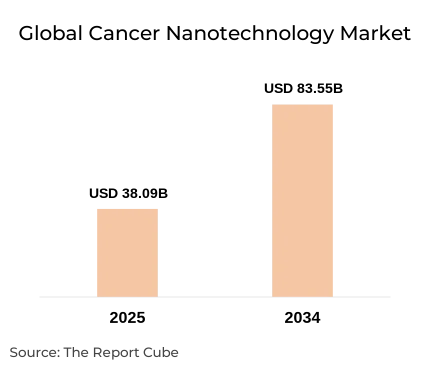
- The Global Cancer Nanotechnology Market was valued at USD 38.09 billion in 2025.
- The market is projected to reach USD 83.55 billion by 2034.
- The market is anticipated to register a CAGR of 9.12% during 2026–2034.
By Application
- Breast Cancer segment holds the dominant share, accounting for approximately 34% of revenue.
Key Players
- More than 10 companies are actively engaged in producing Global Cancer Nanotechnology Market solutions.
- Top 5 companies acquired around 52% of the market share.
- Alnylam Pharmaceuticals, Inc., Amgen Inc., AstraZeneca, Pfizer Inc., F. Hoffmann-La Roche Ltd, and others.
By End User
- Therapeutics segment leads with roughly 48% share across end-user categories.
Global Cancer Nanotechnology Market Insights & Analysis
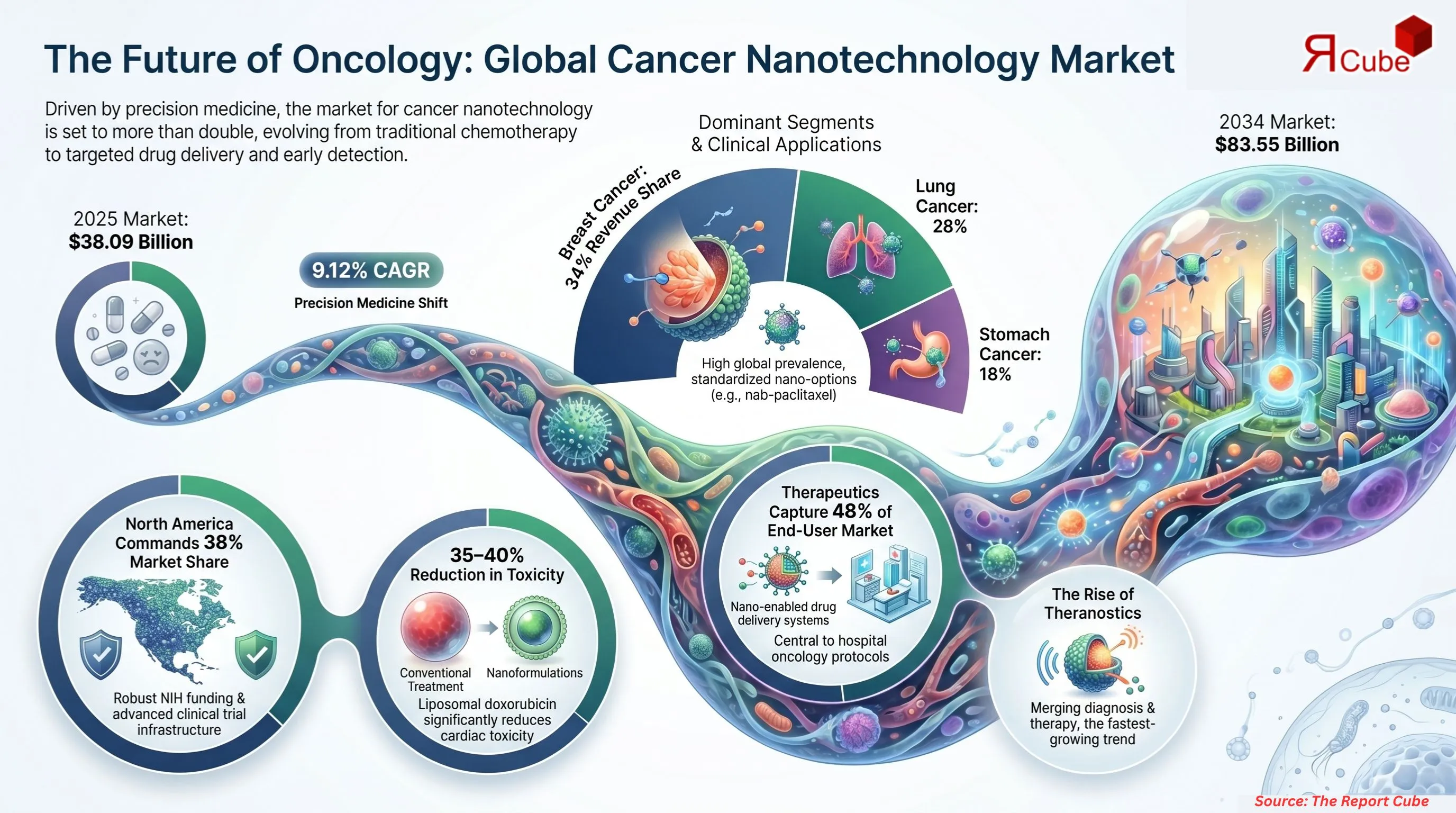
The Global Cancer Nanotechnology Market is anticipated to register a 9.12% CAGR during 2026–2034. The market size was valued at USD 38.09 billion in 2025 and is projected to reach USD 83.55 billion by 2034. Cancer nanotechnology is reshaping oncology by enabling precise drug delivery, early-stage tumor detection, and multi-modal treatment approaches at the cellular level. Rising global cancer incidence, with the WHO estimating over 20 million new cases annually, is intensifying the demand for more targeted, less toxic treatment modalities.
Government bodies and international health agencies are actively channeling resources into nanomedicine R&D. The U.S. National Cancer Institute's (NCI) Alliance for Nanotechnology in Cancer has supported more than 150 interdisciplinary research projects, catalyzing translational research from laboratory to clinical settings. Similarly, the European Commission's Horizon Europe program allocated substantial funding toward nanoparticle-based oncology solutions through 2024–2027. Private sector investments are equally robust, with venture capital flows into oncology nanotechnology platforms surpassing USD 4.2 billion globally in 2024.
Global Cancer Nanotechnology Market Dynamics
Key Market Driver: Targeted Drug Delivery Reducing Systemic Toxicity
One of the primary forces propelling the Global Cancer Nanotechnology Market is the unparalleled ability of nanoparticle-based systems to deliver chemotherapeutic agents directly to tumor microenvironments. Traditional chemotherapy exposes healthy tissues to toxic agents, resulting in severe adverse effects. Lipid nanoparticles, polymeric micelles, and dendrimers can be engineered to exploit the enhanced permeability and retention (EPR) effect intrinsic to tumor vasculature. Clinical evidence supports this: nanoformulations such as liposomal doxorubicin have demonstrated 35–40% reductions in cardiac toxicity compared to conventional doxorubicin. This precision not only improves patient quality of life but also enhances therapeutic index, enabling higher effective doses at the tumor site while sparing surrounding healthy tissue, a critical advancement driving oncologist adoption worldwide.
Major Industry Challenge: Complex Regulatory Pathways for Nanomedicines
Despite strong scientific momentum, the Global Cancer Nanotechnology Market faces a formidable challenge in navigating fragmented and evolving regulatory frameworks across major jurisdictions. Nanomedicines occupy a unique regulatory grey zone, neither purely pharmaceutical nor medical device, requiring specialized guidance that most regulatory bodies are still developing. The U.S. FDA's Nanotechnology Regulatory Science Research Plan and the EMA's reflection papers acknowledge this gap but have yet to establish fully harmonized, predictive approval pathways. This regulatory ambiguity extends approval timelines by two to five years on average, discouraging smaller innovators. Inconsistencies in characterization standards, such as nanoparticle size distribution, surface chemistry, and biocompatibility thresholds, across the EU, US, and Asia-Pacific further complicate multi-regional product launches and slow market entry for novel nanotechnology platforms.
Emerging Trend Shaping Outlook: Theranostic Nanoplatforms Merging Diagnosis and Therapy
An increasingly prominent trend transforming the cancer nanotechnology landscape is the development of theranostic nanoplatforms that simultaneously diagnose and treat malignancies within a single formulation. These multifunctional constructs, often incorporating superparamagnetic iron oxide nanoparticles (SPIONs), gold nanocages, or quantum dots, enable real-time tumor imaging via MRI or PET while concurrently releasing therapeutic payloads triggered by internal stimuli such as pH changes or external stimuli like near-infrared light. Nanobiotix's NBTXR3, a hafnium oxide nanoparticle radioenhancer, exemplifies this convergence, having received regulatory approval in Europe and demonstrating compelling Phase III data in head-and-neck cancers. As personalized oncology advances, theranostic platforms are expected to transition from clinical trials to standard-of-care protocols across multiple cancer types through 2034.
Need Specific Data, Let’s Customize the Report for You
Request CustomizationGlobal Cancer Nanotechnology Market Segment-wise Analysis
The Global Cancer Nanotechnology Market is segmented by Application and End User, each reflecting distinct demand patterns driven by disease burden, clinical adoption, and technological capability. Together, these segments illustrate a market at the intersection of materials science, oncology, and precision medicine.
By Application
- Breast Cancer
- Stomach Cancer
- Lung Cancer
- Others
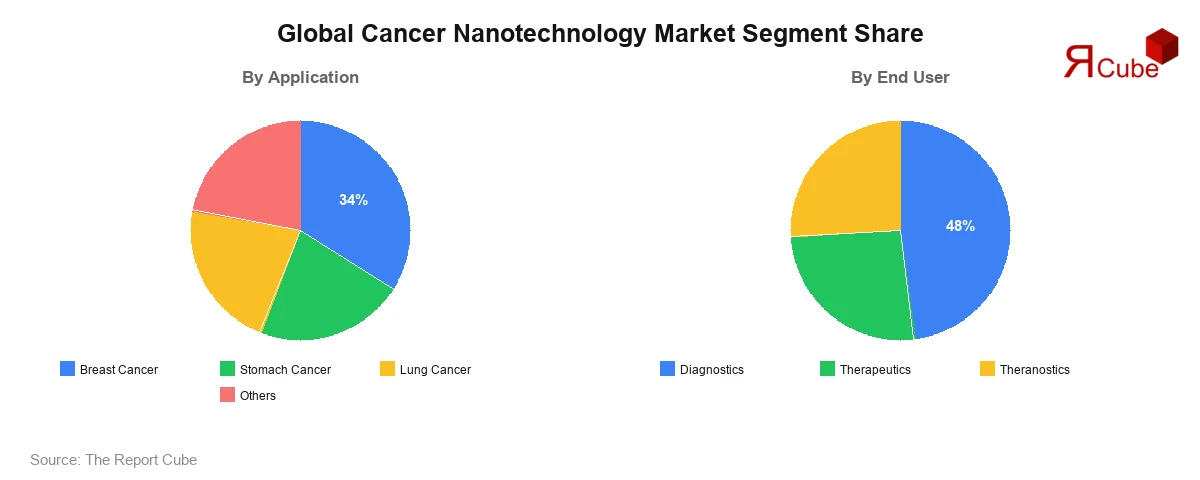
Breast Cancer commands the leading share within the application segment, accounting for approximately 34% of total market revenue in 2025. This dominance is rooted in the high global prevalence of breast cancer, ranking as the most commonly diagnosed cancer worldwide with over 2.3 million new cases annually per WHO data. Nanoformulations such as nab-paclitaxel (Abraxane) have become standard-of-care options for HER2-negative metastatic breast cancer, underpinning strong commercial adoption. Lung Cancer represents the second largest application segment, capturing around 28% of market share.
The aggressive tumor microenvironment in non-small cell lung cancer (NSCLC) creates a compelling case for nanoparticle-based delivery of EGFR inhibitors and immunotherapy adjuvants. Stomach Cancer, though comparatively smaller at approximately 18% share, is seeing expanding pipeline activity, particularly in Asia-Pacific where gastric malignancy rates remain disproportionately high. The Others segment, encompassing colorectal, pancreatic, and ovarian cancers, collectively accounts for the remaining 20%, with pancreatic cancer nanotechnology gaining notable traction given the dismal prognosis associated with conventional treatment.
By End User
- Diagnostics
- Therapeutics
- Theranostics
Therapeutics dominates the end-user segment, representing approximately 48% of global revenue. Nano-enabled drug delivery systems, including liposomes, polymeric nanoparticles, and albumin-bound formulations, are extensively integrated into oncology treatment protocols across hospital networks and cancer centers worldwide. The segment benefits from a rich pipeline of FDA and EMA-approved products and a continuous stream of Phase II/III clinical trials.
Diagnostics accounts for roughly 30% of market share, fueled by the adoption of quantum dot-based imaging agents and nanoparticle-enhanced contrast media in MRI and PET scans, which significantly improve early-stage detection sensitivity. Theranostics, while currently the smallest segment at approximately 22%, is the fastest-growing, driven by an accelerating clinical pipeline of dual-function platforms that combine imaging and therapeutic delivery. The increasing clinical evidence supporting theranostic efficacy in recurrent and refractory cancers is expected to rapidly expand this segment's share toward 2034.
Regional Projection of Global Cancer Nanotechnology Market
The Global Cancer Nanotechnology Market demonstrates strong geographic variation, with demand shaped by healthcare infrastructure, R&D investment, and cancer burden distribution.
- North America
- Europe
- Asia-Pacific
- Latin America
- Middle East & Africa
North America leads the global market, holding approximately 38% of total revenue in 2025. The region's dominance is attributed to robust NIH and NCI funding, a dense cluster of nanotechnology-focused biotech firms, advanced clinical trial infrastructure, and early regulatory engagement with nanomedicine frameworks. The U.S. alone accounts for the lion's share, with institutions such as MD Anderson and Memorial Sloan Kettering actively integrating nano-oncology protocols into patient care.
Global Cancer Nanotechnology Market: Recent Development (2025)
- Pfizer Inc. expanded its lipid nanoparticle oncology pipeline, reporting a 14% revenue margin increase.
- AstraZeneca partnered with a nano-biotech firm to co-develop EGFR-targeted nanoparticles for lung cancer.
- Nanobiotix reported a 21% gross margin improvement following expanded NBTXR3 approvals across Europe.
- Alnylam Pharmaceuticals advanced RNA interference nanoparticle trials targeting solid tumor gene expressions.
Global Cancer Nanotechnology Market Future Outlook (2034)
The Global Cancer Nanotechnology Market is poised for sustained expansion, projected to reach USD 83.55 billion by 2034 at a 9.12% CAGR. The convergence of nanotechnology with genomics, proteomics, and artificial intelligence will unlock next-generation precision oncology tools capable of adapting drug payloads in real time to tumor mutations.
Stimuli-responsive nanoparticles, personalized nanomedicine platforms, and mRNA-nanoparticle cancer vaccines represent the frontier of long-term growth. Asia-Pacific is projected to emerge as the fastest-growing regional market, driven by expanding oncology infrastructure in China, India, and South Korea. Regulatory harmonization efforts and increasing partnerships between academic institutions and pharmaceutical majors will further accelerate translation of laboratory innovations into viable clinical products, reinforcing robust long-term market expansion through the forecast period.
Why Choose This Report?
- Provides a comprehensive overview of the overall market analysis, encompassing key trends, consumer behavior analysis, and risk assessment to support strategic decision-making.
- Provides accurate, up-to-date insights into market size, segmentation, and emerging opportunities, helping to minimize risk & capitalizing on growth.
- Gives deep understanding of target audience preferences, investment habits, and communication channels for enhanced product development & marketing effectiveness.
- Delivers competitive analysis & benchmarking, uncovering the strengths & weaknesses of market competitors to guide strategies.
- Consolidate comprehensive market intelligence, reducing reasoning & streamlining research efforts.
- Facilitates customized market segmentation & risk mitigation strategies, fine-tuned to the business objectives.
- Aids in identifying both market challenges & untapped opportunities within the industry to drive long-term business growth.
- Provides valuable information based on actual customer data & search trends.
Table of Contents
- Introduction
- Objective of the study
- Product Definition
- Market Segmentation
- Study Variables
- Research Methodology
- Secondary Data Points
- Companies Interviewed
- Primary Data Points
- Break Down of Primary Interviews
- Secondary Data Points
- Executive Summary
- Market Dynamics
- Drivers
- Challenges
- Opportunity Assessment
- Recent Trends and Developments
- Policy and Regulatory Landscape
- Global Cancer Nanotechnology Market and Forecast Analysis Overview (2021-2034)
- Market Size, By Value, By growth rate (CAGR/USD Billions)
- Demand - Supply Trends
- Market Share, By Type
- Nanoparticles
- Nanofibers
- Nanorods
- Graphene
- Nanofluidic Devices
- Others
- Market Share, By Application
- Breast Cancer
- Stomach Cancer
- Lung Cancer
- Others
- Market Share, By End User
- Diagnostics
- Therapeutics
- Theranostics
- Market Share, By Region
- North America
- Europe
- Asia-Pacific
- Latin America
- Middle East & Africa
- Market Share, By Company
- Revenue Shares
- Competition Characteristics
- North America Cancer Nanotechnology Market Overview (2021-2034)
- Market Size, By Value (in USD Billions)
- Market Share, By Type
- Market Share, By Application
- Market Share, By End User
- By Country
- The US
- Canada
- Mexico
- The US Cancer Nanotechnology Market Overview (2021-2034)
- Market Share, By Type
- Market Share, By Application
- Market Share, By End User
- Canada Cancer Nanotechnology Market Overview (2021-2034)
- Market Share, By Type
- Market Share, By Application
- Market Share, By End User
- Mexico Cancer Nanotechnology Market Overview (2021-2034)
- Market Share, By Type
- Market Share, By Application
- Market Share, By End User
- South America Cancer Nanotechnology Market Overview (2021-2034)
- Market Size, By Value (in USD Billions)
- Market Share, By Type
- Market Share, By Application
- Market Share, By End User
- By Country
- Brazil
- Argentina
- Rest of South America
- Brazil Cancer Nanotechnology Market Overview (2021-2034)
- Market Share, By Type
- Market Share, By Application
- Market Share, By End User
- Argentina Cancer Nanotechnology Market Overview (2021-2034)
- Market Share, By Type
- Market Share, By Application
- Market Share, By End User
- Europe Cancer Nanotechnology Market Overview (2021-2034)
- Market Size, By Value (in USD Billions)
- By Type
- By Application
- By End User
- By Country
- Germany
- The UK
- France
- Spain
- Italy
- Rest of Europe
- Germany Cancer Nanotechnology Market Overview (2021-2034)
- Market Share, By Type
- Market Share, By Application
- Market Share, By End User
- France Cancer Nanotechnology Market Overview (2021-2034)
- Market Share, By Type
- Market Share, By Application
- Market Share, By End User
- The UK Cancer Nanotechnology Market Overview (2021-2034)
- Market Share, By Type
- Market Share, By Application
- Market Share, By End User
- Spain Cancer Nanotechnology Market Overview (2021-2034)
- Market Share, By Type
- Market Share, By Application
- Market Share, By End User
- Italy Cancer Nanotechnology Market Overview (2021-2034)
- Market Share, By Type
- Market Share, By Application
- Market Share, By End User
- The Middle East & Africa Cancer Nanotechnology Market Overview (2021-2034)
- Market Size, By Value (in USD Billions)
- By Type
- By Application
- By End User
- By Country
- The UAE
- Saudi Arabia
- South Africa
- Rest of the Middle East & Africa
- The UAE Cancer Nanotechnology Market Overview (2021-2034)
- Market Share, By Type
- Market Share, By Application
- Market Share, By End User
- Saudi Arabia Cancer Nanotechnology Market Overview (2021-2034)
- Market Share, By Type
- Market Share, By Application
- Market Share, By End User
- South Africa Cancer Nanotechnology Market Overview (2021-2034)
- Market Share, By Type
- Market Share, By Application
- Market Share, By End User
- Asia-Pacific Cancer Nanotechnology Market Overview (2021-2034)
- Market Size, By Value (in USD Billions)
- By Type
- By Application
- By End User
- By Country
- China
- India
- Japan
- South Korea
- Australia
- Rest of Asia-Pacific
- China Cancer Nanotechnology Market Overview (2021-2034)
- Market Share, By Type
- Market Share, By Application
- Market Share, By End User
- India Cancer Nanotechnology Market Overview (2021-2034)
- Market Share, By Type
- Market Share, By Application
- Market Share, By End User
- Japan Cancer Nanotechnology Market Overview (2021-2034)
- Market Share, By Type
- Market Share, By Application
- Market Share, By End User
- South Korea Cancer Nanotechnology Market Overview (2021-2034)
- Market Share, By Type
- Market Share, By Application
- Market Share, By End User
- Austraila Cancer Nanotechnology Market Overview (2021-2034)
- Market Share, By Type
- Market Share, By Application
- Market Share, By End User
- Competitive Outlook (Company Profile - Partial List)
- Alnylam Pharmaceuticals, Inc.
- Company Overview
- Business Segments
- Strategic Alliances/Partnerships
- Recent Developments
- Amgen Inc.
- Company Overview
- Business Segments
- Strategic Alliances/Partnerships
- Recent Developments
- Arrowhead Pharmaceuticals, Inc.
- Company Overview
- Business Segments
- Strategic Alliances/Partnerships
- Recent Developments
- AstraZeneca
- Company Overview
- Business Segments
- Strategic Alliances/Partnerships
- Recent Developments
- Cadila Pharmaceuticals
- Company Overview
- Business Segments
- Strategic Alliances/Partnerships
- Recent Developments
- CELGENE CORPORATION
- Company Overview
- Business Segments
- Strategic Alliances/Partnerships
- Recent Developments
- Celsion Corporation
- Company Overview
- Business Segments
- Strategic Alliances/Partnerships
- Recent Developments
- Genzyme
- Company Overview
- Business Segments
- Strategic Alliances/Partnerships
- Recent Developments
- Merck & Co., Inc.
- Company Overview
- Business Segments
- Strategic Alliances/Partnerships
- Recent Developments
- Nippon Kayaku Co.,Ltd.
- Company Overview
- Business Segments
- Strategic Alliances/Partnerships
- Recent Developments
- Nanobiotix
- Company Overview
- Business Segments
- Strategic Alliances/Partnerships
- Recent Developments
- Pfizer Inc.
- Company Overview
- Business Segments
- Strategic Alliances/Partnerships
- Recent Developments
- F. Hoffmann-La Roche Ltd
- Company Overview
- Business Segments
- Strategic Alliances/Partnerships
- Recent Developments
- Takeda Pharmaceutical Company Limited
- Company Overview
- Business Segments
- Strategic Alliances/Partnerships
- Recent Developments
- Others
- Alnylam Pharmaceuticals, Inc.
- Disclaimer
Top Key Players & Market Share Outlook
- Alnylam Pharmaceuticals, Inc.
- Amgen Inc.
- Arrowhead Pharmaceuticals, Inc.
- AstraZeneca
- Cadila Pharmaceuticals
- CELGENE CORPORATION
- Celsion Corporation
- Genzyme
- Merck & Co., Inc.
- Nippon Kayaku Co.,Ltd.
- Nanobiotix
- Pfizer Inc.
- F. Hoffmann-La Roche Ltd
- Takeda Pharmaceutical Company Limited
- Others
Frequently Asked Questions






