



Build Your Custom Market Intelligence Report
Customize Your ReportGCC Connected Medical Devices and Wearables Market Key Highlights
By Device Type:
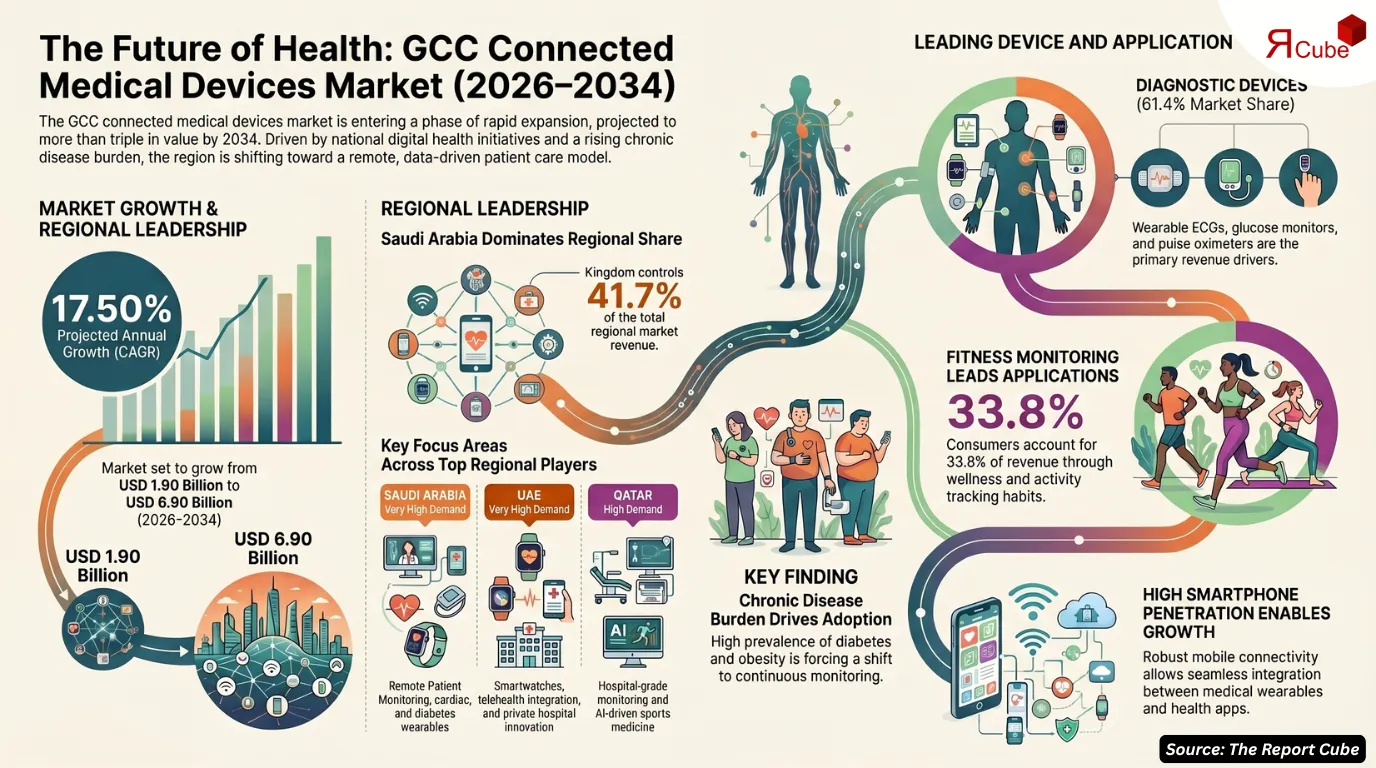
Diagnostic Devices segment leads the market with nearly 61.4% share.
By Application Type:
Fitness Monitoring segment dominates the market with approximately 33.8% of revenue.
Regional Outlook:
Saudi Arabia dominates the GCC Connected Medical Devices and Wearables Market with around 41.7% share.
GCC Connected Medical Devices and Wearables Market Insights & Analysis
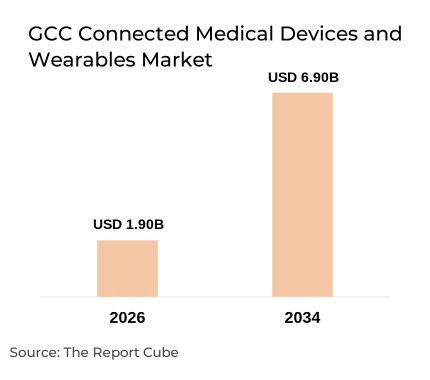
The GCC Connected Medical Devices and Wearables Market is anticipated to register a CAGR of around 17.50% during the forecast period 2026-2034. The market size is valued at USD 1.90 Billion in 2026 and is projected to reach USD 6.90 Billion by 2034. Healthcare systems across the Gulf region are increasingly incorporating connected technologies to address rising chronic disease prevalence, healthcare workforce optimization, and growing demand for personalized patient care. Saudi Arabia, the UAE, and Qatar continue expanding digital health infrastructure through investments in telemedicine networks, electronic health records, and remote monitoring platforms. These developments have accelerated the adoption of connected medical devices in GCC healthcare facilities, particularly for diabetes management, cardiovascular monitoring, and post-discharge patient supervision.
Healthcare providers are reporting measurable improvements in patient engagement and treatment adherence through connected medical wearables in GCC countries. Continuous glucose monitoring systems, wearable electrocardiographs, smart watches, and wireless pulse oximeters are increasingly integrated into care pathways to support real-time clinical decision-making. Market growth is further supported by high smartphone penetration, expanding health insurance coverage, and greater awareness of preventive healthcare. As GCC governments continue prioritizing healthcare modernization under long-term national development strategies, connected healthcare technologies are expected to become a critical component of future patient management models.
GCC Connected Medical Devices and Wearables Market Impact Analysis
| Factor | Type | Specific Impact on Market | Magnitude | Business Implication |
|---|---|---|---|---|
| Government Digital Health Programs | Regulatory | Remote care initiatives accelerate adoption of connected devices | High | Creates strong demand pipeline for clinical grade wearables |
| Rising Chronic Disease Burden | Market | More patients need continuous monitoring for long term care | High | Drives uptake of remote patient monitoring platforms |
| High Smartphone and Internet Use | Technological | Robust connectivity enables seamless device data integration | High | Supports ecosystem for app linked medical wearables |
| Health Conscious Young Population | Consumer | Fitness tracking habits expand demand for smart wearables | Medium | Opens cross sell paths from wellness to medical devices |
| Data Privacy and Security Concerns | Regulatory | Stricter rules raise compliance costs and approval timelines | Medium | Requires strong cybersecurity and data governance design |
| Partnerships Between Providers and OEMs | Competitive | Care providers bundle wearables into hybrid care models | Medium | Favors vendors with proven clinical integration capability |
| High Device and Service Costs | Market | Premium pricing slows penetration in price sensitive users | Medium | Drives need for tiered offerings and pay per use models |
GCC Connected Medical Devices and Wearables Market Dynamics
Key Driver: Growing Chronic Disease Burden Supporting Continuous Health Monitoring
Healthcare authorities across GCC countries continue to face rising rates of diabetes, obesity, cardiovascular disease, and hypertension. According to regional public health assessments, diabetes prevalence remains among the highest globally, creating substantial demand for connected monitoring solutions that enable proactive disease management. This healthcare challenge is encouraging providers to deploy connected medical devices in GCC hospitals, clinics, and home-care settings to improve patient outcomes while reducing avoidable hospital admissions.
Continuous glucose monitors, wearable ECG devices, insulin pumps, and smart health trackers provide clinicians with uninterrupted patient data, allowing faster interventions and more informed treatment decisions. Patients also benefit from improved disease awareness and medication compliance through real-time health insights. As healthcare systems shift toward value-based care models, the ability of connected medical wearables in GCC markets to support preventive healthcare and long-term disease management continues to strengthen their adoption across the region.
Industry Trends: Expansion of Smart Healthcare Ecosystems and Advanced Wearable Technologies
Healthcare technology innovation is reshaping the GCC Connected Medical Devices and Wearables Market. Manufacturers are introducing medical-grade wearable devices equipped with advanced biosensors capable of monitoring heart rhythm, oxygen saturation, sleep quality, respiratory patterns, and glucose fluctuations. These devices are increasingly supported by cloud-based healthcare platforms that allow healthcare professionals to access patient information remotely and securely.
Digital health transformation initiatives across Saudi Arabia and the UAE are also encouraging integration between wearable technologies and healthcare information systems. Connected medical devices in GCC healthcare environments are moving beyond standalone monitoring tools and becoming part of broader digital care ecosystems. Enhanced connectivity, improved battery performance, and sophisticated mobile health applications are increasing device usability and patient engagement, creating sustained growth opportunities throughout the forecast period.
Book your FREE 30-minute expert consultation today
Contact UsMajor Challenge: Healthcare Data Protection and Regulatory Complexity
Managing sensitive patient information remains a significant consideration for stakeholders operating within the GCC Connected Medical Devices and Wearables Market. Connected healthcare technologies generate large volumes of clinical and personal health data, requiring robust cybersecurity frameworks and strict compliance with evolving healthcare regulations. Healthcare providers must ensure that connected platforms maintain patient confidentiality while enabling secure information exchange among care teams.
Regulatory requirements can also create challenges for device manufacturers seeking market entry across multiple GCC countries. Product approval processes often involve extensive clinical validation, quality assessments, and compliance reviews. While these requirements strengthen patient safety and product reliability, they may increase commercialization timelines and operational costs. Addressing these challenges through stronger cybersecurity measures and regulatory collaboration will remain important for long-term market development.
Opportunity: Remote Healthcare Expansion Creating New Growth Potential
Demand for remote healthcare services continues to expand across GCC countries as healthcare systems focus on accessibility, efficiency, and long-term patient engagement. Connected medical wearables in GCC markets are increasingly supporting virtual consultations, chronic disease management programs, and home-based healthcare services. This transition is particularly beneficial for patients requiring continuous monitoring while minimizing frequent hospital visits.
National healthcare transformation programs are creating favorable conditions for wider adoption of connected healthcare solutions. Investments in digital hospitals, smart clinics, and telehealth infrastructure are enabling healthcare providers to deploy advanced monitoring technologies on a larger scale. The growing acceptance of personalized healthcare, combined with increasing investments in healthcare innovation, positions the GCC Connected Medical Devices and Wearables Market for substantial expansion over the coming decade.
GCC Connected Medical Devices and Wearables Market Segment-wise Analysis
By Device Type:
- Diagnostic Devices
- ECG Monitor
- Pulse Oximeter
- Sleep Monitors
- Smart Watches
- Insulin Pumps
- Wearable Electrocardiographs
- Cardioverter Defibrillator
- Others (Electronic Skin Patches, Fitness Trackers, etc.)
- Therapeutic Devices
- Respiratory Therapy Management
- Rehabilitation Devices
- Pain Management
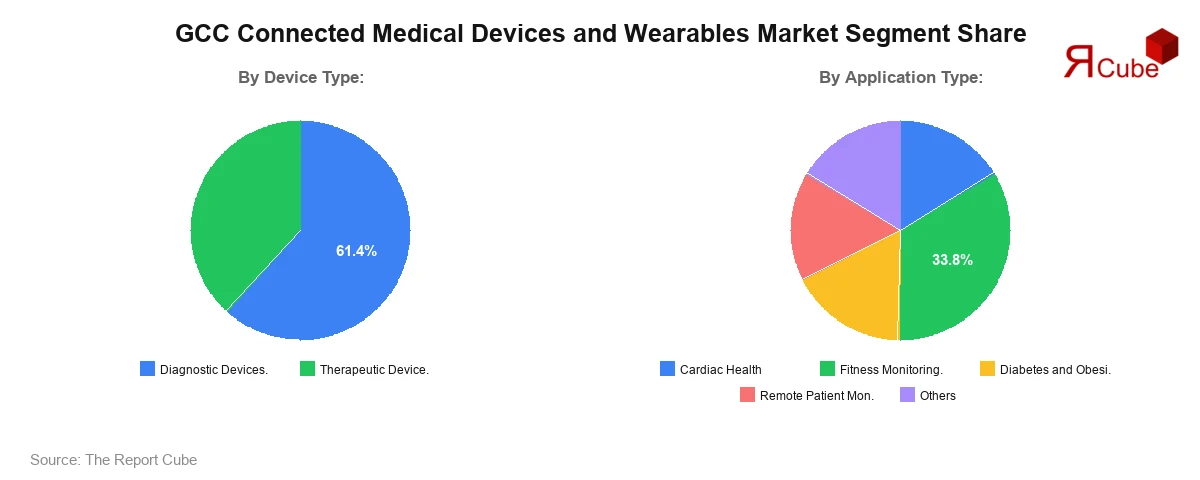
Diagnostic Devices account for the largest share of the GCC Connected Medical Devices and Wearables Market, representing approximately 61.4% of total revenue in 2026. Strong demand for continuous patient monitoring, early disease detection, and preventive healthcare solutions has accelerated adoption across both clinical and consumer healthcare environments. Products such as wearable electrocardiographs, smart watches, glucose monitoring systems, sleep monitors, and pulse oximeters are increasingly used to support chronic disease management and ongoing wellness monitoring.
Healthcare providers throughout Saudi Arabia, the UAE, and Qatar are integrating connected diagnostic devices into patient care workflows to improve treatment efficiency and facilitate remote supervision. The availability of advanced sensors, wireless connectivity, and real-time data analytics has significantly enhanced the clinical value of diagnostic wearables. Growing awareness regarding preventive healthcare and rising demand for home-based monitoring solutions are expected to support continued segment leadership during the forecast period.
By Application Type:
- Cardiac Health
- Fitness Monitoring
- Diabetes and Obesity Care
- Remote Patient Monitoring
- Others
Fitness Monitoring holds the leading position within the application landscape, accounting for nearly 33.8% of market revenue. Consumers across GCC countries are increasingly adopting wearable devices to monitor physical activity, heart rate, sleep quality, calorie expenditure, and overall wellness indicators. The rising focus on healthier lifestyles, supported by national wellness initiatives and increasing participation in fitness programs, has contributed significantly to segment expansion.
Connected medical wearables in GCC markets are evolving beyond traditional activity tracking functions and now offer sophisticated health assessment capabilities. Advanced wearable platforms provide users with personalized health recommendations, cardiovascular insights, and long-term wellness monitoring. Strong purchasing power, widespread smartphone adoption, and growing health awareness among younger populations continue to support demand for fitness-focused connected healthcare devices throughout the region.
Regional Projection of GCC Connected Medical Devices and Wearables Industry
- Saudi Arabia
- United Arab Emirates
- Kuwait
- Oman
- Qatar
- Bahrain
Saudi Arabia maintains its leadership position in the GCC Connected Medical Devices and Wearables Market, accounting for approximately 41.7% of regional revenue. The country's healthcare sector has undergone substantial digital transformation under Vision 2030 initiatives, resulting in increased deployment of connected healthcare technologies across hospitals, clinics, and community healthcare programs. Rising healthcare expenditure and large-scale investments in digital infrastructure have accelerated adoption of connected medical devices in GCC's largest healthcare market.
The growing prevalence of diabetes, cardiovascular disorders, and obesity has further strengthened demand for continuous monitoring technologies. Healthcare providers are increasingly utilizing connected medical wearables in GCC healthcare systems to improve patient engagement, support remote monitoring programs, and enhance clinical outcomes. Combined with strong government support, expanding healthcare infrastructure, and increasing consumer awareness of preventive healthcare, Saudi Arabia is expected to remain the dominant contributor to regional market growth through 2034.
Need insights for a specific region within this market?
Request Regional DataGCC Connected Medical Devices & Wearables - Country View
| Country | Demand Level | Key Areas | System Dominance | Core Demand Logic | Growth Nature |
|---|---|---|---|---|---|
| Saudi Arabia | Very High | Riyadh, Jeddah, Dammam | RPM, cardiac and diabetes wearables | Vision 2030 digital health and chronic care | Fastest growth, scale-focused expansion |
| United Arab Emirates | Very High | Dubai, Abu Dhabi, Sharjah | Smartwatches, RPM, telehealth linked | Startup-led HealthTech and private hospitals | Innovation-driven, premium segment growth |
| Kuwait | Medium | Kuwait City metro belt | Fitness bands and home RPM kits | High lifestyle disease and early screening | Steady adoption from public sector pilots |
| Oman | Low to Medium | Muscat, Sohar, Salalah | Basic wearables linked to mHealth apps | Gradual eHealth rollout and remote areas | Paced growth, infrastructure dependent |
| Qatar | High | Doha, Education City, Lusail | Hospital grade RPM and elite wearables | AI health programs and sports medicine | High-value, research anchored growth |
| Bahrain | Medium | Manama, Muharraq corridor | Consumer wearables linked to EHR | National health insurance and telehealth | Niche growth via insurer partnerships |
Government Initiatives & Policies
- Saudi Vision 2030 Health Sector Transformation Program: Saudi Arabia continues expanding digital healthcare services, telemedicine infrastructure, and connected patient care systems to improve healthcare efficiency and support widespread adoption of connected medical devices.
- UAE Digital Health Strategy 2025-2026: The UAE is advancing healthcare digitalization through connected healthcare platforms, smart hospitals, remote patient monitoring programs, and integrated health information systems that encourage wearable device adoption.
GCC Connected Medical Devices and Wearables Industry Recent Developments
- 2025: Abbott Laboratories launched the FreeStyle Libre 2 Plus Continuous Glucose Monitoring System featuring automatic glucose readings every minute, real-time alerts, smartphone connectivity, and remote monitoring capabilities. The innovation enhances diabetes management while strengthening the connected healthcare ecosystem. Growing adoption of advanced CGM technologies is expected to support demand for wearable healthcare devices, remote patient monitoring solutions, and digital diabetes management platforms across GCC countries.
Why Choose This Report?
- Provides a comprehensive overview of the overall market analysis, encompassing key trends, consumer behavior analysis, and risk assessment to support strategic decision-making.
- Provides accurate, up-to-date insights into market size, segmentation, and emerging opportunities, helping to minimize risk & capitalizing on growth.
- Gives deep understanding of target audience preferences, investment habits, and communication channels for enhanced product development & marketing effectiveness.
- Delivers competitive analysis & benchmarking, uncovering the strengths & weaknesses of market competitors to guide strategies.
- Consolidate comprehensive market intelligence, reducing reasoning & streamlining research efforts.
- Facilitates customized market segmentation & risk mitigation strategies, fine-tuned to the business objectives.
- Aids in identifying both market challenges & untapped opportunities within the industry to drive long-term business growth.
- Provides valuable information based on actual customer data & search trends.
Table of Contents
- Introduction
- Objective of the Study
- Product and Category Definition
- Market Segmentation
- Study Variables
- Research Methodology
- Secondary Data Points
- Breakdown of Secondary Sources
- Primary Data Points
- Breakdown of Primary Interviews
- Secondary Data Points
- Executive Summary
- Market Dynamics
- Emerging Opportunities
- Adoption Trends
- Demand Drivers
- Disruption Analysis (Challenges)
- Industry Analysis and Strategic Insights
- Supply and Value Chain Analysis
- Pricing Analysis
- Go-To-Market (GTM) Strategy
- BCG Matrix
- Recent Trends and Developments
- Import and Export Analysis
- Regulatory and Policy Landscape
- Country-wise Policies
- Government Initiatives
- GCC Connected Medical Devices and Wearables Market Overview and Forecast Analysis (2021-2034)
- Market Size, By Value, By Growth Rate (CAGR/USD Billion)
- Market Share, By Device Type
- Diagnostic Devices
- ECG Monitor
- Pulse Oximeter
- Sleep Monitors
- Smart Watches
- Insulin Pumps
- Wearable Electrocardiographs
- Cardioverter Defibrillator
- Others (Electronic Skin Patches, Fitness Trackers, etc.)
- Therapeutic Devices
- Respiratory Therapy Management
- Rehabilitation Devices
- Pain Management
- Diagnostic Devices
- Market Share, By Product Site
- Strap and Clip
- Headband
- Shoe Sensors
- Handheld
- Others (Clip, Bracelet, etc.)
- Market Share, By Application Type
- Cardiac Health
- Fitness Monitoring
- Diabetes and Obesity Care
- Remote Patient Monitoring
- Others (Home Healthcare, Sleep Tracking, etc.)
- Market Share, By Distribution Channel
- Retail Pharmacies
- Online Stores
- Others (Supermarkets and Hypermarkets)
- Market Share, By Country
- Saudi Arabia
- United Arab Emirates
- Kuwait
- Oman
- Qatar
- Bahrain
- Market Share, By Company
- Revenue Shares and Analysis
- Competitive Landscape
- Saudi Arabia Connected Medical Devices and Wearables Market Overview and Forecast Analysis (2021-2034)
- Market Size, By Value, By Growth Rate (CAGR/USD Billion/Million)
- Market Share, By Device Type
- Market Share, By Product Site
- Market Share, By Application Type
- Market Share, By Distribution Channel
- United Arab Emirates Connected Medical Devices and Wearables Market Overview and Forecast Analysis (2021-2034)
- Market Size, By Value, By Growth Rate (CAGR/USD Billion/Million)
- Market Share, By Device Type
- Market Share, By Product Site
- Market Share, By Application Type
- Market Share, By Distribution Channel
- Kuwait Connected Medical Devices and Wearables Market Overview and Forecast Analysis (2021-2034)
- Market Size, By Value, By Growth Rate (CAGR/USD Billion/Million)
- Market Share, By Device Type
- Market Share, By Product Site
- Market Share, By Application Type
- Market Share, By Distribution Channel
- Oman Connected Medical Devices and Wearables Market Overview and Forecast Analysis (2021-2034)
- Market Size, By Value, By Growth Rate (CAGR/USD Billion/Million)
- Market Share, By Device Type
- Market Share, By Product Site
- Market Share, By Application Type
- Market Share, By Distribution Channel
- Qatar Connected Medical Devices and Wearables Market Overview and Forecast Analysis (2021-2034)
- Market Size, By Value, By Growth Rate (CAGR/USD Billion/Million)
- Market Share, By Device Type
- Market Share, By Product Site
- Market Share, By Application Type
- Market Share, By Distribution Channel
- Bahrain Connected Medical Devices and Wearables Market Overview and Forecast Analysis (2021-2034)
- Market Size, By Value, By Growth Rate (CAGR/USD Billion/Million)
- Market Share, By Device Type
- Market Share, By Product Site
- Market Share, By Application Type
- Market Share, By Distribution Channel
- Competitive Analysis, 2026
- Market Share of Key Players
- Competitive Mapping for Each Segment and Companies Operating Regionally
- Saudi Arabia Connected Medical Devices and Wearables Companies Share and Competitive Analysis, 2026
- United Arab Emirates Connected Medical Devices and Wearables Companies Share and Competitive Analysis, 2026
- Kuwait Connected Medical Devices and Wearables Companies Share and Competitive Analysis, 2026
- Oman Connected Medical Devices and Wearables Companies Share and Competitive Analysis, 2026
- Qatar Connected Medical Devices and Wearables Companies Share and Competitive Analysis, 2026
- Bahrain Connected Medical Devices and Wearables Companies Share and Competitive Analysis, 2026
- Company Profile (Partial List)
- Garmin Ltd.
- Company Overview
- Product Portfolio
- Strategic Alliances and Partnerships
- Recent Developments
- Medtronic plc
- Company Overview
- Product Portfolio
- Strategic Alliances and Partnerships
- Recent Developments
- Polar Electro Oy
- Company Overview
- Product Portfolio
- Strategic Alliances and Partnerships
- Recent Developments
- Fitbit, Inc.
- Company Overview
- Product Portfolio
- Strategic Alliances and Partnerships
- Recent Developments
- Abbott Laboratories
- Company Overview
- Product Portfolio
- Strategic Alliances and Partnerships
- Recent Developments
- Dexcom, Inc.
- Company Overview
- Product Portfolio
- Strategic Alliances and Partnerships
- Recent Developments
- Apple Inc.
- Company Overview
- Product Portfolio
- Strategic Alliances and Partnerships
- Recent Developments
- VitalConnect, Inc.
- Company Overview
- Product Portfolio
- Strategic Alliances and Partnerships
- Recent Developments
- Withings SAS
- Company Overview
- Product Portfolio
- Strategic Alliances and Partnerships
- Recent Developments
- Omron Healthcare, Inc.
- Company Overview
- Product Portfolio
- Strategic Alliances and Partnerships
- Recent Developments
- Others (Partial List)
- Garmin Ltd.
- Contact Us and Disclaimer
Top Key Players & Market Share Outlook
- Garmin Ltd.
- Medtronic plc
- Polar Electro Oy
- Fitbit, Inc.
- Abbott Laboratories
- Dexcom, Inc.
- Apple Inc.
- VitalConnect, Inc.
- Withings SAS
- Omron Healthcare, Inc.
Frequently Asked Questions






