



Build Your Custom Market Intelligence Report
Customize Your ReportMexico Telehealth Market Insights & Analysis
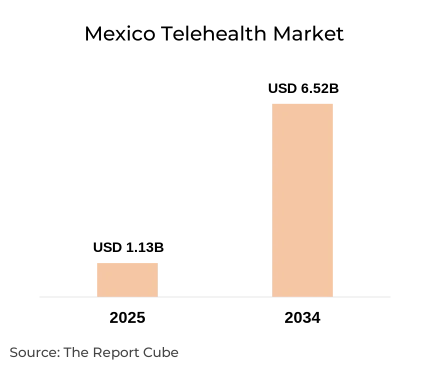
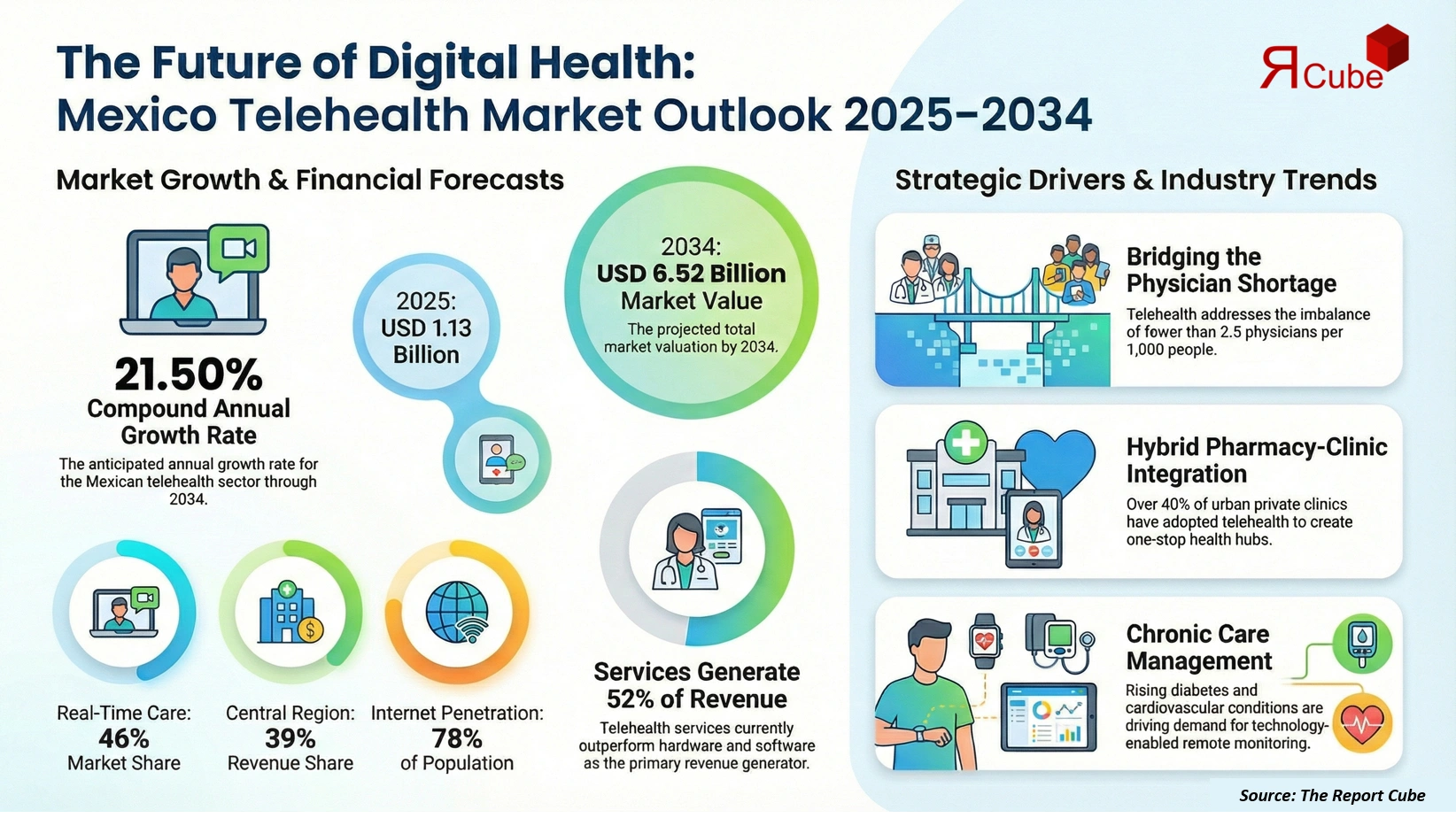
The Mexico Telehealth Market is anticipated to register a CAGR of 21.50% during 2026-2034. The market size was valued at USD 1.13 billion in 2025 and is projected to reach USD 6.52 billion by 2034. This exceptional growth reflects Mexico’s accelerating digital health transformation, driven by rising healthcare access gaps, uneven physician distribution, and growing demand for cost-effective medical services. Telehealth has emerged as a practical solution to bridge urban-rural disparities while reducing pressure on overstretched public healthcare facilities.
Mexico’s large population base, combined with increasing internet penetration exceeding 78% in 2025, is significantly improving telehealth adoption across demographics. Patients are increasingly comfortable using virtual consultations for primary care, follow-ups, and mental health services. Employers and insurers are also integrating telehealth into employee wellness programs to manage healthcare costs and improve productivity. This shift is reinforcing telehealth as a core component of Mexico’s healthcare delivery framework rather than a supplementary service.
Furthermore, the expansion of private healthcare providers and pharmacy-led clinics is accelerating telehealth deployment nationwide. Digital platforms are being leveraged to support appointment scheduling, diagnostics, e-prescriptions, and chronic disease monitoring. As regulatory clarity improves and technology costs decline, telehealth adoption is expected to deepen across regions, positioning the Mexico Telehealth Market as one of the fastest-growing digital health markets in Latin America through 2034.
Mexico Telehealth Market Recent Developments
- 2025: Teladoc Health expanded Spanish-language virtual care services tailored for Mexican employers and insurers.
- 2025: Philips Healthcare enhanced remote patient monitoring deployments across private hospital networks in Mexico.
Government Initiatives & Policies
- Digital Health Strategy by Mexico’s Ministry of Health: Promotes telemedicine adoption to expand care access nationwide.
- National Broadband Expansion Program: Improves digital infrastructure supporting telehealth in underserved regions.
Mexico Telehealth Market Dynamics
Key Driver: Growing Healthcare Access Gaps and Physician Shortages
Limited access to healthcare services, particularly in rural and semi-urban regions, is a primary driver of the Mexico Telehealth Market. Mexico has fewer than 2.5 physicians per 1,000 people, with a heavy concentration in major cities. Telehealth platforms address this imbalance by enabling remote consultations, diagnostics, and follow-up care without geographic constraints. Additionally, long waiting times in public hospitals encourage patients to seek faster virtual alternatives. Telehealth reduces travel costs, minimizes work absences, and enhances continuity of care, making it highly attractive for both patients and providers. These structural healthcare challenges are expected to sustain strong telehealth demand through 2034.
Book your FREE 30-minute expert consultation today
Contact UsIndustry Trends: Integration of Telehealth with Pharmacy and Clinic Networks
An important trend shaping the market is the integration of telehealth services with pharmacy chains and outpatient clinics. Retail health providers are embedding virtual consultations within physical locations, allowing patients to access doctors alongside diagnostics and medications in a single visit. This hybrid care model improves trust and usability, particularly among first-time telehealth users. Additionally, real-time care platforms are incorporating AI-assisted triage and electronic health records to streamline workflows. By 2025, over 40% of private clinics in major cities had adopted some form of telehealth capability, highlighting its growing institutional acceptance.
Major Challenge: Digital Literacy and Infrastructure Gaps
Despite rapid growth, disparities in digital literacy and internet quality present a significant challenge to market expansion. While urban regions benefit from strong connectivity, rural areas still face limited broadband access and lower smartphone penetration. Elderly populations also exhibit lower comfort levels with digital health platforms, restricting adoption. Furthermore, interoperability issues between telehealth systems and traditional healthcare records complicate care coordination. Addressing these challenges requires coordinated investment in infrastructure, education, and standardized digital health frameworks to ensure inclusive telehealth growth.
Opportunity: Expansion of Remote Monitoring and Chronic Care Management
The rising prevalence of chronic diseases such as diabetes and cardiovascular conditions presents a major opportunity for telehealth providers. Remote monitoring solutions enable continuous tracking of patient health metrics, reducing hospital admissions and improving outcomes. Mexico’s chronic disease burden is increasing steadily, creating demand for long-term, technology-enabled care models. Telehealth platforms offering subscription-based chronic care management can generate recurring revenue while improving patient engagement. As payers recognize the cost-saving potential of preventive digital care, adoption of remote monitoring services is expected to accelerate significantly.
Mexico Telehealth Market Segment-wise Analysis
By Component:
- Telehealth Hardware
- Telehealth Software
- Telehealth Services
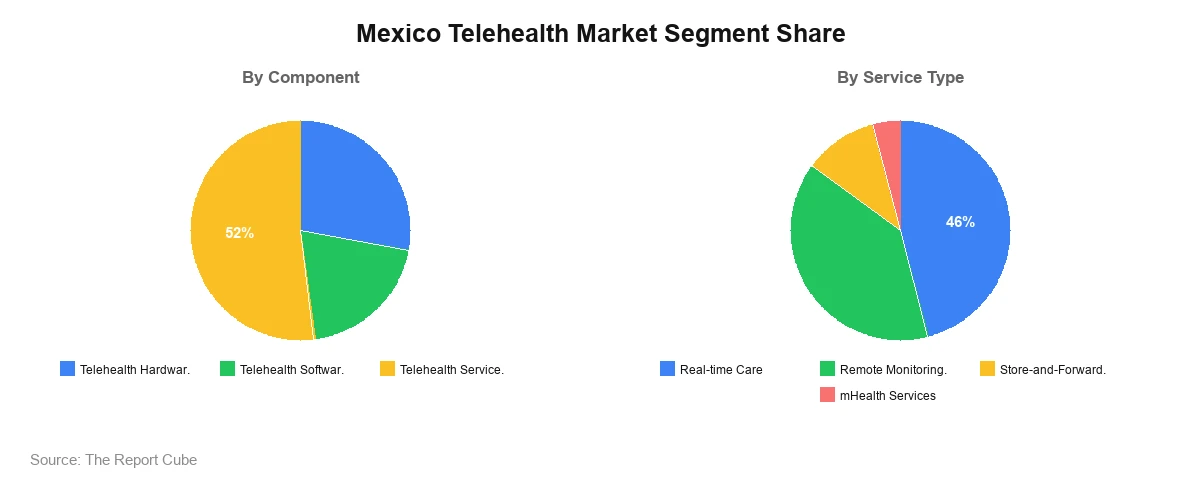
Telehealth services dominate the Mexico Telehealth Market, accounting for approximately 52% of total market revenue in 2025. This leadership is driven by high demand for virtual consultations, mental health services, and follow-up care. Service-based models offer scalability and recurring revenue, making them attractive to providers and investors. Telehealth software follows closely, supported by growing adoption of integrated care platforms. Hardware demand remains steady, primarily driven by remote monitoring devices used in chronic disease management.
By Service Type:
- Real-time Care
- Remote Monitoring
- Store-and-Forward
- mHealth Services
Real-time care leads the service type segment, holding nearly 46% market share in 2025. Patients prefer live video or audio consultations for immediate medical advice and reassurance. This segment benefits from improved video quality, mobile accessibility, and secure platforms. Remote monitoring is the fastest-growing sub-segment, driven by chronic care needs and employer-sponsored wellness programs. Together, these services form the backbone of Mexico’s evolving telehealth ecosystem.
Regional Projection of Mexico Telehealth Industry
- North
- Central
- South
- West
The Central region leads the Mexico Telehealth Market, contributing approximately 39% of total revenue in 2025. Mexico City and surrounding states benefit from advanced healthcare infrastructure, higher digital adoption, and strong private sector participation. The North region follows closely, supported by cross-border healthcare collaboration and higher employer-sponsored telehealth usage. While the South region currently lags due to infrastructure limitations, it represents a high-growth opportunity as government connectivity initiatives expand.
Need insights for a specific region within this market?
Request Regional DataWhy Choose This Report?
- Provides a comprehensive overview of the overall market analysis, encompassing key trends, consumer behavior analysis, and risk assessment to support strategic decision-making.
- Provides accurate, up-to-date insights into market size, segmentation, and emerging opportunities, helping to minimize risk & capitalizing on growth.
- Gives deep understanding of target audience preferences, investment habits, and communication channels for enhanced product development & marketing effectiveness.
- Delivers competitive analysis & benchmarking, uncovering the strengths & weaknesses of market competitors to guide strategies.
- Consolidate comprehensive market intelligence, reducing reasoning & streamlining research efforts.
- Facilitates customized market segmentation & risk mitigation strategies, fine-tuned to the business objectives.
- Aids in identifying both market challenges & untapped opportunities within the industry to drive long-term business growth.
- Provides valuable information based on actual customer data & search trends.
Table of Contents
- Introduction
- Objective of the Study
- Product and Category Definition
- Market Segmentation
- Study Variables
- Research Methodology
- Secondary Data Points
- Breakdown of Secondary Sources
- Primary Data Points
- Breakdown of Primary Interviews
- Secondary Data Points
- Executive Summary
- Market Dynamics
- Drivers
- Challenges
- Opportunity Assessment
- Recent Trends and Developments
- Regulatory and Policy Landscape
- Mexico Telehealth Market Overview (2020-2034)
- Market Size, By Value (USD Billion)
- Market Share, By Component
- Telehealth Hardware
- Telehealth Software
- Telehealth Services
- Market Share, By Service Type
- Real-time Care
- Remote Monitoring
- Store-and-Forward
- mHealth Services
- Market Share, By Mode
- Web-based
- Cloud-based
- On-premise
- Market Share, By End User
- Hospitals
- Clinics
- Homecare
- Employers
- Market Share, By Clinical Area
- Primary Care
- Chronic Care
- Mental Health
- Specialty Care
- Market Share, By Region
- North
- Central
- South
- East
- West
- Market Share, By Company
- Revenue Shares
- Competitive Landscape
- North Mexico Telehealth Market
- Market Size, By Value (USD Billion)
- Market Share, By Component
- Market Share, By Service Type
- Market Share, By Mode
- Market Share, By End User
- Market Share, By Clinical Area
- Central Mexico Telehealth Market
- Market Size, By Value (USD Billion)
- Market Share, By Component
- Market Share, By Service Type
- Market Share, By Mode
- Market Share, By End User
- Market Share, By Clinical Area
- South Mexico Telehealth Market
- Market Size, By Value (USD Billion)
- Market Share, By Component
- Market Share, By Service Type
- Market Share, By Mode
- Market Share, By End User
- Market Share, By Clinical Area
- East Mexico Telehealth Market
- Market Size, By Value (USD Billion)
- Market Share, By Component
- Market Share, By Service Type
- Market Share, By Mode
- Market Share, By End User
- Market Share, By Clinical Area
- West Mexico Telehealth Market
- Market Size, By Value (USD Billion)
- Market Share, By Component
- Market Share, By Service Type
- Market Share, By Mode
- Market Share, By End User
- Market Share, By Clinical Area
- Competitive Outlook and Company Profiles
- Teladoc Health
- Company Overview
- Service Portfolio
- Strategic Alliances/Partnerships
- Recent Developments
- Siemens Healthineers
- Company Overview
- Service Portfolio
- Strategic Alliances/Partnerships
- Recent Developments
- Philips Healthcare
- Company Overview
- Service Portfolio
- Strategic Alliances/Partnerships
- Recent Developments
- Medtronic PLC
- Company Overview
- Service Portfolio
- Strategic Alliances/Partnerships
- Recent Developments
- Oracle Cerner
- Company Overview
- Service Portfolio
- Strategic Alliances/Partnerships
- Recent Developments
- Zoom Health
- Company Overview
- Service Portfolio
- Strategic Alliances/Partnerships
- Recent Developments
- Doctor On Demand
- Company Overview
- Service Portfolio
- Strategic Alliances/Partnerships
- Recent Developments
- Salud Digna
- Company Overview
- Service Portfolio
- Strategic Alliances/Partnerships
- Recent Developments
- Keralty Mexico
- Company Overview
- Service Portfolio
- Strategic Alliances/Partnerships
- Recent Developments
- Farmacias Similares
- Company Overview
- Service Portfolio
- Strategic Alliances/Partnerships
- Recent Developments
- Others
- Teladoc Health
- Contact Us and Disclaimer
Top Key Players & Market Share Outlook
- Teladoc Health
- Siemens Healthineers
- Philips Healthcare
- Medtronic PLC
- Oracle Cerner
- Zoom Health
- Doctor On Demand
- Salud Digna
- Keralty Mexico
- Farmacias Similares
- Others
Frequently Asked Questions






