



Build Your Custom Market Intelligence Report
Customize Your ReportJapan Ethanol Market Key Highlights
By Type:
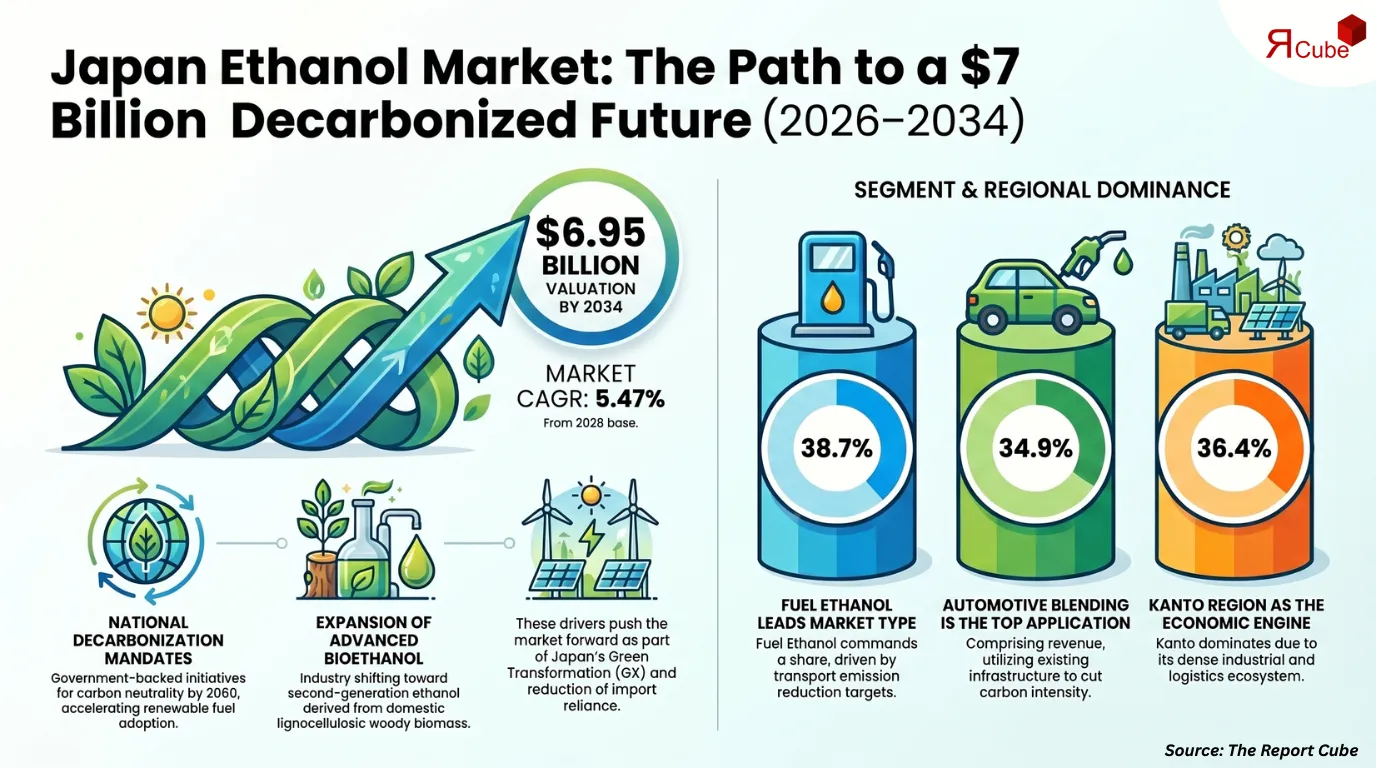
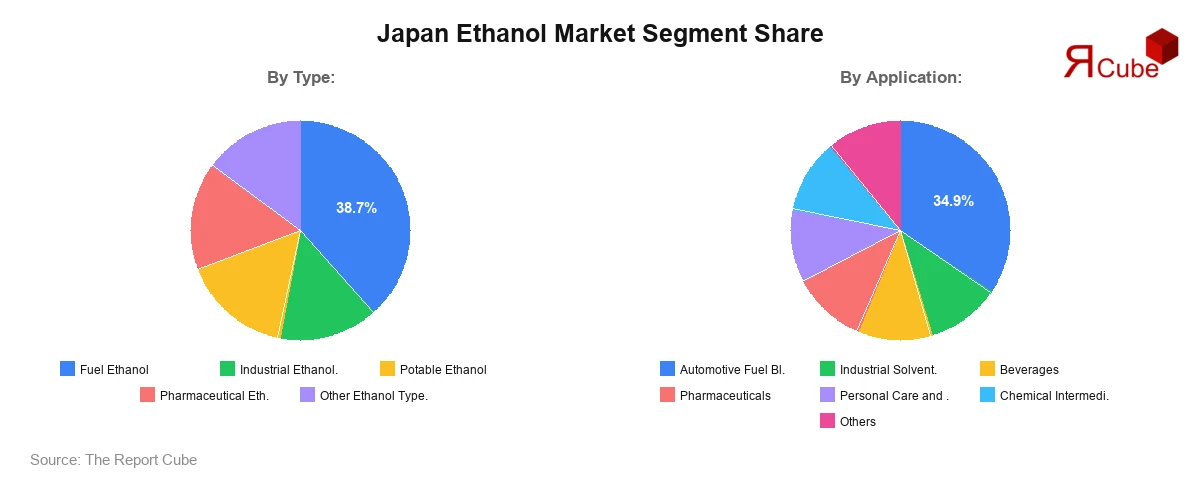
Fuel Ethanol segment leads the market with approximately 38.7% share.
By Application:
Automotive Fuel Blending segment dominates the market with nearly 34.9% of revenue.
Regional Outlook:
Kanto region dominates the Japan Ethanol Market with around 36.4% share.
Japan Ethanol Market Insights & Analysis
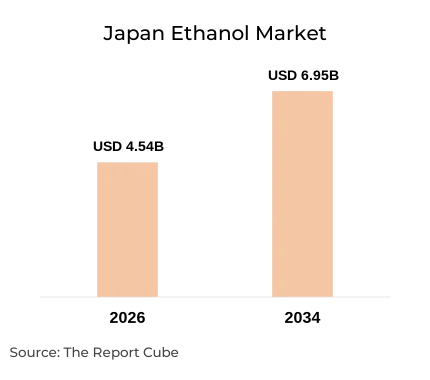
The Japan Ethanol Market is anticipated to register a CAGR of around 5.47% during the forecast period 2026-2034. The market size is valued at USD 4.54 billion in 2026 and is projected to reach USD 6.95 billion by 2034. Market expansion is being shaped by Japan’s long-term decarbonization roadmap, increasing investment in renewable fuels, and growing emphasis on reducing dependence on imported fossil energy sources. Ethanol consumption is gaining momentum across transportation, pharmaceuticals, chemicals, and food processing industries due to its versatility and lower environmental footprint. Government-backed initiatives supporting carbon neutrality by 2050 are encouraging both public and private stakeholders to strengthen biofuel infrastructure and diversify feedstock sources. Rising interest in sustainable fuel alternatives is also prompting refiners and trading companies to explore greater ethanol integration within domestic energy supply chains.
Industrial developments across the country are accelerating the transition toward advanced bio-based production systems. Japanese corporations are increasingly partnering with biotechnology firms and forestry stakeholders to commercialize second-generation ethanol derived from lignocellulosic biomass. The 2025 announcement of Morisora Bio Refinery LLC by Nippon Paper Industries, Sumitomo Corporation, and Green Earth Institute reflects a broader industry shift toward utilizing domestic woody biomass resources. Such projects are expected to improve supply resilience while supporting regional economic development. Growth in pharmaceutical manufacturing, personal care products, specialty chemicals, and industrial solvents is creating additional demand for high-purity ethanol. As sustainability targets become more integrated into corporate investment strategies, the Japan ethanol industry is expected to experience steady technological advancement and broader commercial adoption throughout the forecast period.
Japan Ethanol Market Impact Analysis
| Factor | Type | Specific Impact on Market | Magnitude | Business Implication |
|---|---|---|---|---|
| Government Decarbonization Targets | Regulatory | Policies promote ethanol blending to cut transport emissions | High | Supports long term demand visibility for fuel grade ethanol |
| Reliance on Imported Feedstock | Environmental | Limited farmland forces dependence on overseas corn and sugar | High | Requires hedging and diversified sourcing to manage cost spikes |
| Growth in Biofuel Blending | Market | Higher ethanol gasoline blends lift industrial and fuel demand | Medium | Encourages capacity expansion and storage infrastructure upgrades |
| Competition from Other Renewables | Competitive | EV adoption and advanced biofuels limit ethanol volume upside | Medium | Pushes producers to target chemicals and industrial solvent uses |
| Price Volatility in Global Markets | Market | Imported ethanol and feedstock face fluctuating international prices | High | Necessitates flexible contracts and margin focused product mix |
| Innovation in Cellulosic Ethanol | Technological | R&D explores waste biomass routes to reduce import reliance | Medium | Creates scope for partnerships on advanced production technology |
| Industrial and Chemical Demand Base | Consumer | Stable use in solvents, pharma and coatings supports baseline need | Medium | Offers diversification beyond fuel segment for revenue stability |
Japan Ethanol Market Dynamics
Key Driver: Rising Demand for Renewable Transportation Fuels and Decarbonization Efforts
Japan's commitment to carbon reduction and energy diversification is a major factor driving the growth of the Japan ethanol market. Transportation remains one of the largest contributors to greenhouse gas emissions, encouraging policymakers and fuel suppliers to explore cleaner alternatives. Ethanol blending offers an effective solution to lower emissions while utilizing existing fuel infrastructure. Growing adoption of biofuel programs and increasing awareness regarding sustainable mobility are supporting ethanol demand across the country.
Moreover, automotive manufacturers and fuel distributors are collaborating to support low-carbon fuel ecosystems. Demand for fuel ethanol continues to increase as public and private sector stakeholders work toward long-term environmental goals. The expansion of renewable fuel consumption is expected to strengthen ethanol market size, market share, and overall industry growth throughout the forecast period.
Industry Trends: Expansion of Advanced Bioethanol and Biomass-Based Production
A significant trend shaping the Japan ethanol industry is the development of advanced bioethanol production technologies. Companies are increasingly investing in cellulosic ethanol and biomass conversion systems to reduce dependence on imported feedstocks. Research initiatives involving agricultural residues, forestry waste, and woody biomass are creating new opportunities for sustainable ethanol production. These innovations are helping improve production efficiency while supporting national sustainability targets.
Industry participants are also focusing on circular economy strategies that utilize waste materials as feedstocks. Growing investments in biorefineries and integrated biofuel production facilities are accelerating ethanol market trends across Japan. As technological advancements improve commercial viability, advanced ethanol production is expected to contribute significantly to future market demand and long-term industry competitiveness.
Book your FREE 30-minute expert consultation today
Contact UsMajor Challenge: Dependence on Imported Feedstocks and Production Costs
One of the key challenges facing the Japan ethanol market is the limited availability of domestic feedstock resources. A substantial portion of ethanol production relies on imported raw materials, exposing manufacturers to fluctuations in global commodity prices and supply chain disruptions. Rising logistics expenses and currency exchange volatility can directly impact production economics and profit margins for ethanol producers.
Additionally, advanced ethanol production technologies require significant capital investment and operational expertise. Competition from conventional fossil fuels and alternative renewable energy solutions can further affect market penetration. Addressing feedstock security and reducing production costs remain critical challenges that industry participants must overcome to maintain sustainable ethanol market growth in Japan.
Opportunity: Growing Applications Across Pharmaceuticals, Chemicals, and Personal Care Industries
Beyond transportation fuels, expanding industrial applications present substantial opportunities for the Japan ethanol market. Ethanol is widely utilized in pharmaceutical formulations, sanitization products, industrial solvents, and cosmetic manufacturing. Increasing demand for high-purity ethanol across these sectors is creating new revenue streams for producers. The healthcare industry's focus on quality standards and product safety further supports demand growth.
In addition, chemical manufacturers are incorporating bio-based ingredients into production processes to meet sustainability objectives. Consumer preference for environmentally responsible products is encouraging greater use of renewable ethanol in personal care and specialty chemical applications. These developments are expected to strengthen ethanol market demand, diversify end-use sectors, and create long-term growth opportunities across Japan.
Japan Ethanol Market Segment-wise Analysis
By Type:
- Fuel Ethanol
- Industrial Ethanol
- Potable Ethanol
- Pharmaceutical Ethanol
- Other Ethanol Types
Fuel Ethanol is projected to maintain its position as the largest segment in the Japan Ethanol Market, accounting for approximately 38.7% of total revenue in 2026. Demand growth is closely linked to national efforts aimed at lowering transportation-related emissions and diversifying energy sources. Fuel suppliers continue to evaluate renewable blending strategies as part of broader carbon reduction initiatives. Increasing attention to energy security and sustainable mobility solutions is supporting long-term adoption across both public and private transportation networks.
Market participants are investing in supply agreements, logistics infrastructure, and advanced biofuel technologies to ensure reliable ethanol availability. The segment also benefits from growing policy alignment between environmental objectives and transportation fuel standards. As Japan continues to pursue lower-emission mobility systems, fuel ethanol consumption is expected to expand steadily, reinforcing its leadership position within the overall market throughout the forecast period.
By Application:
- Automotive Fuel Blending
- Industrial Solvents
- Beverages
- Pharmaceuticals
- Personal Care and Cosmetics
- Chemical Intermediates
- Others
Automotive Fuel Blending represents the leading application segment within the Japan Ethanol Market, contributing nearly 34.9% of total market revenue. Ethanol blending provides an immediate pathway for reducing carbon intensity within existing transportation systems while minimizing infrastructure replacement costs. This practical advantage has encouraged growing interest among fuel distributors and policymakers focused on achieving measurable emissions reductions.
Steady vehicle usage across urban and industrial regions continues to support demand for cleaner fuel alternatives. Ethanol-blended fuels offer environmental benefits while maintaining compatibility with existing fuel distribution networks and many vehicle technologies. Rising investments in sustainable transportation initiatives and broader energy transition strategies are expected to strengthen demand from the automotive sector, ensuring continued segment leadership during the forecast period.
Regional Projection of Japan Ethanol Industry
- Hokkaido
- Tohoku
- Kanto
- Shikoku
- Others
Kanto is expected to remain the leading regional market, accounting for approximately 36.4% of Japan ethanol industry revenue. The region benefits from a highly developed industrial ecosystem, extensive transportation infrastructure, and strong concentrations of chemical, pharmaceutical, automotive, and manufacturing activities. These industries collectively generate substantial demand for ethanol across fuel, solvent, and specialty applications.
Tokyo and surrounding prefectures serve as major commercial and logistics centers, facilitating efficient distribution of ethanol products throughout the country. Strong investment activity in sustainability-focused industrial projects and renewable energy initiatives further supports regional market growth. The presence of leading corporations, research institutions, and advanced manufacturing facilities creates favorable conditions for technology adoption and product innovation. As industrial decarbonization efforts continue to expand, Kanto is expected to retain its dominant position within the Japan Ethanol Market through 2034.
Need insights for a specific region within this market?
Request Regional DataJapan Ethanol Market Regional Analysis
The Japan ethanol market shows varied regional dynamics driven by imports, industrial demand, and sectoral specialization across key islands and economic zones.
| Cluster | Demand Level | Key Areas | System Dominance | Core Demand Logic | Growth Nature |
|---|---|---|---|---|---|
| Hokkaido | Medium | Sapporo, Asahikawa | Bioethanol for fuels | Agriculture and blended gasoline | Steady, policy-linked |
| Tohoku | Medium | Sendai, Aomori | Bioethanol from crops | Feedstock base and pilots | Tech-driven expansion |
| Kanto | High | Tokyo, Yokohama | Industrial and pharma grade | Refining, pharma, cosmetics | Diverse, value-added |
| Shikoku | Low | Takamatsu, Matsuyama | Industrial solvents use | Small industry and blending | Niche, gradual |
| Others | High | Kansai, Kyushu, Chugoku | Fuel and chemical ethanol | Refineries and auto clusters | Fast, decarbonization-led |
Government Initiatives & Policies
- GX Promotion Strategy (2025): Japan continues implementing its Green Transformation strategy to accelerate decarbonization, renewable fuel adoption, and sustainable industrial development, supporting biofuel and ethanol market growth.
- Biomass Industrial City Initiative (2025-2026): The Japanese government supports regional biomass utilization projects that encourage biofuel production, resource recycling, and renewable energy development using local feedstocks.
Japan Ethanol Industry Recent Developments
- 2025: Nippon Paper Industries, Sumitomo Corporation, and Green Earth Institute announced the establishment of Morisora Bio Refinery LLC to produce bioethanol and biochemicals from woody biomass. The venture plans to construct a semi-commercial facility at the Iwanuma Mill in Miyagi Prefecture, utilizing sustainable forest resources from the Tohoku region to advance domestic renewable fuel production.
Why Choose This Report?
- Provides a comprehensive overview of the overall market analysis, encompassing key trends, consumer behavior analysis, and risk assessment to support strategic decision-making.
- Provides accurate, up-to-date insights into market size, segmentation, and emerging opportunities, helping to minimize risk & capitalizing on growth.
- Gives deep understanding of target audience preferences, investment habits, and communication channels for enhanced product development & marketing effectiveness.
- Delivers competitive analysis & benchmarking, uncovering the strengths & weaknesses of market competitors to guide strategies.
- Consolidate comprehensive market intelligence, reducing reasoning & streamlining research efforts.
- Facilitates customized market segmentation & risk mitigation strategies, fine-tuned to the business objectives.
- Aids in identifying both market challenges & untapped opportunities within the industry to drive long-term business growth.
- Provides valuable information based on actual customer data & search trends.
Table of Contents
- Introduction
- Objective of the Study
- Product and Category Definition
- Market Segmentation
- Study Variables
- Research Methodology
- Secondary Data Points
- Breakdown of Secondary Sources
- Primary Data Points
- Breakdown of Primary Interviews
- Secondary Data Points
- Executive Summary
- Market Dynamics
- Emerging Opportunities
- Adoption Trends
- Demand Drivers
- Disruption Analysis (Challenges)
- Industry Analysis & Strategic Insights
- Supply/Value Chain Analysis
- Pricing Analysis
- Go-To-Market (GTM) Strategy
- BCG Matrix
- Recent Trends and Developments
- Import and Export Analysis
- Regulatory and Policy Landscape
- Region-wise Policies
- Government Initiatives
- Japan Ethanol Market Overview and Forecast Analysis (2021-2034)
- Market Size, By Value, By Growth Rate (CAGR/USD Million)
- Market Share, By Type
- Fuel Ethanol
- Industrial Ethanol
- Potable Ethanol
- Pharmaceutical Ethanol
- Other Ethanol Types
- Market Share, By Type Raw Material
- Sugarcane Molasses
- Sugarcane Juice
- Damaged Food Grains
- Corn
- Other Feedstocks
- Market Share, By Type Purity
- Hydrous Ethanol
- Anhydrous Ethanol
- Extra-Neutral Alcohol
- Market Share, By Type Application
- Automotive Fuel Blending
- Industrial Solvents
- Beverages
- Pharmaceuticals
- Personal Care and Cosmetics
- Chemical Intermediates
- Othes
- Market Share, By Region
- Hokkaido
- Tohoku
- Kanto
- Shikoku
- Others
- Market Share, By Company
- Revenue Shares and Analysis
- Competitive Landscape
- Hokkaido Ethanol Market Overview and Forecast Analysis (2021-2034)
- Market Size, By Value, By Growth Rate (CAGR/USD Million)
- Market Share, By Type
- Market Share, By Type Raw Material
- Market Share, By Type Purity
- Market Share, By Type Application
- Tohoku Ethanol Market Overview and Forecast Analysis (2021-2034)
- Market Size, By Value, By Growth Rate (CAGR/USD Million)
- Market Share, By Type
- Market Share, By Type Raw Material
- Market Share, By Type Purity
- Market Share, By Type Application
- Kanto Ethanol Market Overview and Forecast Analysis (2021-2034)
- Market Size, By Value, By Growth Rate (CAGR/USD Million)
- Market Share, By Type
- Market Share, By Type Raw Material
- Market Share, By Type Purity
- Market Share, By Type Application
- Shikoku Ethanol Market Overview and Forecast Analysis (2021-2034)
- Market Size, By Value, By Growth Rate (CAGR/USD Million)
- Market Share, By Type
- Market Share, By Type Raw Material
- Market Share, By Type Purity
- Market Share, By Type Application
- Competitive Analysis, 2026
- Market Share of Key Players
- Competitive Mapping for Each Segment and Companies Operating Regionally
- Hokkaido Ethanol Companies Share and Competitive Analysis, 2026
- Tohoku Ethanol Companies Share and Competitive Analysis, 2026
- Kanto Ethanol Companies Share and Competitive Analysis, 2026
- Shikoku Ethanol Companies Share and Competitive Analysis, 2026
- Company Profile (Partial List)
- Nippon Biofuel Co., Ltd.
- Company Overview
- Product Portfolio
- Strategic Alliances/Partnerships
- Recent Developments
- KH Neochem Co., Ltd.
- Company Overview
- Product Portfolio
- Strategic Alliances/Partnerships
- Recent Developments
- Crasus Chemical Inc.
- Company Overview
- Product Portfolio
- Strategic Alliances/Partnerships
- Recent Developments
- Kansai Chemical Engineering
- Company Overview
- Product Portfolio
- Strategic Alliances/Partnerships
- Recent Developments
- Eneos Corporation
- Company Overview
- Product Portfolio
- Strategic Alliances/Partnerships
- Recent Developments
- Mitsubishi Chemical Corp.
- Company Overview
- Product Portfolio
- Strategic Alliances/Partnerships
- Recent Developments
- Kumiai Chemical Industry
- Company Overview
- Product Portfolio
- Strategic Alliances/Partnerships
- Recent Developments
- ITOCHU Corporation
- Company Overview
- Product Portfolio
- Strategic Alliances/Partnerships
- Recent Developments
- Japan Biofuels Supply LLP (JBSL)
- Company Overview
- Product Portfolio
- Strategic Alliances/Partnerships
- Recent Developments
- Sekisui Chemical Co., Ltd.
- Company Overview
- Product Portfolio
- Strategic Alliances/Partnerships
- Recent Developments
- Others (Partial List)
- Nippon Biofuel Co., Ltd.
- Contact Us and Disclaimer
Top Key Players & Market Share Outlook
- Nippon Biofuel Co., Ltd.
- KH Neochem Co., Ltd.
- Crasus Chemical Inc.
- Kansai Chemical Engineering
- Eneos Corporation
- Mitsubishi Chemical Corp.
- Kumiai Chemical Industry
- ITOCHU Corporation
- Japan Biofuels Supply LLP (JBSL)
- Sekisui Chemical Co., Ltd.
Frequently Asked Questions






