



Build Your Custom Market Intelligence Report
Customize Your ReportJapan Hospital Drug Waste Management Market Key Highlights
By Type of Waste:
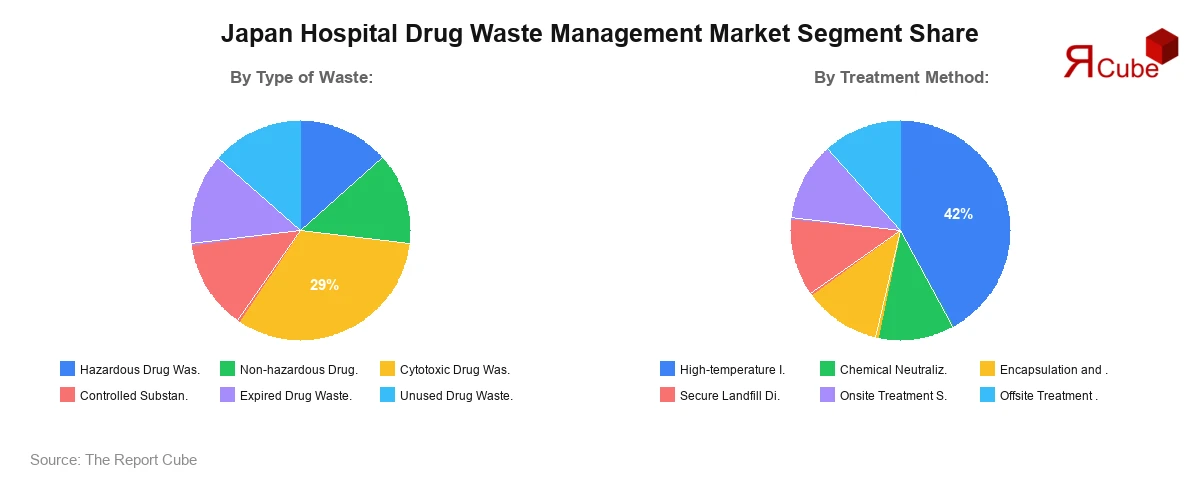
Cytotoxic Drug Waste segment leads the market with around 29% market share.
By Treatment Method:
High-temperature Incineration segment dominates the market with nearly 42% of revenue.
Regional Outlook:
Honshu region dominates the Japan Hospital Drug Waste Management Market with approximately 64% share.
Japan Hospital Drug Waste Management Market Insights & Analysis
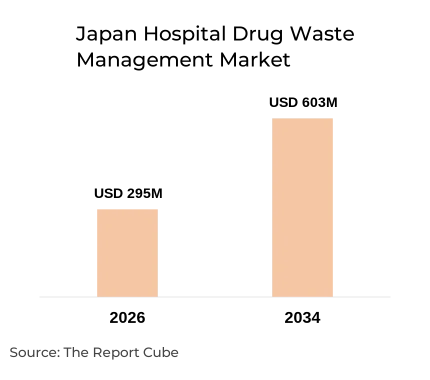
The Japan Hospital Drug Waste Management Market is anticipated to register a CAGR of around 9.4% during the forecast period 2026-2034. The market size is valued at USD 295 million in 2026 and is projected to reach USD 603 million by 2034. The market is evolving rapidly as healthcare institutions in Japan adopt stricter waste handling protocols aligned with environmental safety and public health standards. Rising pharmaceutical consumption, particularly specialty and oncology drugs, has significantly increased the volume of hazardous and cytotoxic waste generated across hospitals.
Growth is also supported by rising investments in advanced waste treatment infrastructure, including automated segregation systems and high-efficiency incineration technologies. Government-backed sustainability initiatives and hospital accreditation requirements are encouraging healthcare providers to adopt compliant waste management systems. Leading companies are expanding integrated service offerings, combining collection, treatment, and compliance reporting into unified platforms. Additionally, Japan’s aging population and increasing hospital admissions are driving consistent waste generation, further strengthening demand for reliable and technologically advanced drug waste management solutions.
Japan Hospital Drug Waste Management Market Dynamics
Key Driver: Rising Pharmaceutical Usage and Stringent Regulatory Compliance
The primary growth driver of the Japan Hospital Drug Waste Management Market is the increasing consumption of pharmaceuticals, especially high-value specialty and oncology drugs. Hospitals in Japan generate over 18% more pharmaceutical waste compared to 2020 levels, driven by increased chronic disease management and advanced treatment protocols. This surge directly raises the need for efficient waste segregation, handling, and disposal systems. Additionally, strict national regulations require hospitals to comply with detailed waste tracking and reporting standards, pushing healthcare facilities to adopt structured waste management solutions.
Furthermore, regulatory enforcement has intensified across Japan, with periodic inspections and compliance audits becoming more frequent. Hospitals are investing in automated systems such as barcoded waste tracking and digital documentation platforms to meet compliance standards. This shift ensures transparency, reduces risk of contamination, and enhances operational efficiency, making compliance a central driver of market growth.
Book your FREE 30-minute expert consultation today
Contact UsIndustry Trends: Integration of Digital Tracking and Automated Waste Segregation Systems
The market is witnessing a clear transition toward digitalization, with hospitals increasingly adopting automated tracking systems and integrated hospital information systems. Nearly 46% of large hospitals in Japan have implemented digital waste tracking platforms by 2025, enabling real-time monitoring of pharmaceutical waste streams. These systems improve traceability and reduce human error in waste handling processes.
Another notable trend is the adoption of barcoded segregation systems, which ensure accurate classification of hazardous and non-hazardous waste at the source. Integration with hospital IT infrastructure allows seamless documentation and compliance reporting. This trend is reshaping operational workflows and improving safety standards across healthcare facilities, making waste management more efficient and data-driven.
Major Challenge: High Operational Costs and Complex Waste Handling Requirements
The Japan Hospital Drug Waste Management Market faces challenges due to high operational costs associated with advanced waste treatment technologies. High-temperature incineration systems, chemical neutralization processes, and compliance monitoring tools require significant capital investment. Smaller hospitals often struggle to adopt these solutions, limiting market penetration in certain segments.
Additionally, the complexity of handling multiple waste categories such as cytotoxic, controlled substances, and expired drugs increases operational burden. Each category requires specific treatment protocols and regulatory compliance measures. This complexity leads to higher training costs and operational inefficiencies, which can slow adoption rates across mid-sized healthcare facilities.
Opportunity: Expansion of Integrated Waste Management Services and Outsourcing Models
The market presents strong opportunities through the expansion of integrated waste management services. Hospitals are increasingly outsourcing waste handling operations to specialized service providers, allowing them to focus on core healthcare delivery. Integrated service contracts that combine collection, treatment, and compliance reporting are gaining traction, improving efficiency and reducing administrative burden.
Additionally, the adoption of offsite treatment facilities is expanding rapidly, especially in urban regions. Service providers are investing in centralized waste processing units with advanced technologies, enabling cost-effective and scalable solutions. This shift toward outsourcing and integrated service models is expected to unlock new revenue streams and accelerate market growth in the coming years.
Japan Hospital Drug Waste Management Market Segment-wise Analysis
By Type of Waste:
- Hazardous Drug Waste
- Non-hazardous Drug Waste
- Cytotoxic Drug Waste
- Controlled Substance Waste
- Expired Drug Waste
- Unused Drug Waste
The cytotoxic drug waste segment holds a dominant share of approximately 29% in the Japan Hospital Drug Waste Management Market. This dominance is driven by the increasing use of chemotherapy drugs in oncology treatments, particularly in specialized cancer care units. Cytotoxic waste requires strict handling, storage, and disposal protocols due to its hazardous nature, leading hospitals to invest in specialized waste management systems.
Additionally, Japan’s rising cancer incidence rates have led to a steady increase in chemotherapy procedures, directly contributing to higher cytotoxic waste generation. Advanced containment and disposal methods, including high-temperature incineration, further support the segment’s growth.
By Treatment Method:
- High-temperature Incineration
- Chemical Neutralization
- Encapsulation and Solidification
- Secure Landfill Disposal
- Onsite Treatment Systems
- Offsite Treatment Facilities
High-temperature incineration dominates the treatment method segment, accounting for nearly 42% of total market revenue. This method is widely preferred due to its effectiveness in completely destroying hazardous pharmaceutical compounds, including cytotoxic and controlled substances.
Hospitals and waste management providers in Japan rely on advanced incineration facilities that meet strict emission standards set by environmental authorities. The increasing adoption of centralized incineration plants and government support for environmentally safe disposal methods further strengthen this segment’s leadership position.
Regional Projection of Japan Hospital Drug Waste Management Industry
- Hokkaido
- Honshu
- Shikoku
- Kyushu
Honshu leads the Japan Hospital Drug Waste Management Market with approximately 64% share, driven by its dense population and concentration of major healthcare facilities. Cities like Tokyo and Osaka host a large number of advanced hospitals and research centers, generating substantial pharmaceutical waste volumes. The region also benefits from well-developed waste management infrastructure and strong regulatory enforcement. Investments in modern incineration plants and digital waste tracking systems are significantly higher in Honshu compared to other regions. Additionally, the presence of leading service providers and continuous technological upgrades contribute to the region’s dominant position in the market.
Government Initiatives & Policies
- Japan Ministry of the Environment Hazardous Waste Control 2025 Update: Strengthens pharmaceutical waste segregation and mandates advanced incineration standards for medical institutions.
- Japan Pharmaceuticals and Medical Devices Act Enforcement 2025 Revision: Enhances traceability, disposal compliance, and monitoring of expired and controlled drugs across hospital networks.
Japan Hospital Drug Waste Management Industry Recent Developments
- 2025: Veolia acquired Zeeklite Co., Ltd. landfill facility in Yamagata, expanding hazardous waste capacity and strengthening integrated pharmaceutical waste management capabilities across Japan’s healthcare sector.
- 2025: Veolia expanded hazardous waste treatment capacity in Japan through acquisition of Zeeklite Co., Ltd., strengthening integrated pharmaceutical waste management services.
- 2025: Macnica deployed AI-powered “Melt King IOT” sterilizer at Machida City Hospital, reducing pharmaceutical waste volume by up to 80% and lowering emissions.
Need insights for a specific region within this market?
Request Regional DataWhy Choose This Report?
- Provides a comprehensive overview of the overall market analysis, encompassing key trends, consumer behavior analysis, and risk assessment to support strategic decision-making.
- Provides accurate, up-to-date insights into market size, segmentation, and emerging opportunities, helping to minimize risk & capitalizing on growth.
- Gives deep understanding of target audience preferences, investment habits, and communication channels for enhanced product development & marketing effectiveness.
- Delivers competitive analysis & benchmarking, uncovering the strengths & weaknesses of market competitors to guide strategies.
- Consolidate comprehensive market intelligence, reducing reasoning & streamlining research efforts.
- Facilitates customized market segmentation & risk mitigation strategies, fine-tuned to the business objectives.
- Aids in identifying both market challenges & untapped opportunities within the industry to drive long-term business growth.
- Provides valuable information based on actual customer data & search trends.
Table of Contents
- Introduction
- Objective of the Study
- Product and Category Definition
- Market Segmentation
- Study Variables
- Research Methodology
- Secondary Data Points
- Breakdown of Secondary Sources
- Primary Data Points
- Breakdown of Primary Interviews
- Secondary Data Points
- Executive Summary
- Market Dynamics
- Drivers
- Challenges
- Opportunity Assessment
- Recent Trends and Developments
- Regulatory and Policy Landscape
- Japan Hospital Drug Waste Management Market Overview (2021-2034)
- Market Size, By Value (USD Million)
- Market Share, By Type of Waste
- Hazardous Drug Waste
- Non‑hazardous Drug Waste
- Cytotoxic Drug Waste
- Controlled Substance Waste
- Expired Drug Waste
- Unused Drug Waste
- Market Share, By Treatment Method
- High‑temperature Incineration
- Chemical Neutralization
- Encapsulation and Solidification
- Secure Landfill Disposal
- Onsite Treatment Systems
- Offsite Treatment Facilities
- Market Share, By Waste Source Type
- Inpatient Hospital Pharmacies
- Outpatient and Ambulatory Pharmacies
- Operating Rooms
- Intensive Care Units
- Emergency Departments
- Oncology and Chemotherapy Units
- Market Share, By Drug Value Category
- High‑value Specialty Drugs
- Routine Prescription Drugs
- Over‑the‑Counter Drugs
- Investigational Drugs
- Market Share, By Service Model
- Onsite Waste Management Services
- Offsite Waste Management Services
- Integrated Waste Management Contracts
- Consulting and Compliance Services
- Market Share, By Service Types
- Collection and Transportation Services
- Segregation and Labeling Services
- Treatment and Final Disposal Services
- Documentation and Reporting Services
- Regulatory Compliance and Training Services
- Market Share, By Technology Adoption Level
- Basic Compliance Systems
- Automated Tracking Systems
- Barcoded Waste Segregation Systems
- Digital Documentation Platforms
- Integrated Hospital Information Systems
- Market Share, By Region
- Hokkaido
- Honshu
- Shikoku
- Kyushu
- Market Share, By Company
- Revenue Shares and Analysis
- Competitive Landscape
- Hokkaido Hospital Drug Waste Management Market
- Market Size, By Value (USD Million)
- Market Share, By Type of Waste
- Market Share, By Treatment Method
- Market Share, By Waste Source Type
- Market Share, By Drug Value Category
- Market Share, By Service Model
- Market Share, By Service Types
- Market Share, By Technology Adoption Level
- Honshu Hospital Drug Waste Management Market
- Market Size, By Value (USD Million)
- Market Share, By Type of Waste
- Market Share, By Treatment Method
- Market Share, By Waste Source Type
- Market Share, By Drug Value Category
- Market Share, By Service Model
- Market Share, By Service Types
- Market Share, By Technology Adoption Level
- Shikoku Hospital Drug Waste Management Market
- Market Size, By Value (USD Million)
- Market Share, By Type of Waste
- Market Share, By Treatment Method
- Market Share, By Waste Source Type
- Market Share, By Drug Value Category
- Market Share, By Service Model
- Market Share, By Service Types
- Market Share, By Technology Adoption Level
- Kyushu Hospital Drug Waste Management Market
- Market Size, By Value (USD Million)
- Market Share, By Type of Waste
- Market Share, By Treatment Method
- Market Share, By Waste Source Type
- Market Share, By Drug Value Category
- Market Share, By Service Model
- Market Share, By Service Types
- Market Share, By Technology Adoption Level
- Competitive Outlook and Company Profiles
- Republic Services
- Company Overview
- Product Portfolio
- Strategic Alliances/Partnerships
- Recent Developments
- Clean Harbors, Inc.
- Company Overview
- Product Portfolio
- Strategic Alliances/Partnerships
- Recent Developments
- Daniels Sharpsmart Inc.
- Company Overview
- Product Portfolio
- Strategic Alliances/Partnerships
- Recent Developments
- Waste Management, Inc.
- Company Overview
- Product Portfolio
- Strategic Alliances/Partnerships
- Recent Developments
- Remondis SE & Co. KG
- Company Overview
- Product Portfolio
- Strategic Alliances/Partnerships
- Recent Developments
- Veolia
- Company Overview
- Product Portfolio
- Strategic Alliances/Partnerships
- Recent Developments
- BioMedical Waste Solutions, LLC
- Company Overview
- Product Portfolio
- Strategic Alliances/Partnerships
- Recent Developments
- Kansai Tsushyou Co., Ltd.
- Company Overview
- Product Portfolio
- Strategic Alliances/Partnerships
- Recent Developments
- Stericycle, Inc.
- Company Overview
- Product Portfolio
- Strategic Alliances/Partnerships
- Recent Developments
- Nippon Medical Waste Management
- Company Overview
- Product Portfolio
- Strategic Alliances/Partnerships
- Recent Developments
- Others
- Republic Services
- Contact Us and Disclaimer
Top Key Players & Market Share Outlook
- Republic Services
- Clean Harbors, Inc.
- Daniels Sharpsmart Inc.
- Waste Management, Inc.
- Remondis SE & Co. KG
- Veolia
- BioMedical Waste Solutions, LLC
- Kansai Tsushyou Co., Ltd.
- Stericycle, Inc.
- Nippon Medical Waste Management
Frequently Asked Questions






