



Build Your Custom Market Intelligence Report
Customize Your ReportGlobal Matcha Powder Market Insights & Analysis
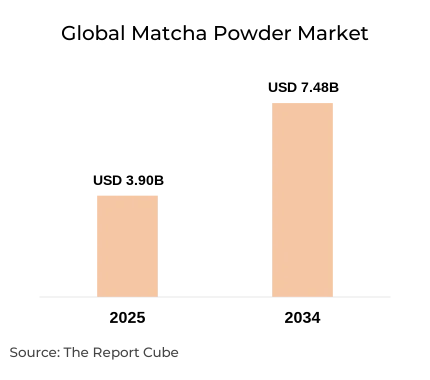
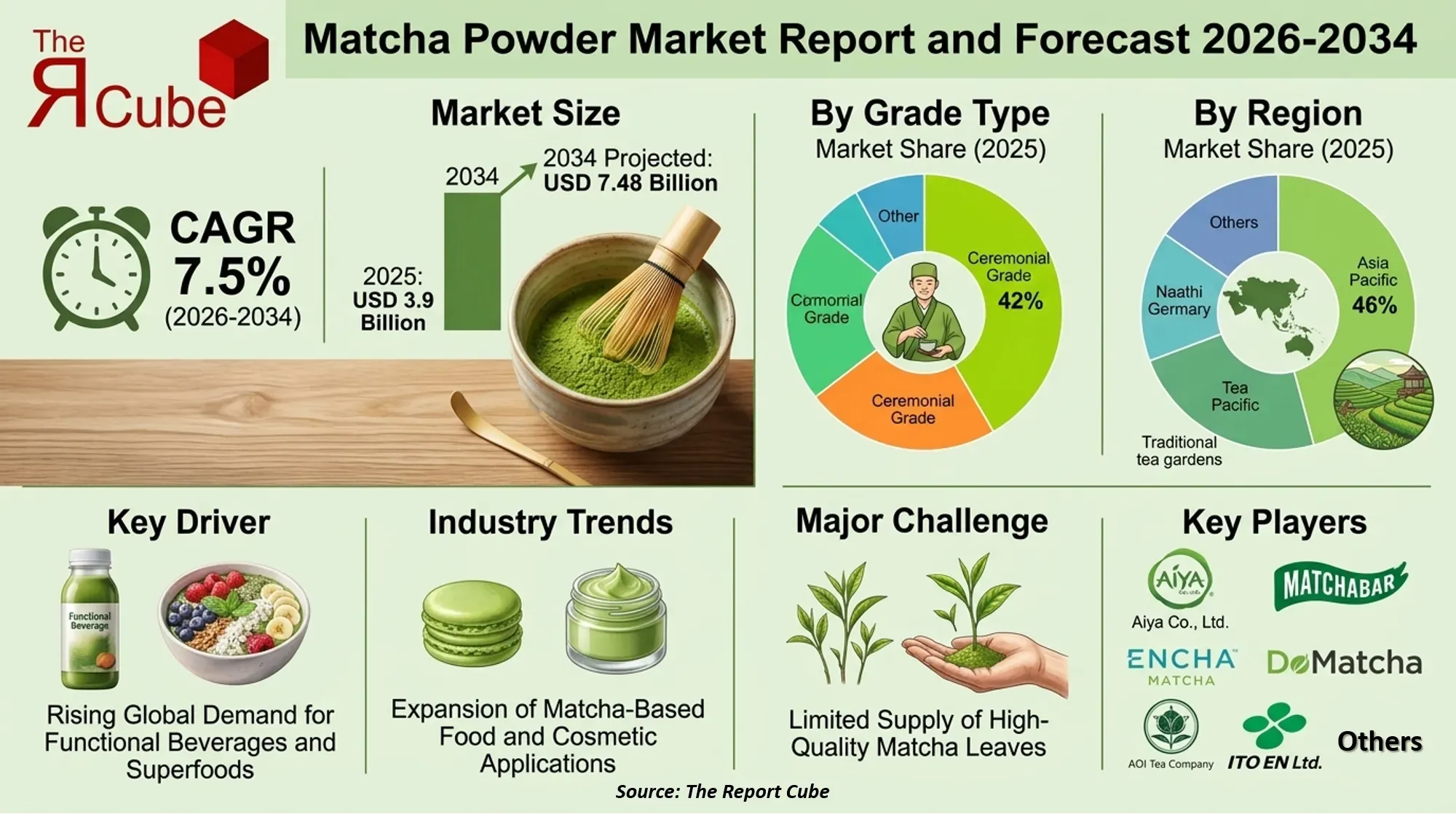
The Global Matcha Powder Market is anticipated to register a CAGR of 7.5% during 2026-2034. The market size was valued at USD 3.9 Billion in 2025 and is projected to reach USD 7.48 Billion by 2034.
The global matcha powder market has witnessed notable growth over the past decade as consumers increasingly shift toward functional beverages and natural superfoods. Matcha, a finely ground powder made from specially grown green tea leaves, has gained popularity for its high antioxidant content, amino acids, and metabolism-supporting properties. Rising consumer awareness regarding preventive healthcare and wellness-focused diets has accelerated the demand for matcha across beverages, food products, supplements, and cosmetics. The expansion of café culture worldwide and the growing popularity of matcha-based beverages such as lattes, smoothies, and ready-to-drink teas are also contributing significantly to the market’s expansion.
Another factor supporting the growth of the matcha powder market is the increasing adoption of organic and clean-label ingredients. Consumers in North America and Europe are actively seeking plant-based and natural ingredients in daily food consumption, which has encouraged food manufacturers to incorporate matcha into bakery products, confectionery items, and dairy alternatives. Additionally, the global rise in vegan and vegetarian populations has boosted demand for matcha as a natural flavoring and nutritional ingredient.
The market is also experiencing growth due to product innovation and the expansion of distribution channels. E-commerce platforms and specialty health food stores have made premium matcha products more accessible to consumers. Leading companies are investing in sustainable sourcing from Japan and other emerging matcha-producing regions to maintain quality standards. Furthermore, matcha’s increasing use in cosmetics and skincare products due to its anti-inflammatory and anti-aging benefits is opening new revenue streams for manufacturers. As consumer lifestyles continue to prioritize health, convenience, and functional nutrition, the global matcha powder market is expected to maintain a strong growth trajectory through 2034.
Global Matcha Powder Market Recent Developments
- 2025: ITO EN Ltd. expanded its premium ceremonial-grade matcha portfolio for North American retail and specialty café chains.
- 2025: MatchaBar launched ready-to-drink organic matcha energy beverages targeting health-conscious urban consumers.
Government Initiatives & Policies
- Japan Green Tea Export Promotion Program: Initiative supporting global export of premium Japanese tea including matcha.
- EU Organic Farming Policy: European initiative promoting organic agricultural products including organic tea cultivation.
Global Matcha Powder Market Dynamics
Key Driver: Rising Global Demand for Functional Beverages and Superfoods
The increasing global demand for functional beverages and nutrient-rich superfoods is a primary driver of the matcha powder market. Consumers are increasingly adopting beverages that provide additional health benefits beyond basic hydration. Matcha powder is rich in catechins, particularly epigallocatechin gallate (EGCG), which is known for its strong antioxidant properties. These health benefits make matcha an attractive ingredient in functional drinks aimed at improving metabolism, boosting energy levels, and supporting cardiovascular health.
Additionally, consumers are moving away from traditional sugary beverages toward healthier alternatives. Matcha-based drinks such as matcha lattes, iced matcha beverages, and matcha smoothies are gaining traction among millennials and younger consumers. According to industry estimates, functional beverage consumption has increased by nearly 18% globally over the past five years, significantly supporting the adoption of matcha as a core ingredient.
Furthermore, the expansion of specialty cafés and global coffee chains offering matcha-based drinks has significantly boosted market visibility. Major café chains have introduced matcha drinks as part of their permanent menu offerings, which has encouraged broader consumer adoption. As a result, the beverage industry continues to be one of the largest consumers of matcha powder worldwide.
Industry Trends: Expansion of Matcha-Based Food and Cosmetic Applications
One of the most notable trends shaping the matcha powder market is the diversification of applications beyond beverages. Food manufacturers are increasingly incorporating matcha powder into bakery items, desserts, snacks, and dairy products to enhance flavor and nutritional value. Matcha-flavored cakes, cookies, ice creams, and chocolates are becoming increasingly popular in global markets, particularly in North America and Europe.
Another significant trend is the rapid adoption of matcha in the cosmetics and personal care industry. Matcha contains antioxidants and anti-inflammatory compounds that help protect skin from oxidative stress and environmental damage. As a result, skincare brands are incorporating matcha into face masks, creams, and serums designed to improve skin health and prevent premature aging.
The increasing popularity of plant-based diets is also influencing product development within the matcha industry. Vegan-friendly matcha-based snacks, protein drinks, and supplements are gaining strong traction among health-conscious consumers. This diversification of applications is expected to significantly broaden the market potential of matcha powder across multiple industries.
Major Challenge: Limited Supply of High-Quality Matcha Leaves
Despite its growing demand, the matcha powder market faces challenges related to the limited supply of high-quality matcha leaves. Authentic matcha production requires specific cultivation methods including shading tea plants for several weeks before harvest, which enhances chlorophyll content and amino acid levels. This specialized cultivation process limits production capacity and makes high-grade matcha relatively expensive compared to traditional green tea.
Most premium matcha production is concentrated in Japan, particularly in regions such as Uji and Nishio. As global demand continues to grow, maintaining consistent quality while scaling production has become increasingly challenging for producers. Supply chain constraints and fluctuating agricultural yields can also affect the availability of premium-grade matcha.
Additionally, the growing presence of low-quality or adulterated matcha products in global markets can negatively impact consumer trust. These products often use lower-grade tea leaves or artificial coloring to imitate authentic matcha, creating challenges for premium brands that emphasize quality and authenticity.
Opportunity: Growth of Online Retail and Global Health Trends
The rapid expansion of e-commerce and online retail platforms presents significant growth opportunities for the matcha powder market. Online channels allow consumers to easily access premium matcha products that may not be widely available in traditional retail stores. Specialty tea brands are leveraging digital platforms to reach global consumers and educate them about the health benefits and preparation methods of matcha.
Furthermore, global health and wellness trends are expected to significantly boost demand for matcha powder. Consumers are increasingly seeking natural ingredients that support energy, mental focus, and metabolic health. Matcha’s unique combination of caffeine and L-theanine provides sustained energy without the sudden crashes associated with coffee, making it attractive to professionals and students.
Additionally, innovations such as matcha protein powders, matcha dietary supplements, and matcha-based energy drinks are expanding the product portfolio within the industry. These developments are expected to create new opportunities for manufacturers while strengthening the overall market growth through 2034.
Global Matcha Powder Market Segment-wise Analysis
By Grade Type:
- Ceremonial Grade Matcha
- Premium Grade Matcha
- Culinary Grade Matcha
- Industrial Grade Matcha
Ceremonial grade matcha dominates the grade type segment, accounting for approximately 42% of the global matcha powder market share. This grade is considered the highest quality and is traditionally used in Japanese tea ceremonies. It is characterized by vibrant green color, smooth texture, and mild flavor profile, making it ideal for direct consumption as tea.
The increasing consumer preference for authentic and high-quality matcha products has significantly boosted demand for ceremonial grade matcha in international markets. Specialty tea brands and premium cafés often prioritize ceremonial-grade matcha to deliver superior taste and nutritional benefits to consumers. Furthermore, rising disposable income levels in developed economies have enabled consumers to purchase premium matcha products despite higher prices.
By Application:
- Beverages
- Food Products
- Dietary Supplements
- Cosmetics and Personal Care
The beverages segment dominates the application category, holding nearly 48% of the global market share. Matcha beverages such as lattes, ready-to-drink teas, smoothies, and energy drinks are gaining immense popularity among health-conscious consumers seeking natural caffeine alternatives.
The growing presence of specialty cafés and coffee chains offering matcha beverages has significantly increased consumer awareness and demand. Matcha lattes and iced matcha drinks have become staple menu items in many international café chains, attracting younger demographics interested in functional beverages.
Additionally, beverage manufacturers are introducing ready-to-drink matcha beverages packaged in bottles and cans to cater to busy consumers seeking convenient healthy drink options. The increasing availability of these products through supermarkets and online retail platforms further strengthens the growth of this segment.
Regional Projection of Global Matcha Powder Industry
- North America
- Europe
- Asia Pacific
- Middle East and Africa
Asia Pacific dominates the global matcha powder market, accounting for approximately 46% of the total market share. Japan remains the leading producer and exporter of high-quality matcha powder, with centuries-old cultivation techniques that ensure superior quality. The region’s strong tea culture and established production infrastructure continue to support its leadership in the global market.
Japan plays a critical role in global matcha production, with regions such as Uji, Kyoto, and Nishio recognized for producing premium ceremonial-grade matcha. The country exports a significant portion of its matcha production to North America and Europe, where demand for specialty tea products is rapidly increasing.
Additionally, the rising popularity of Japanese cuisine and traditional tea culture has contributed to increasing international demand for matcha products. Many global consumers associate matcha with Japanese authenticity and quality, which further strengthens Asia Pacific’s dominance in the market.
Why Choose This Report?
- Provides a comprehensive overview of the overall market analysis, encompassing key trends, consumer behavior analysis, and risk assessment to support strategic decision-making.
- Provides accurate, up-to-date insights into market size, segmentation, and emerging opportunities, helping to minimize risk & capitalizing on growth.
- Gives deep understanding of target audience preferences, investment habits, and communication channels for enhanced product development & marketing effectiveness.
- Delivers competitive analysis & benchmarking, uncovering the strengths & weaknesses of market competitors to guide strategies.
- Consolidate comprehensive market intelligence, reducing reasoning & streamlining research efforts.
- Facilitates customized market segmentation & risk mitigation strategies, fine-tuned to the business objectives.
- Aids in identifying both market challenges & untapped opportunities within the industry to drive long-term business growth.
- Provides valuable information based on actual customer data & search trends.
Table of Contents
- Introduction
- Objective of the Study
- Product and Category Definition
- Market Segmentation
- Study Variables
- Research Methodology
- Secondary Data Points
- Breakdown of Secondary Sources
- Primary Data Points
- Breakdown of Primary Interviews
- Secondary Data Points
- Executive Summary
- Market Dynamics
- Drivers
- Challenges
- Opportunity Assessment
- Recent Trends and Developments
- Regulatory and Policy Landscape
- Global Matcha Powder Market Overview (2026-2034)
- Market Size, By Value (USD Billion)
- Market Share, By Grade Type
- Ceremonial Grade Matcha
- Premium Grade Matcha
- Culinary Grade Matcha
- Market Share, By Form
- Organic Matcha Powder
- Conventional Matcha Powder
- Market Share, By Application
- Beverages
- Tea and Ready-to-Drink Beverages
- Smoothies and Lattes
- Food Products
- Bakery and Confectionery
- Dairy Products
- Snacks and Desserts
- Dietary Supplements
- Cosmetics and Personal Care
- Beverages
- Market Share, By Distribution Channel
- Supermarkets and Hypermarkets
- Specialty Stores
- Online Retail
- Health Food Stores
- Others
- Market Share, By Region
- North America
- Europe
- Asia Pacific
- Middle East and Africa
- South America
- Market Share, By Company
- Revenue Shares and Analysis
- Competitive Landscape
- North America Matcha Powder Market
- Market Size, By Value (USD Billion/Million)
- Market Share, By Grade Type
- Market Share, By Form
- Market Share, By Application
- Market Share, By Distribution Channel
- Europe Matcha Powder Market
- Market Size, By Value (USD Billion/Million)
- Market Share, By Grade Type
- Market Share, By Form
- Market Share, By Application
- Market Share, By Distribution Channel
- Asia Pacific Matcha Powder Market
- Market Size, By Value (USD Billion/Million)
- Market Share, By Grade Type
- Market Share, By Form
- Market Share, By Application
- Market Share, By Distribution Channel
- Middle East and Africa Matcha Powder Market
- Market Size, By Value (USD Billion/Million)
- Market Share, By Grade Type
- Market Share, By Form
- Market Share, By Application
- Market Share, By Distribution Channel
- South America Matcha Powder Market
- Market Size, By Value (USD Billion/Million)
- Market Share, By Grade Type
- Market Share, By Form
- Market Share, By Application
- Market Share, By Distribution Channel
- Competitive Outlook and Company Profiles
- Aiya Co., Ltd.
- Company Overview
- Product Portfolio
- Strategic Alliances/Partnerships
- Recent Developments
- MatchaBar
- Company Overview
- Product Portfolio
- Strategic Alliances/Partnerships
- Recent Developments
- Encha Matcha
- Company Overview
- Product Portfolio
- Strategic Alliances/Partnerships
- Recent Developments
- DoMatcha
- Company Overview
- Product Portfolio
- Strategic Alliances/Partnerships
- Recent Developments
- AOI Tea Company
- Company Overview
- Product Portfolio
- Strategic Alliances/Partnerships
- Recent Developments
- ITO EN Ltd.
- Company Overview
- Product Portfolio
- Strategic Alliances/Partnerships
- Recent Developments
- Aiya Co., Ltd.
- Contact Us and Disclaimer
Top Key Players & Market Share Outlook
- Aiya Co., Ltd.
- MatchaBar
- Encha Matcha
- DoMatcha
- AOI Tea Company
- ITO EN Ltd.
Frequently Asked Questions






