



Build Your Custom Market Intelligence Report
Customize Your ReportDenmark Plant-Based Dairy Market Insights & Analysis
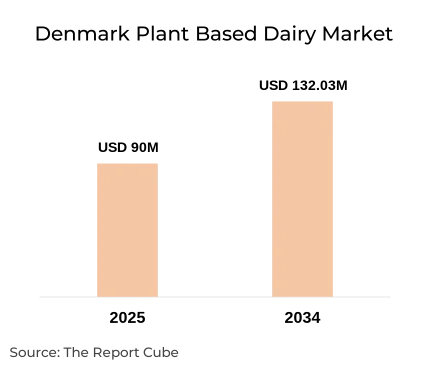
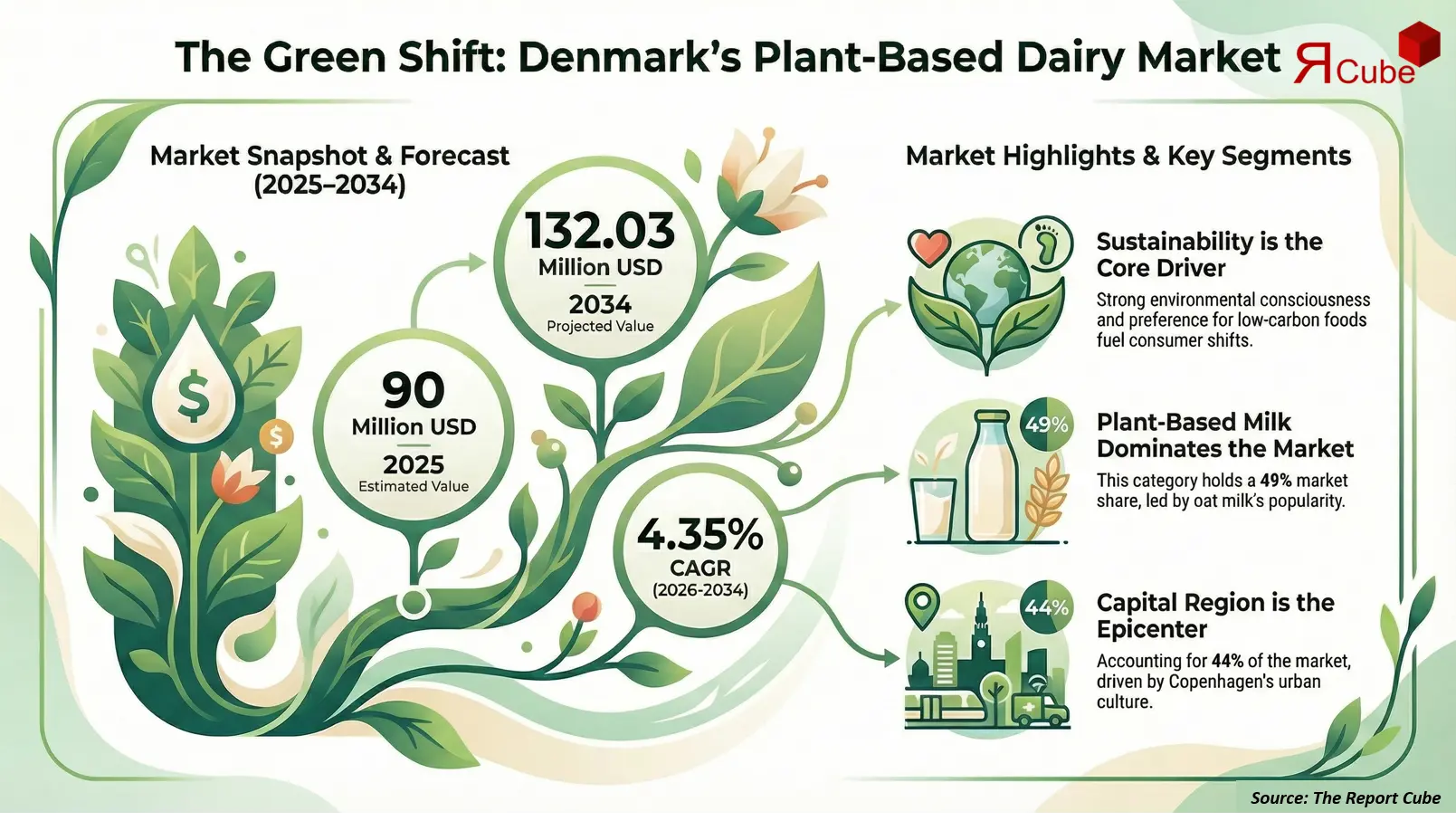
The Denmark Plant-Based Dairy Market is projected to grow at a 4.35% CAGR during 2026-2034. The market stood at USD 90 million in 2025 and is expected to reach USD 132.03 million by 2034. Growth is supported by Denmark’s strong sustainability culture, increasing adoption of flexitarian diets, and rising preference for low-impact, climate-friendly food alternatives. Danish consumers demonstrate high awareness of environmental labeling, carbon footprints, and animal welfare factors that influence the shift away from traditional dairy toward plant-based formats. Local innovators and global brands continue to expand ranges across milk, yogurt, cheese substitutes, and cooking creams, supported by clean-label reformulations and improved taste profiles. Retailers and foodservice players are strengthening plant-based assortments, reflecting growing mainstream acceptance across households, cafés, and institutional kitchens.
Furthermore, Denmark’s robust agricultural innovation ecosystem accelerates plant-based R&D advancements, especially in oat- and pea-based formulations aligned with Nordic sustainability principles. Export-oriented manufacturers and startups continue refining texture, flavor, and functional performance, strengthening domestic and export competitiveness. As climate policies tighten and consumers prioritize sustainable nutrition, demand for plant-based dairy alternatives is expected to rise steadily. Online retail, recipe-based marketing, and partnerships with health stores and lifestyle influencers further expand market penetration. Collectively, these factors are driving a long-term transition toward diversified, environmentally conscious plant-based dairy consumption across the Danish food landscape.
Denmark Plant-Based Dairy Market Recent Developments
- 2025: Leading plant-based producers expanded oat- and almond-based dairy alternatives, investing in upgraded production lines to improve creaminess and nutritional density.
- 2025: Major Danish retailers increased shelf space for plant-based dairy, introducing private-label alternatives that target budget-conscious flexitarian consumers.
Government Initiatives & Policies
- Danish Climate & Food Sustainability Strategy: National policy continues supporting plant-based food innovation and low-emission dietary transitions through funding, research centers, and sustainability incentives.
- Green Retail & Public Meal Programs: Public-sector food procurement guidelines encourage increased use of plant-based ingredients in schools, hospitals, and cafeterias to reduce environmental impact.
Denmark Plant-Based Dairy Market Dynamics
Driver: Sustainability Leadership & Rapid Consumer Shift Toward Climate-Friendly Foods
Denmark’s strong environmental consciousness is a core driver of plant-based dairy adoption. The country consistently ranks among Europe’s most sustainability-oriented consumer markets, with widespread preference for low-carbon, animal-free alternatives. Younger consumers, urban households, and flexitarians are driving demand for oat milk, vegan cheese, cultured yogurts, and spreadable plant-based butters. As retailers and cafés normalize plant-based offerings particularly oat-based beverages in coffee culture trial and repeat consumption continue to expand. Danish producers emphasize clean-label formulations, organic sourcing, and high sustainability standards, aligning with national food transition goals. This alignment between policy, consumer values, and industry innovation reinforces long-term category growth.
Challenge: Premium Pricing, Competition with Traditional Dairy & Taste Barrier for Certain Categories
While adoption is rising, plant-based dairy alternatives still face challenges related to cost competitiveness and sensory expectations. Premium price points relative to cow’s milk can limit access for some consumers, especially families seeking affordable daily-use products. Plant-based cheese and yogurt categories must continue improving mouthfeel, melting behavior, and flavor authenticity to match consumer expectations shaped by Denmark’s strong dairy heritage. Supply chain constraints for certain imported ingredients also influence pricing. With Denmark being a major dairy-producing nation, traditional dairy maintains powerful cultural and nutritional positioning, making brand differentiation essential for plant-based producers seeking mainstream expansion.
Opportunity: Innovation in Oat, Pea & Hybrid Fermentation Technologies
Significant opportunity exists in advanced fermentation technologies, novel protein bases, and hybrid plant-based formulations that enhance texture and nutritional quality. Denmark’s global leadership in oat-based innovation, combined with investments in precision fermentation and plant protein extraction, positions the nation as a hub for next-generation dairy alternatives. Opportunities also lie in creating fortified, high-protein plant-based dairy options that appeal to fitness-focused consumers and those seeking healthier dairy substitutes. Foodservice channels continue to adopt plant-based ingredients for menu diversification, expanding demand beyond retail shelves. Export opportunities for Nordic-inspired plant-based dairy products present additional growth potential for Danish brands.
Trend: Mainstreaming of Plant-Based Dairy in Coffee Culture, Retail & Public Institutions
A major trend shaping the Danish market is the mainstream integration of plant-based dairy into everyday consumption rituals. Oat-based milk has become the preferred alternative in cafés, bakeries, and beverage chains, driven by taste compatibility with coffee and barista-friendly formulations. Retail strategies leverage multi-pack oat beverages, premium yogurt cups, and chef-grade cooking creams to enhance versatility in home cooking. Public meal programs that emphasize plant-based nutrition further normalize consumption across schools and hospitals. Sustainability labeling, storytelling around Nordic ingredients, and digital recipe marketing strengthen emotional connection and brand loyalty. These lifestyle-driven trends support steady category expansion well through the forecast horizon.
Denmark Plant-Based Dairy Market Segment-wise Analysis
By Product Type:
- Plant-Based Milk
- Plant-Based Yogurt
- Plant-Based Cheese
- Plant-Based Creams
- Butter & Spreads
- Other Plant-Based Dairy Alternatives
Plant-Based Milk leads the market with around 49% share, driven by strong consumer affinity for oat-based beverages, which have become deeply integrated into Denmark’s coffee culture and household routines. Versatility, improved creaminess, and barista-grade formulations make plant-based milk the entry point for new consumers transitioning from traditional dairy. Retailers and cafés consistently highlight oat, almond, and soy variants through promotions and recipe integrations. Local producers leverage sustainable sourcing, Nordic branding, and innovations in flavor and texture to reinforce this category’s dominance. As adoption expands across foodservice, public institutions, and households, plant-based milk remains the backbone of Denmark’s plant-based dairy growth.
By Distribution Channel:
- Supermarkets & Hypermarkets
- Convenience Stores
- Specialty & Health Stores
- Online Retail
- HoReCa / Foodservice
Supermarkets & Hypermarkets account for the largest distribution share at approximately 57%. These retail channels serve as the primary access points for plant-based dairy products across Denmark due to broad SKU availability, strong promotional visibility, and price competitiveness compared to specialty stores. Major retailers stock wide ranges of plant-based beverages, yogurts, cheese alternatives, and spreads, reinforcing familiarity and routine household purchases. Their private-label offerings appeal to cost-conscious flexitarians seeking sustainable alternatives without premium price tags. As major chains expand refrigerated shelf space and integrate sustainability-focused messaging, supermarkets and hypermarkets continue anchoring volume growth across the country.
Regional Projection of Denmark Plant-Based Dairy Industry
By Region:
- Capital Region of Denmark
- Central Denmark Region
- North Denmark Region
- Region Zealand
- Region of Southern Denmark
- Others
The Capital Region of Denmark leads with approximately 44% share, supported by high urban density, strong sustainability adoption, advanced retail networks, and widespread café culture. Copenhagen serves as the epicenter for plant-based innovation, with numerous specialty cafés, organic stores, and restaurant concepts integrating plant-based dairy alternatives into menus. Consumers in the Capital Region demonstrate strong willingness to pay for sustainable, premium, and innovative products, making it a natural launchpad for new plant-based SKUs. With strong distribution capabilities and high lifestyle-driven demand, the region maintains its position as the primary growth engine for the Danish plant-based dairy market.
What Does Our Denmark Plant-Based Dairy Market Research Study Entail?
- Provides comprehensive market sizing and forecasting from 2026-2034, highlighting growth from USD 90 million in 2025 to USD 132.03 million by 2034 at a 4.35% CAGR.
- Analyzes detailed segmentation across Product Types and Distribution Channels, identifying high-growth categories such as plant-based milk, yogurt, and emerging cheese alternatives.
- Offers regional insights covering key consumption hubs such as the Capital Region, Central Denmark, North Denmark, Zealand, and Southern Denmark.
- Presents competitive profiling of top players including Arla Foods, Naturli’ Foods, Oatly, Alpro, Danone, and emerging Danish plant-based innovators.
- Reviews sustainability policies, plant-based food innovation trends, consumer behavior patterns, and actionable strategies for retail, foodservice, and manufacturing stakeholders.
Table of Contents
- Introduction
- Objective of the Study
- Product/Technology Definition
- Market Segmentation
- Study Variables
- Research Methodology
- Secondary Data Points
- Breakdown of Secondary Sources
- Primary Data Points
- Breakdown of Primary Interviews
- Secondary Data Points
- Executive Summary
- Market Dynamics
- Drivers
- Challenges
- Opportunity Assessment
- Recent Trends and Developments
- Policy and Regulatory Landscape
- Denmark Plant-Based Dairy Market Overview (2020–2034)
- Market Size, By Volume (Million Litres/Tons) & Value (EUR Million)
- Market Share, By Product Type
- Plant-Based Milk
- Plant-Based Yogurt
- Plant-Based Cheese
- Plant-Based Creams, Butter & Spreads
- Other Plant-Based Dairy Alternatives
- Market Share, By Distribution Channel
- Supermarkets & Hypermarkets
- Convenience Stores
- Specialty & Health Stores
- Online Retail
- HoReCa / Foodservice
- Market Share, By Consumer Segment
- Flexitarians
- Vegetarians & Vegans
- Lactose-Intolerant & Allergen-Sensitive Consumers
- Others
- Market Share, By Company
- Revenue Shares
- Competitive Landscape
- Segment-wise & Industry-wise Market Forecast (2026–2034)
- By Product Type
- By Distribution Channel
- By Consumer Segment
- Competitive Outlook & Company Profiles
- Arla Foods
- Company Overview
- Business Segments
- Strategic Alliances/Partnerships
- Recent Developments
- Naturli’ Foods
- Company Overview
- Business Segments
- Strategic Alliances/Partnerships
- Recent Developments
- Oatly (Denmark)
- Company Overview
- Business Segments
- Strategic Alliances/Partnerships
- Recent Developments
- Alpro / Danone
- Company Overview
- Business Segments
- Strategic Alliances/Partnerships
- Recent Developments
- Others
- Arla Foods
- Contact Us / Disclaimer
Top Key Players & Market Share Outlook
- Arla Foods
- Naturli’ Foods
- Oatly
- Alpro / Danone
- Others
Frequently Asked Questions






