



Build Your Custom Market Intelligence Report
Customize Your ReportGlobal Protein Inhibitor Market Key Highlights
- By Product: Protein Kinase Inhibitors lead 44% share driven oncology dominance globally.
- By Application: Oncology application holds 58% share fueling sustained inhibitor demand worldwide.
- Region Outlook: North America commands 41% share supported by strong biopharmaceutical innovation.
- Recent Develpoment: Novartis expanded kinase inhibitor pipeline advancing late-stage oncology trials globally.
- Government Initiatives/programs: FDA accelerated breakthrough designations supporting rapid approval of novel inhibitors.
Global Protein Inhibitor Market Insights & Analysis
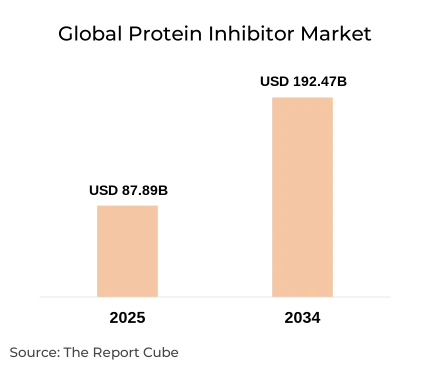
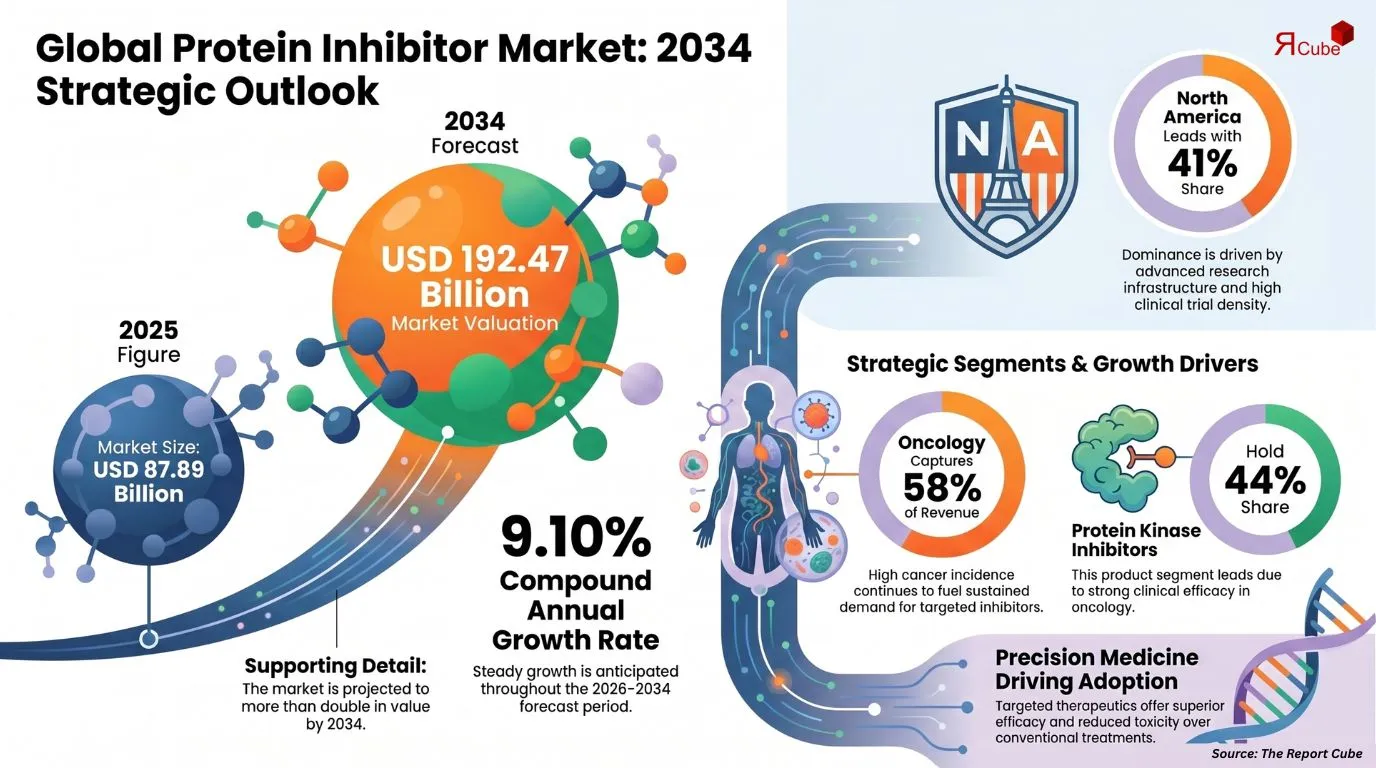
The Global Protein Inhibitor Market is anticipated to register a 9.10% during 2026–2034. The market size was valued at USD 87.89 billion and is projected to reach USD 192.47 billion by 2034. The market demonstrates robust expansion driven by accelerating demand for targeted therapeutics across oncology and chronic inflammatory indications. Protein inhibitors have become central to precision medicine strategies, enabling selective modulation of disease-causing cellular pathways. Over 70% of late-stage oncology drug pipelines currently involve targeted or biologic mechanisms, underscoring sustained commercial relevance.
Pharmaceutical innovation intensity remains high, supported by rising biologics approvals and expanding clinical trial volumes globally. Increased prevalence of cancer, projected to surpass 30 million annual cases worldwide by 2040, significantly reinforces long-term demand. Simultaneously, inflammatory and autoimmune disorders continue to rise due to aging populations and lifestyle-related risk factors, broadening therapeutic application scope.
Regulatory agencies have streamlined approval pathways for high-impact therapies, particularly those demonstrating superior efficacy or biomarker-driven patient stratification. This has improved commercialization timelines for novel inhibitors. Additionally, strategic licensing, mergers, and co-development agreements among multinational pharmaceutical companies strengthen pipeline depth and global market penetration.
Collectively, these factors position the Global Protein Inhibitor Market as a cornerstone of next-generation therapeutics, delivering sustained revenue growth and innovation momentum throughout the forecast period.
Global Protein Inhibitor Market Dynamics
Precision therapeutics driving clinical adoption
The primary growth driver is the rapid shift toward precision therapeutics targeting specific molecular pathways. Protein inhibitors offer superior efficacy and reduced systemic toxicity compared to conventional therapies. In oncology, kinase inhibitors and monoclonal antibodies demonstrate improved progression-free survival across multiple tumor types. Increasing availability of companion diagnostics further supports adoption by enabling patient-specific treatment selection.
Complex development and resistance mechanisms
A major industry challenge involves biological resistance mechanisms emerging during long-term inhibitor therapy. Tumor heterogeneity and adaptive mutations can reduce drug effectiveness, necessitating combination therapies or next-generation inhibitor development. These scientific complexities extend clinical development timelines and increase R&D risk, particularly in oncology-focused pipelines.
Combination therapies reshaping treatment paradigms
An emerging trend shaping outlook is the growing use of protein inhibitors within combination regimens. Co-administration with immunotherapies or chemotherapeutics enhances treatment response and delays resistance onset. Clinical evidence increasingly supports multi-target approaches, encouraging pharmaceutical companies to reposition existing inhibitors within broader therapeutic frameworks.
Need Specific Data, Let’s Customize the Report for You
Contact UsGlobal Protein Inhibitor Market Segment-wise Analysis
Segment-wise evaluation clarifies revenue concentration, adoption intensity, and clinical relevance across products and applications, guiding strategic positioning decisions for stakeholders.
By Product
- Protein Kinase Inhibitors
- Monoclonal Antibody
- Other Products
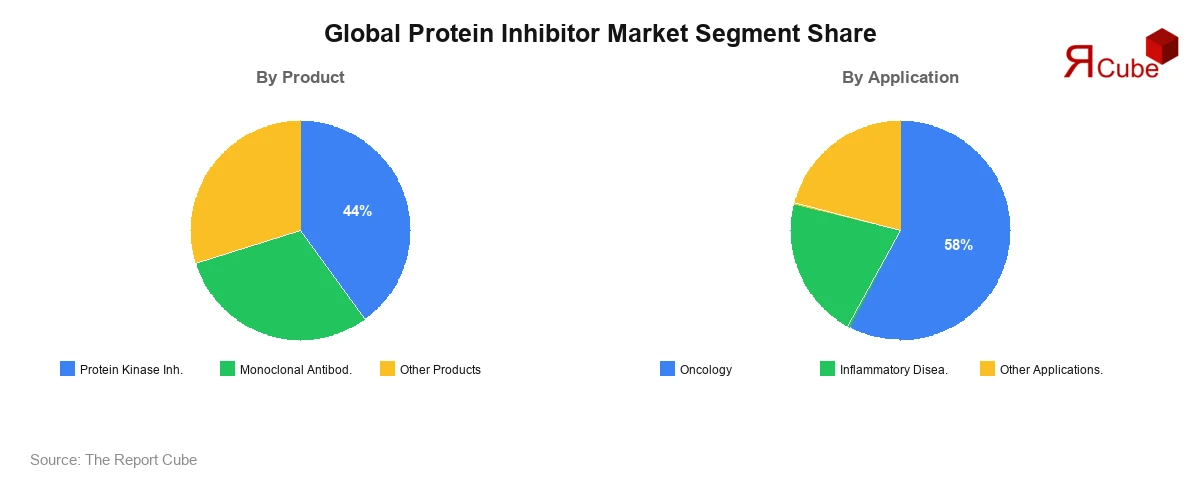
Protein Kinase Inhibitors dominate the product landscape, accounting for approximately 44% of global revenue. Their strong clinical efficacy across oncology indications, including lung, breast, and hematological cancers, underpins widespread adoption. Continuous pipeline expansion and lifecycle management strategies further reinforce dominance.
Monoclonal antibodies represent nearly 36% market share, benefiting from high specificity and expanding indications in oncology and inflammatory diseases. Their strong safety profile supports long-term therapy use. Other products collectively contribute around 20%, including emerging inhibitor classes targeting novel intracellular pathways.
By Application
- Oncology
- Inflammatory Diseases
- Other Applications
Oncology remains the largest application segment, contributing nearly 58% of total market revenue. High cancer incidence and strong clinical outcomes drive continued investment. Inflammatory diseases account for approximately 27%, supported by rising autoimmune disorder prevalence. Other applications collectively represent 15%, reflecting early-stage expansion into rare and metabolic diseases.
Regional Projection of Global Protein Inhibitor Market
Regional assessment highlights geographic demand disparities, innovation maturity, healthcare access levels, and reimbursement strength shaping protein inhibitor commercialization worldwide trends.
- North America
- Europe
- Asia Pacific
- Latin America
- Middle East & Africa
North America leads the Global Protein Inhibitor Market with approximately 41% share, driven by advanced research infrastructure and strong pharmaceutical investment. High clinical trial density and rapid adoption of targeted therapies support regional dominance.
Global Protein Inhibitor Market: Recent Develpoment (2025)
- Bayer AG advanced next-generation kinase inhibitors into phase three oncology clinical trials globally.
- AstraZeneca expanded monoclonal antibody manufacturing capacity supporting rising oncology treatment demand worldwide.
- Roche strengthened protein inhibitor portfolio through strategic acquisition enhancing immuno-oncology research capabilities.
- Pfizer initiated multi-indication trials combining inhibitors with immunotherapies improving therapeutic response rates.
Government Initiatives/programs
- FDA collaborated with Pfizer accelerating priority reviews for innovative protein inhibitor oncology therapies.
- European regulators supported Novartis through fast-track approvals expanding access to targeted inhibitor treatments.
Global Protein Inhibitor Market Future Outlook (2034)
The Global Protein Inhibitor Market is projected to sustain a 9.10% CAGR, reaching USD 192.47 billion by 2034. Future growth will be driven by expanding oncology pipelines, broader inflammatory disease applications, and continued biologics innovation. Pharmaceutical companies will increasingly focus on next-generation inhibitors with improved selectivity and resistance mitigation profiles.
Technological advancement, including AI-driven drug discovery, will accelerate target identification and optimize molecular design. These capabilities are expected to shorten development cycles and improve clinical success rates. Long-term expansion will also benefit from increased healthcare access in emerging economies and growing biologics manufacturing capacity.
Strategic collaborations and combination therapy development will remain central to competitive positioning. As precision medicine adoption deepens, protein inhibitors will continue to redefine therapeutic standards across multiple disease areas, ensuring sustained market relevance through 2034.
Why Choose This Report?
- Provides a comprehensive overview of the overall market analysis, encompassing key trends, consumer behavior analysis, and risk assessment to support strategic decision-making.
- Provides accurate, up-to-date insights into market size, segmentation, and emerging opportunities, helping to minimize risk & capitalizing on growth.
- Gives deep understanding of target audience preferences, investment habits, and communication channels for enhanced product development & marketing effectiveness.
- Delivers competitive analysis & benchmarking, uncovering the strengths & weaknesses of market competitors to guide strategies.
- Consolidate comprehensive market intelligence, reducing reasoning & streamlining research efforts.
- Facilitates customized market segmentation & risk mitigation strategies, fine-tuned to the business objectives.
- Aids in identifying both market challenges & untapped opportunities within the industry to drive long-term business growth.
- Provides valuable information based on actual customer data & search trends.
Table of Contents
- Introduction
- Objective of the study
- Product Definition
- Market Segmentation
- Study Variables
- Research Methodology
- Secondary Data Points
- Companies Interviewed
- Primary Data Points
- BreakDown of Primary Interviews
- Secondary Data Points
- Executive Summary
- Market Dynamics
- Drivers
- Challenges
- Opportunity Assessment
- Recent Trends and Developments
- Policy and Regulatory Landscape
- Global Protein Inhibitor Market Overview (2021-2034)
- Market Size, By Value (USD Billion)
- Market Share, By Product
- Protein Kinase Inhibitors
- Monoclonal Antibody
- Other Products
- Market Share, By Application
- Oncology
- Inflammatory Diseases
- Other Applications
- Market Share, By Distribution Channel
- Hospital Pharmacies
- Independent Pharmacies
- Online Pharmacies
- Market Share, By Protein Kinase Inhibitors
- Selective Kinase Inhibitors
- Non-selective Kinase Inhibitors
- Small Molecule Kinase Inhibitors
- Biologic Kinase Inhibitors
- Market Share, By Monoclonal Antibodies
- Chimeric Monoclonal Antibodies
- Humanized Monoclonal Antibodies
- Fully Human Monoclonal Antibodies
- Conjugated Monoclonal Antibodies
- Market Share, By Other Products
- Peptide Inhibitors
- Protein Degradation Technologies
- Small Molecule Inhibitors
- Combination Therapy Products
- Market Share, By Region
- North America
- Europe
- Asia Pacific
- Latin America
- Middle East & Africa
- Market Share, By Company
- Revenue Shares
- Competition Characteristics
- North America Protein Inhibitor Market Overview (2021-2034)
- Market Size, By Value
- Market Share, By Product
- Market Share, By Application
- Market Share, By Distribution Channel
- Market Share, By Protein Kinase Inhibitors
- Market Share, By Monoclonal Antibodies
- Market Share, By Other Products
- By Country
- The US
- Canada
- Mexico
- The US Protein Inhibitor Market Overview (2021-2034)
- Market Share, By Product
- Market Share, By Application
- Market Share, By Distribution Channel
- Market Share, By Protein Kinase Inhibitors
- Market Share, By Monoclonal Antibodies
- Market Share, By Other Products
- Canada Protein Inhibitor Market Overview (2021-2034)
- Market Share, By Product
- Market Share, By Application
- Market Share, By Distribution Channel
- Market Share, By Protein Kinase Inhibitors
- Market Share, By Monoclonal Antibodies
- Market Share, By Other Products
- Mexico Protein Inhibitor Market Overview (2021-2034)
- Market Share, By Product
- Market Share, By Application
- Market Share, By Distribution Channel
- Market Share, By Protein Kinase Inhibitors
- Market Share, By Monoclonal Antibodies
- Market Share, By Other Products
- South America Protein Inhibitor Market Overview (2021-2034)
- Market Size, By Value
- Market Share, By Product
- Market Share, By Application
- Market Share, By Distribution Channel
- Market Share, By Protein Kinase Inhibitors
- Market Share, By Monoclonal Antibodies
- Market Share, By Other Products
- By Country
- Brazil
- Argentina
- Rest of South America
- Brazil Protein Inhibitor Market Overview (2021-2034)
- Market Share, By Product
- Market Share, By Application
- Market Share, By Distribution Channel
- Market Share, By Protein Kinase Inhibitors
- Market Share, By Monoclonal Antibodies
- Market Share, By Other Products
- Argentina Protein Inhibitor Market Overview (2021-2034)
- Market Share, By Product
- Market Share, By Application
- Market Share, By Distribution Channel
- Market Share, By Protein Kinase Inhibitors
- Market Share, By Monoclonal Antibodies
- Market Share, By Other Products
- Europe Protein Inhibitor Market Overview (2021-2034)
- Market Size, By Value
- By Product
- By Application
- By Distribution Channel
- By Protein Kinase Inhibitors
- By Monoclonal Antibodies
- By Other Products
- By Country
- Germany
- The UK
- France
- Spain
- Italy
- Rest of Europe
- Germany Protein Inhibitor Market Overview (2021-2034)
- Market Share, By Product
- Market Share, By Application
- Market Share, By Distribution Channel
- Market Share, By Protein Kinase Inhibitors
- Market Share, By Monoclonal Antibodies
- Market Share, By Other Products
- France Protein Inhibitor Market Overview (2021-2034)
- Market Share, By Product
- Market Share, By Application
- Market Share, By Distribution Channel
- Market Share, By Protein Kinase Inhibitors
- Market Share, By Monoclonal Antibodies
- Market Share, By Other Products
- The UK Protein Inhibitor Market Overview (2021-2034)
- Market Share, By Product
- Market Share, By Application
- Market Share, By Distribution Channel
- Market Share, By Protein Kinase Inhibitors
- Market Share, By Monoclonal Antibodies
- Market Share, By Other Products
- Spain Protein Inhibitor Market Overview (2021-2034)
- Market Share, By Product
- Market Share, By Application
- Market Share, By Distribution Channel
- Market Share, By Protein Kinase Inhibitors
- Market Share, By Monoclonal Antibodies
- Market Share, By Other Products
- Italy Protein Inhibitor Market Overview (2021-2034)
- Market Share, By Product
- Market Share, By Application
- Market Share, By Distribution Channel
- Market Share, By Protein Kinase Inhibitors
- Market Share, By Monoclonal Antibodies
- Market Share, By Other Products
- The Middle East & Africa Protein Inhibitor Market Overview (2021-2034)
- Market Size, By Value
- By Product
- By Application
- By Distribution Channel
- By Protein Kinase Inhibitors
- By Monoclonal Antibodies
- By Other Products
- By Country
- The UAE
- Saudi Arabia
- South Africa
- Rest of the Middle East & Africa
- The UAE Protein Inhibitor Market Overview (2021-2034)
- Market Share, By Product
- Market Share, By Application
- Market Share, By Distribution Channel
- Market Share, By Protein Kinase Inhibitors
- Market Share, By Monoclonal Antibodies
- Market Share, By Other Products
- Saudi Arabia Protein Inhibitor Market Overview (2021-2034)
- Market Share, By Product
- Market Share, By Application
- Market Share, By Distribution Channel
- Market Share, By Protein Kinase Inhibitors
- Market Share, By Monoclonal Antibodies
- Market Share, By Other Products
- South Africa Protein Inhibitor Market Overview (2021-2034)
- Market Share, By Product
- Market Share, By Application
- Market Share, By Distribution Channel
- Market Share, By Protein Kinase Inhibitors
- Market Share, By Monoclonal Antibodies
- Market Share, By Other Products
- Asia-Pacific Protein Inhibitor Market Overview (2021-2034)
- Market Size, By Value
- By Product
- By Application
- By Distribution Channel
- By Protein Kinase Inhibitors
- By Monoclonal Antibodies
- By Other Products
- By Country
- China
- India
- Japan
- South Korea
- Australia
- Rest of Asia-Pacific
- China Protein Inhibitor Market Overview (2021-2034)
- Market Share, By Product
- Market Share, By Application
- Market Share, By Distribution Channel
- Market Share, By Protein Kinase Inhibitors
- Market Share, By Monoclonal Antibodies
- Market Share, By Other Products
- India Protein Inhibitor Market Overview (2021-2034)
- Market Share, By Product
- Market Share, By Application
- Market Share, By Distribution Channel
- Market Share, By Protein Kinase Inhibitors
- Market Share, By Monoclonal Antibodies
- Market Share, By Other Products
- Japan Protein Inhibitor Market Overview (2021-2034)
- Market Share, By Product
- Market Share, By Application
- Market Share, By Distribution Channel
- Market Share, By Protein Kinase Inhibitors
- Market Share, By Monoclonal Antibodies
- Market Share, By Other Products
- South Korea Protein Inhibitor Market Overview (2021-2034)
- Market Share, By Product
- Market Share, By Application
- Market Share, By Distribution Channel
- Market Share, By Protein Kinase Inhibitors
- Market Share, By Monoclonal Antibodies
- Market Share, By Other Products
- Austraila Protein Inhibitor Market Overview (2021-2034)
- Market Share, By Product
- Market Share, By Application
- Market Share, By Distribution Channel
- Market Share, By Protein Kinase Inhibitors
- Market Share, By Monoclonal Antibodies
- Market Share, By Other Products
- Competitive Outlook (Company Profile - Partial List)
- Bayer AG
- Company Overview
- Business Segments
- Strategic Alliances/Partnerships
- Recent Developments
- AstraZeneca plc
- Company Overview
- Business Segments
- Strategic Alliances/Partnerships
- Recent Developments
- F. Hoffmann-La Roche Ltd.
- Company Overview
- Business Segments
- Strategic Alliances/Partnerships
- Recent Developments
- Teva Pharmaceutical Industries Ltd.
- Company Overview
- Business Segments
- Strategic Alliances/Partnerships
- Recent Developments
- Apotex Inc.
- Company Overview
- Business Segments
- Strategic Alliances/Partnerships
- Recent Developments
- Novartis International AG
- Company Overview
- Business Segments
- Strategic Alliances/Partnerships
- Recent Developments
- GlaxoSmithKline plc
- Company Overview
- Business Segments
- Strategic Alliances/Partnerships
- Recent Developments
- Pfizer Inc.
- Company Overview
- Business Segments
- Strategic Alliances/Partnerships
- Recent Developments
- Boehringer Ingelheim International GmbH
- Company Overview
- Business Segments
- Strategic Alliances/Partnerships
- Recent Developments
- Abbott Laboratories
- Company Overview
- Business Segments
- Strategic Alliances/Partnerships
- Recent Developments
- Amgen Inc.
- Company Overview
- Business Segments
- Strategic Alliances/Partnerships
- Recent Developments
- Baxter International Inc.
- Company Overview
- Business Segments
- Strategic Alliances/Partnerships
- Recent Developments
- Merck & Co. Inc.
- Company Overview
- Business Segments
- Strategic Alliances/Partnerships
- Recent Developments
- Interprotein Corporation
- Company Overview
- Business Segments
- Strategic Alliances/Partnerships
- Recent Developments
- Others
- Bayer AG
- Disclaimer
Top Key Players & Market Share Outlook
- Bayer AG
- AstraZeneca plc
- F. Hoffmann-La Roche Ltd.
- Teva Pharmaceutical Industries Ltd.
- Apotex Inc.
- Novartis International AG
- GlaxoSmithKline plc
- Pfizer Inc.
- Boehringer Ingelheim International GmbH
- Abbott Laboratories
- Amgen Inc.
- Baxter International Inc.
- Merck & Co. Inc.
- Interprotein Corporation
- Others
Frequently Asked Questions






