



Build Your Custom Market Intelligence Report
Customize Your ReportBrazil Retail Pharmacy Market Statistics and Insights
Market Insights
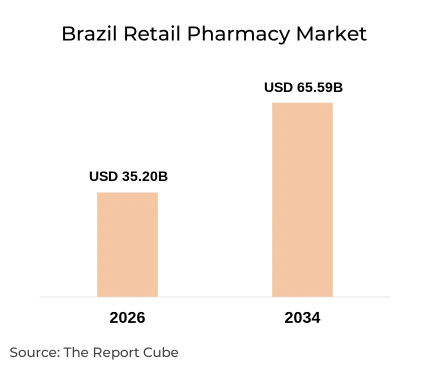
- The Brazil Retail Pharmacy Market was valued at USD 35.20 billion in 2026.
- The market is projected to reach USD 65.59 billion by 2034.
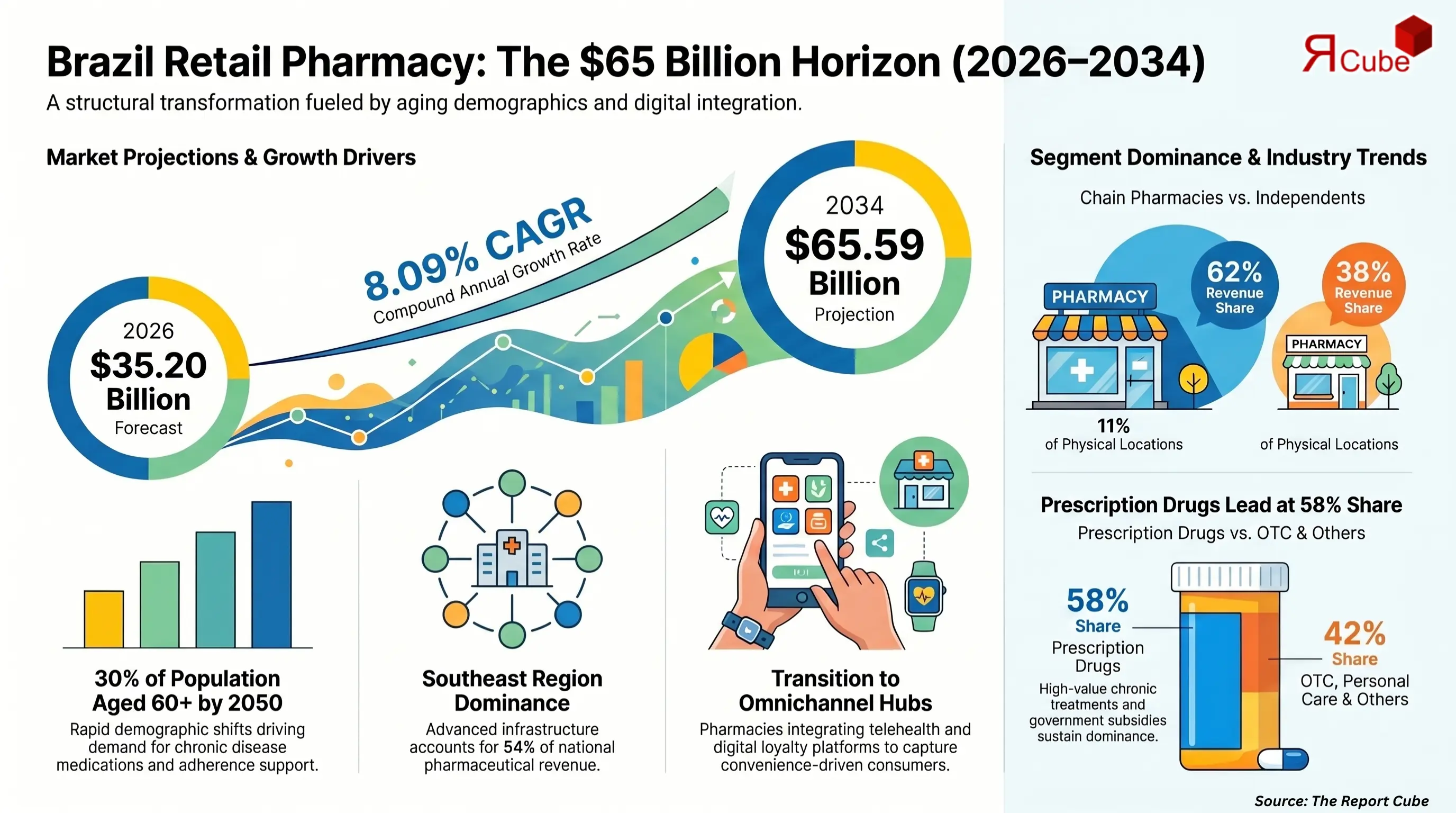
- The market is anticipated to register an 8.09% CAGR during 2026–2034.
By Product
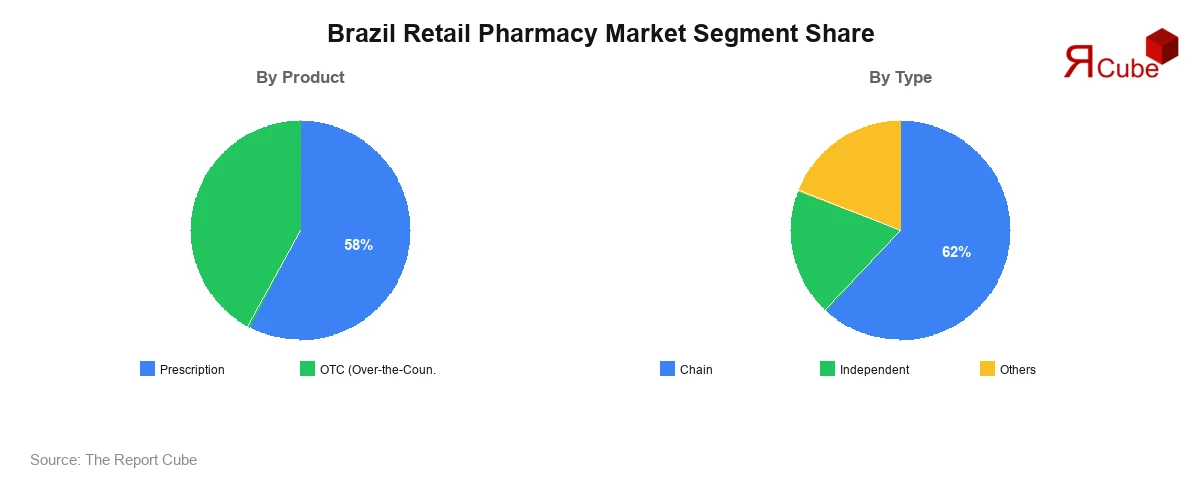
- Prescription drugs lead the segment, commanding approximately 58% of total market revenue.
Competitive Landscape
- More than 10 companies are actively engaged in producing Brazil Retail Pharmacy Market products.
- Top 5 companies acquired around 55% of the market share.
- Raia Drogasil, Grupo DPSP, Pague Menos, Drogaria Onofre, Drogaria Pacheco, and others.
By Type
- Chain pharmacies dominate the segment, accounting for nearly 62% of total market revenue.
Brazil Retail Pharmacy Market Insights & Analysis
The Brazil Retail Pharmacy Market is anticipated to register a 8.09% CAGR during 2026–2034. The market size was valued at USD 35.20 billion in 2026 and is projected to reach USD 65.59 billion by 2034. Brazil's retail pharmacy sector is undergoing a structural transformation, supported by rising healthcare expenditure, population aging, and the growing burden of chronic non-communicable diseases. As of 2025, healthcare spending in Brazil reached approximately 9% of GDP, reflecting the government's commitment to expanding access to quality medicines and preventive care. The Southeast region alone accounts for more than 54% of the country's pharmaceutical consumption, driven by dense urban populations and advanced healthcare infrastructure.
Abrafarma-affiliated pharmacy networks closed 2025 with 11,688 stores - a 5.9% year-over-year increase - and despite representing only about 11% of total pharmacy locations nationwide, these chains account for roughly 53% of all medication dispensed in Brazil. This scale imbalance is reshaping supplier negotiations, logistics strategies, and margin structures across the market. Investment in digital health platforms, omnichannel retail models, and clinical pharmacy services is accelerating, with major players expanding telehealth integration and e-pharmacy capabilities to capture growing consumer preference for convenience-driven healthcare access.
Brazil Retail Pharmacy Market Dynamics
Key Market Driver Aging Population Fueling Chronic Disease Demand
Brazil is experiencing one of Latin America's most pronounced demographic transitions. By 2050, individuals aged 60 and above are expected to represent more than 30% of the total population, up sharply from 14% in 2023. This demographic shift is directly correlated with rising prevalence of chronic conditions such as hypertension, diabetes, and cardiovascular disease, which together account for over 70% of national mortality. Older adults managing multiple comorbidities require continuous medication regimens and adherence support, driving sustained prescription drug volumes. Retail pharmacies are uniquely positioned to serve this segment due to their geographic proximity, extended operating hours, and expanding pharmacist-led clinical services.
Major Industry Challenge Regulatory Complexity and Drug Price Controls
Brazil's retail pharmacy operators navigate a demanding regulatory environment governed by ANVISA, the national health surveillance authority, which enforces rigorous licensing requirements, product registration protocols, and mandatory drug traceability systems. The government's price control mechanism - enforced through the Drug Market Regulation Chamber (CMED) - caps annual price adjustments for regulated medicines, compressing margins particularly on branded prescription drugs. Independent pharmacies face disproportionate compliance burdens compared to large chains, as implementing serialization systems, electronic prescriptions, and pharmaceutical care documentation standards requires significant operational investment. These regulatory constraints, while essential for patient safety, limit pricing flexibility and create structural disadvantages for smaller market participants seeking to remain competitive in a rapidly consolidating landscape.
Emerging Trend Shaping Outlook Omnichannel Pharmacy Models Reshaping Consumer Access
Brazil's retail pharmacy market is witnessing a pronounced shift toward omnichannel service delivery, integrating physical store networks with digital ordering platforms, home delivery, telehealth consultations, and mobile applications. Leading chains are investing in loyalty ecosystems and digital health platforms that enable patients to manage prescriptions, access pharmacist counseling, and track medication adherence through mobile interfaces. Online pharmacy penetration is accelerating, supported by favorable regulatory frameworks and changing consumer preferences post-pandemic. This transformation is expanding market reach beyond traditional urban strongholds into secondary cities and rural areas, unlocking new revenue streams while enhancing patient engagement and long-term loyalty for pharmacy operators willing to invest in digital infrastructure.
Need Specific Data, Let’s Customize the Report for You
Request CustomizationBrazil Retail Pharmacy Market Segment-wise Analysis
Brazil's retail pharmacy market is segmented across two primary dimensions - By Product and By Type - each reflecting distinct consumption patterns, distribution dynamics, and strategic priorities among market participants. Together, these segments reveal where revenue concentration lies and where growth opportunities are emerging as the market matures through 2034.
By Product
- Prescription
- OTC (Over-the-Counter)
Prescription drugs represent the dominant revenue-generating category within the Brazil Retail Pharmacy Market, accounting for approximately 58% of total market value. This dominance is underpinned by Brazil's rising incidence of chronic non-communicable diseases - including hypertension, diabetes, and oncological conditions - that require physician-authorized, long-term medication regimens. Patented and branded prescription medicines generate higher per-unit revenue compared to generics and OTC products, reinforcing their outsized contribution to overall market receipts. The government's broad public health programs such as Farmácia Popular, which subsidizes essential medicines for low-income populations, further sustains prescription volumes by expanding access to regulated medications.
The OTC segment, while secondary in revenue share at approximately 42%, is emerging as the fastest-growing category within the product dimension. Fueled by rising consumer awareness of self-medication, government campaigns promoting preventive healthcare, and growing availability of wellness and nutraceutical products through pharmacy channels, OTC sales are expanding consistently. Pharmacies are increasingly stocking personal care, vitamins, supplements, and diagnostic devices alongside traditional OTC medications, transforming retail locations into comprehensive health and wellness destinations. The OTC segment's growth trajectory is expected to accelerate through 2034 as consumer health literacy improves and digital access to health information drives higher rates of self-directed care.
By Type
- Chain
- Independent
- Others
Chain pharmacies hold commanding dominance within the Brazil Retail Pharmacy Market by type, capturing approximately 62% of total market revenue. Major networks such as Raia Drogasil, Grupo DPSP, and Pague Menos have leveraged scale advantages in logistics, supplier pricing, and digital investment to outperform fragmented independent operators. Abrafarma-affiliated chain networks, while representing only 11% of pharmacy locations, handle roughly 53% of all medication dispensed nationally - a stark illustration of the operational efficiency gap between chain and independent formats. These networks are expanding aggressively into secondary cities and underserved regions, driven by store count growth, loyalty program penetration, and integrated clinical service offerings.
Independent pharmacies account for approximately 28% of total market revenue, serving as critical access points in communities where large chains have not yet established a presence. Their competitive advantage lies in personalized service, community trust, and pharmacist relationships rather than pricing or promotional capabilities. However, the segment faces mounting structural pressures from escalating compliance costs, digital investment requirements, and the scale advantages enjoyed by national chains. The "Others" category - encompassing hospital-adjacent pharmacies, specialty pharmaceutical outlets, and compounding pharmacies - represents the remaining 10% of market share, serving niche patient populations requiring customized formulations and high-cost specialty therapies unavailable through standard retail channels.
Regional Projection of Brazil Retail Pharmacy Market
Brazil's retail pharmacy market is distributed across five primary geographic zones, each reflecting unique population dynamics and healthcare infrastructure profiles:
- Southeast
- Northeast
- South
- Midwest
- North
The Southeast region commands the largest share of the Brazil Retail Pharmacy Market, accounting for approximately 54% of total national revenue, driven by states including São Paulo, Rio de Janeiro, and Minas Gerais. This dominance reflects the region's concentrated urban population, highest per-capita income levels, advanced healthcare infrastructure, and the presence of Brazil's largest pharmaceutical distribution hubs. Dense retail pharmacy networks in the Southeast benefit from proximity to major hospitals, research institutions, and pharmaceutical manufacturing clusters. In October 2025, Roquette opened its Pharmaceutical Innovation Center in São Paulo, reinforcing the region's role as Latin America's foremost pharmaceutical collaboration hub. The Northeast region is emerging as the second-fastest-growing zone, supported by improving income levels and government healthcare access initiatives.
Brazil Retail Pharmacy Market: Recent Development (2025)
- Raia Drogasil expanded its store network by over 200 locations in 2025, reporting net revenue growth of 14.3% year over year.
- Grupo DPSP integrated telehealth services into 400 outlets, boosting same-store pharmaceutical sales margins by 6.8%.
- Pague Menos launched a digital loyalty platform in Q1 2025, enrolling over 3 million new members within six months.
- Drogaria Pacheco completed a regional distribution center upgrade, improving delivery efficiency across Southeast operations significantly.
Brazil Retail Pharmacy Market Future Outlook (2034)
The Brazil Retail Pharmacy Market is poised for sustained and structurally sound expansion, maintaining an 8.09% CAGR through 2034 to reach USD 65.59 billion. Growth will be powered by an aging population requiring complex pharmaceutical care, rising chronic disease prevalence, and deepening digital health integration across all service formats. Pharmacy chains are investing in AI-driven inventory management, personalized medicine platforms, and predictive dispensing systems that use patient data to anticipate refill needs and flag adherence gaps.
Clinical pharmacy services - including in-store diagnostics, vaccination programs, and chronic disease monitoring - will become standard offerings by the early 2030s, transforming retail pharmacies from transactional dispensaries into proactive healthcare delivery nodes. Secondary cities and underserved northern regions present the largest untapped geographic growth opportunities, as infrastructure investment and digital access expand market reach beyond traditional urban strongholds.
Why Choose This Report?
- Provides a comprehensive overview of the overall market analysis, encompassing key trends, consumer behavior analysis, and risk assessment to support strategic decision-making.
- Provides accurate, up-to-date insights into market size, segmentation, and emerging opportunities, helping to minimize risk & capitalizing on growth.
- Gives deep understanding of target audience preferences, investment habits, and communication channels for enhanced product development & marketing effectiveness.
- Delivers competitive analysis & benchmarking, uncovering the strengths & weaknesses of market competitors to guide strategies.
- Consolidate comprehensive market intelligence, reducing reasoning & streamlining research efforts.
- Facilitates customized market segmentation & risk mitigation strategies, fine-tuned to the business objectives.
- Aids in identifying both market challenges & untapped opportunities within the industry to drive long-term business growth.
- Provides valuable information based on actual customer data & search trends.
Table of Contents
- Introduction
- Objective of the study
- Product Definition
- Market Segmentation
- Study Variables
- Research Methodology
- Secondary Data Points
- Companies Interviewed
- Primary Data Points
- Breakdown of Primary Interviews
- Secondary Data Points
- Executive Summary
- Market Dynamics
- Drivers
- Challenges
- Opportunity Assessment
- Recent Trends and Developments
- Policy and Regulatory Landscape
- Brazil Retail Pharmacy Market Overview and Forecast Analysis (2021-2034)
- Market Size, By Value, By growth rate (CAGR/USD Billions)
- Demand - Supply Trends
- Market Share, By Product
- Prescription
- OTC
- Market Share, By Type
- Chain
- Independent
- Others
- Market Share, By Region
- Southeast
- Northeast
- South
- Midwest
- North
- Market Share, By Competitors
- Competition Characteristics
- Revenue Shares
- Brazil Prescription Retail Pharmacy Market Overview, 2021-2034 F
- By Value (USD Million)
- By Type- Market Size & Forecast 2021-2034, USD Million
- Brazil OTC Retail Pharmacy Market Overview, 2021-2034 F
- By Value (USD Million)
- By Type- Market Size & Forecast 2021-2034, USD Million
- Competitive Outlook (Company Profile - Partial List)
- Raia Drogasil
- Company Overview
- Business Segments
- Strategic Alliances/Partnerships
- Recent Developments
- Grupo DPSP
- Company Overview
- Business Segments
- Strategic Alliances/Partnerships
- Recent Developments
- Pague Menos
- Company Overview
- Business Segments
- Strategic Alliances/Partnerships
- Recent Developments
- Drogaria Onofre
- Company Overview
- Business Segments
- Strategic Alliances/Partnerships
- Recent Developments
- Drogaria Pacheco
- Company Overview
- Business Segments
- Strategic Alliances/Partnerships
- Recent Developments
- Farmácias Guarulhos
- Company Overview
- Business Segments
- Strategic Alliances/Partnerships
- Recent Developments
- Others
- Raia Drogasil
- Contact Us & Disclaimer
Top Key Players & Market Share Outlook
- Raia Drogasil
- Grupo DPSP
- Pague Menos
- Drogaria Onofre
- Drogaria Pacheco
- Farmácias Guarulhos
- Others
Frequently Asked Questions






