



Build Your Custom Market Intelligence Report
Customize Your ReportCanada Skin Care Market Insights & Analysis
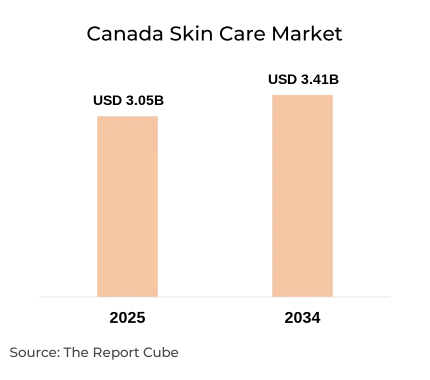
The Canada Skin Care Market is projected to grow at a 1.25% CAGR during 2026-2034. The market stood at USD 3.05 billion in 2025 and is expected to reach USD 3.41 billion by 2034. Growth is driven by steady consumer demand for daily skincare essentials, gradual premiumization in urban centers, and wider availability of clinical and dermocosmetic products through pharmacies and specialty channels. Canadian consumers place high value on product safety, regulatory transparency, and efficacy, which supports dermocosmetic lines and clinically validated serums. Retail penetration across supermarkets, pharmacy chains, and e-commerce platforms continues to expand, enabling niche indie and natural brands to achieve national reach. Retailers and brands are also placing stronger emphasis on ingredient transparency, sustainability, and packaging recyclability factors that influence shelf selection and online reviews. As a result, average selling prices and the mix of premium-to-mass products are changing slowly, creating a steady, low-single-digit growth environment for the next decade.
Additionally, demographic trends and changing consumer behavior support market resilience. Canada’s aging population creates steady demand for anti-ageing and targeted treatment products, while younger consumers push the market toward natural, cruelty-free, and multifunctional products that combine sun protection with hydration and antioxidant benefits. Professional channels dermatologists, aesthetic clinics, and spas are expanding their retail footprints with clinic-grade formulations that command higher margins and reinforce trust among consumers seeking visible results. Brands are investing in evidence-led marketing, third-party clinical claims, and partnerships with dermatology professionals to differentiate offerings. Combined, these factors sustain long-term demand while maintaining relatively modest CAGR levels driven by premium mix and product innovation rather than explosive volume growth.
Canada Skin Care Market Recent Developments
- 2025: Major multinational and Canadian indie brands expanded clinical and natural skincare lines, launching antioxidant serums and hybrid sunscreen-moisturizers tailored for Canadian climate needs.
- 2025: Several retailers and pharmacy chains rolled out expanded beauty-tech services, including in-store skin analysis kiosks and virtual consultations to boost product personalization and online conversion.
Government Initiatives & Policies
- Health Canada Regulations & Labeling Guidance: Continued emphasis on ingredient transparency, accurate labeling, and safety reporting requirements that help build consumer trust in domestic and imported skincare products.
- Sustainability & Waste-Reduction Programs: Federal and provincial drives encouraging recyclable packaging and chemical stewardship that influence manufacturer packaging choices and supply-chain practices.
Canada Skin Care Market Dynamics
Driver: Premiumization, Clinical Validation & Evidence-Led Consumer Choices
One of the strongest drivers for the Canada skin care market is premiumization coupled with increasing consumer demand for clinically validated products. More Canadian shoppers seek visible results and are willing to pay higher prices for serums, anti-ageing treatments, and dermatologist-recommended brands that demonstrate efficacy through clinical data or peer-reviewed studies. This has pushed both international prestige brands and local dermocosmetic labels to invest in controlled trials, third-party testing, and clearer claims on packaging and communications. Simultaneously, premium offerings have expanded beyond high-end department-store lines into pharmacy-led and online-exclusive ranges, broadening consumer access. This premium shift is particularly pronounced in metro regions where disposable incomes and beauty spend are higher; however, it is also reflected in mid-tier cities via e-commerce and targeted retail promotions. As a result, revenue growth is increasingly driven by value per unit rather than dramatic increases in household penetration, creating a sustainable but measured market expansion over the forecast period.
Challenge: Mature Market, Price Sensitivity & Ingredient Cost Volatility
Canada’s skin care market faces the challenge of being relatively mature and highly competitive, where product proliferation has increased consumer choice but also intensified price sensitivity. Many households already use basic cleansing and moisturizing routines, so incremental growth depends on convincing consumers to trade up or adopt additional treatment steps. Brands must balance investments in R&D, clean-label sourcing, and clinical testing with margin pressures caused by ingredient cost volatility particularly for premium actives like peptides, stabilized retinoids, and novel botanical extracts. Currency fluctuations and global supply-chain constraints can further affect costs for imported actives and specialized packaging. For indie brands, the need to invest in marketing and regulatory compliance raises barriers to scale. Collectively, these factors constrain rapid price-led growth and require strategic product positioning, efficient supply-chain management, and clear evidence-based communication to maintain profitability.
Opportunity: Natural & Organic Growth, Indie Brands & Digital Personalization
Significant opportunity exists in natural, organic, and sustainably positioned skincare lines that align with Canadian consumers’ environmental and health concerns. Indie Canadian brands that emphasize transparency, locally sourced ingredients, and sustainable packaging are attracting loyal followings and gaining shelf space in specialty retailers and e-commerce marketplaces. Digital personalization tools, including virtual consultations, skin-analysis apps, and AI-driven regimen builders, enable brands to recommend focused treatment bundles and increase average order value through cross-sell and subscription programs. Retailers that integrate digital diagnostics with in-store sampling and subscription replenishment see higher retention. Additionally, clinical channels offer expansion potential for prescription-strength and dermocosmetic products. By combining sustainability credentials, localized storytelling, and tech-enabled personalization, companies can capture premium share while deepening consumer loyalty across diverse Canadian demographics.
Trend: Multi-Functional Products, Sun Care Integration & Minimalist Routines
A dominant trend in Canada is the rise of multi-functional products that combine hydration, sun protection, and antioxidant defense into single-step formulations. Busy consumers prefer streamlined regimens that deliver measurable benefits: a moisturizer with SPF and anti-pollution ingredients, or a serum that offers hydration plus vitamin C stabilization. This minimalism is paired with targeted treatments potent serums or spot-correctors allowing users to mix a concise routine suited to seasonal needs. Climate extremes across Canada cold, dry winters and humid summers also push demand for barrier-repair products and flexible textures. Brands responding with adaptable formulations, robust SPF technology, and clear usage guidance tend to perform better. The combination of multifunctionality, evidence-based claims, and convenient formats supports broader category adoption without requiring consumers to expand complicated routines.
Canada Skin Care Market Segment-wise Analysis
By Product Type:
- Creams & Lotions
- Face Serums & Treatments
- Cleansers & Toners
- Sunscreens & Sun Care
- Anti-ageing Products
- Acne & Blemish Care
- Others
Face Serums & Treatments command the leading product-type share at around 38%. This dominance is driven by consumer willingness to invest in high-efficacy actives vitamin C, hyaluronic acid, niacinamide, retinoids and peptide complexes that promise visible improvements in texture, tone, and signs of ageing. Serums often serve as the core premium item in a skincare routine and act as a gateway product that encourages subsequent purchases of complementary moisturizers, sunscreens, or targeted treatments. Retailers and clinics also push serums through promotional bundles and clinical recommendation, and online platforms leverage before-and-after imagery and user testimonials to support conversion. Over the forecast period, serums and targeted treatments will remain the highest-margin and fastest-growing subcategory due to continuous innovation and evidence-driven consumer preference.
By Ingredient Type:
- Conventional
- Natural & Organic
- Dermocosmetic / Clinical
- Others
Dermocosmetic / Clinical formulations hold the largest ingredient-type share at about 42%. Canadian consumers show strong trust in products backed by clinical research, third-party validation, and dermatologist endorsement. Dermocosmetic brands blend active pharmaceutical-like ingredients with cosmetic tolerability, offering targeted solutions for concerns such as hyperpigmentation, rosacea, acne scarring, and advanced photo-ageing. These products are frequently retailed through pharmacy channels and professional clinics, where healthcare professionals recommend them as part of treatment plans. The rise of clinic-affiliated brand launches and pharmacy-private labels further cements the clinical segment’s leadership, as consumers increasingly prioritize results and safety over purely natural or conventional claims for specific skin concerns.
Regional Projection of Canada Skin Care Industry
By Region:
- Ontario
- Quebec
- British Columbia
- Alberta
- Others
Ontario leads the Canada skin care market with approximately 44% share, driven by its large urban population, high household spending power in metropolitan areas like Toronto and Ottawa, and dense retail and clinical networks. The province hosts a disproportionate share of specialty retailers, dermatology clinics, aesthetic practices, and beauty-focused e-commerce customers, which together support higher average selling prices and greater adoption of clinical and premium products. Ontario also acts as a launchpad for new brand entries and marketing campaigns that later scale nationally. Retail infrastructure, influencer ecosystems, and concentrated professional channels amplify product visibility and speed market traction in the region, reinforcing Ontario’s position as the primary revenue driver for the Canadian skin care industry.
What Does Our Canada Skin Care Market Research Study Entail?
- Provides comprehensive market sizing and forecasting from 2026-2034, showing growth from USD 3.05 billion to USD 3.41 billion at a 1.25% CAGR, with scenario analysis by retail and professional channels.
- Delivers detailed segmentation across Product Types and Ingredient Types, with sub-segment share estimates and growth projections to identify high-opportunity categories.
- Offers regional insights across Ontario, Quebec, British Columbia, Alberta, and other provinces, highlighting distribution dynamics and urban versus regional adoption patterns.
- Presents competitive profiling of major players such as L'Oréal Canada, Estée Lauder Companies (Canada), Procter & Gamble, Unilever, Johnson & Johnson, Shiseido Canada, Beiersdorf, LVMH, and Canadian indie & natural brands.
- Reviews regulatory environment, Health Canada guidance, sustainability trends, clinical innovation, digital personalization tools, and actionable go-to-market recommendations for manufacturers, retailers, and investors.
Table of Contents
- Introduction
- Objective of the Study
- Product/Technology Definition
- Market Segmentation
- Study Variables
- Research Methodology
- Secondary Data Points
- Breakdown of Secondary Sources
- Primary Data Points
- Breakdown of Primary Interviews
- Secondary Data Points
- Executive Summary
- Market Dynamics
- Drivers
- Challenges
- Opportunity Assessment
- Recent Trends and Developments
- Policy and Regulatory Landscape
- Canada Skin Care Market Overview (2020–2034)
- Market Size, By Volume (Units) & Value (USD Million)
- Market Share, By Product Type
- Creams & Lotions
- Face Serums & Treatments
- Cleansers & Toners
- Sunscreens & Sun Care
- Anti-ageing Products
- Acne & Blemish Care
- Others
- Market Share, By Ingredient Type
- Conventional
- Natural & Organic
- Dermocosmetic / Clinical
- Others
- Market Share, By Gender & Consumer Group
- Women
- Men
- Unisex
- Baby & Kids
- Market Share, By Distribution Channel
- Supermarkets & Hypermarkets
- Drugstores & Pharmacies
- Beauty Specialty Stores
- Department Stores
- Online/E-commerce
- Direct Sales & Others
- Market Share, By Region
- Ontario
- Quebec
- British Columbia
- Alberta
- Prairie Provinces (Saskatchewan & Manitoba)
- Atlantic Canada
- Territories (Yukon, Northwest Territories, Nunavut)
- Market Share, By Company
- Revenue Shares
- Competitive Landscape
- Segment-wise & Industry-wise Market Forecast (2026–2034)
- By Product Type
- By Ingredient Type
- By Gender & Consumer Group
- By Distribution Channel
- By Region
- Regions Analysis (2020–2034)
- Ontario Skin Care Market
- Market Size, By Volume (Units) & Value (USD Million)
- Market Share, By Product Type
- Market Share, By Ingredient Type
- Market Share, By Distribution Channel
- Quebec Skin Care Market
- Market Size, By Volume (Units) & Value (USD Million)
- Market Share, By Product Type
- Market Share, By Ingredient Type
- Market Share, By Distribution Channel
- British Columbia Skin Care Market
- Market Size, By Volume (Units) & Value (USD Million)
- Market Share, By Product Type
- Market Share, By Ingredient Type
- Market Share, By Distribution Channel
- Alberta Skin Care Market
- Market Size, By Volume (Units) & Value (USD Million)
- Market Share, By Product Type
- Market Share, By Ingredient Type
- Market Share, By Distribution Channel
- Prairie Provinces Skin Care Market (Saskatchewan & Manitoba)
- Market Size, By Volume (Units) & Value (USD Million)
- Market Share, By Product Type
- Market Share, By Ingredient Type
- Market Share, By Distribution Channel
- Atlantic Canada Skin Care Market
- Market Size, By Volume (Units) & Value (USD Million)
- Market Share, By Product Type
- Market Share, By Ingredient Type
- Market Share, By Distribution Channel
- Territories Skin Care Market (Yukon, Northwest Territories, Nunavut)
- Market Size, By Volume (Units) & Value (USD Million)
- Market Share, By Product Type
- Market Share, By Ingredient Type
- Market Share, By Distribution Channel
- Competitive Outlook & Company Profiles
- L'Oréal Canada
- Company Overview
- Business Segments
- Strategic Alliances/Partnerships
- Recent Developments
- Estée Lauder Companies (Canada)
- Company Overview
- Business Segments
- Strategic Alliances/Partnerships
- Recent Developments
- Procter & Gamble (Olay, others)
- Company Overview
- Business Segments
- Strategic Alliances/Partnerships
- Recent Developments
- Unilever (Dove, Pond's, etc.)
- Company Overview
- Business Segments
- Strategic Alliances/Partnerships
- Recent Developments
- Johnson & Johnson (Neutrogena, Aveeno)
- Company Overview
- Business Segments
- Strategic Alliances/Partnerships
- Recent Developments
- Shiseido Canada
- Company Overview
- Business Segments
- Strategic Alliances/Partnerships
- Recent Developments
- Beiersdorf (Nivea)
- Company Overview
- Business Segments
- Strategic Alliances/Partnerships
- Recent Developments
- LVMH (Sephora & Prestige Brands)
- Company Overview
- Business Segments
- Strategic Alliances/Partnerships
- Recent Developments
- Canadian Indie & Natural Skin Care Brands
- Company Overview
- Business Segments
- Strategic Alliances/Partnerships
- Recent Developments
- Dermocosmetic & Pharmacy-exclusive Brands
- Company Overview
- Business Segments
- Strategic Alliances/Partnerships
- Recent Developments
- Others
- Company Overview
- Business Segments
- Strategic Alliances/Partnerships
- Recent Developments
- L'Oréal Canada
- Contact Us / Disclaimer
Top Key Players & Market Share Outlook
- L'Oréal Canada
- Estée Lauder Companies Canada
- Procter & Gamble
- Unilever
- Johnson & Johnson
- Shiseido Canada
- Beiersdorf
- LVMH
- Others
Frequently Asked Questions






