



Build Your Custom Market Intelligence Report
Customize Your ReportIndonesia Skin Care Market Insights & Analysis
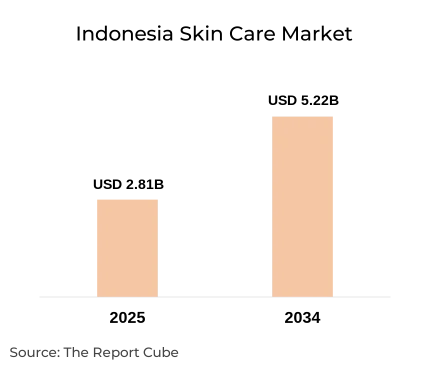
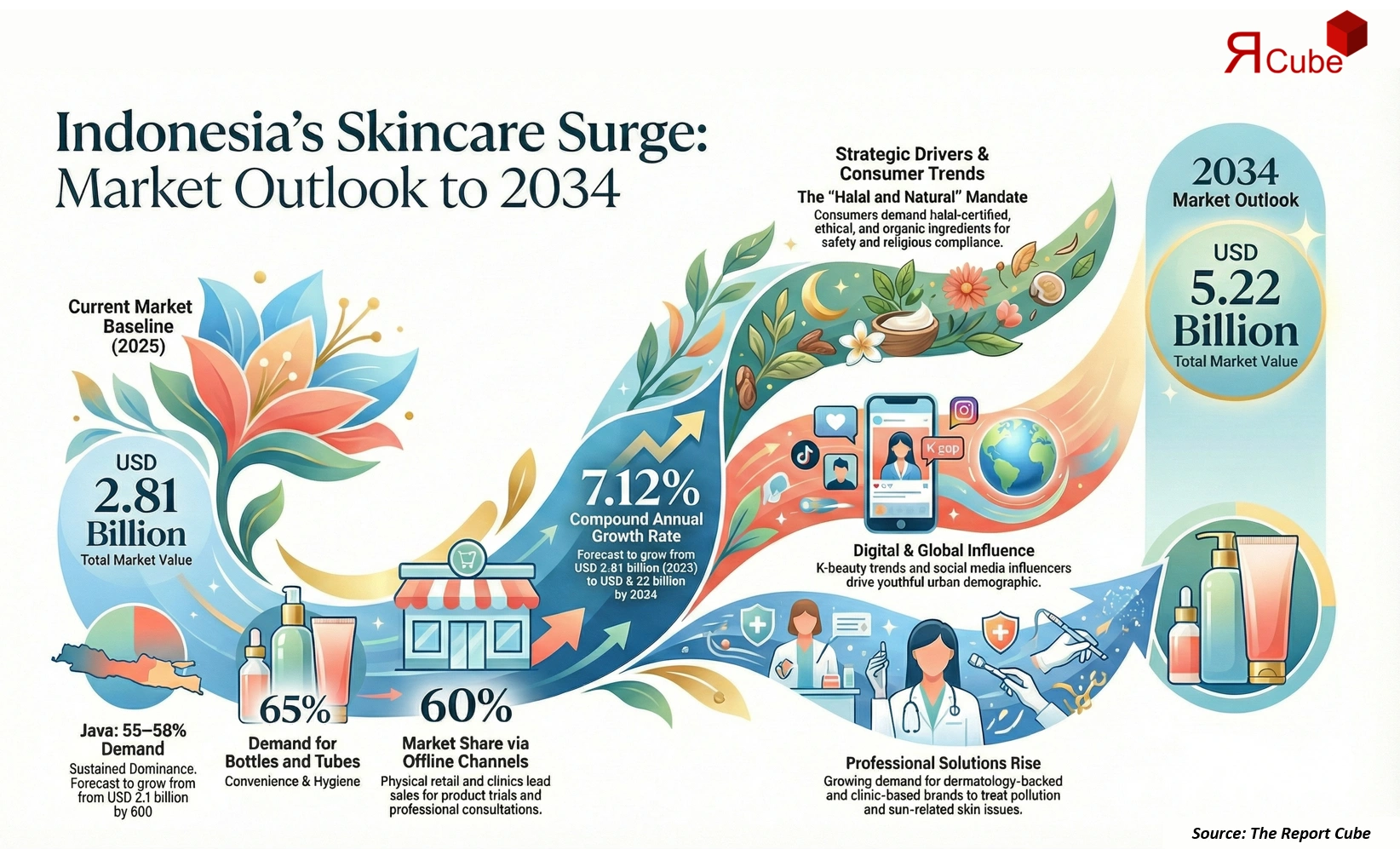
The Indonesia Skin Care Market is experiencing strong and consistent growth, driven by rising beauty consciousness, increasing disposable income, rapid urbanization, and growing influence of social media and digital marketing. In 2025, the market was valued at USD 2.81 billion and is projected to reach USD 5.22 billion by 2034, expanding at a CAGR of 7.12% during the forecast period of 2026–2034. Skin care products have become an integral part of daily personal care routines among Indonesian consumers, supported by changing lifestyles and heightened awareness of skin health.
Indonesia’s large and youthful population plays a crucial role in driving market expansion. Younger consumers are highly influenced by beauty trends, skincare routines promoted by influencers, dermatologists, and celebrities on social media platforms. Increased exposure to global beauty standards and Korean and Japanese skincare trends has significantly boosted demand for facial cleansers, moisturizers, sunscreens, serums, and anti-aging products across both urban and semi-urban areas.
Additionally, rising concerns related to pollution, humidity, sun exposure, and skin-related issues such as acne, pigmentation, and premature aging are fueling demand for specialized and dermatologically tested skincare solutions. Growth in e-commerce platforms, availability of international brands, and expansion of local manufacturers are further strengthening the Indonesia Skin Care Market. As consumers increasingly prioritize quality, safety, and efficacy, the market is expected to maintain a steady growth trajectory through 2034.
Indonesia Skin Care Market Key Highlight
Market Size & Growth
- The Indonesia Skin Care Market was valued at USD 2.81 billion in 2025 and is expected to reach USD 5.22 billion by 2034, growing at a CAGR of 7.12% during 2026–2034.
Leading Segment
- Bottles and tubes together account for approximately 62–65% of total packaging demand due to convenience and hygiene.
- Offline sales channels dominate with nearly 58–60% market share, supported by retail stores and clinics.
Leading Region
- Java Island contributes around 55–58% of total market demand, driven by urban population concentration.
Market Dynamics
- Growth driven by beauty awareness, digital influence, rising income levels, and expanding e-commerce penetration.
Indonesia Skin Care Market Dynamics
Key Market Driver – Rising Beauty Awareness and Lifestyle Changes
A primary driver of the Indonesia Skin Care Market is the growing awareness of skincare and personal grooming among consumers. Rising disposable income and improved living standards are encouraging consumers to spend more on beauty and personal care products. Skincare is increasingly viewed as a necessity rather than a luxury, especially among young professionals and urban consumers.
Changing lifestyles, longer working hours, and increased exposure to pollution and sunlight have made skincare essential for maintaining healthy skin. Consumers are actively seeking products that offer hydration, sun protection, acne control, and anti-aging benefits, thereby driving sustained demand across multiple product categories.
Key Market Trend – Natural, Halal, and Dermatology-Based Products
A key trend shaping the market is the growing preference for natural, organic, and halal-certified skincare products. Indonesian consumers are becoming more ingredient-conscious and are seeking products that are safe, ethically sourced, and suitable for sensitive skin. Halal certification plays an important role in purchasing decisions, especially among Muslim consumers.
Additionally, dermatology-backed and clinic-based skincare brands are gaining popularity as consumers seek professional solutions for skin issues. This trend is strengthening trust in premium and medical-grade skincare products.
Major Market Challenge – Intense Competition and Price Sensitivity
The Indonesia Skin Care Market is highly competitive, with the presence of numerous domestic and international brands. Price sensitivity among a large segment of consumers creates pressure on manufacturers to offer affordable yet effective products. Maintaining product differentiation while managing costs remains a key challenge.
Counterfeit products and low-quality imports also pose challenges, impacting brand reputation and consumer trust. Regulatory compliance and quality assurance are critical to sustaining long-term growth in the market.
Key Market Opportunity – E-commerce Growth and Rural Penetration
Rapid growth of e-commerce platforms presents significant opportunities for skincare brands to reach a wider consumer base. Online sales channels enable direct-to-consumer engagement, personalized marketing, and broader geographic coverage, including rural and semi-urban regions.
Rising smartphone usage, improved internet connectivity, and digital payment adoption are accelerating online skincare purchases. Brands that invest in digital marketing and omnichannel strategies are well-positioned to capture emerging demand.
Need Specific Data, Let’s Customize the Report for You
Contact UsIndonesia Skin Care Market Segment-wise Analysis
The Indonesia Skin Care Market is segmented by packaging type and sales channel, reflecting consumer preferences and purchasing behavior.
By Packaging:
- Tubes
- Bottles
- Jars
- Others
Bottles and tubes dominate the market, accounting for approximately 62–65% of total packaging demand. These formats are preferred due to ease of use, portability, and better product preservation. Jars remain popular for creams and masks, while other packaging formats cater to niche and premium products.
By Sales Channel:
- Online
- Offline
Offline channels lead the market with nearly 58–60% share, supported by supermarkets, specialty beauty stores, pharmacies, and dermatology clinics. Consumers prefer offline purchases for product trials and professional consultation. However, online channels are growing rapidly, driven by convenience, discounts, and wider product availability.
Indonesia Skin Care Market Recent Development (2025)
- Paragon Technology & Innovation PT expanded its halal-certified skincare product portfolio.
- Unilever Indonesia Tbk PT introduced new dermatology-inspired skincare lines.
- L'Oréal Indonesia PT strengthened its e-commerce and influencer marketing strategy.
- ERHA Clinic Indonesia PT expanded clinic-based skincare services across major cities.
- Vitapharm PT invested in R&D for natural and sensitive-skin formulations.
Indonesia Skin Care Market Future Outlook (2034)
By 2034, the Indonesia Skin Care Market is expected to reach USD 5.22 billion, supported by rising beauty awareness, product innovation, and expanding digital sales channels. Growth in premium skincare, dermatology-backed products, and halal-certified offerings will shape future market dynamics. Increasing focus on sustainability, eco-friendly packaging, and personalized skincare solutions is expected to further strengthen market growth. Overall, the market outlook remains positive, characterized by steady demand, innovation, and expanding consumer base.
Major Queries Answered in the Report
- What is the current and forecast size of the Indonesia Skin Care Market?
- Which packaging types dominate skincare sales?
- How do online and offline sales channels compare?
- What trends are influencing consumer skincare preferences?
- Which regions generate the highest demand?
- What challenges affect market competition?
- Who are the key players operating in the market?
Table of Contents
- Introduction
- Objective of the study
- Product Definition
- Market Segmentation
- Study Variables
- Research Methodology
- Secondary Data Points
- Companies Interviewed
- Primary Data Points
- BreakDown of Primary Interviews
- Secondary Data Points
- Executive Summary
- Market Dynamics
- Drivers
- Challenges
- Opportunity Assessment
- Recent Trends and Developments
- Policy and Regulatory Landscape
- Indonesia Skin Care Market Overview (2021-2034)
- Market Size, By Value (in USD Billions)
- Market Share, By Product
- Body Care
- Firming Body Care
- General Purpose Body Care
- Facial Care
- Acne Treatments
- Face Masks
- Facial Cleansers
- Liquid
- Cream
- Gel
- Bar Cleansers
- Facial Cleansing Wipes
- Moisturisers and Treatments
- Basic Moisturisers
- Anti-Agers
- Hand Care
- Skin Care Sets/Kits
- Body Care
- Market Share, By Category
- Premium
- Mass
- Market Share, By Gender
- Men
- Women
- Unisex
- Market Share, By End User
- Adults
- Teenagers
- Children
- Market Share, By Packaging
- Tubes
- Bottles
- Jars
- Others
- Market Share, By Sales Channel
- Onlin
- Offline
- Market Share, By Competitors
- Competition Characteristics
- Revenue Shares
- Indonesia Body Care Skin Care Market Overview, 2021-2034F
- By Value (USD Million)
- By Category- Market Size & Forecast 2021-2034, USD Million
- By Gender- Market Size & Forecast 2021-2034, USD Million
- By End User- Market Size & Forecast 2021-2034, USD Million
- By Packaging- Market Size & Forecast 2021-2034, USD Million
- By Sales Channel- Market Size & Forecast 2021-2034, USD Million
- Indonesia Facial Care Skin Care Market Overview, 2021-2034F
- By Value (USD Million)
- By Category- Market Size & Forecast 2021-2034, USD Million
- By Gender- Market Size & Forecast 2021-2034, USD Million
- By End User- Market Size & Forecast 2021-2034, USD Million
- By Packaging- Market Size & Forecast 2021-2034, USD Million
- By Sales Channel- Market Size & Forecast 2021-2034, USD Million
- Indonesia Hand Care Skin Care Market Overview, 2021-2034F
- By Value (USD Million)
- By Category- Market Size & Forecast 2021-2034, USD Million
- By Gender- Market Size & Forecast 2021-2034, USD Million
- By End User- Market Size & Forecast 2021-2034, USD Million
- By Packaging- Market Size & Forecast 2021-2034, USD Million
- By Sales Channel- Market Size & Forecast 2021-2034, USD Million
- Indonesia Skin Care Sets/Kits Skin Care Market Overview, 2021-2034F
- By Value (USD Million)
- By Category- Market Size & Forecast 2021-2034, USD Million
- By Gender- Market Size & Forecast 2021-2034, USD Million
- By End User- Market Size & Forecast 2021-2034, USD Million
- By Packaging- Market Size & Forecast 2021-2034, USD Million
- By Sales Channel- Market Size & Forecast 2021-2034, USD Million
- Competitive Outlook (Company Profile - Partial List)
- Nayue Kosmetik Indonesia PT
- Company Overview
- Business Segments
- Strategic Alliances/Partnerships
- Recent Developments
- Vitapharm PT
- Company Overview
- Business Segments
- Strategic Alliances/Partnerships
- Recent Developments
- ERHA Clinic Indonesia PT
- Company Overview
- Business Segments
- Strategic Alliances/Partnerships
- Recent Developments
- Unilever Indonesia Tbk PT
- Company Overview
- Business Segments
- Strategic Alliances/Partnerships
- Recent Developments
- Paragon Technology & Innovation PT
- Company Overview
- Business Segments
- Strategic Alliances/Partnerships
- Recent Developments
- L'Oréal Indonesia PT
- Company Overview
- Business Segments
- Strategic Alliances/Partnerships
- Recent Developments
- May Sun Yvan PT
- Company Overview
- Business Segments
- Strategic Alliances/Partnerships
- Recent Developments
- Procter & Gamble Home Products Indonesia PT
- Company Overview
- Business Segments
- Strategic Alliances/Partnerships
- Recent Developments
- Suntome Wisdom Indonesia PT
- Company Overview
- Business Segments
- Strategic Alliances/Partnerships
- Recent Developments
- Others
- Nayue Kosmetik Indonesia PT
- Contact Us & Disclaimer
Top Key Players & Market Share Outlook
- Nayue Kosmetik Indonesia PT
- Vitapharm PT
- ERHA Clinic Indonesia PT
- Unilever Indonesia Tbk PT
- Paragon Technology & Innovation PT
- L'Oréal Indonesia PT
- May Sun Yvan PT
- Procter & Gamble Home Products Indonesia PT
- Suntome Wisdom Indonesia PT
- Others
Frequently Asked Questions






