



Build Your Custom Market Intelligence Report
Customize Your ReportAustralia Sustainable Packaged Foods Market Insights & Analysis
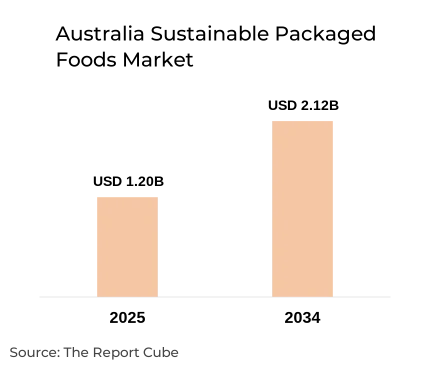
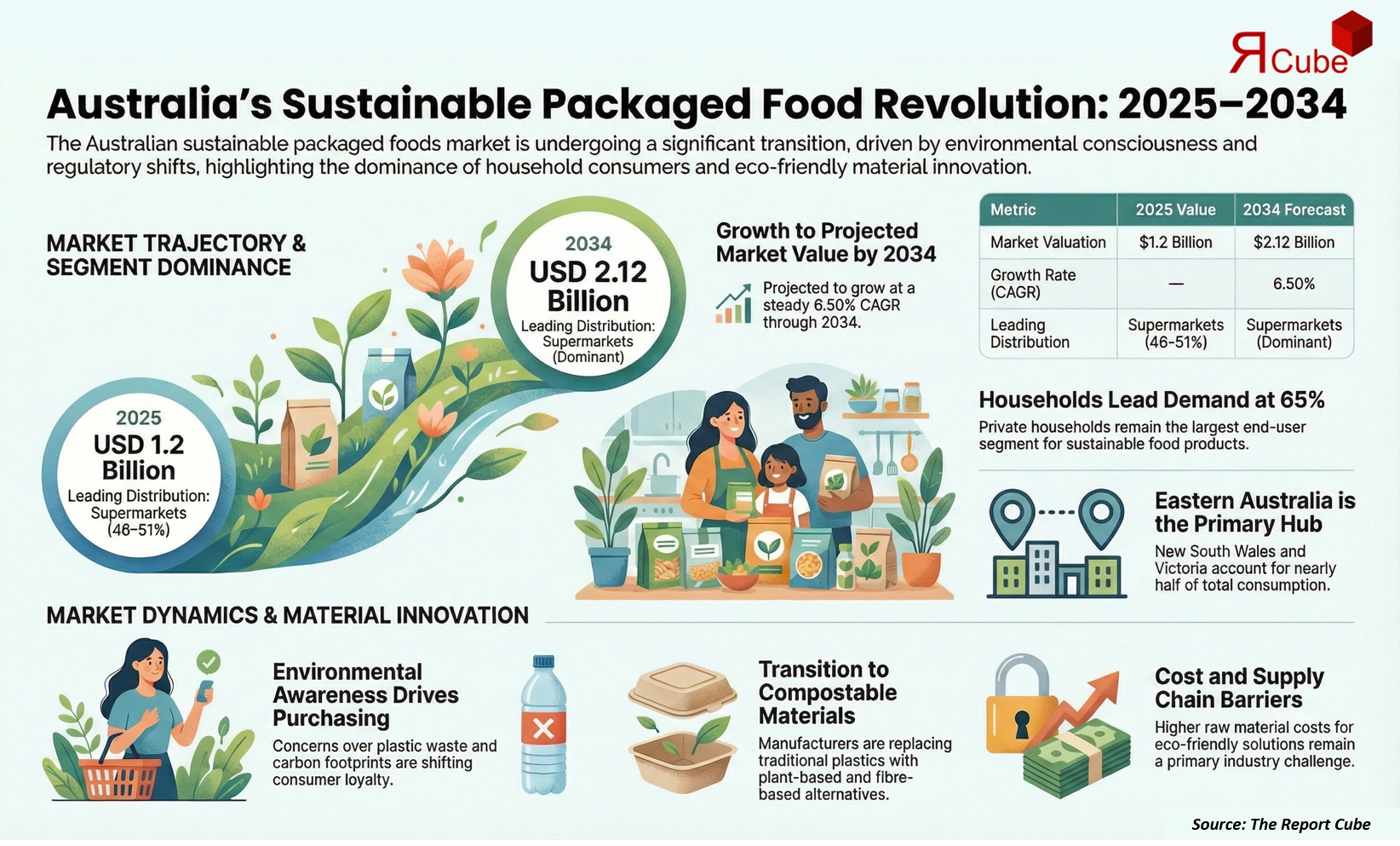
The Australia Sustainable Packaged Foods Market is witnessing steady expansion as consumers increasingly prioritize environmental responsibility, health consciousness, and ethical consumption. In 2025, the market was valued at USD 1.2 billion and is projected to reach USD 2.12 billion by 2034, growing at a CAGR of 6.50% during the forecast period from 2026 to 2034. Sustainable packaged foods include products manufactured using eco-friendly packaging materials, responsibly sourced ingredients, and processes that reduce carbon footprint and waste generation.
Australia’s consumers are becoming more aware of the environmental impact of food packaging, especially plastic waste and greenhouse gas emissions. This shift in consumer mindset is encouraging food manufacturers and packaging companies to adopt recyclable, compostable, and biodegradable packaging solutions. Sustainable packaged foods are increasingly perceived as a combination of environmental responsibility and premium quality, strengthening their appeal among urban and middle-income households.
Government regulations and sustainability initiatives aimed at reducing packaging waste and improving recycling rates are further supporting market growth. Retailers and foodservice providers are also committing to sustainability targets, pushing suppliers to adopt greener packaging solutions. As sustainability becomes a core purchasing criterion, the Australia Sustainable Packaged Foods Market is expected to maintain strong momentum through 2034.
Australia Sustainable Packaged Foods Market Key Highlight
Market Size & Growth
- The Australia Sustainable Packaged Foods Market was valued at USD 1.2 billion in 2025 and is expected to reach USD 2.12 billion by 2034, growing at a CAGR of 6.50% during 2026–2034.
Leading Segment
- Supermarkets and hypermarkets account for approximately 48–51% of total market distribution.
- Household consumers contribute nearly 62–65% of overall market demand.
Leading Region
- Eastern Australia, including New South Wales and Victoria, represents around 44–47% of total market consumption.
Market Dynamics
- Growth driven by sustainability awareness, eco-friendly packaging innovation, regulatory support, and changing consumer preferences.
Australia Sustainable Packaged Foods Market Dynamics
Key Market Driver – Rising Environmental Awareness Among Consumers
A key driver of the Australia Sustainable Packaged Foods Market is growing environmental awareness among consumers. Increasing concerns about plastic pollution, climate change, and food waste have influenced purchasing behavior, particularly among younger and urban populations. Consumers are actively choosing products that use recyclable or biodegradable packaging and demonstrate responsible sourcing practices. Sustainable packaged foods are increasingly associated with brand transparency, ethical values, and long-term environmental benefits, encouraging repeat purchases and brand loyalty.
Key Market Trend – Innovation in Sustainable Packaging Materials
A major trend shaping the market is innovation in sustainable packaging materials. Food manufacturers and packaging companies are investing in plant-based plastics, paper-based packaging, compostable materials, and lightweight packaging designs to reduce environmental impact. Advancements in barrier technologies have improved the shelf life and safety of sustainable packaging, making it suitable for a wide range of food products. These innovations are helping overcome traditional limitations associated with eco-friendly packaging while enhancing consumer acceptance.
Major Market Challenge – Higher Costs and Supply Chain Complexity
Despite strong demand, higher costs associated with sustainable materials remain a key challenge. Eco-friendly packaging solutions often involve higher raw material and production costs compared to conventional packaging, which can impact product pricing. Additionally, sourcing sustainable materials at scale and maintaining consistent quality can be complex. Small and medium-sized food manufacturers may face financial and operational constraints, slowing widespread adoption across all market segments.
Key Market Opportunity – Retailer and Foodservice Sustainability Commitments
Retailers and foodservice providers present a significant opportunity for the market. Supermarkets, restaurants, and institutional buyers are increasingly committing to sustainability targets, including reducing single-use plastics and improving recyclability. Partnerships between food manufacturers, packaging suppliers, and retailers can accelerate the adoption of sustainable packaged foods. Expansion of private-label sustainable products further enhances market penetration and affordability.
Need Specific Data, Let’s Customize the Report for You
Contact UsAustralia Sustainable Packaged Foods Market Segment-wise Analysis
The Australia Sustainable Packaged Foods Market is segmented by distribution channel and end-user, reflecting diverse purchasing patterns and consumption needs.
By Distribution Channel:
- Supermarkets and Hypermarkets
- Convenience Stores
- Online Retail
- Specialty Health Stores
Supermarkets and hypermarkets dominate the market with approximately 48–51% share due to their wide product assortment and high consumer footfall. Online retail is growing rapidly as consumers seek convenience and access to niche sustainable brands. Specialty health stores play an important role in catering to premium and health-focused consumers.
By End-User:
- Households
- Foodservice Providers
- Institutional Buyers
Household consumers lead the market with nearly 62–65% share, driven by rising awareness and preference for sustainable daily food products. Foodservice providers are increasingly adopting sustainable packaged foods to meet customer expectations and corporate sustainability goals. Institutional buyers, including schools and healthcare facilities, are gradually increasing adoption.
Regional Projection of Australia Sustainable Packaged Foods Market
- Eastern Australia
- Western Australia
- Southern Australia
- Northern Australia
Eastern Australia dominates the market with approximately 44–47% share, supported by high population density, strong retail infrastructure, and sustainability-focused consumers in New South Wales and Victoria. Southern and Western Australia show steady growth, while Northern Australia is gradually adopting sustainable packaged foods through expanding retail access.
Australia Sustainable Packaged Foods Market Recent Development (2025)
- Amcor PLC expanded recyclable and compostable food packaging solutions.
- Orora Ltd invested in sustainable fiber-based packaging technologies.
- Tetra Pak International enhanced renewable material usage in food cartons.
- BioPak expanded compostable packaging offerings for food brands.
- Kraft Heinz Co increased adoption of recyclable packaging formats in Australia.
Australia Sustainable Packaged Foods Market Future Outlook (2034)
By 2034, the Australia Sustainable Packaged Foods Market is expected to reach USD 2.12 billion, supported by strong consumer demand for environmentally responsible products and continued innovation in packaging materials. Supermarkets and household consumption will remain dominant, while foodservice and institutional adoption increases. Regulatory support, retailer commitments, and technological advancements will further strengthen market growth, ensuring a positive and resilient outlook.
Major Queries Answered in the Report
- What is the current and forecast size of the Australia Sustainable Packaged Foods Market?
- Which distribution channels dominate market sales?
- How do end-user segments influence market demand?
- What challenges affect sustainable packaging adoption?
- Which regions contribute most to market consumption?
- What trends are shaping innovation in sustainable packaged foods?
- Who are the key players operating in the Australia market?
Table of Contents
- Introduction
- Objective of the study
- Product Definition
- Market Segmentation
- Study Variables
- Research Methodology
- Secondary Data Points
- Companies Interviewed
- Primary Data Points
- Break Down of Primary Interviews
- Secondary Data Points
- Executive Summary
- Market Dynamics
- Drivers
- Challenges
- Opportunity Assessment
- Recent Trends and Developments
- Policy and Regulatory Landscape
- Australia Sustainable Packaged Foods Market Overview (2021-2034)
- Market Size, By Value (in USD Billions)
- Market Share, By Product Type
- Plant-Based Foods
- Meat Alternatives
- Dairy Alternatives
- Snacks and Bars
- Organic Packaged Foods
- Ready-to-Eat Meals
- Baked Goods
- Beverages
- Eco-Friendly Snacks
- Nuts and Seeds
- Energy Bars
- Fruit-Based Snacks
- Plant-Based Foods
- Market Share, By Packaging Material
- Biodegradable Plastics
- Recyclable Paper and Cardboard
- Compostable Materials
- Reusable Containers
- Market Share, By Distribution Channel
- Supermarkets and Hypermarkets
- Convenience Stores
- Online Retail
- Specialty Health Stores
- Market Share, By End-User
- Households
- Foodservice Providers
- Institutional Buyers
- Market Share, By Region
- Eastern Australia
- Western Australia
- Southern Australia
- Northern Australia
- Market Share, By Competitors
- Competition Characteristics
- Revenue Shares
- Australia Plant-Based Foods Sustainable Packaged Foods Market Overview, 2021-2034F
- By Value (USD Million)
- By Packaging Material- Market Size & Forecast 2019-2030, USD Million
- By Distribution Channel- Market Size & Forecast 2019-2030, USD Million
- By End-User- Market Size & Forecast 2019-2030, USD Million
- Australia Organic Packaged Foods Sustainable Packaged Foods Market Overview, 2021-2034F
- By Value (USD Million)
- By Packaging Material- Market Size & Forecast 2019-2030, USD Million
- By Distribution Channel- Market Size & Forecast 2019-2030, USD Million
- By End-User- Market Size & Forecast 2019-2030, USD Million
- Australia Eco-Friendly Snacks Sustainable Packaged Foods Market Overview, 2021-2034F
- By Value (USD Million)
- By Packaging Material- Market Size & Forecast 2019-2030, USD Million
- By Distribution Channel- Market Size & Forecast 2019-2030, USD Million
- By End-User- Market Size & Forecast 2019-2030, USD Million
- Competitive Outlook (Company Profile - Partial List)
- Amcor PLC
- Company Overview
- Business Segments
- Strategic Alliances/Partnerships
- Recent Developments
- Orora Ltd
- Company Overview
- Business Segments
- Strategic Alliances/Partnerships
- Recent Developments
- Tetra Pak International S.A.
- Company Overview
- Business Segments
- Strategic Alliances/Partnerships
- Recent Developments
- Simplot Co
- Company Overview
- Business Segments
- Strategic Alliances/Partnerships
- Recent Developments
- McCain Foods Ltd
- Company Overview
- Business Segments
- Strategic Alliances/Partnerships
- Recent Developments
- Kraft Heinz Co
- Company Overview
- Business Segments
- Strategic Alliances/Partnerships
- Recent Developments
- Mars Inc
- Company Overview
- Business Segments
- Strategic Alliances/Partnerships
- Recent Developments
- Vacupack Australia
- Company Overview
- Business Segments
- Strategic Alliances/Partnerships
- Recent Developments
- BioPak
- Company Overview
- Business Segments
- Strategic Alliances/Partnerships
- Recent Developments
- Others
- Amcor PLC
- Contact Us & Disclaimer
Top Key Players & Market Share Outlook
- Amcor PLC
- Orora Ltd
- Tetra Pak International S.A.
- Simplot Co
- McCain Foods Ltd
- Kraft Heinz Co
- Mars Inc
- Vacupack Australia
- BioPak
- Others
Frequently Asked Questions






