


Build Your Custom Market Intelligence Report
Customize Your ReportKey Takeaways
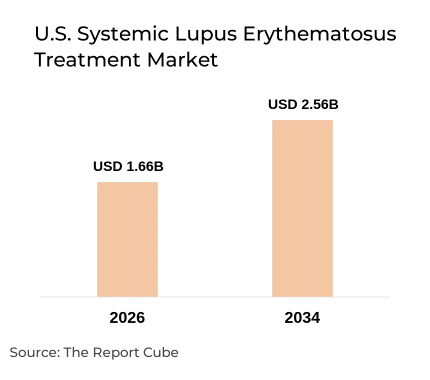
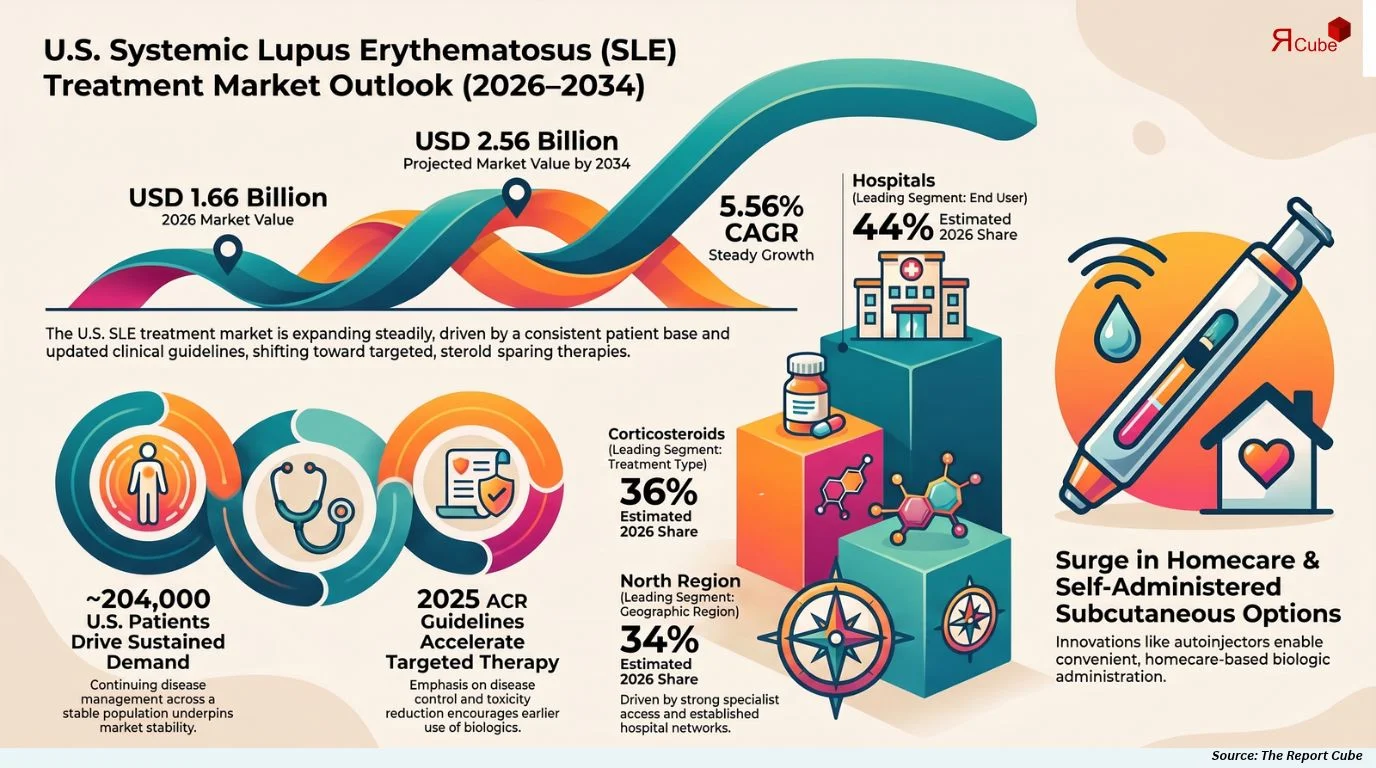
- U.S. systemic lupus erythematosus treatment market valued at USD 1.66 billion in 2026.
- Market projected to reach USD 2.56 billion by 2034 at a 5.56% CAGR.
- Corticosteroids lead the treatment type segment with an estimated 36% share in 2026.
- Hospitals dominate the end-user segment with an estimated 44% share in 2026.
- Homecare settings represent the emerging growth opportunity as self-administered therapies expand.
- Steroid-sparing treatment strategies are shifting therapy selection toward targeted biologics.
- AbbVie, Roche, Bristol-Myers Squibb, GSK, Novartis, Sanofi, Pfizer, Merck & Co., and Amgen are key companies.
Market Overview
Systemic lupus erythematosus (SLE) treatment covers prescription therapies that control a chronic autoimmune disease affecting the skin, joints, kidneys, and other organs. Common options include corticosteroids, antimalarials, nonsteroidal anti-inflammatory drugs, conventional immunosuppressants, and biologic agents, administered orally, intravenously, or subcutaneously in hospitals, specialized clinics, and homecare settings, depending on severity.
This U.S. Systemic Lupus Erythematosus Treatment Market Analysis starts with treatment duration. Disease activity can vary across organ systems, so patients need continuing medication, specialist follow-up, and clinical monitoring. Demand is also shaped by hospital-based care, outpatient clinic management, and the gradual introduction of targeted biologic therapies for suitable patients.
The 2025 American College of Rheumatology guideline targets remission or low disease activity while limiting toxicity, encouraging steroid-sparing regimens and early immunosuppression. Market value is USD 1.66 billion in 2026, rising to USD 2.56 billion by 2034. The market is projected to grow at a CAGR of 5.56% during 2026–2034.
U.S. Systemic Lupus Erythematosus Treatment Market Dynamics
U.S. Systemic Lupus Erythematosus Treatment Market Growth depends on a stable diagnosed population, clinical guidelines favoring disease control, and expanding biologic and self-administered options. Treatment toxicity and diagnostic complexity moderate adoption, while competition among established and emerging therapies shapes pricing, access, and prescribing patterns.
|
Factor |
Type |
Specific Impact on Market |
Magnitude |
|---|---|---|---|
|
Large diagnosed patient population |
Driver |
Sustains continuing demand for medication and clinical monitoring |
High |
|
Guideline emphasis on disease control |
Driver |
Supports maintenance, immunosuppressive, and biologic therapy use |
High |
|
Targeted biologic and homecare options |
Opportunity |
Enables new mechanisms and self-administered delivery |
Medium to High |
|
Treatment toxicity and complex presentation |
Challenge |
Complicates therapy selection and long-term adherence |
Medium to High |
|
Steroid-sparing, personalized treatment |
Trend |
Shifts prescribing toward targeted, patient-specific regimens |
High |
U.S. Systemic Lupus Erythematosus Treatment Market Growth Drivers
According to the CDC, approximately 204,000 people in the United States have SLE, based on prevalence estimates cited in its 2024 overview. Because the disease is chronic and can involve multiple organs, patients require continuing medication, clinical monitoring, and specialist care, which creates a steady base of treatment demand across hospitals and clinics.
The American College of Rheumatology (ACR) 2025 SLE treatment guideline sets therapy goals of achieving and maintaining remission or low disease activity, reducing morbidity and mortality, and minimizing treatment-related toxicity. These objectives support continued demand for maintenance therapies, immunosuppressive medicines, and biologic treatments that clinicians can adjust as disease activity and organ involvement change.
U.S. Systemic Lupus Erythematosus Treatment Market Opportunities
Roche’s Gazyva received FDA approval for active lupus nephritis in October 2025, and its SLE application was accepted by the FDA in April 2026, with a decision expected by December 2026. Meanwhile, the ACR’s 2025 guideline supports introducing conventional or biologic immunosuppressive therapies early when clinically appropriate, a position that widens the scope for targeted therapies.
Self-administered therapies create a second opportunity. In April 2026, the FDA approved AstraZeneca’s Saphnelo as a once-weekly subcutaneous autoinjector pen for adults with moderate to severe SLE, allowing home or caregiver-supported use. Suitability depends on the medicine and individual clinical needs, but reduced clinic visits may improve convenience for some patients.
U.S. Systemic Lupus Erythematosus Treatment Industry Challenges
The CDC describes SLE as a disease that can cause a wide range of symptoms and affect multiple parts of the body, making diagnosis difficult. Differences in disease severity and organ involvement complicate individualized treatment selection and can require ongoing specialist assessment and monitoring for many patients over the long term.
Balancing treatment effectiveness with adverse effects remains a clinical challenge. The ACR’s 2025 guideline stresses reducing disease activity while minimizing treatment-related toxicity, including risks tied to glucocorticoids, which still hold the leading treatment share. Disease control, medication tolerability, long-term safety, and adherence must be weighed together by clinicians and patients.
Need Specific Data, Let’s Customize the Report for You
Request CustomizationU.S. Systemic Lupus Erythematosus Treatment Market Trends
U.S. Systemic Lupus Erythematosus Treatment Market Trends increasingly favor steroid-sparing treatment strategies. The ACR’s 2025 guideline advises clinicians to minimize glucocorticoid exposure and introduce suitable conventional or biologic immunosuppressive therapies when clinically indicated, reflecting a gradual shift toward controlling disease activity while reducing risks from prolonged glucocorticoid use in patients.
Personalized treatment selection is gaining prominence. Prescribers increasingly consider disease severity, organ involvement, response to prior therapies, tolerability, and patient preference, while biologic advances and patient-centered care shape product development. Delivery is moving closer to home as subcutaneous options such as Saphnelo’s autoinjector reach adults with moderate to severe SLE.
U.S. Systemic Lupus Erythematosus Treatment Market Segment Analysis
Treatment demand in the United States is organized by care setting, drug class, patient age group, and route of administration. Each category reflects how clinicians match therapy to disease severity, organ involvement, and patient circumstances. The U.S. Systemic Lupus Erythematosus Treatment Market Share breakdown below identifies the leading segments where figures are available.
By End User
- Hospitals
- Specialized Clinics
- Homecare Settings
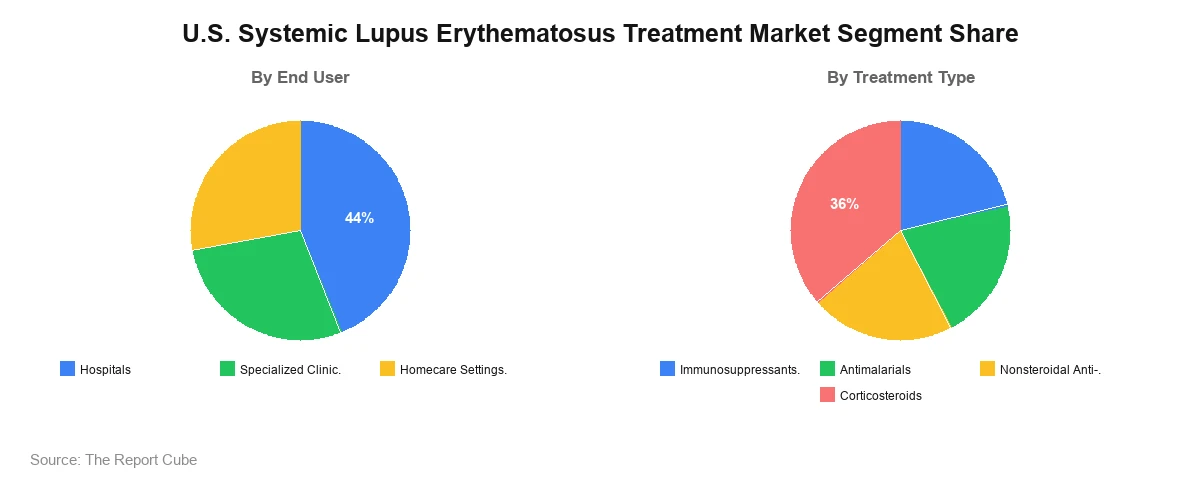
Hospitals lead the end-user category with an estimated 44% share in 2026, supported by their role in diagnosing multi-organ disease, administering intravenous biologics such as GSK’s Benlysta, Roche’s Gazyva, and AstraZeneca’s Saphnelo, and managing complex presentations that include lupus nephritis. Specialized clinics follow, driven by rheumatology-led monitoring, outpatient infusion services, and long-term maintenance care for patients with stable disease. Homecare settings represent the emerging segment as self-administered subcutaneous therapies expand, including the Saphnelo autoinjector pen approved in April 2026 and GSK’s subcutaneous Benlysta option. Demand in this setting depends on patient suitability, clinician oversight, and remote follow-up, so adoption is likely to remain gradual.
By Treatment Type
- Immunosuppressants
- Antimalarials
- Nonsteroidal Anti-Inflammatory Drugs
- Corticosteroids
Corticosteroids lead the treatment-type category with an estimated 36% share in 2026, reflecting rapid anti-inflammatory action, long clinical familiarity, and use during flares and organ involvement, including Pfizer’s Medrol and Solu-Medrol brands. The ACR’s 2025 guideline advises minimizing glucocorticoid exposure, which supports demand shifts toward other classes. Immunosuppressants, including biologic agents such as GSK’s Benlysta and Roche’s Gazyva, are gaining relevance as steroid-sparing options. Antimalarials, mainly hydroxychloroquine, remain a foundational background therapy, while nonsteroidal anti-inflammatory drugs are used primarily for musculoskeletal symptom relief in milder disease. Wider biologic availability may therefore gradually moderate the steroid-led structure of treatment.
Regional Analysis
|
Region |
Estimated Market Share |
Key Growth Factors |
Industry Trends |
|---|---|---|---|
|
West |
- |
Specialist care access; hospital and clinic networks |
Biologic and personalized treatment adoption |
|
Southwest |
- |
Outpatient and clinic-based care demand |
Rising interest in self-administered therapies |
|
North |
34% |
Largest regional share; hospital-led care and specialist follow-up |
Steroid-sparing and targeted biologic use |
|
Midwest |
- |
Established hospital systems and clinic-based monitoring |
Gradual adoption of homecare delivery |
North leads with an estimated 34% share in 2026, equal to roughly one-third of national demand, with the remaining 66% distributed across the West, Southwest, and Midwest. Hospital-led care, specialist rheumatology access, and rising biologic use are likely contributors, although these drivers are qualitative and individual shares for the other regions are not separately disclosed.
The West, Southwest, and Midwest collectively account for the remaining 66%. Demand across these regions follows the same clinical drivers: a chronic patient base, rheumatology-led care, and growing access to biologic and subcutaneous therapies. Differences between regions are expected to reflect healthcare access and treatment-setting mix, and are directional rather than measured.
Market Share & Competitive Landscape
Competition combines established biologic franchises, long-standing corticosteroid suppliers, and late-stage pipeline developers. The positioning below reflects products, development activity, and care-setting presence rather than numerical market share. Roche and GSK hold approved lupus-indicated biologics, while other companies participate through pipeline programs or supportive therapies.
|
Company |
Competitive Strength |
Primary Segment Served |
|---|---|---|
|
AbbVie |
Large immunology portfolio; Rinvoq (upadacitinib) in late-stage SLE development |
Immunosuppressants; oral |
|
Roche |
Gazyva approved for lupus nephritis in October 2025; SLE application under FDA review after positive Phase III ALLEGORY data |
Immunosuppressants (biologic); intravenous, hospitals |
|
Bristol-Myers Squibb |
Deucravacitinib in late-stage SLE development |
Immunosuppressants; oral |
|
GSK |
Benlysta in intravenous and subcutaneous forms; global sales of £1,773 million in 2025 |
Immunosuppressants (biologic); hospitals, clinics, homecare |
|
Novartis |
Ianalumab in Phase III SLE studies with subcutaneous regimens |
Immunosuppressants (biologic); subcutaneous pipeline |
|
Sanofi |
Frexalimab in a Phase 2 SLE study |
Immunosuppressants (biologic); intravenous pipeline |
|
Pfizer |
Corticosteroid portfolio including Medrol and Solu-Medrol |
Corticosteroids |
|
Merck & Co. |
MK-6194 in Phase 2a and MK-1045 in Phase 1 SLE studies |
Immunosuppressants; pipeline |
|
Amgen |
Biologics and immunology expertise; earlier mid-stage lupus programs stopped for futility |
Immunosuppressants; pipeline reset |
Key Companies in the U.S. Systemic Lupus Erythematosus Treatment Market
Roche: Roche, headquartered in Basel, Switzerland, is a global healthcare group with pharmaceuticals and diagnostics operations. In October 2025, the FDA approved Gazyva for adults with active lupus nephritis receiving standard therapy, and in April 2026 accepted its SLE application. Its anti-CD20 biologic strengthens Roche’s position in hospital-based, B-cell-directed lupus treatment.
GSK: GSK plc, headquartered in London, markets Benlysta, which the FDA approved in 2011 as the first new lupus drug in over 50 years. Global Benlysta sales rose to £1,773 million in 2025 from £1,490 million in 2024, per GSK’s annual report. Intravenous and subcutaneous options broaden reach across care settings.
Recent Developments
|
Year / Month |
Company |
Development |
|---|---|---|
|
Oct 2025 |
Roche |
FDA approved Gazyva for adults with active lupus nephritis receiving standard therapy, with a 90-minute infusion option after the first infusion for eligible patients |
|
2025 (full year) |
GSK |
Reported Benlysta sales of £1,773 million, up 22% at constant exchange rates versus 2024 |
|
Early 2026 |
AstraZeneca |
FDA issued a complete response letter for the subcutaneous Saphnelo application; the company stated it had provided the requested information |
|
Apr 2026 |
Roche |
FDA accepted the supplemental application for Gazyva in SLE; decision expected by December 2026 (pending) |
|
Apr 2026 |
AstraZeneca |
FDA approved Saphnelo as a once-weekly subcutaneous autoinjector for self-administration in adults with moderate to severe SLE |
U.S. Systemic Lupus Erythematosus Treatment Market Future Outlook
The U.S. Systemic Lupus Erythematosus Treatment Market Forecast points to a rise from USD 1.66 billion in 2026 to USD 2.56 billion by 2034, a CAGR of 5.56%. Growth is expected to depend on a continuing treated population, steroid-sparing treatment strategies, and wider use of biologic therapies, with pending regulatory decisions, including Roche’s Gazyva in SLE, shaping the competitive mix during the forecast period.
Delivery models and clinical practice are likely to evolve alongside product launches. Subcutaneous and self-administered options, such as the Saphnelo autoinjector, may widen homecare use, while late-stage candidates from Novartis, AbbVie, and Bristol-Myers Squibb remain subject to trial outcomes and regulatory review. Corticosteroids may retain a role, although guideline emphasis on minimizing glucocorticoid exposure could gradually redirect demand. These projections remain conditional on clinical, regulatory, and reimbursement developments.
U.S. Systemic Lupus Erythematosus Treatment Market Report Coverage
This U.S. Systemic Lupus Erythematosus Treatment Market Report covers market size, segmentation, regional performance, and competitive positioning for 2026–2034.
|
Parameter |
Details |
|---|---|
|
Market Name |
U.S. Systemic Lupus Erythematosus Treatment Market |
|
Market Size 2026 |
USD 1.66 Billion |
|
Market Size 2034 |
USD 2.56 Billion |
|
Forecast Period |
2026–2034 |
|
CAGR |
5.56% |
|
Base Year |
2026 |
|
Historical Years |
2021–2025 |
|
Forecast Years |
2026–2034 |
|
Segments Covered |
By End User, By Treatment Type, By Patient Demographics, By Route of Administration |
|
Regions Covered |
West, Southwest, North, Midwest |
|
Key Companies |
AbbVie, Roche, Bristol-Myers Squibb, GSK, Novartis, Sanofi, Pfizer, Merck & Co., Amgen |
|
Customization |
Available as per client requirements |
Why Choose This U.S. Systemic Lupus Erythematosus Treatment Market Report?
- Covers the U.S. Systemic Lupus Erythematosus Treatment Market from 2026 to 2034 with value projections and CAGR.
- Segments demand by end user, treatment type, patient demographics, and route of administration.
- Provides a regional view across the West, Southwest, North, and Midwest.
- Assesses nine key companies, including approved products and late-stage pipeline activity.
- Examines how clinical guidelines and steroid-sparing strategies influence therapy selection.
- Tracks regulatory and product developments from 2025 and 2026.
- Supports portfolio planning, investment screening, and market-entry assessment without guaranteeing business outcomes.
Table of Contents
- Introduction
- Objective of the Study
- Product Definition
- Market Segmentation
- Study Variables
- Research Methodology
- Secondary Data Points
- Companies Interviewed
- Primary Data Points
- Breakdown of Primary Interviews
- Secondary Data Points
- Executive Summary
- Market Dynamics
- Drivers
- Challenges
- Opportunity Assessment
- Recent Trends and Developments
- Policy and Regulatory Landscape
- U.S Systemic Lupus Erythematosus Treatment Market Overview and Forecast Analysis (2021-2034)
- Market Size, By Value, By Growth Rate (CAGR/USD Billions)
- Demand – Supply Trends
- Market Share, By End User
- Hospitals
- Specialized Clinics
- Homecare Settings
- Market Share, By Treatment Type
- Immunosuppressants
- Antimalarials
- Nonsteroidal Anti-Inflammatory Drugs
- Corticosteroids
- Market Share, By Patient Demographics
- Pediatric
- Adult
- Geriatric
- Market Share, By Route of Administration
- Oral
- Intravenous
- Subcutaneous
- Market Share, By Region
- West
- Southwest
- North
- Midwest
- Market Share, By Competitors
- Competition Characteristics
- Revenue Shares
- Hospitals U.S Systemic Lupus Erythematosus Treatment Market Overview, 2021-2034F
- By Value (USD Million)
- By Treatment Type – Market Size & Forecast 2021-2034, USD Million
- Immunosuppressants
- Antimalarials
- Nonsteroidal Anti-Inflammatory Drugs
- Corticosteroids
- Specialized Clinics U.S Systemic Lupus Erythematosus Treatment Market Overview, 2021-2034F
- By Value (USD Million)
- By Treatment Type – Market Size & Forecast 2021-2034, USD Million
- Immunosuppressants
- Antimalarials
- Nonsteroidal Anti-Inflammatory Drugs
- Corticosteroids
- Homecare Settings U.S Systemic Lupus Erythematosus Treatment Market Overview, 2021-2034F
- By Value (USD Million)
- By Treatment Type – Market Size & Forecast 2021-2034, USD Million
- Immunosuppressants
- Antimalarials
- Nonsteroidal Anti-Inflammatory Drugs
- Corticosteroids
- Competitive Outlook (Company Profile - Partial List)
- AbbVie
- Company Overview
- Business Segments
- Strategic Alliances/Partnerships
- Recent Developments
- Roche
- Company Overview
- Business Segments
- Strategic Alliances/Partnerships
- Recent Developments
- Bristol-Myers Squibb
- Company Overview
- Business Segments
- Strategic Alliances/Partnerships
- Recent Developments
- GSK
- Company Overview
- Business Segments
- Strategic Alliances/Partnerships
- Recent Developments
- Novartis
- Company Overview
- Business Segments
- Strategic Alliances/Partnerships
- Recent Developments
- Sanofi
- Company Overview
- Business Segments
- Strategic Alliances/Partnerships
- Recent Developments
- Pfizer
- Company Overview
- Business Segments
- Strategic Alliances/Partnerships
- Recent Developments
- Merck & Co.
- Company Overview
- Business Segments
- Strategic Alliances/Partnerships
- Recent Developments
- Amgen
- Company Overview
- Business Segments
- Strategic Alliances/Partnerships
- Recent Developments
- AbbVie
- Contact Us & Disclaimer
Top Key Players & Market Share Outlook
- AbbVie
- Roche
- Bristol-Myers Squibb
- GSK
- Novartis
- Sanofi
- Pfizer
- Merck & Co.
- Amgen
Frequently Asked Questions