


Build Your Custom Market Intelligence Report
Customize Your ReportKey Highlights
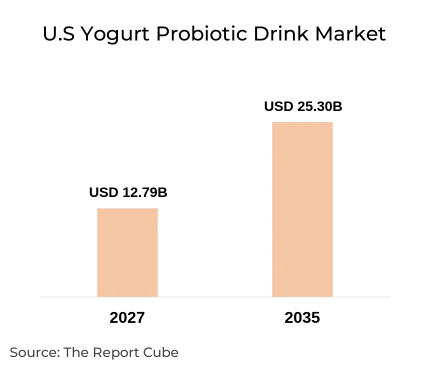
- The U.S. yogurt probiotic drink market is estimated at USD 12.79 billion in 2027 and is projected to reach USD 25.30 billion by 2035, registering a CAGR of approximately 8.90% during 2027–2035.
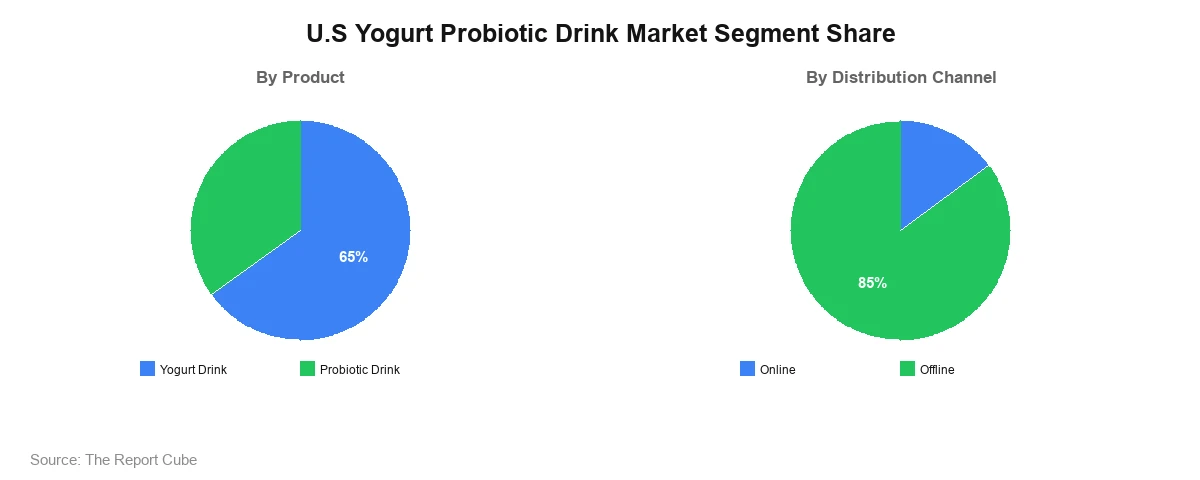
- Yogurt drinks account for an estimated 65% market share in 2026, based on the supplied analyst estimate, supported by demand for drinkable yogurt, cultured dairy beverages, and convenient fermented dairy products.
- Offline distribution accounts for an estimated 85% market share in 2026, reflecting the importance of supermarkets, grocery stores, convenience retailers, and refrigerated retail distribution.
- Consumer interest in gut health, fermented foods, live cultures, and probiotic ingredients is encouraging manufacturers to develop functional yogurt and probiotic beverages.
- High-protein and portable dairy beverages are gaining product development attention, with companies introducing drinkable Greek yogurt, protein yogurt drinks, and kefir-based beverages.
- Refrigerated supply chains, product shelf life, live-culture viability, packaging, and temperature-controlled distribution are important competitive factors in the market.
U.S. Yogurt Probiotic Drink Market Overview
The U.S. yogurt probiotic drink market comprises drinkable yogurt, fermented dairy beverages, and probiotic beverages marketed for their live cultures and functional formulation characteristics. Products in this category include drinkable conventional and Greek yogurt, kefir, cultured dairy beverages, probiotic milk drinks, and selected non-dairy fermented beverages. These products are sold through supermarkets, grocery stores, convenience retailers, natural food stores, specialty retailers, and online channels. Market demand is influenced by consumer interest in gut health, convenient nutrition, fermented foods, protein-rich beverages, and products containing live microorganisms.
Consumer interest in gut health and functional nutrition is influencing product innovation. Manufacturers are introducing beverages with specific probiotic strains, live-culture positioning, protein enrichment, reduced sugar, lactose-free formulations, and plant-based ingredients. The development of ready-to-drink protein yogurt beverages also connects the category with the wider demand for convenient protein consumption. However, product claims relating to digestion, immunity, or other health outcomes require appropriate scientific substantiation and compliance with U.S. food labeling and advertising requirements.
U.S. Yogurt Probiotic Drink Market Size and Forecast
The U.S. yogurt probiotic drink market is estimated to reach USD 12.79 billion in 2027 and is projected to increase to USD 25.30 billion by 2035. Based on the supplied market values, the market is expected to register a CAGR of approximately 8.90% during the forecast period. Growth is associated with demand for drinkable yogurt, fermented dairy beverages, kefir, probiotic drinks, and functional beverages positioned around gut health and convenient nutrition.
Offline distribution accounts for an estimated 85% market share in 2026, based on the supplied analyst estimate. Supermarkets, grocery stores, convenience stores, natural food retailers, and other physical outlets remain important channels for refrigerated yogurt and probiotic beverages. Retail visibility, product availability, promotional activity, refrigerated shelf space, and established grocery distribution networks influence sales. Online grocery platforms, direct-to-consumer websites, and subscription services provide additional purchasing options, particularly for specialized probiotic products and multipacks.
Market Outlook
The U.S. yogurt probiotic drink market is expected to benefit from continued consumer interest in fermented foods, gut health, convenient nutrition, and functional beverages. Drinkable yogurt and cultured dairy beverages are established product formats that combine dairy nutrition with convenient consumption. Manufacturers are likely to expand product portfolios through new flavors, improved textures, higher-protein formulations, lactose-free alternatives, and products containing selected live cultures. The market's growth will also depend on consumers' willingness to purchase functional beverages regularly and the ability of brands to communicate product benefits accurately.
Offline retail is expected to remain a key distribution channel because refrigerated beverages depend on retail cold-chain infrastructure and frequent grocery purchasing. Online grocery, direct-to-consumer platforms, and specialty health retailers can complement physical retail distribution. Manufacturers will need to manage refrigeration, shelf-life requirements, product returns, and temperature control across distribution channels. Competition is expected to remain influenced by brand recognition, retail availability, pricing, formulation differentiation, and the ability to maintain product quality throughout the supply chain.
Government Regulations in the U.S. Yogurt Probiotic Drink Market
The U.S. yogurt probiotic drink market is regulated by the U.S. Food and Drug Administration (FDA) under food safety, standards of identity, ingredient, labeling, and manufacturing requirements. Yogurt is covered by the FDA standard of identity under 21 CFR Section 131.200, which defines yogurt through specified dairy ingredients and characterizing bacterial cultures, including Lactobacillus delbrueckii subsp. bulgaricus and Streptococcus thermophilus. The standard establishes product composition and labeling requirements, including a finished-product pH of 4.6 or lower. It also permits the optional statement “contains live and active cultures” when the product contains at least 10 million colony-forming units per gram at manufacture and there is a reasonable expectation of at least 1 million CFU per gram throughout the manufacturer's assigned shelf life.
U.S. Yogurt Probiotic Drink Market Dynamics
The U.S. yogurt probiotic drink market is influenced by consumer demand for fermented foods, gut-health-oriented beverages, convenient nutrition, and protein-rich dairy products. Product innovation and the availability of live-culture formulations create opportunities for established dairy manufacturers and specialist probiotic brands. At the same time, product classification, health-claim substantiation, refrigerated distribution, and live-culture stability influence the operating environment and competitive positioning.
| Factor | Type | Specific Impact on Market | Magnitude |
|---|---|---|---|
| Increasing Consumer Interest in Gut Health and Fermented Foods | Driver | Consumer interest in fermented foods and products containing live microorganisms supports demand for drinkable yogurt, kefir, and probiotic beverages. | High |
| Growing Demand for Convenient Protein-Rich Yogurt Drinks | Driver | Ready-to-drink Greek yogurt and protein-enriched dairy beverages provide convenient formats for consumers seeking portable nutrition and higher protein intake. | High |
| Development of Strain-Specific and Non-Dairy Probiotic Beverages | Opportunity | Specialized probiotic strains, dairy-free fermented beverages, and product-specific formulations create opportunities for differentiated brands and new customer segments. | Medium to High |
| Expansion of Online Grocery and Direct-to-Consumer Distribution | Opportunity | Digital grocery platforms and direct sales provide additional access to specialty products, multipacks, and consumers seeking specific probiotic formulations. | Medium |
| Cold-Chain Dependence and Live-Culture Shelf-Life Management | Challenge | Refrigeration, storage conditions, distribution time, and microorganism viability increase logistics complexity and product quality management requirements. | High |
| Health-Claim Substantiation and Product Classification | Challenge | Manufacturers must substantiate probiotic and health-related claims and distinguish yogurt products from other fermented or probiotic beverages under applicable labeling rules. | High |
Growth Drivers: Increasing Consumer Interest in Gut Health and Fermented Foods
Increasing consumer interest in gut health and fermented foods is an important demand driver for the U.S. yogurt probiotic drink market. Yogurt, kefir, and probiotic beverages are marketed through their fermentation processes, live-culture content, and product-specific microorganism formulations. These products offer consumers convenient ways to incorporate fermented foods into everyday diets. Manufacturers are emphasizing probiotic strains, live-culture counts, and product formulations to differentiate their beverages from conventional dairy drinks and other refrigerated beverages.
The National Institutes of Health Office of Dietary Supplements explains that yogurt is produced using live microorganisms, but not all fermented foods necessarily contain probiotics with established health benefits. It also notes that the potential effects of probiotics depend on the specific microorganisms and strains involved, as well as their quantity. This distinction supports the importance of strain identification, product quality, and substantiated product positioning in the market.
Market Opportunities: Development of Strain-Specific and Non-Dairy Probiotic Beverages
Development of strain-specific probiotic beverages creates opportunities for manufacturers seeking to differentiate products through formulation, microorganism selection, and product positioning. Probiotic products may contain different bacterial strains, and their potential effects depend on the microorganisms and quantities used. Manufacturers can develop beverages with specified strains, CFU levels, fermentation processes, and storage conditions to meet particular consumer and formulation requirements. Product transparency, appropriate strain identification, and quality testing can strengthen product differentiation in an increasingly competitive functional beverage category.
Non-dairy probiotic beverages also create opportunities to reach consumers seeking plant-based or dairy-free alternatives. Harmless Harvest offers a dairy-free yogurt drink made using coconut ingredients and vegan yogurt cultures, while GoodBelly markets plant-based probiotic juice drinks. These products demonstrate the opportunity to expand beyond conventional milk-based yogurt drinks. However, non-dairy fermented beverages and probiotic juices should be classified separately from standardized dairy yogurt when market boundaries require a strict yogurt definition.
Industry Challenges: Cold-Chain Dependence and Live-Culture Shelf-Life Management
Cold-chain dependence is a major operational challenge for manufacturers of refrigerated yogurt and probiotic beverages. Many products contain live cultures that require appropriate storage conditions to maintain their intended microbial characteristics and product quality. Temperature fluctuations during transportation, warehousing, retail display, and last-mile delivery can affect shelf life, texture, taste, and microorganism viability. Manufacturers must coordinate production schedules, packaging, refrigerated storage, transportation partners, and retail inventory to maintain product quality throughout distribution.
Product shelf life and live-culture stability also create formulation and quality-control requirements. Companies must evaluate microorganism survival, acidity, packaging compatibility, storage conditions, and the expected product characteristics through the declared shelf life. For products marketed with live-culture or probiotic claims, maintaining consistency between product specifications, supporting evidence, and actual market formulations is important. These requirements can increase production costs and complicate distribution across geographically dispersed retail markets.
Need Specific Data, Let’s Customize the Report for You
Request CustomizationMarket Trends: Growth of Functional Fermented Beverages and Probiotic Formulations
Functional fermented beverages are gaining attention as manufacturers develop products that combine fermentation, live cultures, and convenient consumption formats. Product portfolios include drinkable yogurt, kefir, cultured dairy drinks, probiotic shots, and non-dairy fermented beverages. Brands are differentiating their products through specific microorganism strains, live-culture counts, ingredient combinations, and flavor profiles. The trend also encourages product innovation across dairy and plant-based beverage categories.
Danone's 2026 investor conference discussion identified gut health, kefir, probiotics, and prebiotics as important areas of consumer and category development. The company also described protein and value-added yogurt variants as contributors to product innovation and mix. This indicates that established dairy companies are paying attention to functional nutrition and fermented beverage opportunities.
U.S. Yogurt Probiotic Drink Market Segment Analysis
The U.S. yogurt probiotic drink market is segmented by product and distribution channel. Product segmentation distinguishes yogurt drinks from other probiotic drinks, including fermented beverages marketed for their live cultures. Distribution channel segmentation covers online and offline retail formats. Product differentiation is influenced by dairy or non-dairy formulation, fermentation cultures, protein content, flavors, packaging, and storage requirements. Distribution performance is influenced by retail availability, refrigerated logistics, digital grocery infrastructure, and consumer purchasing preferences.
By Product
- Yogurt Drink
- Probiotic Drink
The yogurt drink segment accounts for an estimated 65% market share in 2026, based on the supplied analyst estimate. Yogurt drinks are manufactured by fermenting dairy ingredients with characteristic yogurt cultures and are available in conventional, low-fat, Greek-style, flavored, and protein-enriched formulations. These beverages are consumed as convenient dairy snacks and breakfast products and are distributed through supermarkets, grocery stores, convenience retailers, and online grocery channels. Product innovation focuses on flavors, protein content, lactose-free formulations, reduced added sugar, and convenient single-serving packaging.
The probiotic drink segment includes beverages containing selected live microorganisms and may cover dairy-based and non-dairy products, depending on the market definition. Examples include Yakult's fermented dairy probiotic drink, Bio-K+'s dairy probiotic beverages, GoodBelly's probiotic juice drinks, and KeVita's sparkling probiotic beverages. Kefir and other cultured dairy beverages may also be included where the market methodology defines them as probiotic drinks. However, these products are not all standardized yogurt products. Yakult, for example, explicitly distinguishes its fermented dairy probiotic drink from yogurt. A clear classification methodology is necessary to avoid double counting yogurt drinks and probiotic beverages.
By Distribution Channel
- Online
- Offline
The offline segment accounts for an estimated 85% market share in 2026, based on the supplied analyst estimate. Supermarkets, hypermarkets, grocery stores, convenience stores, natural food retailers, and specialty food outlets provide important distribution channels for yogurt and probiotic beverages. These retailers offer refrigerated display space, product visibility, promotional activity, and access to regular grocery shoppers. Physical retail is particularly important for products that require refrigeration and have limited shelf life. Brand recognition, retail partnerships, store-level availability, and product placement influence the performance of this channel.
The online segment includes e-commerce marketplaces, online grocery retailers, direct-to-consumer websites, and subscription-based purchasing platforms. Digital channels allow consumers to compare nutritional information, probiotic strains, ingredients, flavors, and product formats. Online distribution can also support specialty products, multipacks, and products with limited availability in local stores. However, refrigerated shipping, packaging, last-mile temperature control, and delivery costs can affect the economics of online sales. Digital channels are therefore an additional route to market for manufacturers with suitable cold-chain fulfillment capabilities.
U.S. Yogurt Probiotic Drink Market Regional Analysis
The U.S. yogurt probiotic drink market is analyzed across the Midwest, West, South, and Northeast. Regional demand is influenced by dairy manufacturing activity, consumer preferences, retail infrastructure, refrigerated distribution networks, and the presence of food and beverage companies. USDA dairy production statistics provide a useful indicator of the broader yogurt manufacturing base, although they do not isolate drinkable yogurt or probiotic beverage production.
| Region | Key Growth Factors | Industry Trends |
|---|---|---|
| Midwest | Established dairy processing, food manufacturing, refrigerated distribution networks, and the presence of cultured dairy and beverage producers support regional market activity. | Demand for drinkable yogurt, kefir, high-protein dairy beverages, and fermented products distributed through supermarkets and grocery retailers. |
| West | Yogurt manufacturing activity, consumer interest in functional foods, specialty food retailers, and beverage innovation support market development. | Growth in Greek yogurt drinks, plant-based fermented beverages, reduced-sugar products, and specialty probiotic formulations. |
| South | Large consumer markets, grocery retail networks, food distribution infrastructure, and expanding access to refrigerated beverages support regional demand. | Expansion of convenient single-serve beverages, flavored yogurt drinks, family multipacks, and products positioned around functional nutrition. |
| Northeast | Established grocery and specialty retail channels, urban consumer markets, food distribution networks, and access to cultured dairy products support market activity. | Demand for premium yogurt drinks, kefir, probiotic beverages, and differentiated products with specific nutritional and ingredient attributes. |
U.S. Yogurt Probiotic Drink Market Competitive Landscape
The U.S. yogurt probiotic drink market includes established dairy manufacturers, specialist probiotic beverage companies, fermented dairy brands, and plant-based beverage producers. Competition is influenced by brand recognition, product formulation, live-culture characteristics, flavor innovation, nutritional positioning, packaging, retail distribution, and cold-chain capabilities. Yakult competes through its strain-specific fermented dairy probiotic drink, while Chobani and Danone participate in drinkable yogurt and cultured dairy categories.
| Company | Competitive Strength | Primary Segment Served |
|---|---|---|
| Yakult Honsha Co. Ltd. | Established probiotic beverage brand, proprietary Lactobacillus paracasei strain Shirota, dedicated product identity, and established retail distribution. | Fermented Dairy Probiotic Drinks. |
| Chobani LLC | Greek yogurt expertise, drinkable yogurt portfolio, high-protein beverage innovation, brand recognition, and broad retail presence. | Yogurt Drinks and High-Protein Dairy Beverages. |
| Danone | Large dairy and functional nutrition portfolio, Activia brand, fermentation expertise, and established yogurt manufacturing and distribution capabilities. | Yogurt, Cultured Dairy, and Probiotic Products. |
| Grupo Lala | Broad dairy product portfolio, drinkable yogurt offerings, dairy manufacturing capabilities, and regional distribution experience. | Drinkable Yogurt and Dairy Beverages. |
| Califia Farms LLC | Plant-based beverage expertise, alternative dairy formulations, consumer brand recognition, and retail distribution. | Adjacent Plant-Based Beverage Segment; direct probiotic drink portfolio requires verification. |
| Bio-K+ (Kerry Group) | Specialized probiotic formulations, strain-based product positioning, dairy and non-dairy drink formats, and specified CFU concentrations. | Dairy and Non-Dairy Probiotic Drinks. |
- Yakult Honsha Co. Ltd.: Yakult is a specialist probiotic beverage company with a product portfolio built around fermented dairy drinks containing Lactobacillus paracasei strain Shirota. In the United States, Yakult and Yakult Light are positioned as convenient daily probiotic beverages in small individual bottles. Yakult Original contains 50 calories and 10 grams of sugar per bottle, while Yakult Light contains 25 calories and 3 grams of sugar per bottle, according to the company's U.S. product information. Its product differentiation is based on its proprietary probiotic strain, established brand identity, fermentation expertise, and recognizable packaging format. Yakult also explicitly distinguishes its fermented dairy probiotic beverage from yogurt, making the company relevant to the broader probiotic drink category rather than necessarily to a narrow standardized yogurt drink category.
- Lifeway Foods Inc.: Lifeway Foods is a U.S. producer specializing in kefir and fermented probiotic products. Its portfolio includes traditional kefir, flavored kefir, organic kefir, and other cultured dairy beverages containing live and active probiotic cultures. The company differentiates its products through fermentation expertise, live-culture positioning, nutritional content, and a broad range of flavors and formats. Its Original Kefir product contains 12 live and active probiotic cultures and is positioned as a cultured dairy drink. In February 2026, Lifeway introduced Muscle Mates, a ready-to-drink functional beverage combining protein, creatine, and probiotic cultures. The company also announced a partnership with Erewhon in April 2026 to introduce a Tropical Lifeway Smoothie made with organic Lifeway kefir. These developments demonstrate its focus on extending kefir into new functional beverage formats and retail occasions.
Recent Developments and Updates
- February 27, 2026 – Lifeway Foods: Lifeway Foods announced new cultured dairy innovations at Natural Products Expo West 2026 as the company marked its 40th anniversary. Its Muscle Mates beverage combines 20 grams of protein, 5 grams of creatine, and 12 live and active probiotic cultures in a ready-to-drink format. The product illustrates the convergence of protein nutrition and probiotic beverage positioning.
- April 23, 2026 – Lifeway Foods and Erewhon: Lifeway Foods announced a partnership with Erewhon to introduce a Tropical Lifeway Smoothie made with Organic Lifeway Kefir. The beverage combines kefir with fruit and other ingredients, extending cultured dairy into a prepared smoothie format and a specialty retail and café channel.
- June 2, 2026 – Danone: During its 2026 investor conference, Danone management discussed consumer interest in gut health, kefir, probiotics, prebiotics, protein, and functional yogurt products. Management also described product innovation and higher-value variants as contributors to category and product mix development. These comments provide company-level evidence of strategic interest in functional dairy and fermented beverage categories.
- November 5, 2026 – USDA National Agricultural Statistics Service: USDA reported U.S. plain and flavored yogurt production of 485.6 million pounds in September 2026, up 4.4% from September 2025. Cumulative production for January–September 2026 reached approximately 4.21 billion pounds, 5.3% higher than the corresponding 2025 period. These figures cover overall plain and flavored yogurt production rather than the specific drinkable yogurt or probiotic beverage market.
U.S. Yogurt Probiotic Drink Market Report Coverage
The U.S. Yogurt Probiotic Drink Market report provides an assessment of market size, forecast growth, product segmentation, distribution channel dynamics, regional characteristics, competitive positioning, regulatory requirements, and recent industry developments. The report evaluates drinkable yogurt and probiotic beverage products, including fermented dairy drinks, kefir, selected non-dairy fermented beverages, and specialized probiotic formulations where included within the market definition. It also examines the role of offline and online distribution, product innovation, live-culture positioning, functional nutrition, and cold-chain infrastructure in shaping market development.
| Parameter | Details |
|---|---|
| Market Name | U.S. Yogurt Probiotic Drink Market |
| Market Size (2027) | USD 12.79 Billion |
| Market Size (2035) | USD 25.30 Billion |
| CAGR | 8.90% (2027–2035) |
| Base Year | 2026 |
| Historical Period | 2022–2026 |
| Forecast Period | 2027–2035 |
| Geographic Scope | United States |
| Segmentation | By Product and By Distribution Channel |
| Regions Covered | Midwest, West, South, Northeast |
| Key Companies | Yakult Honsha Co. Ltd., Chobani LLC, Danone, Grupo Lala, Califia Farms LLC, Bio-K+ (Kerry Group), Harmless Harvest, GoodBelly Probiotics, KeVita, Lifeway Foods Inc. |
| Customization | Market segmentation, regional analysis, competitive benchmarking, company profiling, product portfolio assessment, probiotic formulation analysis, distribution channel analysis, regulatory assessment, and customized research requirements. |
Why Choose This U.S. Yogurt Probiotic Drink Market Report?
- Provides market size and forecast analysis of the U.S. yogurt probiotic drink market through 2035.
- Examines drinkable yogurt, fermented dairy beverages, kefir, and selected probiotic beverage categories.
- Analyzes product demand across yogurt drinks and probiotic drinks.
- Evaluates offline and online distribution channels and their role in product availability.
- Reviews consumer interest in gut health, fermented foods, functional nutrition, and live-culture beverages.
- Examines high-protein, reduced-sugar, lactose-free, and plant-based beverage product developments.
- Provides regional analysis across the Midwest, West, South, and Northeast.
- Profiles major dairy manufacturers, probiotic beverage brands, and functional beverage companies.
- Reviews FDA yogurt standards, food labeling requirements, and FTC rules for health-related advertising claims.
- Evaluates cold-chain distribution, shelf-life management, and live-culture stability requirements.
- Supports strategic planning, product development, competitive benchmarking, market entry, and investment decisions.
Table of Contents
- Introduction
- Objective of the Study
- Product Definition
- Market Segmentation
- Study Variables
- Research Methodology
- Secondary Data Points
- Companies Interviewed
- Primary Data Points
- Breakdown of Primary Interviews
- Secondary Data Points
- Executive Summary
- Market Dynamics
- Drivers
- Challenges
- Opportunity Assessment
- Recent Trends and Developments
- Policy and Regulatory Landscape
- U.S Yogurt Probiotic Drink Market Overview and Forecast Analysis (2022-2035)
- Market Size, By Value, By Growth Rate (CAGR/USD Billions)
- Demand – Supply Trends
- Market Share, By Product
- Yogurt Drink
- Probiotic Drink
- Market Share, By Type
- Yogurt Drink
- Probiotic Drink
- Market Share, By Distribution Channel
- Online
- Offline
- Market Share, By Region
- Midwest
- West
- South
- Northeast
- Market Share, By Competitors
- Competition Characteristics
- Revenue Shares
- Yogurt Drink U.S Yogurt Probiotic Drink Market Overview, 2022-2035F
- By Value (USD Million)
- By Type – Market Size & Forecast 2022-2035, USD Million
- Yogurt Drink
- Probiotic Drink
- Probiotic Drink U.S Yogurt Probiotic Drink Market Overview, 2022-2035F
- By Value (USD Million)
- By Type – Market Size & Forecast 2022-2035, USD Million
- Yogurt Drink
- Probiotic Drink
- Competitive Outlook (Company Profile – Partial List)
- Yakult Honsha Co. Ltd.
- Company Overview
- Business Segments
- Strategic Alliances/Partnerships
- Recent Developments
- Chobani LLC
- Company Overview
- Business Segments
- Strategic Alliances/Partnerships
- Recent Developments
- Danone
- Company Overview
- Business Segments
- Strategic Alliances/Partnerships
- Recent Developments
- Grupo Lala
- Company Overview
- Business Segments
- Strategic Alliances/Partnerships
- Recent Developments
- Califia Farms LLC
- Company Overview
- Business Segments
- Strategic Alliances/Partnerships
- Recent Developments
- Bio K+ Kerry Company
- Company Overview
- Business Segments
- Strategic Alliances/Partnerships
- Recent Developments
- Harmless Harvest
- Company Overview
- Business Segments
- Strategic Alliances/Partnerships
- Recent Developments
- Goodbelly Probiotics
- Company Overview
- Business Segments
- Strategic Alliances/Partnerships
- Recent Developments
- KeVita
- Company Overview
- Business Segments
- Strategic Alliances/Partnerships
- Recent Developments
- Lifeway Foods Inc.
- Company Overview
- Business Segments
- Strategic Alliances/Partnerships
- Recent Developments
- Yakult Honsha Co. Ltd.
- Contact Us & Disclaimer
Top Key Players & Market Share Outlook
- Yakult Honsha Co. Ltd
- Chobani LLC
- Danone
- Grupo Lala
- Califia Farms LLC
- Bio K+ Kerry Company
- Harmless Harvest
- Goodbelly Probiotics
- KeVita
- Lifeway Foods Inc
Frequently Asked Questions