


Build Your Custom Market Intelligence Report
Customize Your ReportKey Highlights
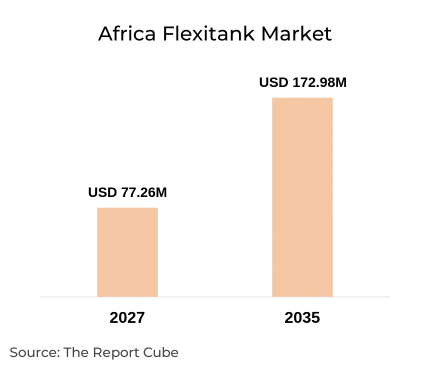
- The Africa Flexitank Market is projected to reach USD 77.26 million in 2027.
- The market is forecast to reach USD 172.98 million by 2035.
- The market is expected to expand at a CAGR of 10.60% during 2027–2035.
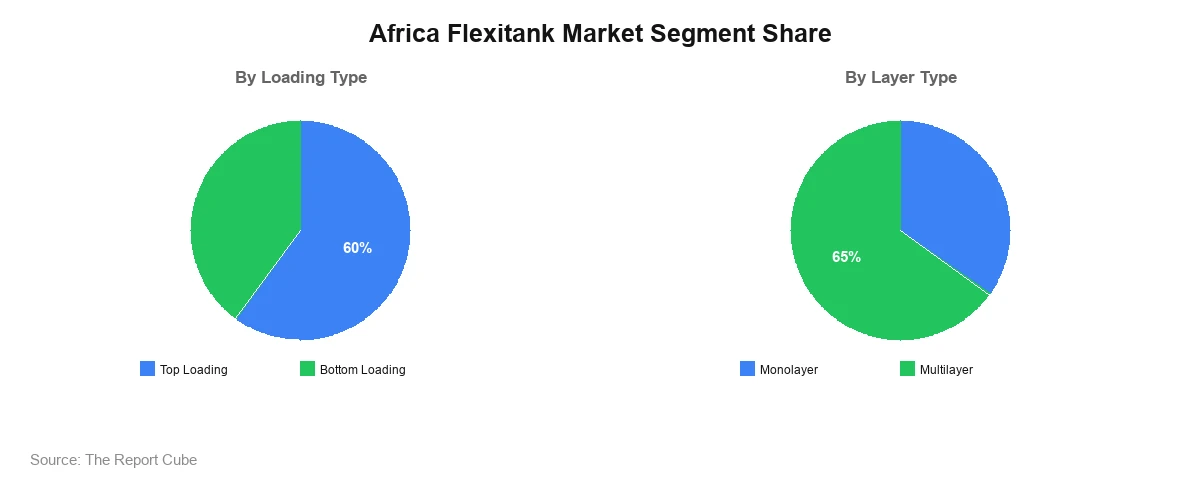
- By loading type, Top Loading leads the category with an estimated 60% share in 2026.
- By layer type, Multilayer flexitanks lead with an estimated 65% share in 2026.
- By application, Edible Oil dominates with an estimated 65% share in 2026, supported by bulk vegetable oil transportation requirements.
- West Africa is the leading geographical category with an estimated 35% share in 2026, while competition includes MYFLEXITANK, Qingdao LAF Technology, SIA FLEXITANKS and other international suppliers.
Market Outlook
Flexitanks are flexible, single-use bulk liquid containers installed inside standard shipping containers to transport non-hazardous liquids. They provide an alternative to drums, intermediate bulk containers and certain conventional bulk transportation systems. In Africa, flexitanks serve international and regional supply chains handling edible oils, wine and other industrial liquids, offering shippers a containerized solution for moving large liquid volumes.
Demand is associated with agricultural exports, food processing, international trade and the development of containerized logistics networks. Edible oils represent an important application because products such as palm, sunflower and soybean oil require suitable bulk packaging and transportation systems. The adoption of flexitanks also depends on port infrastructure, container availability, road connectivity, handling capabilities and the availability of trained loading and unloading operators.
The Africa Flexitank Market is projected to reach USD 77.26 million in 2027 and USD 172.98 million by 2035, expanding at a CAGR of 10.60% during the forecast period. Growth is supported by demand for efficient bulk liquid transportation, increasing agricultural trade, improvements in port connectivity and the preference for containerized shipping solutions among international cargo operators.
The competitive environment includes international flexitank manufacturers, bulk liquid logistics providers and specialist packaging companies. Competition is shaped by product quality, multilayer barrier technology, loading and discharge systems, food-grade compliance and distribution capabilities. Opportunities are emerging through multilayer product development, improved container handling, edible oil exports and the expansion of logistics infrastructure across African trade corridors.
Government Regulations
The Africa Flexitank Market operates under different national regulatory frameworks governing food safety, packaging materials, maritime transportation, customs and the handling of industrial liquids. There is no single continent-wide flexitank regulatory approval that replaces individual country requirements. Food-contact packaging must meet applicable national food safety rules, while international trade involving food products may also require compliance with destination-market regulations. The Codex Alimentarius food hygiene framework provides internationally recognized principles for protecting food throughout storage and transportation. The European Commission's food-contact material framework is relevant when shipments enter the European Union, requiring materials to be sufficiently inert to avoid adversely affecting food safety or quality. In addition, container owners, shipping lines and logistics operators apply operational requirements covering flexitank installation, container suitability, filling, discharge and cargo compatibility. These requirements increase the importance of certified materials, product traceability, documented testing and appropriate handling procedures.
Africa Flexitank Market Dynamics
The Africa Flexitank Market is influenced by agricultural commodity exports, international shipping activity, food-grade packaging requirements and the development of containerized transportation infrastructure. Demand also depends on the availability of suitable ports, container equipment, trained handling personnel and efficient trade corridors. These factors influence the adoption of different loading configurations, flexitank construction technologies and liquid transportation applications.
|
Factor |
Type |
Specific Impact on Market |
Magnitude |
|---|---|---|---|
|
Growing international trade in edible oils |
Driver |
Increases demand for flexible bulk packaging solutions for agricultural and food-grade liquids. |
High |
|
Expansion of containerized shipping infrastructure |
Driver |
Improves access to international transportation networks and supports flexitank adoption. |
High |
|
Multilayer flexitank technology |
Opportunity |
Provides improved barrier properties for sensitive liquids and specialized food applications. |
Medium-High |
|
Development of regional trade corridors |
Opportunity |
Creates opportunities for logistics providers to expand bulk liquid transportation services. |
Medium-High |
|
Limited port and handling infrastructure |
Challenge |
Increases operational complexity, delays and the cost of loading and unloading bulk liquid shipments. |
High |
|
Food safety and cargo contamination risks |
Challenge |
Requires appropriate material selection, quality control and compatibility verification. |
High |
Growth Drivers: Increasing Trade in Agricultural and Edible Oil Products
International trade in agricultural commodities and edible oils supports demand for efficient bulk liquid packaging across African supply chains. Flexitanks allow shippers to transport substantial liquid volumes in standard containers, providing an alternative to transporting products in smaller individual packages. According to UNCTAD's Review of Maritime Transport 2024, tanker calls at African ports increased by 38% between the first half of 2018 and the first half of 2023. Although this figure covers tanker shipping rather than flexitank shipments, it demonstrates increasing maritime liquid-cargo activity and the importance of liquid transportation infrastructure in the region.
Need Specific Data, Let’s Customize the Report for You
Request CustomizationMarket Opportunities: Multilayer Technology and Expanding Trade Connectivity
Multilayer flexitanks create opportunities for transporting liquids that require improved protection against oxygen, moisture and external contamination. These properties are particularly relevant for sensitive edible oils and selected food-grade applications. According to UNCTAD, Africa's container ship port calls increased by 20% between the first half of 2018 and the first half of 2023, reflecting the expansion of maritime activity. Improvements in port connectivity and regional trade corridors could create additional opportunities for flexitank manufacturers and logistics providers offering specialized bulk liquid transportation services.
Industry Challenges: Inconsistent Port Infrastructure and Handling Limitations
Flexitank transportation requires suitable containers, proper installation, controlled loading and unloading procedures and appropriate port handling capabilities. Infrastructure differences across African countries can create operational inconsistencies and increase the complexity of regional distribution. According to the World Bank, port infrastructure and logistics performance remain important considerations for African trade corridors, while UNCTAD has highlighted port congestion and maritime disruptions as significant challenges for international shipping. These conditions can affect shipment reliability, transportation costs and the adoption of specialized containerized liquid packaging.
Market Trends: Growing Focus on Sustainable and Cost-Efficient Bulk Liquid Transportation
Flexitank manufacturers are increasingly focusing on packaging efficiency, improved material performance and more sustainable bulk transportation systems. Containerized liquid packaging can reduce dependence on drums and other smaller packaging formats, while multilayer constructions provide additional protection for selected cargo categories. According to UNCTAD's Review of Maritime Transport 2025, Africa recorded a 10% improvement in liner shipping connectivity between June 2024 and June 2025. Improvements in maritime connectivity and digital trade facilitation are relevant to flexitank suppliers seeking more reliable international distribution and logistics operations.
Africa Flexitank Market Segment Analysis
The Africa Flexitank Market is segmented by loading type, layer type, application and country. These categories reflect differences in operational configuration, packaging construction, liquid cargo requirements and geographical demand across African transportation and export markets.
By Loading Type
- Top Loading
- Bottom Loading
Top Loading leads the category with an estimated 60% share in 2026, according to the supplied analyst estimate. This configuration allows liquid cargo to be introduced through the upper section of the flexitank and can be suitable for operations where loading infrastructure and equipment support top-access filling. Bottom Loading is the second important segment, offering operational advantages through lower-positioned filling and discharge connections. Its adoption depends on equipment compatibility, pumping arrangements, container configuration and the operational requirements of shippers and logistics providers. Both configurations remain relevant to different bulk liquid transportation requirements across African markets.
By Layer Type Outlook
- Monolayer
- Multilayer
Multilayer flexitanks lead the category with an estimated 65% share in 2026, according to the supplied analyst estimate. Their construction uses multiple material layers to improve packaging performance and provide additional protection against external contamination and product degradation. These properties support applications involving sensitive food-grade liquids and selected industrial products. Monolayer flexitanks represent the second segment and offer a comparatively simpler packaging construction for compatible cargo requirements. Their adoption is influenced by product characteristics, transportation duration, cost considerations and the level of barrier protection required by shippers.
Africa Flexitank Market Regional Analysis
The Africa Flexitank Market is analyzed across North Africa, East Africa, West Africa, and Central & Southern Africa. Regional demand is influenced by agricultural commodity production, edible oil trade, port connectivity, container availability and international shipping networks. West Africa accounts for the largest estimated geographical share in the supplied 2026 segmentation assessment.
|
Region |
Estimated Market Share |
Key Growth Factors |
Industry Trends |
|---|---|---|---|
|
West Africa |
Approx. 35% (2026, analyst estimate) |
Agricultural commodity trade, edible oil transportation and international port connectivity. |
Increasing demand for containerized liquid transportation and improved logistics operations. |
|
North Africa |
Not independently verified |
Mediterranean trade connections, food processing and international shipping activity. |
Greater emphasis on efficient export packaging and food-grade bulk transportation. |
|
East Africa |
Not independently verified |
Port development, regional trade corridors and agricultural supply chains. |
Improvements in maritime connectivity and containerized cargo handling. |
|
Central & Southern Africa |
Not independently verified |
Agricultural exports, industrial liquid requirements and international shipping access. |
Growing focus on logistics efficiency and specialized bulk packaging solutions. |
West Africa represents the leading geographical category with an estimated 35% share in 2026. Its market position is associated with agricultural commodity transportation, food processing and access to international maritime trade routes. Ports along the Abidjan–Lagos corridor provide important connections for regional and international cargo movements. The World Bank has documented improvements in port waiting times along this corridor through trade facilitation and infrastructure investments. These improvements are relevant to bulk liquid logistics providers seeking efficient cargo movement and more reliable containerized transportation operations.
Competitive Landscape
The Africa Flexitank Market includes international packaging manufacturers, specialist flexitank suppliers and bulk liquid logistics companies. Competition is shaped by product construction, food-grade material quality, cargo compatibility, loading and discharge technology, global distribution networks and technical support. Companies compete to provide reliable solutions for agricultural liquids, food products and compatible industrial cargo across international shipping routes.
|
Company |
Competitive Strength |
Primary Segment Served |
|---|---|---|
|
MYFLEXITANK |
Food-grade flexitank manufacturing and bulk liquid packaging solutions. |
Edible oils and non-hazardous bulk liquids. |
|
Qingdao LAF Technology Co. Ltd. |
Flexitank manufacturing and integrated bulk fluid logistics packaging solutions. |
Food-grade and industrial bulk liquids. |
|
Techno Group USA |
Bulk liquid transportation and packaging solutions. |
Industrial and food-grade liquids. |
|
SIA FLEXITANKS |
Multilayer polyethylene flexitank technology and specialized liquid logistics. |
Food, beverage, oils and industrial liquids. |
|
Bulk Liquid Solutions |
Bulk liquid logistics and transportation services. |
Bulk liquid transportation. |
|
Bulk Liquid Transport |
Specialized bulk liquid transportation capabilities. |
Industrial and commercial liquids. |
|
Büscherhoff Packaging Solutions GmbH |
Industrial packaging and bulk transportation solutions. |
Bulk packaging applications. |
|
Hillebrand Gori Group GmbH |
Global beverage logistics and specialized wine transportation expertise. |
Wine and beverage logistics. |
|
FLUIDTAINER FLEXITANK SDN BHD |
Flexible bulk liquid packaging solutions. |
Bulk liquid transportation. |
|
Others |
Regional suppliers and specialized packaging providers. |
Various bulk liquid applications. |
- MYFLEXITANK: MYFLEXITANK is a Malaysia-based bulk liquid packaging specialist established in 2006. The company manufactures flexitank systems designed for the transportation of non-hazardous liquids through standard shipping containers. Its portfolio includes Premier and Econ flexitanks, featuring multilayer polyethylene construction and different barrier specifications. The company serves food, pharmaceutical and industrial liquid applications and operates through international customers and distributor networks. Its competitive positioning is supported by product development, food-grade packaging capabilities and specialized bulk liquid transportation solutions.
- Qingdao LAF Technology Co. Ltd.: Qingdao LAF Technology is a China-based manufacturer of flexitanks and bulk fluid logistics packaging products. Its portfolio includes flexitanks, dry bulk liners, paper IBCs and IBC liners designed for different cargo and transportation requirements. The company supports ocean, road and rail transportation applications and has established international distribution capabilities. Its June 2025 announcement concerning an ESG-driven flexitank industrial park in Qingdao highlights investment in manufacturing integration, renewable energy and production infrastructure. These capabilities support its competitive positioning in international bulk packaging markets.
Recent Developments and Updates
- September 2025: UN Trade and Development released its Review of Maritime Transport 2025, highlighting improvements in African liner shipping connectivity. The report noted a 10% improvement between June 2024 and June 2025. Better maritime connectivity is relevant to international flexitank suppliers and bulk liquid logistics providers seeking more reliable containerized cargo transportation networks.
- June 2025: Qingdao LAF Technology announced the launch of an ESG-driven flexitank industrial park in Qingdao, China. The 51,000-square-metre facility incorporates integrated manufacturing operations and renewable energy infrastructure. The development reflects increasing investment in production capacity, manufacturing efficiency and sustainability within the international flexitank packaging industry.
- September 2025: UNCTAD's maritime transport assessment highlighted ongoing freight-rate volatility, shipping disruptions and port performance challenges. These developments reinforce the importance of supply chain resilience, improved port operations and efficient cargo packaging systems for international bulk liquid transportation.
Africa Flexitank Market Future Outlook
The Africa Flexitank Market is expected to experience continued expansion through 2035, supported by agricultural commodity trade, edible oil transportation requirements and improvements in containerized shipping infrastructure. Multilayer flexitanks are likely to remain important for applications requiring additional product protection, while demand for efficient bulk packaging solutions may increase as regional exporters and international logistics operators improve their transportation capabilities.
Competition is expected to focus on product quality, multilayer material innovation, food-grade compliance, distribution coverage and operational support. Investments in African ports, regional trade corridors and maritime connectivity could create additional opportunities for international manufacturers and logistics providers. However, infrastructure limitations, regulatory differences, freight cost volatility and cargo contamination risks will remain important considerations for market participants throughout the forecast period.
Africa Flexitank Market Report Coverage
This Africa Flexitank Market report examines market valuation, forecast growth, segmentation, geographical demand and the competitive landscape during 2027–2035.
|
Parameter |
Details |
|---|---|
|
Market Name |
Africa Flexitank Market |
|
Market Size (Base Year) |
USD 77.26 million (2027) |
|
Market Size (Forecast Year) |
USD 172.98 million (2035) |
|
CAGR |
10.60% |
|
Base Year |
2026 |
|
Historical Period |
2022–2026 |
|
Forecast Period |
2027–2035 |
|
Geographic Scope |
Africa |
|
Segmentation |
By Loading Type, By Layer Type, By Application, By Country |
|
Regions Covered |
North Africa, East Africa, West Africa, Central & Southern Africa |
|
Key Companies |
MYFLEXITANK, Qingdao LAF Technology Co. Ltd., Techno Group USA, SIA FLEXITANKS, Bulk Liquid Solutions, Bulk Liquid Transport, Büscherhoff Packaging Solutions GmbH, Hillebrand Gori Group GmbH, FLUIDTAINER FLEXITANK SDN BHD and Others |
|
Customization |
Available as per requirement |
Why Choose This Africa Flexitank Market Report?
- Provides market valuation of USD 77.26 million in 2027 and a forecast of USD 172.98 million by 2035.
- Examines market segmentation by loading type, layer type, application and geographical category.
- Evaluates the major growth drivers, market opportunities, industry challenges and emerging trends.
- Provides regional assessment across North Africa, East Africa, West Africa and Central & Southern Africa.
- Reviews the competitive landscape and capabilities of major flexitank manufacturers and logistics providers.
- Highlights opportunities associated with multilayer technology, edible oil transportation and containerized logistics.
- Supports strategic decisions relating to market entry, product development, supplier assessment and regional expansion.
Table of Contents
- Introduction
- Objective of the Study
- Product Definition
- Market Segmentation
- Study Variables
- Research Methodology
- Secondary Data Points
- Companies Interviewed
- Primary Data Points
- Breakdown of Primary Interviews
- Secondary Data Points
- Executive Summary
- Market Dynamics
- Drivers
- Challenges
- Opportunity Assessment
- Recent Trends and Developments
- Policy and Regulatory Landscape
- Africa Flexitank Market Overview and Forecast Analysis (2022-2035)
- Market Size, By Value, By Growth Rate (CAGR/USD Billions)
- Demand – Supply Trends
- Market Share, By Loading Type
- Top Loading
- Bottom Loading
- Market Share, By Layer Type Outlook
- Monolayer
- Multilayer
- Market Share, By Application
- Edible Oil
- Wine
- Others
- Market Share, By Country
- North Africa
- East Africa
- West Africa
- Central & Southern Africa
- Market Share, By Competitors
- Competition Characteristics
- Revenue Shares
- Top Loading Africa Flexitank Market Overview, 2022-2035F
- By Value (USD Million)
- By Layer Type Outlook – Market Size & Forecast 2022-2035, USD Million
- Monolayer
- Multilayer
- Bottom Loading Africa Flexitank Market Overview, 2022-2035F
- By Value (USD Million)
- By Layer Type Outlook – Market Size & Forecast 2022-2035, USD Million
- Monolayer
- Multilayer
- Competitive Outlook (Company Profile – Partial List)
- MYFLEXITANK
- Company Overview
- Business Segments
- Strategic Alliances/Partnerships
- Recent Developments
- Qingdao LAF Technology Co. Ltd.
- Company Overview
- Business Segments
- Strategic Alliances/Partnerships
- Recent Developments
- Techno Group USA
- Company Overview
- Business Segments
- Strategic Alliances/Partnerships
- Recent Developments
- SIA FLEXITANKS
- Company Overview
- Business Segments
- Strategic Alliances/Partnerships
- Recent Developments
- Bulk Liquid Solutions
- Company Overview
- Business Segments
- Strategic Alliances/Partnerships
- Recent Developments
- Bulk Liquid Transport
- Company Overview
- Business Segments
- Strategic Alliances/Partnerships
- Recent Developments
- Büscherhoff Packaging Solutions GmbH
- Company Overview
- Business Segments
- Strategic Alliances/Partnerships
- Recent Developments
- Hillebrand Gori Group GmbH
- Company Overview
- Business Segments
- Strategic Alliances/Partnerships
- Recent Developments
- FLUIDTAINER FLEXITANK SDN BHD
- Company Overview
- Business Segments
- Strategic Alliances/Partnerships
- Recent Developments
- Others
- MYFLEXITANK
- Contact Us & Disclaimer
Top Key Players & Market Share Outlook
- MYFLEXITANK
- Qingdao LAF Technology Co. Ltd.
- Techno Group USA
- SIA FLEXITANKS
- Bulk Liquid Solutions
- Bulk Liquid Transport
- Büscherhoff Packaging Solutions GmbH
- Hillebrand Gori Group GmbH
- FLUIDTAINER FLEXITANK SDN BHD
- Others
Frequently Asked Questions