


Build Your Custom Market Intelligence Report
Customize Your ReportKey Highlights
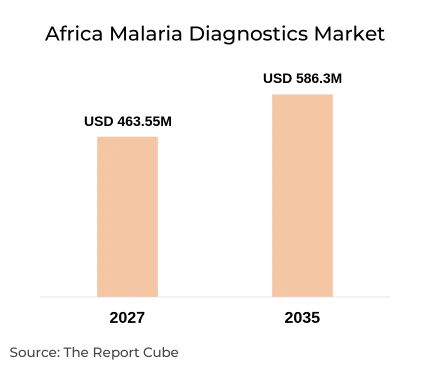
- The Africa Malaria Diagnostics Market is valued at USD 463.55 million in 2027.
- The market is forecast to reach USD 586.30 million by 2035.
- The market is projected to expand at a CAGR of 2.98% during 2027-2035.
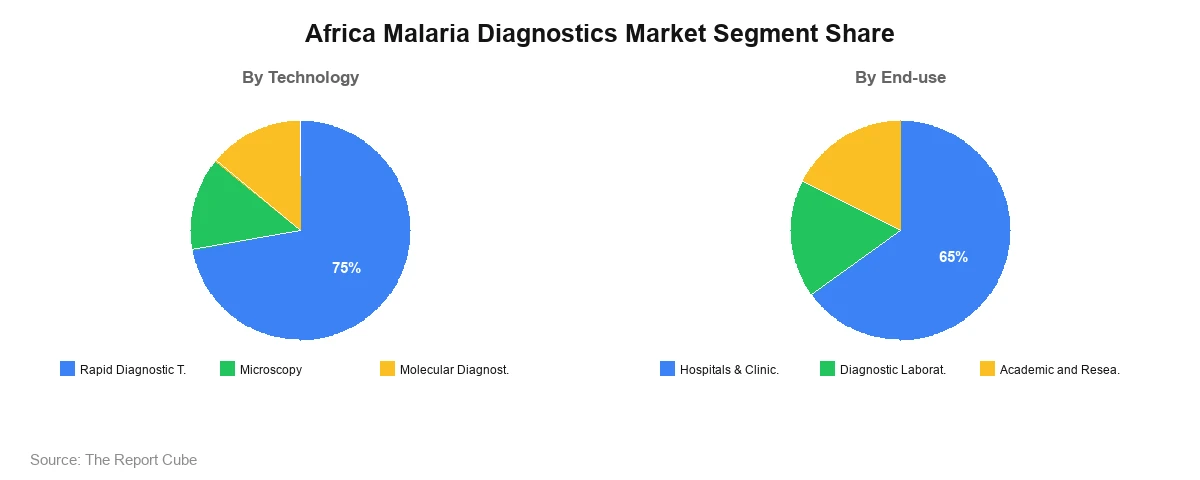
- By technology, Rapid Diagnostic Tests lead with an estimated 75% share in 2026, supported by their speed, ease of use and suitability for community-level testing.
- By end-use, Hospitals & Clinics lead with an estimated 65% share in 2026, reflecting their role in malaria diagnosis and treatment.
- Nigeria leads the selected country segment with an estimated 25% share in 2026, supported by its substantial malaria burden and diagnostic testing requirements.
- WHO recommends parasite-based confirmation through microscopy or RDTs before antimalarial treatment in suspected malaria cases.
- Demand is influenced by malaria-control programmes, diagnostic commodity procurement, quality assurance requirements and the need to address HRP2-based RDT limitations.
Market Outlook
Malaria diagnostics comprise medical tests and laboratory procedures used to identify Plasmodium parasites in human blood samples. The market includes rapid diagnostic tests (RDTs), microscopy-based examination and molecular diagnostic technologies. These methods support malaria case confirmation, treatment decisions, disease surveillance and research activities. Diagnostic testing is particularly important across malaria-endemic African countries, where a substantial share of the global disease burden is concentrated.
Rapid Diagnostic Tests are widely used because they provide results quickly, require relatively limited equipment and can be deployed in primary healthcare facilities and community-level settings. Microscopy remains an important diagnostic method in hospitals and laboratories because it can identify parasite species and quantify parasitaemia when performed by trained personnel. Molecular methods, including polymerase chain reaction (PCR) and loop-mediated isothermal amplification (LAMP), provide higher analytical sensitivity for selected applications, particularly research, surveillance and specialized laboratory investigations.
The Africa Malaria Diagnostics Market is projected to increase from USD 463.55 million in 2027 to USD 586.30 million by 2035, registering a CAGR of 2.98% during the forecast period. Demand is supported by continued malaria-control activities, the need for parasite-based diagnosis, public-sector procurement of diagnostic commodities and efforts to improve access to testing in underserved communities. However, market expansion is influenced by funding availability, procurement cycles, diagnostic product quality, supply-chain efficiency and country-specific healthcare infrastructure.
The competitive environment includes international diagnostic manufacturers, regional suppliers and specialized in-vitro diagnostic companies. Companies compete through product performance, WHO prequalification status, manufacturing capacity, affordability, distribution partnerships and the ability to meet national procurement requirements. Rapid diagnostic tests are expected to remain the dominant technology category, while microscopy and molecular diagnostics will continue to serve complementary clinical, laboratory and research applications.
Government Regulations
Malaria diagnostic products are subject to in-vitro diagnostic medical device requirements, product registration and quality assurance procedures across African markets. The World Health Organization (WHO) recommends parasite-based diagnosis using microscopy or rapid diagnostic tests for patients with suspected malaria before treatment is administered. WHO also recommends that malaria RDTs selected for procurement should be WHO-prequalified, with product selection considering diagnostic performance, Plasmodium species detection, temperature stability, shelf life, ease of use and total procurement cost. Manufacturers supplying international public-health programmes therefore need to demonstrate product quality and manufacturing compliance, while country-level suppliers must also meet applicable national regulatory and registration requirements.
WHO prequalification involves laboratory performance evaluation, product dossier review and inspection of manufacturing facilities. These requirements influence market access for suppliers targeting government tenders and donor-funded procurement channels. In addition, WHO has issued guidance on surveillance of pfhrp2 and pfhrp3 gene deletions, which can cause false-negative results in HRP2-based RDTs. Countries where these deletions affect diagnostic reliability may need to evaluate alternative antigen targets and adjust product selection according to local epidemiological evidence.
Africa Malaria Diagnostics Market Dynamics
Demand for malaria diagnostics across Africa is influenced by disease prevalence, public-health testing policies, diagnostic accessibility and the availability of reliable medical supplies. RDTs and microscopy remain central to routine case confirmation, while molecular technologies support selected research and surveillance activities. Procurement requirements, diagnostic accuracy and healthcare infrastructure determine the adoption and competitive positioning of different technologies.
|
Factor |
Type |
Specific Impact on Market |
Magnitude |
|---|---|---|---|
|
High malaria burden and diagnostic testing requirements |
Driver |
Continued suspected malaria cases create demand for parasite-based confirmation through RDTs and microscopy. |
High |
|
Expansion of accessible rapid testing |
Driver |
Simple testing formats support diagnosis in primary healthcare facilities and remote communities with limited laboratory infrastructure. |
High |
|
Alternative antigen targets and diagnostic surveillance |
Opportunity |
Growing attention to pfhrp2/3 gene deletions creates demand for alternative RDT formats, product evaluation and molecular surveillance. |
Medium-High |
|
Strengthening laboratory and diagnostic networks |
Opportunity |
Investment in laboratory capacity, trained personnel and quality assurance can support microscopy and specialized molecular testing. |
Medium |
|
Funding and procurement dependency |
Challenge |
Dependence on government budgets and external donor procurement can create fluctuations in purchasing volumes and supply continuity. |
High |
|
Diagnostic accuracy and operational limitations |
Challenge |
RDT antigen limitations, microscopy workforce requirements and molecular testing costs can affect diagnostic reliability and adoption. |
Medium-High |
Growth Drivers: High Malaria Burden and Continued Demand for Parasite-Based Diagnosis
The high malaria burden across the WHO African Region remains a major structural driver for diagnostic testing. According to the WHO malaria fact sheet, the African Region accounted for approximately 95% of global malaria cases and deaths in 2024. Nigeria and the Democratic Republic of the Congo were among the countries contributing the largest shares of malaria deaths in the region. This disease burden creates a sustained need for diagnostic commodities across hospitals, clinics, public-health facilities and community-level programmes. WHO recommendations for parasite-based confirmation before treatment further support the role of RDTs and microscopy in routine malaria case management.
Need Specific Data, Let’s Customize the Report for You
Request CustomizationMarket Opportunities: Alternative RDT Technologies and Molecular Surveillance
The emergence of Plasmodium falciparum parasites with pfhrp2 and pfhrp3 gene deletions presents an opportunity for manufacturers developing alternative antigen-based RDTs and diagnostic surveillance solutions. These genetic deletions can prevent HRP2-based tests from detecting certain infections, increasing the importance of local surveillance and appropriate product selection. WHO's updated response plan encourages countries to strengthen molecular characterization and assess alternative diagnostic targets where the prevalence of these deletions affects testing reliability. Molecular diagnostic technologies, including PCR and LAMP, can therefore benefit from demand in research laboratories, surveillance programmes and specialized diagnostic settings. However, WHO currently recommends nucleic-acid amplification tests primarily for research purposes rather than routine clinical management of malaria.
Industry Challenges: Funding Dependency and Diagnostic Supply-Chain Constraints
Malaria diagnostic procurement in several African countries is closely connected to government health budgets and international financing programmes. Changes in donor funding, public procurement schedules, tender delays and inventory availability can affect the volume and timing of diagnostic purchases. Manufacturers and distributors must maintain reliable supply, competitive pricing and compliance with procurement specifications to participate in these channels. Additional challenges include transportation, storage conditions, product shelf life and maintaining adequate availability across remote healthcare facilities.
Diagnostic accuracy also remains a critical operational challenge. HRP2-based RDTs can miss infections caused by parasites with relevant pfhrp2/3 gene deletions, while microscopy performance depends on equipment, slide preparation and the competence of trained microscopists. Molecular diagnostics offer greater analytical sensitivity for low-density infections, but equipment, laboratory infrastructure, operating costs and turnaround time limit their routine deployment in many settings.
Market Trends: Continued Preference for Rapid Testing and Improved Diagnostic Quality
The malaria diagnostics landscape is increasingly shaped by the need for rapid, accessible and quality-assured testing. RDTs remain important for point-of-care and community-level diagnosis because they can be performed without the laboratory infrastructure required for microscopy and molecular testing. At the same time, WHO's prequalification framework and product-selection guidance are increasing the importance of diagnostic performance, temperature stability, shelf life and manufacturing quality. Another emerging trend is the evaluation of alternative antigen targets and improved surveillance systems in response to pfhrp2/3 gene deletions. These developments are influencing product specifications and procurement decisions across malaria-endemic markets.
Africa Malaria Diagnostics Market Segment Analysis
The Africa Malaria Diagnostics Market is segmented by technology, end-use and country. Technology segmentation reflects the different diagnostic methods used for routine malaria case confirmation, laboratory examination and specialized testing. End-use segmentation covers the principal healthcare and research settings that procure and perform malaria diagnostic tests. Country-level demand is influenced by malaria burden, public-health programmes, diagnostic infrastructure and procurement activity.
By Technology
- Rapid Diagnostic Tests
- Microscopy
- Molecular Diagnostic Tests
Rapid Diagnostic Tests lead the technology category with an approx 75% share in 2026, based on the supplied analyst estimate. Their leading position is supported by rapid turnaround time, relatively simple operating procedures and suitability for healthcare facilities where access to laboratory equipment and trained microscopists is limited. RDTs are particularly relevant for primary healthcare and community-level testing, where timely diagnosis supports treatment decisions.
Microscopy represents an important diagnostic segment because it allows trained laboratory personnel to identify malaria parasites, differentiate species and estimate parasite density. It remains valuable in hospitals, diagnostic laboratories and facilities with established laboratory infrastructure. Its performance, however, depends on equipment availability, slide preparation, quality assurance and microscopist competency.
Molecular Diagnostic Tests include technologies such as PCR and LAMP, which can detect parasite nucleic acids and support the identification of low-density infections, species confirmation and molecular surveillance. Their use is more specialized because of infrastructure, technical expertise and cost requirements. WHO currently describes nucleic-acid amplification-based methods as primarily research-oriented rather than routine clinical case-management tools.
By End-use
- Hospitals & Clinics
- Diagnostic Laboratories
- Academic and Research Institutes
Hospitals & Clinics lead the end-use category with an approx 65% share in 2026, based on the supplied analyst estimate. These facilities provide first-line assessment, malaria testing and treatment services for patients presenting with fever and suspected malaria. Their demand includes RDTs for rapid diagnosis and microscopy for laboratory confirmation, species identification and parasite quantification where appropriate.
Diagnostic Laboratories represent an important segment through routine microscopy, confirmatory testing, quality assurance and specialized diagnostic services. Their role is particularly relevant in healthcare systems where laboratory-based diagnosis is integrated into patient management and national malaria surveillance activities.
Academic and Research Institutes contribute to demand through malaria epidemiology studies, diagnostic performance evaluation, molecular surveillance, parasite characterization and research into alternative diagnostic methods. Molecular diagnostic technologies are more relevant in this segment because they support specialized investigations that extend beyond routine point-of-care testing.
Africa Malaria Diagnostics Market Regional Analysis
The Africa Malaria Diagnostics Market is analyzed across Nigeria, the Democratic Republic of The Congo, the United Republic of Tanzania, Uganda and South Africa. Demand differs according to malaria incidence, healthcare access, national testing policies, laboratory capacity and public-sector procurement. Nigeria is identified as the leading country in the supplied market estimates, while the other countries contribute through their respective diagnostic programmes and healthcare requirements. Country shares beyond the supplied Nigeria estimate have not been independently verified and are therefore not assigned.
|
Country |
Key Growth Factors |
Industry Trends |
|---|---|---|
|
Nigeria |
Substantial malaria burden, large population and continued need for parasite-based diagnosis. |
High relevance of RDT procurement, public-health testing and diagnostic access. |
|
Democratic Republic of The Congo |
High malaria burden and diagnostic requirements across a geographically extensive healthcare system. |
Demand for RDT availability, microscopy services and malaria-control programme support. |
|
United Republic of Tanzania |
Malaria-control activities and ongoing requirements for diagnostic commodities. |
Procurement of rapid tests and continued use of parasite-based diagnosis. |
|
Uganda |
Malaria testing requirements across healthcare facilities and community-level services. |
Significant RDT procurement and emphasis on accessible diagnostic services. |
|
South Africa |
National malaria surveillance, healthcare infrastructure and laboratory-based diagnostic requirements. |
Demand shaped by targeted malaria testing, diagnostic quality and specialized laboratory services. |
Competitive Landscape
The Africa Malaria Diagnostics Market includes global diagnostic companies, specialized rapid-test manufacturers and suppliers of laboratory and molecular diagnostic technologies. Competition is influenced by diagnostic performance, WHO prequalification, manufacturing quality, product affordability, supply reliability and distribution capabilities. The companies listed below are the participants supplied for this report. Their relevance differs by technology and product portfolio; inclusion in the competitive landscape does not imply that every company is a verified direct supplier of malaria-specific diagnostic products in every African country.
|
Company |
Competitive Strength / Capability |
Primary Segment / Relevance |
|---|---|---|
|
Abbott |
Established global diagnostics business and malaria RDT product presence through Abbott Diagnostics Korea. |
Rapid Diagnostic Tests |
|
Bio-Rad Laboratories Inc. |
Broad clinical diagnostics and laboratory testing capabilities; specific current malaria product and African supply position require product-level verification. |
Laboratory diagnostics and research-related testing |
|
Premier Medical |
First Response malaria RDT portfolio, including WHO-prequalified malaria antigen tests. |
Rapid Diagnostic Tests |
|
Sysmex Corporation |
Laboratory diagnostics, hematology and analytical systems; malaria-specific product participation requires product-level verification. |
Laboratory diagnostics and microscopy-related ecosystem |
|
Zephyr Biomedicals - A Division of Tulip Diagnostics Ltd India |
Malaria rapid-test portfolio, including Parascreen and FalciVax products listed by WHO. |
Rapid Diagnostic Tests |
|
SHERLOCK BIOSCIENCES |
CRISPR-based molecular diagnostic technology capabilities; a current malaria-specific commercial product for the African market was not verified. |
Emerging molecular diagnostics and technology development |
|
Eiken Chemical Co. Ltd. |
Loopamp LAMP-based malaria detection kits for Plasmodium species. |
Molecular Diagnostic Tests |
|
ARKRAY Inc. |
Clinical testing and diagnostic equipment capabilities; direct malaria-specific product participation requires further verification. |
Laboratory diagnostic systems |
|
Meril Life Sciences Pvt. Ltd. |
Medical devices and in-vitro diagnostic capabilities; malaria-specific product availability and market participation require product-level verification. |
Diagnostic and healthcare products |
|
SD Biosensor Inc. |
STANDARD Q malaria RDT portfolio, including Plasmodium falciparum and P. falciparum/P. vivax tests listed by WHO. |
Rapid Diagnostic Tests |
|
Advy Chemical Private Limited |
AdvDx Malaria Pf Rapid Malaria Ag Detection Test listed in the WHO prequalified product database. |
Rapid Diagnostic Tests |
- Abbott: Abbott participates in the malaria diagnostics market through its diagnostic product portfolio, including malaria rapid diagnostic tests associated with Abbott Diagnostics Korea. The WHO prequalified product database lists the NxTek Eliminate Malaria Pf and NxTek Malaria Pf products under Abbott Diagnostics Korea Inc. This provides evidence of its participation in malaria-specific rapid testing. Its wider diagnostics business and established international operations support its competitive position, although country-level availability and procurement participation need to be assessed separately.
- SD Biosensor Inc.: SD Biosensor is an in-vitro diagnostics manufacturer with a malaria RDT portfolio under its STANDARD Q product range. WHO's prequalified product database lists its STANDARD Q Malaria P.f Ag Test and STANDARD Q Malaria P.f/Pan Ag Test, while additional product listings include newer STANDARD Q malaria products. Its competitive relevance is supported by product-level evidence, particularly in rapid antigen-based testing. The company's ability to meet country-specific registration, procurement and supply requirements remains important for African market participation.
Recent Developments and Updates
- 2025: WHO published updated technical guidance for malaria rapid diagnostic tests intended for manufacturers seeking WHO prequalification. The guidance supports evaluation of in-vitro diagnostic products designed to detect Plasmodium antigens in blood samples from symptomatic patients.
- April 2025: The South African National Department of Health issued a procurement tender for the supply and delivery of rapid diagnostic tests over a three-year period. The tender documentation specified WHO prequalification for malaria RDT products, illustrating the importance of product quality and prequalification in public-sector procurement.
- March 2026: Premier Medical Corporation announced a First Response malaria test designed to detect P. falciparum HRP2, P. falciparum pLDH and P. vivax pLDH antigens. The launch reflects continued product development around multi-antigen detection and diagnostic performance.
- 2026: WHO's prequalified IVD database includes newer STANDARD Q malaria RDT product listings from SD Biosensor, including P. falciparum and P. falciparum/P. vivax formats. These listings illustrate continued product updates within the malaria rapid testing category.
Africa Malaria Diagnostics Market Future Outlook
The Africa Malaria Diagnostics Market is expected to expand steadily through 2035, supported by the continued need for parasite-based diagnosis, malaria-control programmes and public-health investment in diagnostic access. Rapid Diagnostic Tests are likely to retain their leading position because of their suitability for primary healthcare facilities and community-level testing. Hospitals and clinics are expected to remain major end-use settings, while diagnostic laboratories will continue to support microscopy, confirmatory testing and quality assurance activities.
Technology development is likely to focus on improved RDT performance, alternative antigen targets and better suitability for local epidemiological conditions. The need to monitor pfhrp2/pfhrp3 gene deletions may encourage greater use of non-HRP2 antigen combinations and specialized molecular surveillance. Molecular testing is expected to remain more concentrated in research, surveillance and reference laboratory applications unless evidence and operational conditions support broader clinical use.
Competitive positioning will depend on WHO prequalification, national product registration, pricing, product stability, procurement eligibility and reliable distribution. Companies with malaria-specific product portfolios and established public-health supply relationships may be better positioned to compete for institutional demand. However, funding uncertainty, procurement delays, country-specific regulatory requirements and healthcare infrastructure gaps will continue to influence the pace of market development.
Africa Malaria Diagnostics Market Report Coverage
This Africa Malaria Diagnostics Market report summarizes market valuation, forecast, technology segmentation, end-use analysis, selected country-level demand and the competitive ecosystem for 2027-2035. The market values and segment shares are based on the supplied market estimates; country-level and segment-level shares not supplied or independently verified are not assigned.
|
Parameter |
Details |
|---|---|
|
Market Name |
Africa Malaria Diagnostics Market |
|
Market Size (2027) |
USD 463.55 million |
|
Market Size (2035) |
USD 586.30 million |
|
CAGR |
2.98% |
|
Base Year |
2026 |
|
Historical Period |
2022-2026 |
|
Forecast Period |
2027-2035 |
|
Geographic Scope |
Africa |
|
Segmentation |
By Technology, By End-use, By Country |
|
Countries Covered in Segmentation |
Nigeria, Democratic Republic of The Congo, United Republic of Tanzania, Uganda, South Africa |
|
Key Companies |
Abbott, Bio-Rad Laboratories Inc., Premier Medical, Sysmex Corporation, Zephyr Biomedicals - A Division of Tulip Diagnostics Ltd India, SHERLOCK BIOSCIENCES, Eiken Chemical Co. Ltd., ARKRAY Inc., Meril Life Sciences Pvt. Ltd., SD Biosensor Inc., Advy Chemical Private Limited |
|
Customization |
Available as per requirement |
Why Choose This Africa Malaria Diagnostics Market Report?
- Presents the 2027 market valuation, 2035 forecast and 2.98% CAGR for the Africa Malaria Diagnostics Market.
- Segments the market by Rapid Diagnostic Tests, Microscopy and Molecular Diagnostic Tests.
- Evaluates demand across Hospitals & Clinics, Diagnostic Laboratories and Academic and Research Institutes.
- Provides country-level analysis covering Nigeria, the Democratic Republic of The Congo, the United Republic of Tanzania, Uganda and South Africa.
- Reviews the influence of malaria burden, diagnostic testing policies, procurement activity and healthcare infrastructure.
- Examines WHO prequalification, RDT quality assurance and the diagnostic implications of pfhrp2/pfhrp3 gene deletions.
- Profiles key diagnostic manufacturers and distinguishes verified malaria-specific product portfolios from broader diagnostic capabilities.
Table of Contents
- Introduction
- Objective of the Study
- Product Definition
- Market Segmentation
- Study Variables
- Research Methodology
- Secondary Data Points
- Companies Interviewed
- Primary Data Points
- Breakdown of Primary Interviews
- Secondary Data Points
- Executive Summary
- Market Dynamics
- Drivers
- Challenges
- Opportunity Assessment
- Recent Trends and Developments
- Policy and Regulatory Landscape
- Africa Malaria Diagnostics Market Overview and Forecast Analysis (2022-2035)
- Market Size, By Value, By Growth Rate (CAGR/USD Millions)
- Demand – Supply Trends
- Market Share, By Technology
- Rapid Diagnostic Tests
- Microscopy
- Molecular Diagnostic Tests
- Market Share, By End-use
- Hospitals & Clinics
- Diagnostic Laboratories
- Academic and Research Institutes
- Market Share, By Country
- Nigeria
- Democratic Republic of The Congo
- United Republic of Tanzania
- Uganda
- South Africa
- Market Share, By Competitors
- Competition Characteristics
- Revenue Shares
- Rapid Diagnostic Tests Africa Malaria Diagnostics Market Overview, 2022-2035F
- By Value (USD Million)
- By End-use – Market Size & Forecast 2022-2035, USD Million
- Hospitals & Clinics
- Diagnostic Laboratories
- Academic and Research Institutes
- Microscopy Africa Malaria Diagnostics Market Overview, 2022-2035F
- By Value (USD Million)
- By End-use – Market Size & Forecast 2022-2035, USD Million
- Hospitals & Clinics
- Diagnostic Laboratories
- Academic and Research Institutes
- Molecular Diagnostic Tests Africa Malaria Diagnostics Market Overview, 2022-2035F
- By Value (USD Million)
- By End-use – Market Size & Forecast 2022-2035, USD Million
- Hospitals & Clinics
- Diagnostic Laboratories
- Academic and Research Institutes
- Competitive Outlook (Company Profile – Partial List)
- Abbott
- Company Overview
- Business Segments
- Strategic Alliances/Partnerships
- Recent Developments
- Bio-Rad Laboratories Inc.
- Company Overview
- Business Segments
- Strategic Alliances/Partnerships
- Recent Developments
- Premier Medical
- Company Overview
- Business Segments
- Strategic Alliances/Partnerships
- Recent Developments
- Sysmex Corporation
- Company Overview
- Business Segments
- Strategic Alliances/Partnerships
- Recent Developments
- Zephyr Biomedicals - A Division of Tulip Diagnostics Ltd India
- Company Overview
- Business Segments
- Strategic Alliances/Partnerships
- Recent Developments
- SHERLOCK BIOSCIENCES
- Company Overview
- Business Segments
- Strategic Alliances/Partnerships
- Recent Developments
- Eiken Chemical Co. Ltd.
- Company Overview
- Business Segments
- Strategic Alliances/Partnerships
- Recent Developments
- ARKRAY Inc.
- Company Overview
- Business Segments
- Strategic Alliances/Partnerships
- Recent Developments
- Meril Life Sciences Pvt. Ltd.
- Company Overview
- Business Segments
- Strategic Alliances/Partnerships
- Recent Developments
- SD Biosensor Inc.
- Company Overview
- Business Segments
- Strategic Alliances/Partnerships
- Recent Developments
- Advy Chemical Private Limited
- Company Overview
- Business Segments
- Strategic Alliances/Partnerships
- Recent Developments
- Abbott
- Contact Us & Disclaimer
Top Key Players & Market Share Outlook
- Abbott
- Bio-Rad Laboratories Inc.
- Premier Medical
- Sysmex Corporation
- Zephyr Biomedicals - A Division of Tulip Diagnostics Ltd India
- SHERLOCK BIOSCIENCES
- Eiken Chemical Co. Ltd.
- ARKRAY Inc.
- Meril Life Sciences Pvt. Ltd.
- SD Biosensor Inc.
- Advy Chemical Private Limited
Frequently Asked Questions