


Build Your Custom Market Intelligence Report
Customize Your ReportKey Highlights of the Africa Pharmaceuticals Market
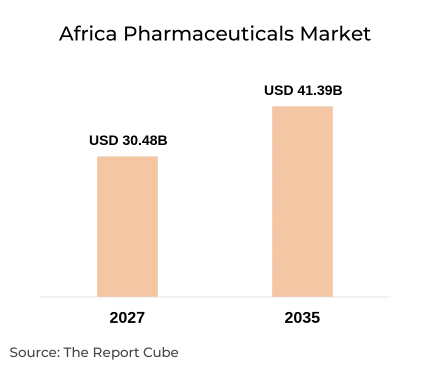
- The Africa pharmaceuticals market is estimated at USD 30.48 billion in 2027 and is projected to reach USD 41.39 billion by 2035, expanding at a CAGR of 3.90% during 2027–2035.
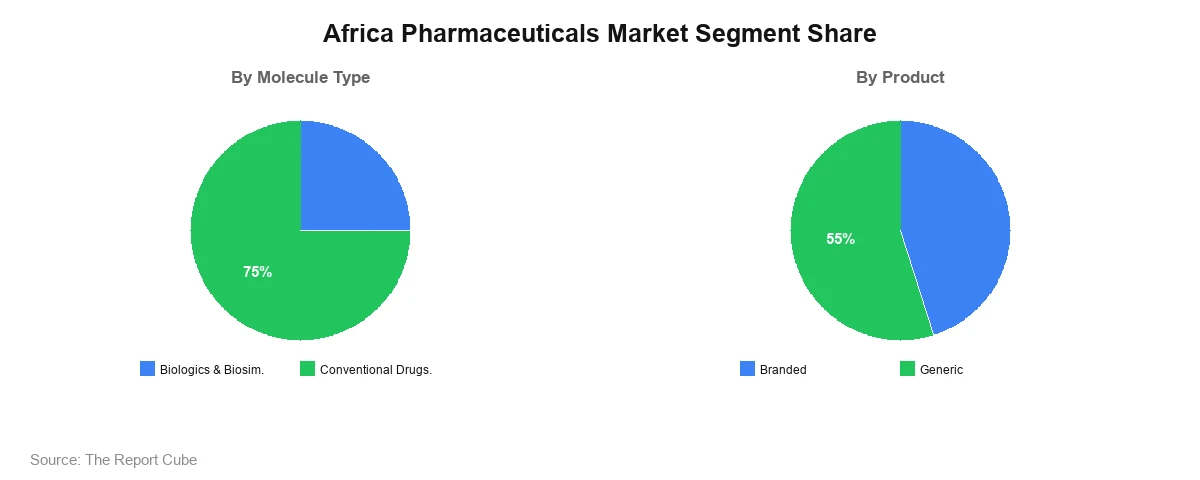
- Conventional Drugs (Small Molecules) are estimated to account for approximately 75% of the market by molecule type in 2026, reflecting their broad use across generic, branded and essential medicine categories.
- Generic medicines are estimated to hold approximately 55% of the market by product in 2026, supported by affordability requirements and demand for cost-effective treatment options.
- Prescription medicines are estimated to represent approximately 70% of the market by type in 2026, reflecting the importance of physician-directed treatment across acute and chronic conditions.
- Infectious Diseases are estimated to account for approximately 25% of the market by disease category in 2026, supported by the continuing need for treatments for malaria, HIV, tuberculosis and other communicable diseases.
- Oral medicines are estimated to hold approximately 60% of the market by route of administration in 2026, while tablets are estimated to account for approximately 45% by formulation.
- Adults are estimated to represent approximately 70% of demand by age group in 2026, while hospitals are estimated to account for approximately 45% of the market by end-user.
- South Africa is identified in the supplied market estimates as the leading country, with an estimated 25% share in 2026. However, South Africa is not included in the supplied By Country segment list.
Africa Pharmaceuticals Market Outlook
The Africa pharmaceuticals market is shaped by a combination of communicable and non-communicable disease burdens, increasing demand for essential medicines, population growth, healthcare infrastructure development and evolving pharmaceutical regulatory systems. Demand spans prescription and over-the-counter medicines, generic and branded products, conventional small molecules and biologics, with procurement taking place through public healthcare systems, private hospitals, clinics, pharmacies and institutional buyers.
The market continues to depend substantially on imported pharmaceutical products and active pharmaceutical ingredients. UN Trade and Development (UNCTAD) reports that more than 70% of pharmaceuticals consumed in Africa are imported, with supply primarily originating from outside the continent. Pharmaceutical manufacturing is concentrated in a relatively small number of countries, creating opportunities for investment in local production, technology transfer, distribution infrastructure and regional supply chains.
Conventional small-molecule medicines and generic products remain important components of pharmaceutical supply because they cover a wide range of therapeutic needs and can be produced through established manufacturing processes. At the same time, demand for biologics, biosimilars, oncology medicines, diabetes therapies and other specialty products is creating opportunities for pharmaceutical companies to expand their portfolios and strengthen their regional distribution networks.
Government Regulations
The Africa pharmaceuticals market is governed by national medicines regulatory authorities, public health legislation, pharmaceutical manufacturing requirements, product registration procedures, pharmacovigilance systems and quality standards. Regulatory requirements differ across countries, affecting product approvals, imports, manufacturing licences, labelling, distribution and post-market surveillance. The African Medicines Agency (AMA) is intended to strengthen continental regulatory coordination and support harmonization, convergence and reliance among national authorities. The African Union's AMA Treaty entered into force on 5 November 2021, and the African Union's published ratification information provides the official status of participating member states.
In May 2026, WHO and the African Medicines Agency signed a framework agreement to strengthen regulatory harmonization, regulatory capacity, safety surveillance and access to quality-assured health products. In August 2026, African health ministers endorsed the WHO Regional Strategy on Regulation of Medical Products in the African Region for 2026–2035. The strategy focuses on strengthening national regulatory systems and improving the safety, quality and effectiveness of medicines and other health products. National authorities, including South Africa's South African Health Products Regulatory Authority (SAHPRA), continue to oversee product registrations and manufacturing-related activities within their jurisdictions.
Africa Pharmaceuticals Market Dynamics
The Africa pharmaceuticals market is influenced by persistent demand for essential medicines, the growing burden of chronic diseases, continued reliance on imported pharmaceutical products and efforts to expand domestic manufacturing. Disease-specific treatment requirements support demand across infectious and non-communicable disease categories, while affordability, regulatory capacity and supply-chain constraints affect the availability of medicines. The following table summarizes the major factors shaping market development.
| Factor | Type | Specific Impact on Market | Magnitude |
|---|---|---|---|
| High burden of communicable diseases | Growth Driver | Demand for antimalarial, antiretroviral, tuberculosis and other anti-infective medicines supports recurring pharmaceutical procurement across public and private healthcare systems. | High |
| Growing non-communicable disease burden | Growth Driver | Increasing requirements for cardiovascular, cancer, diabetes and respiratory treatments expand demand for chronic-care and specialty pharmaceutical portfolios. | High |
| Expansion of local pharmaceutical manufacturing | Opportunity | Investment in domestic production, technology transfer and regional manufacturing networks can improve supply resilience and create opportunities for manufacturers. | High |
| Regulatory harmonization | Opportunity | Greater regulatory convergence and reliance mechanisms may reduce duplicated processes and support more efficient product registration across participating markets. | Medium to High |
| Dependence on imported medicines and inputs | Challenge | Reliance on external suppliers exposes pharmaceutical availability to international logistics disruption, currency movements and changes in export conditions. | High |
| Affordability and healthcare access constraints | Challenge | Household purchasing power, public healthcare budgets and reimbursement limitations can restrict access to branded and higher-cost specialty medicines. | High |
| Growth of generic and biosimilar portfolios | Trend | Pharmaceutical companies are expanding cost-effective generic and selected biosimilar offerings to address affordability and broaden treatment availability. | Medium to High |
| Increasing focus on pharmaceutical quality assurance | Trend | Regulatory strengthening, pharmacovigilance and manufacturing quality requirements are increasing the importance of compliant production and distribution. | Medium to High |
Growth Drivers: Persistent Demand for Infectious Disease Treatments and Essential Medicines
The continuing burden of infectious diseases is an important source of pharmaceutical demand across African countries. Medicines used for malaria, HIV/AIDS, tuberculosis and other communicable diseases are required through public health programmes, hospitals, clinics and private healthcare providers. According to the World Health Organization, the WHO African Region accounted for approximately 95% of global malaria cases and malaria deaths in 2024, highlighting the region's substantial treatment requirements. This disease burden supports demand for antimalarial medicines, diagnostics-linked treatment programmes and related pharmaceutical products.
Public procurement programmes and essential medicine supply systems also contribute to recurring demand. National health authorities and healthcare institutions require reliable supplies of anti-infective medicines, vaccines, pain management products and other essential treatments. The continued need to improve access to quality-assured medicines supports pharmaceutical distribution, generic medicine supply and manufacturing opportunities. However, disease burden does not automatically translate into equivalent commercial sales, as procurement budgets, treatment coverage, medicine availability and affordability determine the level of effective demand.
Need Specific Data, Let’s Customize the Report for You
Request CustomizationMarket Opportunities: Expansion of Local Pharmaceutical Manufacturing and Regional Supply Chains
Africa's dependence on imported medicines creates an opportunity to expand domestic pharmaceutical manufacturing and regional supply networks. UNCTAD reports that more than 70% of pharmaceuticals consumed in Africa are imported and that manufacturing capacity is concentrated in a limited number of countries. Investment in formulation facilities, active pharmaceutical ingredient supply, packaging, quality testing and distribution infrastructure can help strengthen local production capabilities. These developments may also create opportunities for international pharmaceutical manufacturers to establish partnerships, licensing arrangements and technology-transfer programmes with regional producers.
Africa CDC's Platform for Harmonized African Health Products Manufacturing is intended to support manufacturing capacity across health products, including therapeutics. The African Union has also articulated an ambition to meet at least 60% of the continent's health product needs through local manufacturing by 2040. This is a long-term policy ambition rather than an achieved production level. Its implementation could support investment in manufacturing infrastructure, workforce development, technology transfer and regional procurement mechanisms.
Industry Challenges: Import Dependence and Pharmaceutical Supply-Chain Vulnerability
Dependence on imported pharmaceutical products and inputs creates a structural challenge for the Africa pharmaceuticals market. UNCTAD identifies external sourcing as a major feature of the continent's pharmaceutical supply system, with imports primarily originating from Asia. This reliance can expose local markets to international shipping disruptions, changes in supplier availability, foreign exchange movements and fluctuations in the cost of imported active pharmaceutical ingredients. Countries with limited domestic production capacity may face additional challenges in maintaining reliable supplies during international health emergencies or trade disruptions.
Strengthening domestic manufacturing is not an immediate solution because pharmaceutical production requires substantial capital investment, technical expertise, reliable utilities, quality-control infrastructure and consistent regulatory oversight. Manufacturers also need access to active ingredients, specialized equipment and predictable demand. These requirements can make it difficult for smaller producers to compete with established international suppliers, particularly in price-sensitive medicine categories.
Market Trends: Increasing Focus on Generic Medicines and Cost-Effective Treatment Portfolios
Generic medicines remain an important part of pharmaceutical supply strategies across Africa because they can provide lower-cost alternatives to originator products in established therapeutic categories. Manufacturers are competing through portfolio breadth, product registration, supply reliability, pricing and distribution partnerships. The importance of generics is particularly visible in high-volume treatment categories where public procurement and affordability influence purchasing decisions. Companies with established regional commercial networks and manufacturing capabilities may be better positioned to serve multiple national markets.
The expansion of generic portfolios is also relevant to chronic disease treatment, anti-infective products and selected specialty categories. However, the market should not be viewed as uniformly shifting toward generics: branded medicines, patented therapies, biologics and specialty products continue to serve distinct treatment requirements. The relative commercial opportunity differs by disease category, country, procurement channel and regulatory environment.
Africa Pharmaceuticals Market Segment Analysis
The Africa pharmaceuticals market is segmented by molecule type, product, type, disease, route of administration, formulation, age group, end-user and country. These categories reflect differences in medicine composition, commercial positioning, prescription status, therapeutic application, delivery method, dosage form, patient population and purchasing channel. Conventional small molecules and generic products represent important parts of the market, while infectious disease treatments and oral formulations address substantial healthcare requirements. The following analysis retains the supplied segmentation and 2026 analyst-estimated leading shares.
By Molecule Type
- Biologics & Biosimilars (Large Molecules)
- Conventional Drugs (Small Molecules)
Conventional Drugs (Small Molecules) are estimated to lead the molecule type category with approximately 75% share in 2026. Their leading position reflects their established use across a wide range of therapeutic areas, including infectious diseases, cardiovascular conditions, diabetes, respiratory disorders and pain management. Small-molecule medicines are available in multiple formulations and are supplied through public procurement, hospitals, clinics and retail pharmacies. Biologics and biosimilars represent a more specialized category that includes complex therapies and products requiring specific manufacturing, storage and regulatory capabilities. Their role is relevant to oncology, autoimmune disorders and other specialist treatment areas, although access and affordability can vary significantly between countries.
By Product
- Branded
- Generic
Generic medicines are estimated to lead the product category with approximately 55% share in 2026. Their position is supported by demand for affordable treatment alternatives and their role in public-sector procurement and private pharmacy distribution. Generic products are particularly relevant in high-volume therapeutic categories where price and availability influence purchasing decisions. Branded medicines continue to compete through established product recognition, differentiated formulations, innovation and physician familiarity. The balance between branded and generic products varies by therapeutic category, patent status, country-level regulation and the purchasing power of healthcare providers and patients.
Africa Pharmaceuticals Market Regional Analysis
The Africa pharmaceuticals market includes diverse national healthcare systems, regulatory environments and pharmaceutical supply structures. Regional demand is influenced by population distribution, disease burden, public and private healthcare expenditure, local manufacturing capabilities and reliance on imported medicines. Southern, Eastern, Western, Northern and Central African markets differ in their pharmaceutical production capacity and distribution infrastructure. South Africa is identified in the supplied estimates as the leading country, although it is absent from the supplied country segmentation list.
| Region | Key Growth Factors | Industry Trends |
|---|---|---|
| Southern Africa | Established pharmaceutical manufacturing and distribution capabilities in selected markets, private healthcare infrastructure and demand for generic and branded medicines. | Expansion of local manufacturing, generic medicine portfolios, regulatory quality systems and regional distribution networks. |
| Eastern Africa | Demand for essential medicines, infectious disease treatments and chronic disease therapies, supported by public healthcare programmes and growing private healthcare provision. | Regional regulatory cooperation, investment in pharmaceutical supply chains and efforts to strengthen local production capacity. |
| Western Africa | Large and diverse healthcare markets, demand for essential medicines and opportunities to improve medicine availability through public and private distribution. | Expansion of pharmaceutical distribution, greater attention to medicine quality assurance and local manufacturing initiatives. |
| Northern Africa | Existing pharmaceutical industrial capabilities in selected countries, healthcare infrastructure and demand for generic, branded and specialty medicines. | Manufacturing investment, portfolio expansion and development of regional pharmaceutical supply capabilities. |
| Central Africa | Demand for essential medicines and anti-infective treatments, alongside opportunities to improve access and distribution coverage. | Greater focus on medicine availability, public procurement and strengthening regulatory and supply-chain systems. |
Africa Pharmaceuticals Market Competitive Landscape
The competitive landscape of the Africa pharmaceuticals market includes multinational pharmaceutical companies, generic medicine manufacturers, specialty medicine businesses and companies with established regional commercial or manufacturing operations. Competition is influenced by portfolio breadth, medicine affordability, regulatory approvals, product quality, manufacturing capabilities, procurement relationships and distribution reach. The companies below are retained from the supplied key-player list. Their roles are described according to publicly identifiable business activities; inclusion does not imply that each company has the same level of direct commercial presence across all African countries.
| Company | Competitive Strength | Primary Segment Served |
|---|---|---|
| Abbott Laboratories | Diversified healthcare and pharmaceutical portfolio, with capabilities across established medicines, diagnostics and other healthcare products. | Branded and established medicines; healthcare products |
| AbbVie | Specialty pharmaceutical portfolio and research-led presence in areas including immunology, oncology and neuroscience. | Specialty and prescription medicines |
| Alfasigma | Pharmaceutical portfolio spanning prescription and consumer health-related therapeutic categories, with international market activities. | Prescription and consumer healthcare medicines |
| Aspen | Significant Africa and Middle East commercial presence, regional manufacturing operations and a portfolio covering prescription, OTC and injectable medicines. | Branded medicines, generics, injectables and manufacturing |
| Aurobindo Pharma | Large generic and pharmaceutical manufacturing platform, with reported commercial activities and expansion initiatives across African markets. | Generic and specialty pharmaceutical products |
| AstraZeneca | Research-led multinational pharmaceutical company with established therapeutic portfolios in oncology, cardiovascular, renal, metabolic and respiratory conditions. | Innovative and specialty prescription medicines |
| Bristol Myers Squibb | Specialty pharmaceutical and biopharmaceutical portfolio focused on areas including oncology, hematology, immunology and cardiovascular disease. | Innovative specialty medicines and biologics |
| BGM | Retained as supplied. The company identity and its Africa pharmaceutical portfolio could not be independently established from the name provided. | Not independently verified |
| Cipla | Established African commercial and manufacturing presence, including South African manufacturing and distribution operations and a broad portfolio across prescription and OTC categories. | Generics, prescription medicines, respiratory and OTC products |
| Others | Includes additional multinational, regional and domestic pharmaceutical manufacturers, distributors and suppliers operating across African markets. | Generic, branded, specialty and essential medicines |
- Aspen: Aspen Pharmacare is a major pharmaceutical company headquartered in South Africa, with commercial operations across multiple international markets. Its business includes Commercial Pharmaceuticals and Manufacturing, with products covering prescription medicines, OTC products, injectables and multiple dosage forms. The company reports manufacturing facilities across several sites and a regional Africa Middle East business covering 45 countries. Its manufacturing footprint and regional commercial operations make it a relevant participant in the African pharmaceutical supply landscape.
- Cipla: Cipla has an established African business supported by regional commercial operations and manufacturing and distribution infrastructure in South Africa. Its South African presence includes Cipla Medpro Manufacturing and distribution facilities, while its portfolio spans prescription medicines and OTC categories. Cipla's regional activities across respiratory, anti-infective, CNS and other therapeutic areas position it as a relevant competitor in several African pharmaceutical categories.
Recent Developments and Updates
- May 21, 2026 – WHO and African Medicines Agency collaboration: WHO and the African Medicines Agency announced a framework agreement to strengthen regulatory harmonization, regulatory capacity, pharmacovigilance and access to quality-assured health products across Africa. The initiative is intended to support more coordinated regulatory systems and improve access to safe and effective medicines.
- February 14, 2026 – African Union declaration on local manufacturing: African Union heads of state and government, health ministers and partners adopted a declaration supporting local manufacturing of pharmaceuticals, vaccines, diagnostics and medical devices. The declaration reaffirmed the ambition to meet at least 60% of Africa's health product needs through local manufacturing by 2040 and highlighted pooled procurement, investment and technology transfer.
- August 26, 2026 – WHO regional regulatory strategy: African health ministers endorsed the Regional Strategy on Regulation of Medical Products in the African Region for 2026–2035. The strategy aims to strengthen national regulatory authorities, improve regulatory cooperation and support the quality, safety and effectiveness of medicines and other health products.
Africa Pharmaceuticals Market Future Outlook
The Africa pharmaceuticals market is expected to continue expanding through 2035 as demand for essential medicines, chronic disease therapies and specialty pharmaceutical products develops across the continent. The continued burden of infectious diseases, combined with increasing non-communicable disease requirements, will sustain demand across anti-infective, cardiovascular, oncology, diabetes and respiratory medicine categories. Generic medicines are likely to remain important for affordability and public procurement, while branded medicines and specialty therapies will continue to serve differentiated treatment needs.
Local manufacturing investment, regulatory harmonization and improvements in pharmaceutical distribution are expected to influence the industry's longer-term development. Initiatives led by Africa CDC, the African Union, WHO and the African Medicines Agency may support stronger regional production and regulatory systems. However, the pace of market development will depend on financing, national implementation, medicine affordability, supply-chain reliability and the ability of healthcare systems to expand access. The market is estimated to grow from USD 30.48 billion in 2027 to USD 41.39 billion by 2035, representing a CAGR of approximately 3.90% over the forecast period.
Africa Pharmaceuticals Market Report Coverage
The Africa Pharmaceuticals Market report provides an analysis of market size, growth trends, competitive positioning, market dynamics and segment-level opportunities across the African pharmaceutical industry. The study covers pharmaceutical products by molecule type, product category, prescription status, disease, route of administration, formulation, age group, end-user and country. It also evaluates the impact of disease burden, pharmaceutical imports, local manufacturing initiatives, regulatory harmonization and healthcare access on market development.
| Parameter | Details |
|---|---|
| Market Name | Africa Pharmaceuticals Market |
| Market Size (2027) | USD 30.48 Billion |
| Market Size (2035) | USD 41.39 Billion |
| CAGR | 3.90% |
| Base Year | 2026 |
| Historical Period | 2022–2026 |
| Forecast Period | 2027–2035 |
| Geographic Scope | Africa |
| Segmentation | By Molecule Type, By Product, By Type, By Disease, By Route Of Administration, By Formulation, By Age Group, By End-user and By Country |
| Regions Covered | Southern Africa, Eastern Africa, Western Africa, Northern Africa and Central Africa |
| Key Companies | Abbott Laboratories, AbbVie, Alfasigma, Aspen, Aurobindo Pharma, AstraZeneca, Bristol Myers Squibb, BGM, Cipla and Others |
| Customization | Available as per client requirements |
Why Choose This Africa Pharmaceuticals Market Report?
- Provides market size estimates and a forecast for the Africa pharmaceuticals market from 2027 to 2035.
- Evaluates key market drivers, opportunities, challenges and trends influencing pharmaceutical demand and supply.
- Examines the market across molecule type, product, prescription status, disease, route of administration, formulation, age group, end-user and country.
- Assesses the role of infectious and non-communicable disease burdens in shaping pharmaceutical requirements.
- Reviews the impact of pharmaceutical import dependence, local manufacturing initiatives and regulatory harmonization.
- Profiles key multinational and regional pharmaceutical companies and their relevant business portfolios.
- Supports strategic planning for pharmaceutical manufacturers, distributors, investors, healthcare providers and other industry stakeholders.
Table of Contents
- Introduction
- Objective of the Study
- Product Definition
- Market Segmentation
- Study Variables
- Research Methodology
- Secondary Data Points
- Companies Interviewed
- Primary Data Points
- Breakdown of Primary Interviews
- Secondary Data Points
- Executive Summary
- Market Dynamics
- Drivers
- Challenges
- Opportunity Assessment
- Recent Trends and Developments
- Policy and Regulatory Landscape
- Africa Pharmaceuticals Market Overview and Forecast Analysis (2022-2035)
- Market Size, By Value, By Growth Rate (CAGR/USD Billions)
- Demand – Supply Trends
- Market Share, By Molecule Type
- Biologics & Biosimilars (Large Molecules)
- Conventional Drugs (Small Molecules)
- Market Share, By Product
- Branded
- Generic
- Market Share, By Type
- Prescription
- OTC
- Market Share, By Disease
- Cardiovascular Diseases
- Cancer
- Diabetes
- Infectious Diseases
- Neurological Disorders
- Respiratory Diseases
- Autoimmune Diseases
- Others
- Market Share, By Route Of Administration
- Oral
- Topical
- Parenteral
- Inhalations
- Others
- Market Share, By Formulation
- Tablets
- Capsules
- Injectable
- Sprays
- Suspensions
- Powders
- Other Formulations
- Market Share, By Age Group
- Children & Adolescents
- Adults
- Geriatric
- Market Share, By End-user
- Hospitals
- Clinics
- Others
- Market Share, By Country
- Botswana
- Namibia
- Zimbabwe
- Zambia
- Tanzania
- Rwanda
- Others
- Market Share, By Competitors
- Competition Characteristics
- Revenue Shares
- Biologics & Biosimilars (Large Molecules) Africa Pharmaceuticals Market Overview, 2022-2035F
- By Value (USD Million)
- By Product – Market Size & Forecast 2022-2035, USD Million
- Branded
- Generic
- Conventional Drugs (Small Molecules) Africa Pharmaceuticals Market Overview, 2022-2035F
- By Value (USD Million)
- By Product – Market Size & Forecast 2022-2035, USD Million
- Branded
- Generic
- Competitive Outlook (Company Profile – Partial List)
- Abbott Laboratories
- Company Overview
- Business Segments
- Strategic Alliances/Partnerships
- Recent Developments
- AbbVie
- Company Overview
- Business Segments
- Strategic Alliances/Partnerships
- Recent Developments
- Alfasigma
- Company Overview
- Business Segments
- Strategic Alliances/Partnerships
- Recent Developments
- Aspen
- Company Overview
- Business Segments
- Strategic Alliances/Partnerships
- Recent Developments
- Aurobindo Pharma
- Company Overview
- Business Segments
- Strategic Alliances/Partnerships
- Recent Developments
- AstraZeneca
- Company Overview
- Business Segments
- Strategic Alliances/Partnerships
- Recent Developments
- Bristol Myers Squibb
- Company Overview
- Business Segments
- Strategic Alliances/Partnerships
- Recent Developments
- BGM
- Company Overview
- Business Segments
- Strategic Alliances/Partnerships
- Recent Developments
- Cipla
- Company Overview
- Business Segments
- Strategic Alliances/Partnerships
- Recent Developments
- Others
- Abbott Laboratories
- Contact Us & Disclaimer
Top Key Players & Market Share Outlook
- Abbott Laboratories
- AbbVie
- Alfasigma
- Aspen
- Aurobindo Pharma
- AstraZeneca
- Bristol Myers Squibb
- BGM
- Cipla
- Others
Frequently Asked Questions