


Build Your Custom Market Intelligence Report
Customize Your ReportNorth America Anti-Infective Agents Market Key Takeaways
- Market valued at USD 34.12 billion in 2026, underpinned by persistent infectious disease burden across the region.
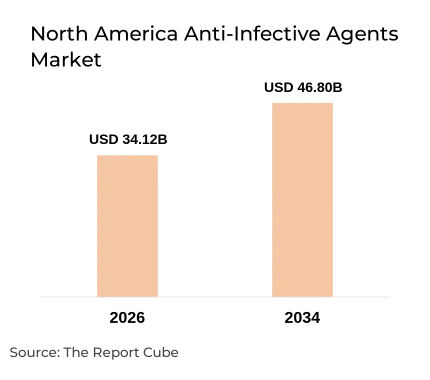
- Industry projected to reach USD 46.80 billion by 2034, expanding at a steady 4.03% CAGR.
- Oral route of administration dominates the segment owing to high patient compliance and broad therapeutic applicability.
- Hospital pharmacies remain the primary distribution channel driven by complex inpatient infectious disease management.
- The United States leads the regional market through advanced pharmaceutical infrastructure and robust prescription volumes.
- Canada represents the fastest-growing country market supported by rising antimicrobial stewardship program investments.
- Leading companies include Pfizer Inc., Merck & Co. Inc., Gilead Sciences Inc., GSK plc, and Novartis AG.
- Rising antimicrobial resistance and expanding antiviral drug pipelines continue shaping long-term market expansion trajectories.
North America Anti-Infective Agents Market Insights & Analysis
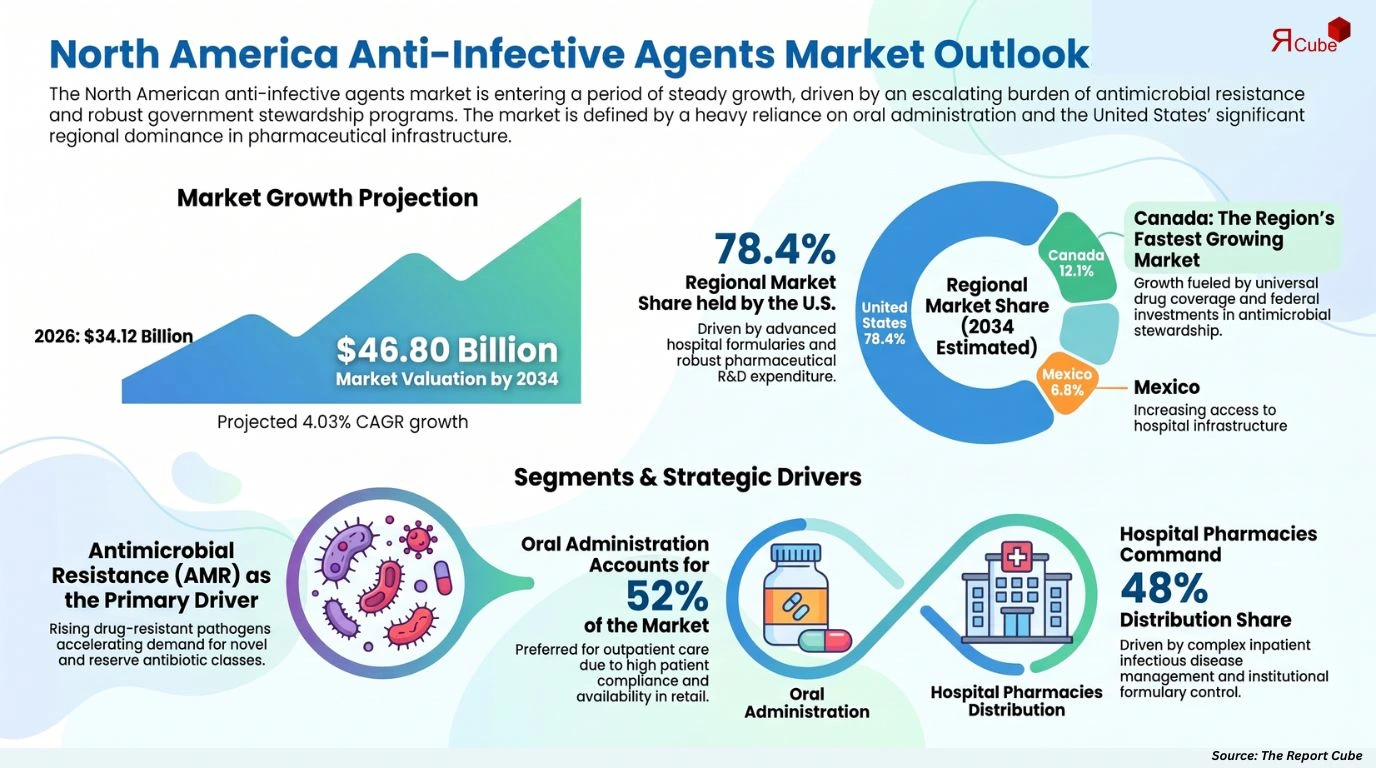
The North America Anti-Infective Agents Market is anticipated to register a 4.03% CAGR during 2026–2034. The market size was valued at USD 34.12 billion in 2026 and is projected to reach USD 46.80 billion by 2034. Sustained market momentum is supported by a high prevalence of bacterial, viral, and fungal infections across the United States, Canada, and Mexico, combined with robust government-backed antimicrobial stewardship initiatives. The U.S. Centers for Disease Control and Prevention continues to allocate substantial funding toward surveillance of drug-resistant pathogens, reinforcing demand for next-generation anti-infective therapies across hospital and outpatient settings.
Pharmaceutical companies across the region continue investing in novel antibiotic development pipelines and antifungal agents as resistance profiles of common pathogens grow increasingly complex. Gilead Sciences reported antiviral revenue exceeding USD 27 billion globally in 2024, reflecting the scale of infectious disease treatment demand. Federal initiatives including the CARB-X program have collectively granted over USD 500 million to support early-stage antibacterial research, reinforcing the innovation pipeline. These sustained investments, combined with expanding access to prescription anti-infectives through retail pharmacy networks, are expected to drive consistent market growth through the forecast period.
North America Anti-Infective Agents Market Dynamics
The North America Anti-Infective Agents Market continues gaining momentum as healthcare systems intensify efforts against bacterial, viral, fungal, and parasitic infections amid growing antimicrobial resistance pressures. Expanding hospital formularies, increasing outpatient prescription volumes, rising government stewardship initiatives, and sustained pharmaceutical R&D investment collectively reinforce demand for effective anti-infective therapies across diverse clinical settings throughout the forecast period.
|
Factor |
Type |
Specific Impact on Market |
Magnitude |
|---|---|---|---|
|
Rising antimicrobial resistance |
Driver |
Accelerates demand for novel and reserve antibiotic classes |
Very High |
|
Expanding antiviral drug pipelines |
Opportunity |
Increases commercial availability of next-generation antiviral therapies |
High |
|
Government stewardship programs |
Driver |
Strengthens formulary management and appropriate prescribing practices |
High |
|
Regulatory approval complexity |
Challenge |
Extends development timelines for new anti-infective drug classes |
Moderate |
|
Personalized infectious disease therapy |
Trend |
Drives adoption of diagnostics-guided precision anti-infective treatment |
High |
Key Market Driver: Escalating Antimicrobial Resistance Burden
Antimicrobial resistance represents the most significant structural driver across the North America Anti-Infective Agents Market, compelling healthcare institutions, regulators, and pharmaceutical companies to accelerate investment in reserve antibiotic classes and novel therapeutic mechanisms. The CDC estimates that drug-resistant infections cause more than 35,000 deaths annually in the United States alone, generating urgent clinical and commercial demand for cephalosporins, carbapenems, and newly approved beta-lactamase inhibitor combinations. These dynamics are reinforcing both hospital formulary expansion and large-scale government procurement programs across the region, supporting antimicrobial resistance surveillance and stewardship initiatives that underpin long-term revenue generation.
Major Industry Challenge: Regulatory Complexity in New Drug Approvals
Obtaining regulatory clearance for new anti-infective agents involves navigating increasingly stringent FDA requirements for clinical trial design, endpoint selection, and post-marketing surveillance. The Limited Population Pathway for Antibacterial and Antifungal Drugs (LPAD) pathway, while designed to expedite approvals, still demands robust efficacy evidence that small patient populations in rare infection trials make difficult to generate. These regulatory complexities extend time-to-market for novel therapies, creating formulary gaps that existing agents must fill and limiting the speed at which pharmaceutical innovators can commercialize breakthrough antibacterial compounds.
Emerging Trend Shaping Outlook: Diagnostics-Guided Precision Anti-Infective Therapy
Rapid diagnostic technologies, including multiplex PCR panels, next-generation sequencing-based pathogen identification, and point-of-care susceptibility testing, are increasingly integrated into infectious disease management protocols across North American hospitals. These tools enable prescribers to transition patients from empiric broad-spectrum antibiotics to targeted narrow-spectrum agents within 24 to 48 hours of admission, reducing resistance selection pressure while optimizing therapeutic outcomes. Leading systems such as BioFire FilmArray and Luminex VERIGENE are now embedded in major academic medical centers, catalyzing demand for complementary targeted anti-infective products across both parenteral and oral therapeutic categories.
Need Specific Data, Let’s Customize the Report for You
Request CustomizationNorth America Anti-Infective Agents Market Segment-wise Analysis
The North America Anti-Infective Agents Market is segmented by route of administration and distribution channel, with each segment reflecting distinct clinical workflows, patient population characteristics, and institutional procurement patterns that collectively shape revenue contribution across the forecast period.
By Route of Administration
- Oral
- Parenteral
- Topical
- Others
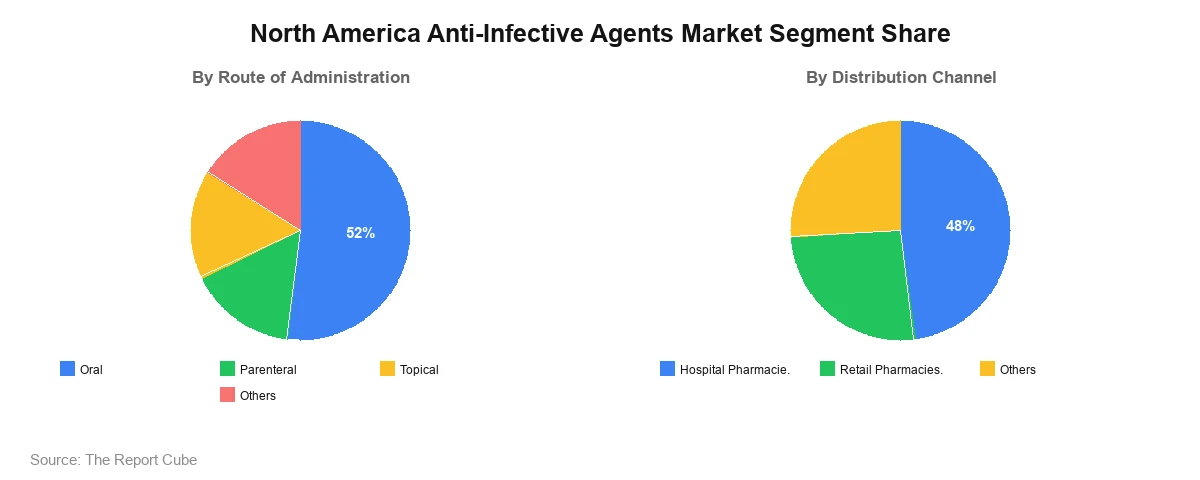
Oral anti-infective agents dominate the route of administration segment, accounting for an estimated 52% market share driven by their widespread applicability across outpatient bacterial infections, antiviral treatment regimens, and long-term prophylactic protocols. The convenience of oral dosing, combined with strong patient adherence rates and extensive availability through retail pharmacies, makes this route the preferred choice for community-acquired pneumonia, urinary tract infections, and influenza antiviral treatment across the United States and Canada. Established oral agents such as amoxicillin-clavulanate, azithromycin, and oseltamivir continue generating consistent prescription volumes across both primary care and specialty settings.
Parenteral anti-infective agents represent the second-largest sub-segment, commanding approximately 33% share as they serve critical care, surgical prophylaxis, and hospital-acquired infection treatment where oral bioavailability is insufficient. Topical agents address dermatological, ophthalmic, and wound care infections with growing adoption driven by the expanding market for topical antifungal and antibacterial formulations in outpatient dermatology clinics. The Others category includes inhalation-route anti-infectives such as tobramycin inhalation solution for cystic fibrosis-associated Pseudomonas infections, representing a specialized but clinically significant segment with robust pricing power.
By Distribution Channel
- Hospital Pharmacies
- Retail Pharmacies
- Others
Hospital pharmacies dominate the distribution channel segment with an estimated 48% market share, reflecting the concentration of parenteral anti-infective dispensing, formulary management, and inpatient infectious disease pharmacotherapy within institutional pharmacy departments. Academic medical centers and large health systems maintain dedicated infectious disease pharmacist roles to optimize anti-infective selection, monitor for adverse drug interactions, and implement stewardship protocols that influence procurement decisions for high-cost agents including daptomycin, ceftazidime-avibactam, and isavuconazole. Government-negotiated contract pricing and group purchasing organization agreements further reinforce hospital pharmacy's dominant channel position.
Retail pharmacies are expanding their anti-infective dispensing role as outpatient prescription volumes grow, capturing approximately 38% share through chain pharmacy networks and independent community pharmacies. Gilead's HIV antiviral portfolio, including bictegravir-containing regimens, is substantially dispensed through specialty retail pharmacy channels, illustrating the shift of complex anti-infective management into ambulatory settings. The Others segment encompasses mail-order pharmacies, specialty pharmacy distributors, and direct institutional procurement pathways that serve long-term care facilities and correctional healthcare systems, segments that are gaining relevance as ambulatory infection management continues expanding beyond traditional hospital settings.
Country Projection of North America Anti-Infective Agents Market
The North America Anti-Infective Agents Market demonstrates meaningful variation across constituent countries based on healthcare infrastructure maturity, prescription regulatory frameworks, publicly funded antimicrobial stewardship investment, and the relative burden of infectious diseases at the population level.
|
Country |
Estimated Market Share |
Key Growth Factors |
Consumer Trends |
|---|---|---|---|
|
United States |
78.4% |
High prescription volumes, robust pharmaceutical R&D, strong hospital formularies |
Rising demand for reserve antibiotics and novel antivirals |
|
Canada |
12.1% |
Government stewardship funding, expanding universal drug coverage |
Growing adoption of targeted narrow-spectrum anti-infectives |
|
Mexico |
6.8% |
Increasing healthcare access, rising infectious disease burden |
Expanding hospital pharmacy infrastructure and branded generics |
|
Rest of North America |
2.7% |
Limited institutional development, growing public health investment |
Increasing demand for essential anti-infective medicines |
- United States: The United States commands approximately 78.4% of the regional market, anchored by the highest per-capita pharmaceutical expenditure in North America, advanced hospital formulary systems, and the world's most active anti-infective clinical trial landscape. Pfizer and Merck continue generating substantial revenue from antibiotic and antiviral portfolios, while emerging biotech companies funded through BARDA and NIH grants are advancing novel beta-lactamase inhibitors, phage therapies, and broad-spectrum antifungals that will progressively enter commercial formularies through 2034.
- Canada: Canada represents the fastest-growing national market within the region, supported by Health Canada's progressive antimicrobial stewardship framework and expanding provincial drug coverage for high-cost anti-infective agents. Federal investments exceeding CAD 100 million toward the Pan-Canadian Action Plan on Antimicrobial Resistance are reinforcing both surveillance infrastructure and clinical guideline development that promote formulary-appropriate prescribing.
- Mexico: Mexico is expanding its anti-infective market through investments in hospital infrastructure, increasing access to branded generics, and a rising burden of respiratory and enteric infections. Novartis and GSK maintain active commercial operations across the Mexican pharmaceutical market, with hospital pharmacies in major urban centers increasingly stocking advanced anti-infective agents aligned with international treatment guidelines.
- Rest of North America: Caribbean and Central American nations within this grouping represent smaller but developing markets where international health organizations continue supporting access to essential anti-infectives, particularly for tuberculosis, HIV, and neglected tropical disease treatment programs, gradually expanding the commercial addressable base.
North America Anti-Infective Agents Market: Recent Development (2025)
- Pfizer Inc. expanded its hospital anti-infective portfolio by launching a new carbapenem-sparing combination therapy option.
- Gilead Sciences received FDA approval for an extended-release HIV antiviral regimen improving outpatient treatment adherence significantly.
- Merck & Co. strengthened its antifungal pipeline through a strategic partnership with a leading North American biotech firm.
- GSK plc announced a multi-year antimicrobial stewardship collaboration with U.S. academic medical centers supporting resistance surveillance.
North America Anti-Infective Agents Market Future Outlook (2034)
The North America Anti-Infective Agents Market is projected to expand at a 4.03% CAGR, reaching approximately USD 46.80 billion by 2034. Sustained growth will be driven by the commercial maturation of next-generation antiviral and antifungal agents, expanding antimicrobial resistance-driven formulary shifts toward reserve antibiotics, and increasing government-backed procurement programs that support equitable access to anti-infective therapies across underserved populations. Pharmaceutical companies are expected to continue prioritizing infectious disease pipelines as regulatory pathways such as LPAD and QIDP designations improve development economics for novel compounds.
Long-term market expansion will also be supported by advances in precision infectious disease diagnostics, with rapid molecular diagnostic platforms for anti-infective stewardship enabling more targeted prescribing that elevates demand for narrow-spectrum agents with strong efficacy evidence. The growing burden of fungal infections in immunocompromised populations - including transplant recipients and patients on biologics - will further expand the antifungal segment, while ongoing HIV therapy innovation from Gilead, ViiV Healthcare, and emerging biosimilar developers will sustain antiviral revenue momentum across both institutional and retail pharmacy channels through the end of the forecast period.
North America Anti-Infective Agents Market Report Coverage
|
Report Attribute |
Details |
|---|---|
|
Market Name |
North America Anti-Infective Agents Market |
|
Market Size (2026) |
USD 34.12 Billion |
|
Market Size (2034) |
USD 46.80 Billion |
|
Forecast Period |
2026–2034 |
|
CAGR |
4.03% |
|
Base Year |
2026 |
|
Historical Years |
2021–2025 |
|
Forecast Years |
2026–2034 |
|
Segments Covered |
By Route of Administration, By Distribution Channel, By Type |
|
Countries Covered |
United States, Canada, Mexico, Rest of North America |
|
Key Companies |
Pfizer Inc., Merck & Co. Inc., Gilead Sciences Inc., GSK plc, Novartis AG, Others |
|
Report Format |
PDF, Excel, PPT |
|
Customization |
Available as per client requirements |
Why Choose This Report?
- Comprehensive analysis covering anti-infective drug classes across North American markets.
- Accurate market sizing with reliable 4.03% CAGR forecast through 2034.
- Detailed segmentation covering route of administration and distribution channel dynamics.
- Country-level insights for the United States, Canada, Mexico, and Rest of North America.
- Competitive profiling of leading pharmaceutical players and emerging pipeline companies.
- Analysis of antimicrobial resistance trends driving formulary and procurement shifts.
- Strategic insights supporting investment, licensing, and market entry decisions.
- Data-driven research aligned with FDA regulatory frameworks and stewardship guidelines.
Table of Contents
- Introduction
- Objective of the Study
- Product Definition
- Market Segmentation
- Study Variables
- Research Methodology
- Secondary Data Points
- Companies Interviewed
- Primary Data Points
- Breakdown of Primary Interviews
- Secondary Data Points
- Executive Summary
- Market Dynamics
- Drivers
- Challenges
- Opportunity Assessment
- Recent Trends and Developments
- Policy and Regulatory Landscape
- North America Anti-Infective Agents Market Overview and Forecast Analysis (2021-2034)
- Market Size, By Value, By Growth Rate (CAGR/USD Billions)
- Demand – Supply Trends
- Market Share, By Type
- Antibacterials
- Cephalosporins
- Penicillins
- Fluoroquinolones
- Macrolides
- Market Share, By Route of Administration
- Oral
- Parenteral
- Topical
- Others
- Market Share, By Distribution Channel
- Hospital Pharmacies
- Retail Pharmacies
- Others
- Market Share, By Country
- United States
- Canada
- Mexico
- Rest of North America
- Market Share, By Competitors
- Competition Characteristics
- Revenue Shares
- Antibacterials North America Anti-Infective Agents Market Overview, 2021-2034F
- By Value (USD Million)
- By Route of Administration – Market Size & Forecast 2021-2034, USD Million
- Oral
- Parenteral
- Topical
- Others
- Cephalosporins North America Anti-Infective Agents Market Overview, 2021-2034F
- By Value (USD Million)
- By Route of Administration – Market Size & Forecast 2021-2034, USD Million
- Oral
- Parenteral
- Topical
- Others
- Penicillins North America Anti-Infective Agents Market Overview, 2021-2034F
- By Value (USD Million)
- By Route of Administration – Market Size & Forecast 2021-2034, USD Million
- Oral
- Parenteral
- Topical
- Others
- Fluoroquinolones North America Anti-Infective Agents Market Overview, 2021-2034F
- By Value (USD Million)
- By Route of Administration – Market Size & Forecast 2021-2034, USD Million
- Oral
- Parenteral
- Topical
- Others
- Macrolides North America Anti-Infective Agents Market Overview, 2021-2034F
- By Value (USD Million)
- By Route of Administration – Market Size & Forecast 2021-2034, USD Million
- Oral
- Parenteral
- Topical
- Others
- Competitive Outlook (Company Profile – Partial List)
- Pfizer Inc.
- Company Overview
- Business Segments
- Strategic Alliances/Partnerships
- Recent Developments
- Merck & Co. Inc.
- Company Overview
- Business Segments
- Strategic Alliances/Partnerships
- Recent Developments
- Gilead Sciences Inc.
- Company Overview
- Business Segments
- Strategic Alliances/Partnerships
- Recent Developments
- GSK plc
- Company Overview
- Business Segments
- Strategic Alliances/Partnerships
- Recent Developments
- Novartis AG
- Company Overview
- Business Segments
- Strategic Alliances/Partnerships
- Recent Developments
- Others
- Pfizer Inc.
- Contact Us & Disclaimer
Top Key Players & Market Share Outlook
- Pfizer Inc.
- Merck & Co. Inc.
- Gilead Sciences Inc.
- GSK plc
- Novartis AG
- Others
Frequently Asked Questions