



Build Your Custom Market Intelligence Report
Customize Your ReportAustralia Menstrual Care Market Insights & Analysis
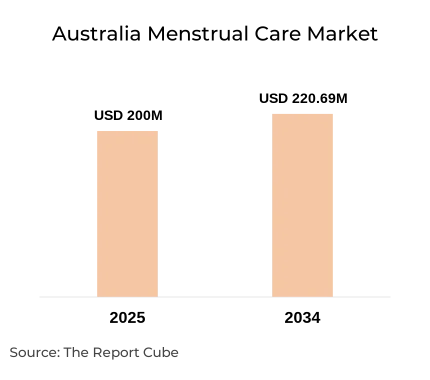
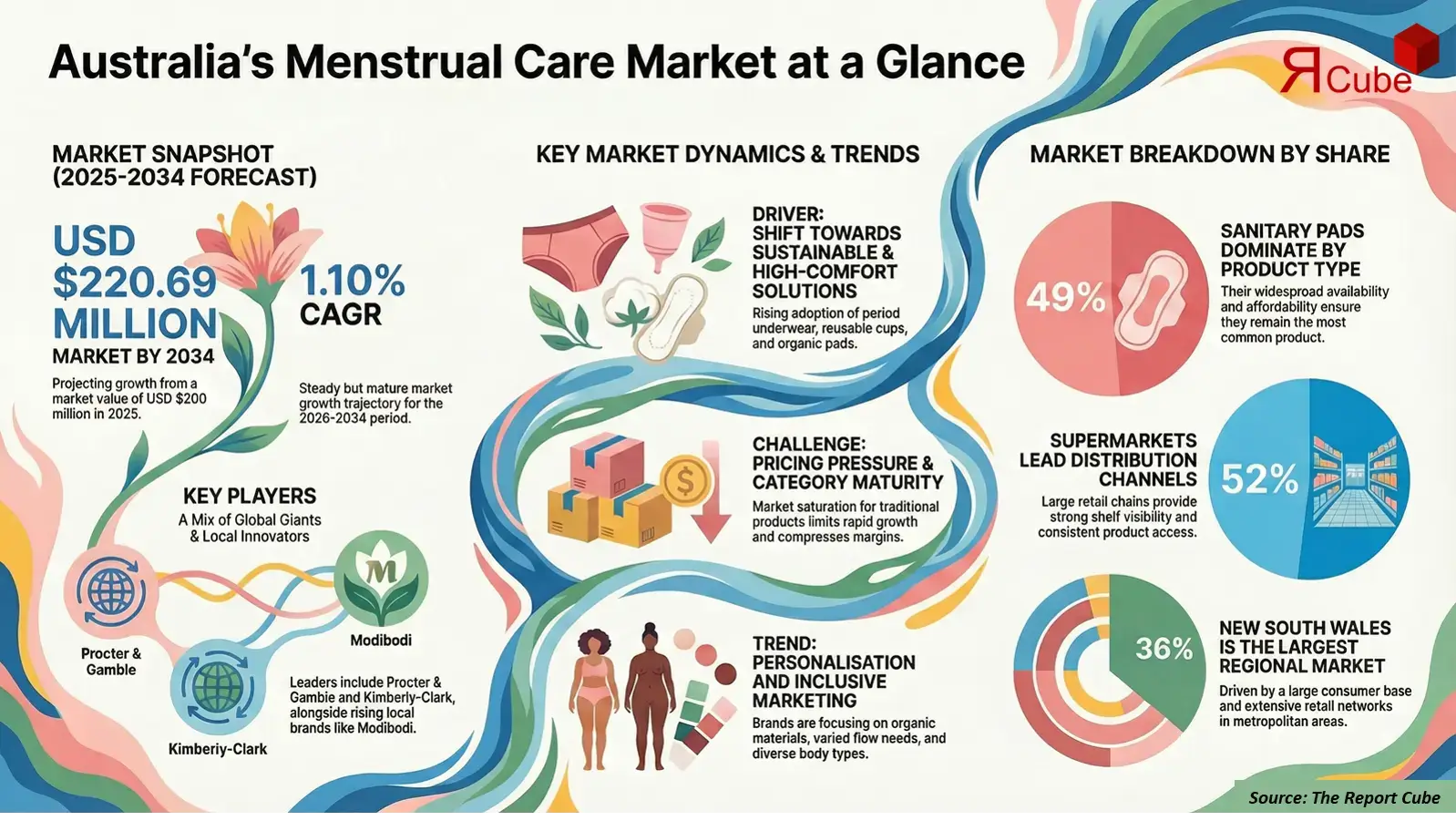
The Australia Menstrual Care Market is projected to grow at a 1.10% CAGR during 2026-2034. The market was valued at USD 200 million in 2025 and is expected to reach USD 220.69 million by 2034. Growth is supported by rising awareness of menstrual hygiene, increased adoption of reusable and eco-friendly products, and the influence of women’s health advocacy across the country. Major brands including Procter & Gamble, Kimberly-Clark, Essity, Johnson & Johnson, Unicharm, and Edgewell continue strengthening their product portfolios with innovations such as organic cotton pads, biodegradable tampons, dermatologically tested products, and improved comfort-oriented designs. At the same time, local Australian brands like Modibodi and Love Luna are shaping the reusable products category with high-performance period underwear and sustainable alternatives that appeal to environmentally conscious consumers.
Recent Developments in Australia Menstrual Care Market (2025):
- Procter & Gamble (Whisper, Always): Launched sustainable, biodegradable sanitary pads to reduce plastic waste in Australia.
- Modibodi: Introduced eco-friendly period underwear made from organic cotton for Australian consumers seeking sustainability.
Government Initiatives & Policies in Australia Menstrual Care Market:
- Australia's Free Menstrual Products Initiative: The Australian Government provides free sanitary products to students in public schools nationwide.
- NSW Period Product Initiative: New South Wales (NSW) offers free menstrual products in public schools to reduce period poverty.
Increasing retail presence, digital health awareness, and a growing online shopping ecosystem enable wider accessibility of menstrual care solutions across both urban and regional markets. Government-led health education programs, school hygiene initiatives, and targeted campaigns addressing period poverty further support product penetration. Consumers are shifting toward personalized solutions, hypoallergenic materials, and subscription-based purchasing models. As sustainability and comfort continue driving product differentiation, manufacturers are investing in material innovation, performance testing, and environmentally responsible packaging to build brand loyalty across diverse demographic groups.
Australia Menstrual Care Market Dynamics
Driver: Shift Toward Sustainable & High-Comfort Menstrual Solutions
One of the strongest growth drivers in Australia’s menstrual care market is the increased shift toward reusable, sustainable, and premium comfort-focused products. Consumers are prioritizing dermatologically safe materials, fragrance-free options, and environmentally responsible choices. The rising adoption of period underwear, reusable cups, and organic pads reflects changing attitudes toward long-term value and sustainability. Australian women are also becoming more informed about product ingredients, carbon footprint, and health considerations, motivating both global and local brands to innovate with enhanced absorbency, breathable fabrics, and improved ergonomic designs.
Challenge: Competitive Pricing Pressure & Slower Category Maturity
The menstrual care market in Australia faces pricing pressure due to mature demand for traditional sanitary pads and tampons. While innovation is strong, market saturation limits rapid growth for some categories. Reusable products though increasingly popular have higher upfront costs that may deter some consumers. Competition among global brands, private labels, and fast-growing local brands also compresses margins. Retail consolidation and supermarket preference for house-brand products present additional hurdles for premium and niche manufacturers, requiring stronger brand differentiation strategies.
Opportunity: Expansion of Reusable Product Category & Digital Commerce
Australia presents a notable opportunity for reusable menstrual products such as menstrual cups and period underwear, driven by environmental consciousness and long-term cost savings. Online health platforms and D2C brands are capitalizing on personalized product recommendations, subscription services, and educational content that help consumers transition from traditional to modern menstrual care solutions. Growth in telehealth conversations, women’s wellness apps, and influencer-led awareness campaigns provide strong momentum for product innovation and targeted marketing strategies in the coming years.
Trend: Personalization, Organic Materials & Inclusive Product Marketing
An emerging trend in the market is the rise of personalized menstrual care, including cycle-specific products, organic cotton formulations, dermatologically tested materials, and pH-balanced hygiene solutions. Brands are increasingly adopting inclusive marketing approaches that address diverse body types, varied flow needs, and cultural sensitivities. Technological enhancements in textile engineering and absorbent materials are reshaping reusable product performance, while improved transparency around ingredient sourcing continues to influence consumer trust.
Australia Menstrual Care Market Segment-wise Analysis
By Product Type:
- Sanitary Pads
- Tampons
- Menstrual Cups
- Pantyliners
- Period Underwear
- Others
Sanitary Pads remain the dominant segment with approximately about 49% share. Their widespread availability, affordability, and strong brand presence make them the most commonly used menstrual care product across urban and rural regions alike. Manufacturers continue to innovate pad materials, absorbency levels, and comfort features to retain category leadership despite rising competition from reusable solutions.
By Distribution Channel:
- Supermarkets/Hypermarkets
- Pharmacies/Drugstores
- Online Retail
- Convenience Stores
- Others
Supermarkets/Hypermarkets lead distribution with an estimated around 52% share. Large retail chains provide strong shelf visibility, promotional offers, and trusted access points for both premium and private-label menstrual care products. Their extensive footprint across metropolitan and regional areas ensures consistent product availability and drives high consumer engagement.
Regional Projection of Australia Menstrual Care Industry
By Region:
- New South Wales
- Victoria
- Queensland
- Western Australia
- South Australia
- Tasmania
- Northern Territory & Australian Capital Territory
New South Wales holds the leading regional share at around 36%, driven by a large consumer base, strong retail networks, and high awareness of women’s hygiene products. Major metropolitan areas such as Sydney demonstrate high adoption of sustainable menstrual solutions and premium products, supporting strong market growth.
What Does Our Australia Menstrual Care Market Research Study Entail?
- Provides comprehensive market size and forecasting from 2026-2034, showing growth from USD 200 million to USD 220.69 million at a 1.10% CAGR.
- Delivers segmentation insights across Product Types and Distribution Channels, highlighting evolving consumer preferences and sustainable product adoption.
- Offers regional assessments across key Australian states, emphasizing opportunities in emerging retail markets.
- Profiles leading companies including Procter & Gamble, Kimberly-Clark, Essity, Johnson & Johnson, Unicharm, Edgewell, Modibodi, Love Luna, and private-label manufacturers.
- Reviews policy frameworks, sustainability initiatives, material innovations, and category trends shaping future menstrual care demand.
Table of Contents
- Introduction
- Objective of the Study
- Product/Category Definition
- Market Segmentation
- Study Variables
- Research Methodology
- Secondary Data Points
- Breakdown of Secondary Sources
- Primary Data Points
- Breakdown of Primary Interviews
- Secondary Data Points
- Executive Summary
- Market Dynamics
- Drivers
- Challenges
- Opportunity Assessment
- Recent Trends and Developments
- Policy and Regulatory Landscape
- Australia Menstrual Care Market Overview (2020-2034)
- Market Size, By Volume (Million Units) & Value (USD Million)
- Market Share, By Product Type
- Sanitary Pads
- Tampons
- Menstrual Cups
- Pantyliners
- Period Underwear
- Others
- Market Share, By Distribution Channel
- Supermarkets/Hypermarkets
- Pharmacies & Drugstores
- Convenience Stores
- Online Retail
- Others
- Market Share, By Material & Sustainability
- Conventional Products
- Organic & Natural Products
- Reusable Products
- Biodegradable/Compostable Products
- Market Share, By Age Group
- Teenagers
- Young Adults
- Adults
- Market Share, By Region
- New South Wales
- Victoria
- Queensland
- Western Australia
- South Australia
- Tasmania
- Northern Territory & Australian Capital Territory
- Market Share, By Company
- Revenue Shares
- Competitive Landscape
- Segment-wise & Industry-wise Market Forecast (2026-2034)
- By Product Type
- By Distribution Channel
- By Material & Sustainability
- By Region
- New South Wales Menstrual Care Market
- Market Size, By Volume & Value (USD Million)
- Market Share, By Product Type
- Market Share, By Distribution Channel
- Market Share, By Key Cities
- Victoria Menstrual Care Market
- Market Size, By Volume & Value (USD Million)
- Market Share, By Product Type
- Market Share, By Distribution Channel
- Market Share, By Key Cities
- Queensland Menstrual Care Market
- Market Size, By Volume & Value (USD Million)
- Market Share, By Product Type
- Market Share, By Distribution Channel
- Market Share, By Key Cities
- Western Australia Menstrual Care Market
- Market Size, By Volume & Value (USD Million)
- Market Share, By Product Type
- Market Share, By Distribution Channel
- Market Share, By Key Cities
- South Australia, Tasmania, Northern Territory & ACT Menstrual Care Market
- Market Size, By Volume & Value (USD Million)
- Market Share, By Product Type
- Market Share, By Distribution Channel
- Market Share, By Key Cities
- Competitive Outlook & Company Profiles
- Procter & Gamble (Whisper, Always, Tampax, others)
- Company Overview
- Product Portfolio
- Strategic Alliances/Partnerships
- Recent Developments
- Kimberly-Clark (U by Kotex, others)
- Company Overview
- Product Portfolio
- Strategic Alliances/Partnerships
- Recent Developments
- Essity (Libra, TOM Organic, others)
- Company Overview
- Product Portfolio
- Strategic Alliances/Partnerships
- Recent Developments
- Johnson & Johnson (o.b., Stayfree, others)
- Company Overview
- Product Portfolio
- Strategic Alliances/Partnerships
- Recent Developments
- Unicharm
- Company Overview
- Product Portfolio
- Strategic Alliances/Partnerships
- Recent Developments
- Edgewell Personal Care (Playtex, others)
- Company Overview
- Product Portfolio
- Strategic Alliances/Partnerships
- Recent Developments
- Premier FMCG / Private Label Manufacturers
- Company Overview
- Product Portfolio
- Strategic Alliances/Partnerships
- Recent Developments
- Modibodi
- Company Overview
- Product Portfolio
- Strategic Alliances/Partnerships
- Recent Developments
- Love Luna
- Company Overview
- Product Portfolio
- Strategic Alliances/Partnerships
- Recent Developments
- Others
- Procter & Gamble (Whisper, Always, Tampax, others)
- Contact Us / Disclaimer
Top Key Players & Market Share Outlook
- Procter & Gamble (Whisper, Always, Tampax, others)
- Kimberly-Clark (U by Kotex, others)
- Essity (Libra, TOM Organic, others)
- Johnson & Johnson (o.b., Stayfree, others)
- Unicharm
- Edgewell Personal Care (Playtex, others)
- Premier FMCG / Private Label Manufacturers
- Modibodi
- Love Luna
- Others
Frequently Asked Questions






