



Build Your Custom Market Intelligence Report
Customize Your ReportUnited States Antipsychotic Drugs Market Key Highlights
By Disease:
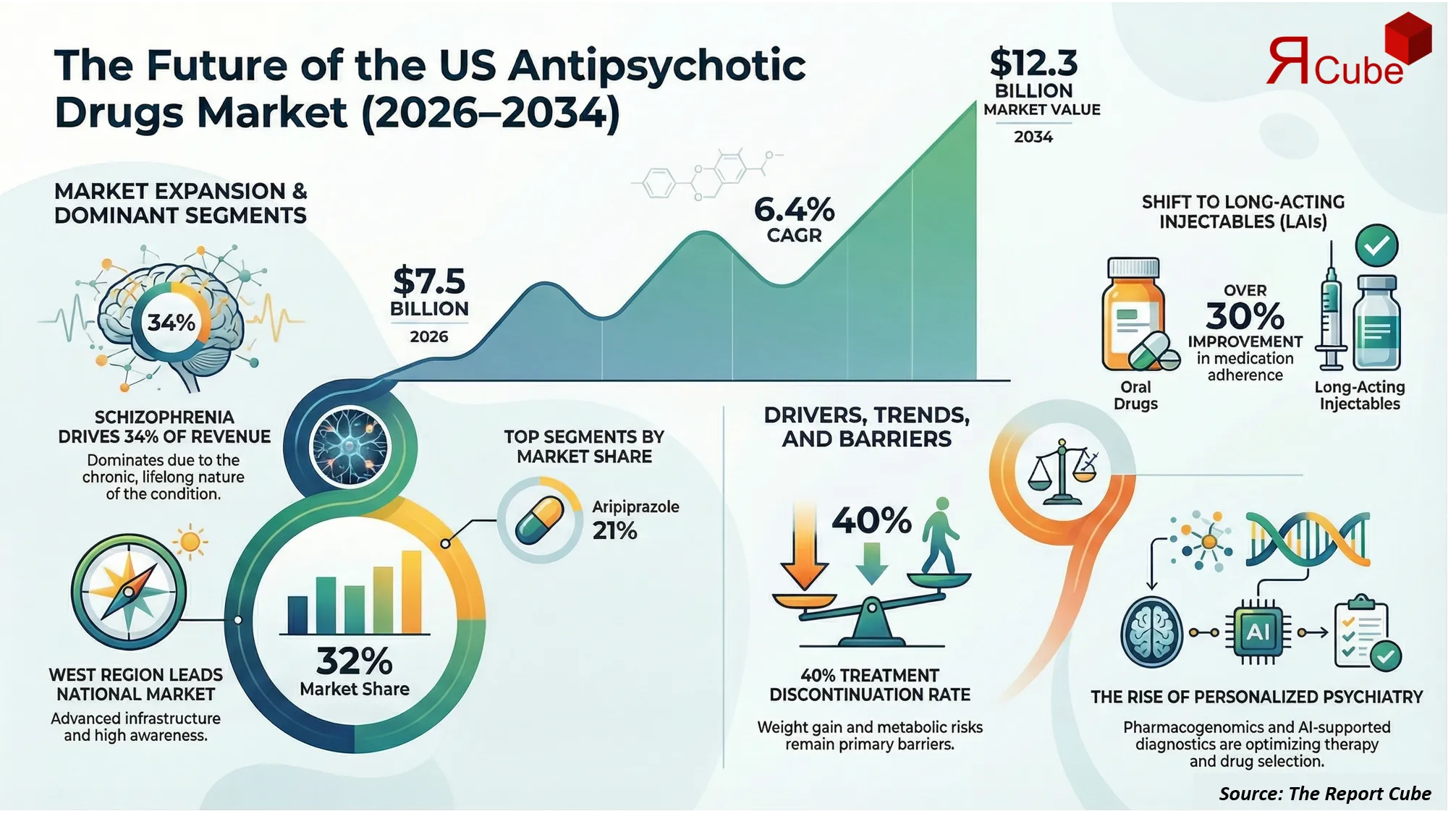
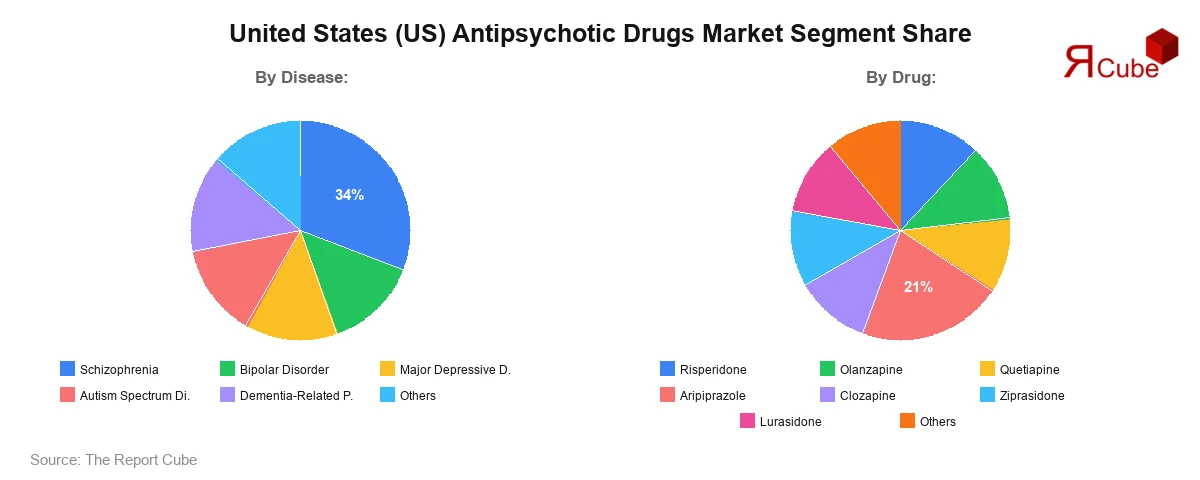
Schizophrenia segment leads the market with nearly 34% share.
By Drug:
Aripiprazole segment dominates the market with around 21% of revenue.
Regional Outlook:
West region dominates the United States Antipsychotic Drugs market with approximately 32% share.
United States Antipsychotic Drugs Market Insights & Analysis
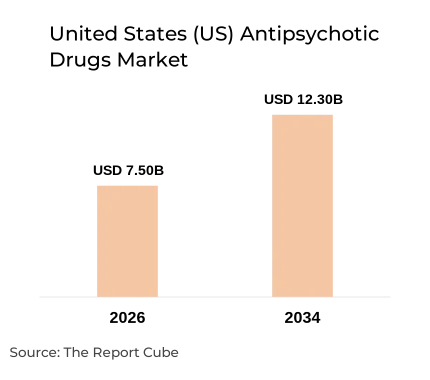
The United States Antipsychotic Drugs Market is anticipated to register a CAGR of around 6.4% during the forecast period 2026-2034. The market size is valued at USD 7.5 billion in 2026 and is projected to reach USD 12.3 billion by 2034. The growth of the United States antipsychotic drugs market size is closely linked to the rising burden of mental health conditions, particularly schizophrenia and bipolar disorder. Recent healthcare data suggests that nearly 1 in 5 adults in the United States experiences some form of mental illness annually, which significantly contributes to prescription demand and long-term treatment adherence.
Pharmaceutical innovation and regulatory approvals are shaping the United States antipsychotic drugs market growth trajectory. Companies are investing heavily in long-acting injectable formulations and novel mechanisms targeting dopamine and serotonin pathways. In 2025, several clinical trials focused on third-generation antipsychotics showed improved patient compliance rates by nearly 18%, reducing relapse frequency. Additionally, healthcare policies supporting mental health funding, including Medicaid expansion and telepsychiatry reimbursement, are increasing treatment access. These developments collectively strengthen the United States antipsychotic drugs market trends, ensuring sustained revenue expansion and improved patient outcomes.
United States Antipsychotic Drugs Market Dynamics
Key Driver: Increasing Prevalence of Psychiatric Disorders and Treatment Adoption
The steady rise in psychiatric disorders across the United States remains a primary driver of the United States antipsychotic drugs market growth. Schizophrenia affects approximately 3.5 million individuals in the country, while bipolar disorder and major depressive disorder continue to show rising diagnosis rates. Improved screening and awareness campaigns have increased early diagnosis by nearly 22% over the past five years. This early detection leads to prolonged treatment cycles, directly influencing drug consumption volumes and market value.
Furthermore, healthcare providers are increasingly adopting combination therapies and second-generation antipsychotics due to their improved safety profiles. Physicians are prioritizing personalized treatment plans, which enhances patient adherence and reduces relapse rates. The expansion of telehealth platforms has also enabled remote psychiatric consultations, particularly in underserved regions, boosting prescription rates and supporting the United States antipsychotic drugs market revenue growth.
Book your FREE 30-minute expert consultation today
Contact UsIndustry Trends: Shift Toward Long-Acting Injectables and Personalized Psychiatry
A significant trend shaping the United States antipsychotic drugs market trends is the rising adoption of long-acting injectable (LAI) antipsychotics. These formulations improve medication adherence by reducing dosing frequency, with studies showing adherence improvement rates of over 30% compared to oral medications. Pharmaceutical companies are focusing on developing extended-release formulations to meet this demand.
Another key trend is the integration of pharmacogenomics in psychiatric treatment. Personalized medicine approaches are helping clinicians select drugs based on genetic profiles, improving treatment effectiveness. Digital health tools and AI-supported diagnostics are further enhancing patient monitoring and therapy optimization, contributing to the expansion of the United States antipsychotic drugs market size.
Major Challenge: Side Effects and Long-Term Safety Concerns
One of the major challenges in the United States antipsychotic drugs market is the concern over long-term side effects associated with antipsychotic medications. Common issues such as weight gain, metabolic syndrome, and cardiovascular risks have raised concerns among patients and healthcare providers. Studies indicate that nearly 40% of patients discontinue treatment due to adverse effects, which impacts market growth and treatment continuity.
In addition, regulatory scrutiny and litigation risks related to drug safety continue to pose challenges for pharmaceutical companies. Safety-related warnings and lawsuits can impact brand reputation and limit product adoption. These factors contribute to cautious prescribing practices and influence overall United States antipsychotic drugs market growth patterns.
Opportunity: Expansion of Mental Health Infrastructure and Digital Therapeutics
The expansion of mental health infrastructure presents a strong opportunity for the United States antipsychotic drugs market. Government initiatives and private investments are increasing access to psychiatric care services, particularly in rural and underserved areas. The integration of digital therapeutics with pharmacological treatments is also gaining traction, enhancing treatment outcomes.
Additionally, the growing acceptance of mental health treatment and reduced stigma are encouraging more individuals to seek medical care. Pharmaceutical companies are exploring new drug delivery systems and combination therapies to improve efficacy. These developments are expected to create significant opportunities for growth in the United States antipsychotic drugs market value over the forecast period.
United States Antipsychotic Drugs Market Segment-wise Analysis
By Disease:
- Schizophrenia
- Bipolar Disorder
- Major Depressive Disorder
- Autism Spectrum Disorder-Related Irritability
- Dementia-Related Psychosis
- Others
The schizophrenia segment leads the United States antipsychotic drugs market share, accounting for approximately 34% of total revenue in 2026. This dominance is due to the chronic nature of schizophrenia, which requires long-term and often lifelong treatment. Clinical data indicates that over 70% of diagnosed patients rely on continuous antipsychotic therapy to manage symptoms effectively.
The increasing availability of advanced second-generation antipsychotics and long-acting injectables has further strengthened this segment. Additionally, healthcare programs supporting mental illness treatment contribute to sustained demand, reinforcing the segment's position in the United States antipsychotic drugs market growth.
By Drug:
- Risperidone
- Olanzapine
- Quetiapine
- Aripiprazole
- Clozapine
- Ziprasidone
- Lurasidone
- Cariprazine
- Brexpiprazole
- Haloperidol
- Others
Aripiprazole dominates the United States antipsychotic drugs market with an estimated 21% revenue share. Its favorable safety profile and broad therapeutic applications make it a preferred choice among clinicians. The drug is widely used for treating schizophrenia, bipolar disorder, and adjunct therapy for depression.
Increased generic availability has also improved affordability, leading to higher prescription rates. Furthermore, pharmaceutical advancements focusing on extended-release versions of aripiprazole are expected to drive further adoption, contributing to overall market revenue growth.
Regional Projection of United States Antipsychotic Drugs Industry
- West
- East
- South
- Midwest
- Others
The West region holds the largest share in the United States antipsychotic drugs market, accounting for approximately 32% of total revenue. This dominance is driven by advanced healthcare infrastructure, higher mental health awareness, and strong presence of leading pharmaceutical companies. States like California have implemented extensive mental health programs, increasing access to diagnosis and treatment services.
Additionally, higher healthcare spending and adoption of innovative therapies contribute to regional growth. The availability of specialized psychiatric care centers and increased insurance coverage further support the United States antipsychotic drugs market expansion in this region.
Government Initiatives & Policies
- 988 Suicide & Crisis Lifeline Expansion (2025): Enhances nationwide mental health emergency response systems and access to psychiatric care.
- Certified Community Behavioral Health Clinics Expansion Program (2026): Expands funding to improve mental health and substance use disorder treatment services across states.
United States Antipsychotic Drugs Industry Recent Developments
- 2025: Eli Lilly and Company faced litigation developments related to Zyprexa, raising concerns about long-term safety disclosures and potential financial implications for its antipsychotic portfolio.
Need insights for a specific region within this market?
Request Regional DataWhy Choose This Report?
- Provides a comprehensive overview of the overall market analysis, encompassing key trends, consumer behavior analysis, and risk assessment to support strategic decision-making.
- Provides accurate, up-to-date insights into market size, segmentation, and emerging opportunities, helping to minimize risk & capitalizing on growth.
- Gives deep understanding of target audience preferences, investment habits, and communication channels for enhanced product development & marketing effectiveness.
- Delivers competitive analysis & benchmarking, uncovering the strengths & weaknesses of market competitors to guide strategies.
- Consolidate comprehensive market intelligence, reducing reasoning & streamlining research efforts.
- Facilitates customized market segmentation & risk mitigation strategies, fine-tuned to the business objectives.
- Aids in identifying both market challenges & untapped opportunities within the industry to drive long-term business growth.
- Provides valuable information based on actual customer data & search trends.
Table of Contents
- Introduction
- Objective of the Study
- Product and Category Definition
- Market Segmentation
- Study Variables
- Research Methodology
- Secondary Data Points
- Breakdown of Secondary Sources
- Primary Data Points
- Breakdown of Primary Interviews
- Secondary Data Points
- Executive Summary
- Market Dynamics
- Drivers
- Challenges
- Opportunity Assessment
- Recent Trends and Developments
- Regulatory and Policy Landscape
- United States Antipsychotic Drugs Market Overview (2021-2034)
- Market Size, By Value (USD Billion)
- Market Share, By Disease
- Schizophrenia
- Bipolar Disorder
- Major Depressive Disorder
- Autism Spectrum Disorder-Related Irritability
- Dementia‑Related Psychosis
- Others
- Market Share, By Drug
- Risperidone
- Olanzapine
- Quetiapine
- Aripiprazole
- Clozapine
- Ziprasidone
- Lurasidone
- Cariprazine
- Brexpiprazole
- Haloperidol
- Others
- Market Share, By Therapeutic Class
- First‑Generation Antipsychotics
- Second‑Generation Antipsychotics
- Third‑Generation Antipsychotics
- Adjunctive Antipsychotic Therapies
- Market Share, By Distribution Channel
- Hospital Pharmacies
- Retail Pharmacies
- Online Pharmacies
- Others
- Market Share, By Region
- West
- East
- South
- Midwest
- Others
- Market Share, By Company
- Revenue Shares and Analysis
- Competitive Landscape
- West United States Antipsychotic Drugs Market
- Market Size, By Value (USD Billion/Million)
- Market Share, By Disease
- Market Share, By Drug
- Market Share, By Therapeutic Class
- Market Share, By Distribution Channel
- East United States Antipsychotic Drugs Market
- Market Size, By Value (USD Billion/Million)
- Market Share, By Disease
- Market Share, By Drug
- Market Share, By Therapeutic Class
- Market Share, By Distribution Channel
- South United States Antipsychotic Drugs Market
- Market Size, By Value (USD Billion/Million)
- Market Share, By Disease
- Market Share, By Drug
- Market Share, By Therapeutic Class
- Market Share, By Distribution Channel
- Midwest United States Antipsychotic Drugs Market
- Market Size, By Value (USD Billion/Million)
- Market Share, By Disease
- Market Share, By Drug
- Market Share, By Therapeutic Class
- Market Share, By Distribution Channel
- Competitive Outlook and Company Profiles
- Alkermes
- Company Overview
- Product Portfolio
- Strategic Alliances/Partnerships
- Recent Developments
- AbbVie
- Company Overview
- Product Portfolio
- Strategic Alliances/Partnerships
- Recent Developments
- Pfizer
- Company Overview
- Product Portfolio
- Strategic Alliances/Partnerships
- Recent Developments
- Acadia Pharmaceuticals
- Company Overview
- Product Portfolio
- Strategic Alliances/Partnerships
- Recent Developments
- Otsuka America
- Company Overview
- Product Portfolio
- Strategic Alliances/Partnerships
- Recent Developments
- Sunovion Pharmaceuticals
- Company Overview
- Product Portfolio
- Strategic Alliances/Partnerships
- Recent Developments
- Vanda Pharmaceuticals
- Company Overview
- Product Portfolio
- Strategic Alliances/Partnerships
- Recent Developments
- Johnson & Johnson
- Company Overview
- Product Portfolio
- Strategic Alliances/Partnerships
- Recent Developments
- Lundbeck US
- Company Overview
- Product Portfolio
- Strategic Alliances/Partnerships
- Recent Developments
- Novartis (US)
- Company Overview
- Product Portfolio
- Strategic Alliances/Partnerships
- Recent Developments
- Biogen
- Company Overview
- Product Portfolio
- Strategic Alliances/Partnerships
- Recent Developments
- Teva Pharmaceuticals USA
- Company Overview
- Product Portfolio
- Strategic Alliances/Partnerships
- Recent Developments
- Intra-Cellular Therapies
- Company Overview
- Product Portfolio
- Strategic Alliances/Partnerships
- Recent Developments
- Bristol Myers Squibb
- Company Overview
- Product Portfolio
- Strategic Alliances/Partnerships
- Recent Developments
- AstraZeneca
- Company Overview
- Product Portfolio
- Strategic Alliances/Partnerships
- Recent Developments
- Eli Lilly and Company
- Company Overview
- Product Portfolio
- Strategic Alliances/Partnerships
- Recent Developments
- Viatris
- Company Overview
- Product Portfolio
- Strategic Alliances/Partnerships
- Recent Developments
- Others
- Alkermes
- Contact Us and Disclaimer
Top Key Players & Market Share Outlook
- Alkermes
- AbbVie
- Pfizer
- Acadia Pharmaceuticals
- Otsuka America
- Sunovion Pharmaceuticals
- Vanda Pharmaceuticals
- Johnson & Johnson
- Lundbeck US
- Novartis (US)
- Biogen
- Teva Pharmaceuticals USA
- Intra-Cellular Therapies
- Bristol Myers Squibb
- AstraZeneca
- Eli Lilly and Company
- Viatris
- Others
Frequently Asked Questions






