




Build Your Custom Market Intelligence Report
Customize Your ReportChile Beer Market Insights & Analysis
The Chile Beer Market is projected to grow at a 2.75% CAGR during 2026-2034. The market was valued at USD 5.29 billion in 2025 and is expected to reach USD 6.75 billion by 2034. Growth is influenced by shifting consumer behavior, rising interest in premium beers, and steady expansion of craft breweries across the country. Chilean consumers are exploring a wider mix of lagers, pilsners, ales, wheat beers, and specialty brews. Younger drinkers in urban regions are especially drawn to craft beers, while mainstream consumers continue to sustain the strong presence of traditional lagers. Retailers, bars, and restaurants are increasing their beer assortments, giving more visibility to both domestic and international brands. As breweries introduce new flavors, seasonal editions, and improved quality standards, the competitive landscape is becoming more dynamic. These combined consumer and industry shifts support a stable but evolving market trajectory in the years ahead.
Chile Beer Market Recent Developments
- 2025: CCU launched a new low-alcohol lager aimed at health-conscious consumers seeking lighter drinking options.
- 2025: AB InBev introduced a regional craft-style pilsner created through collaboration with local brewers.
Government Initiatives & Policies
- Alcohol Labeling and Advertising Policy: Chile updated alcohol labeling rules to require clearer warnings and responsible consumption messaging.
- Importer and Excise Compliance Framework: New procedures strengthen oversight of alcohol imports, helping ensure product traceability and tax compliance.
Another important factor shaping the Chile beer landscape is the growing influence of digital platforms, modern retail formats, and regional tourism. E-commerce channels help smaller breweries reach customers beyond their immediate areas, while supermarkets and convenience stores expand refrigerated sections to feature more variety. South and coastal regions are seeing fast growth due to tourism and local dining culture, creating opportunities for regional breweries to build strong brand identity. Breweries are also investing in sustainable practices, better brewing technologies, and updated packaging to match rising expectations for quality and environmental responsibility. As labeling and alcohol policies continue evolving, producers are adapting to maintain compliance while staying competitive. Overall, the Chile beer market is moving toward a more diverse and experience-driven landscape, supported by innovation, consumer openness, and stronger distribution networks.
Chile Beer Market Dynamics
Driver: Rising Demand for Premium, Craft, and Low-Alcohol Beers
Premiumization is one of the strongest forces shaping the beer market in Chile. Many consumers, especially younger adults, are exploring richer flavors, artisanal products, and specialty brews not widely available in previous years. Lager still holds a dominant share, but craft categories such as ales, IPAs, and wheat beers are gaining wider acceptance across major cities and tourist-heavy regions. Low-alcohol and non-alcoholic beers are also expanding as health-minded consumers seek alternatives that fit a balanced lifestyle. Breweries respond with new recipes, better ingredient sourcing, and improved brewing techniques to meet evolving taste expectations. These shifts support steady growth across both premium and craft segments, helping the market diversify beyond traditional consumption patterns.
Challenge: Regulatory Pressure, Taxation, and Consumer Price Sensitivity
The Chile beer market faces challenges associated with rising regulatory requirements, alcohol-specific taxation, and persistent price sensitivity among a significant portion of consumers. Compliance costs can be high for both large and small breweries, especially when introducing new labels, packaging formats, or imported ingredients. Craft brewers often struggle with operational costs because they rely on smaller production volumes and less efficient distribution networks. Price-conscious shoppers tend to favor mainstream brands or promotional deals, which limits the ability of small and premium-focused breweries to scale. As transportation and raw material costs fluctuate, breweries must adjust pricing carefully to stay competitive without sacrificing profit margins. Balancing compliance, affordability, and operational efficiency remains a central challenge across the industry.
Book your FREE 30-minute expert consultation today
Contact Us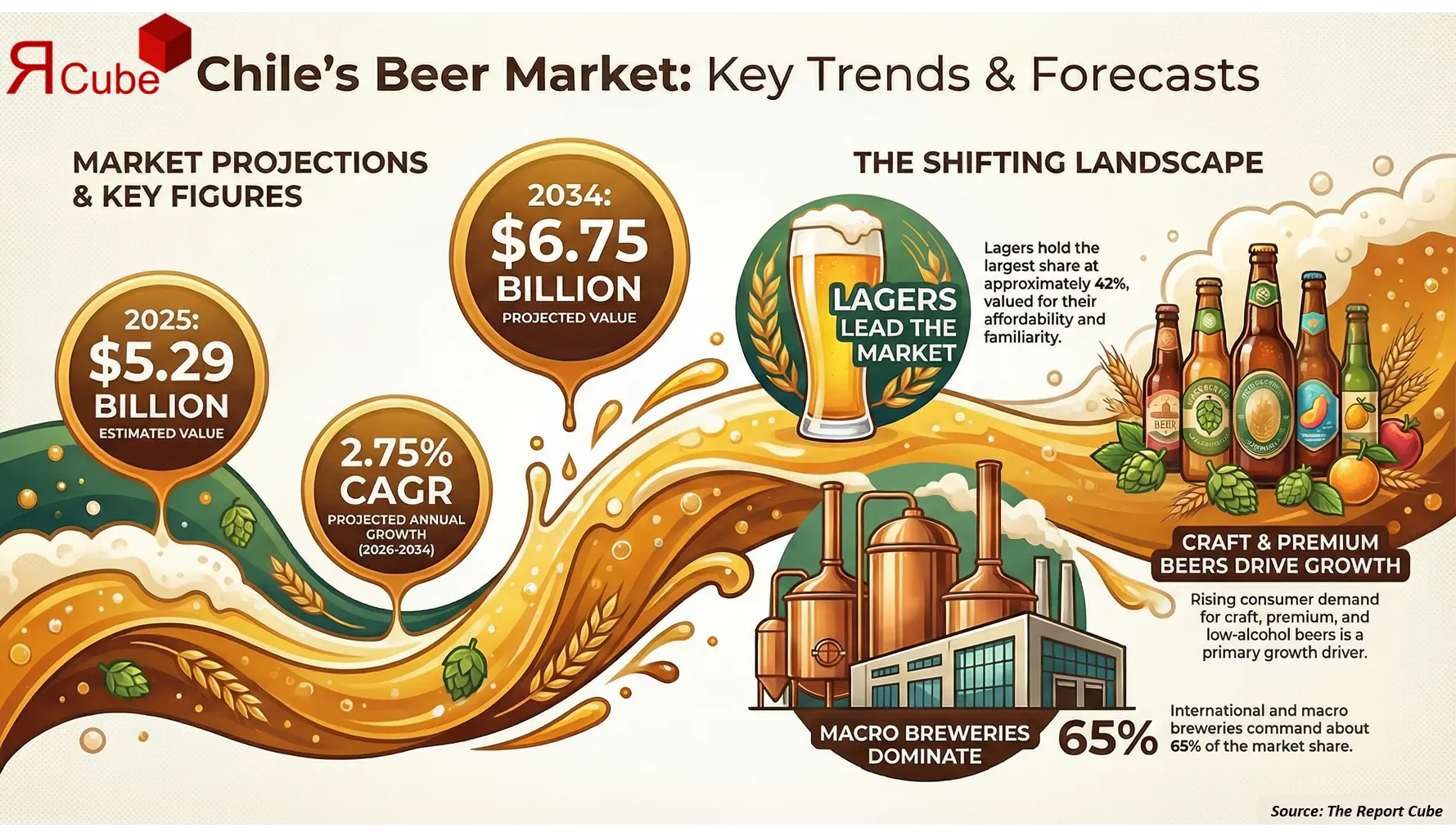
Opportunity: Regional Expansion and Strong Potential for Premium Beer Exports
Several high-potential opportunities are emerging across regional markets where tourism, dining culture, and local brewing traditions are expanding. Regions such as Valparaíso, Coquimbo, Biobío, and southern lake districts are seeing a rise in craft brewery openings, taprooms, and beer events that attract both residents and visitors. Chile’s unique brewing identity, shaped by local ingredients and diverse climate zones, gives producers an advantage when developing premium or export-ready beers. Export opportunities are growing as international markets show interest in craft products from Latin America. Breweries that focus on quality improvements, sustainable production, and strong storytelling can build a long-term competitive edge. As regional and international channels expand, the market is positioned to unlock new growth paths.
Trend: Growth of Craft Culture, Beer Experiences, and Expanding On-Trade Channels
A major trend reshaping the beer sector is the growing emphasis on experience-driven consumption. Taprooms, brewery tours, tasting sessions, and beer-food pairing events are becoming more common as breweries seek deeper consumer connections. On-trade channels such as bars, cafés, and restaurants are increasingly promoting specialty and seasonal beers, helping consumers discover new brands and styles. Retailers are expanding their assortment of craft SKUs, mixed packs, and cold-format offerings to meet changing preferences. Digital platforms also amplify visibility for microbreweries by enabling online ordering, subscription services, and nationwide delivery. These combined trends reinforce the growing cultural significance of craft beer in Chile and support a more dynamic and innovative marketplace.
Chile Beer Market Segment-wise Analysis
By Beer Type:
- Lager
- Pilsner
- Ale
- Wheat Beer
- Stout and Porter
- Non or Low-Alcohol Beer
- Others
Lager holds the largest share of the Chile beer market at approximately 42%. Its strong presence is due to affordability, familiarity, and wide availability across retail and foodservice channels. Consumers rely on lagers for casual consumption, social occasions, and everyday meals. However, interest is gradually shifting toward premium lagers and flavored versions, especially among younger urban drinkers. While lagers dominate overall volume, higher-value segments such as pilsner and craft ales capture a growing portion of premium spending. Breweries that balance traditional lager production with innovative specialty offerings are best positioned to appeal to both mainstream and evolving consumer groups.
By Brewery Type:
- International or Macro Breweries
- Regional and Local Breweries
- Craft and Microbreweries
International and Macro Breweries lead the market with about 65% share, supported by scale, brand recognition, and strong distribution capabilities. Companies like CCU, AB InBev, and Heineken Chile benefit from wide shelf presence, consistent product availability, and competitive pricing. However, craft and microbreweries are experiencing the fastest growth as consumers seek unique local flavors, authentic brewing practices, and more personalized experiences. Regional breweries benefit from tourism-driven demand and strong community ties, especially in coastal and southern regions. Partnerships, collaborations, and co-brewing programs are becoming more common as both large and small breweries aim to expand their portfolios and tap into new consumer segments.
Regional Projection of Chile Beer Industry
By Region:
- Metropolitana
- Valparaíso and Coquimbo
- Biobío and Ñuble
- Central-Southern Regions
- Northern Regions
- Southern Regions
The Metropolitana Region leads the Chile beer market with roughly 48% share. Santiago’s large population, strong retail network, and active nightlife contribute heavily to consumption. The region is also a primary launch site for new beer products, seasonal editions, and premium offerings due to its diverse customer base. Bars, cafés, and restaurants play a major role in shaping consumer preferences by offering a wide selection of craft and imported beers. Meanwhile, regions such as Valparaíso and Biobío are emerging as high-growth zones due to tourism and the rise of local microbreweries. These areas provide strong opportunities for brands looking to expand distribution and strengthen their regional identity.
Need insights for a specific region within this market?
Request Regional DataWhy Choose This Report?
- Provides a comprehensive overview of the overall market analysis, encompassing key trends, consumer behavior analysis, and risk assessment to support strategic decision-making.
- Provides accurate, up-to-date insights into market size, segmentation, and emerging opportunities, helping to minimize risk & capitalizing on growth.
- Gives deep understanding of target audience preferences, investment habits, and communication channels for enhanced product development & marketing effectiveness.
- Delivers competitive analysis & benchmarking, uncovering the strengths & weaknesses of market competitors to guide strategies.
- Consolidate comprehensive market intelligence, reducing reasoning & streamlining research efforts.
- Facilitates customized market segmentation & risk mitigation strategies, fine-tuned to the business objectives.
- Aids in identifying both market challenges & untapped opportunities within the industry to drive long-term business growth.
- Provides valuable information based on actual customer data & search trends.
Table of Contents
- Introduction
- Objective of the Study
- Product/Category Definition
- Market Segmentation
- Study Variables
- Research Methodology
- Secondary Data Points
- Breakdown of Secondary Sources
- Primary Data Points
- Breakdown of Primary Interviews
- Secondary Data Points
- Executive Summary
- Market Dynamics
- Drivers
- Challenges
- Opportunity Assessment
- Recent Trends and Developments
- Policy and Regulatory Landscape
- Chile Beer Market Overview (2020-2034)
- Market Size, By Volume (Million Hectoliters) & Value (USD Million)
- Market Share, By Beer Type
- Lager
- Pilsner
- Ale
- Wheat Beer
- Stout & Porter
- Non/Low-alcohol Beer
- Others
- Market Share, By Brewery Type
- International/Macro Breweries
- Regional & Local Breweries
- Craft & Microbreweries
- Market Share, By Packaging
- Bottles (Returnable & One-way)
- Cans
- Kegs & Draught
- Others
- Market Share, By Distribution Channel
- On-Trade (Bars, Restaurants, Hotels)
- Off-Trade - Supermarkets/Hypermarkets
- Off-Trade - Convenience & Traditional Stores
- Specialty Beer & Liquor Stores
- Online Retail & Direct-to-Consumer
- Others
- Market Share, By Region
- Metropolitana (Including Santiago)
- Valparaíso & Coquimbo
- Biobío & Ñuble
- Central-Southern Regions (Maule, O’Higgins, La Araucanía)
- Northern Regions (Arica y Parinacota to Atacama)
- Southern Regions (Los Ríos, Los Lagos, Aysén, Magallanes)
- Market Share, By Company
- Revenue Shares
- Competitive Landscape
- Segment-wise & Industry-wise Market Forecast (2026-2034)
- By Beer Type
- By Brewery Type
- By Packaging
- By Distribution Channel
- By Region
- Metropolitana (Including Santiago) Beer Market
- Market Size, By Volume & Value (USD Million)
- Market Share, By Beer Type
- Market Share, By Brewery Type
- Market Share, By Distribution Channel
- Market Share, By Key Cities
- Valparaíso & Coquimbo Beer Market
- Market Size, By Volume & Value (USD Million)
- Market Share, By Beer Type
- Market Share, By Brewery Type
- Market Share, By Distribution Channel
- Market Share, By Key Cities
- Biobío & Ñuble Beer Market
- Market Size, By Volume & Value (USD Million)
- Market Share, By Beer Type
- Market Share, By Brewery Type
- Market Share, By Distribution Channel
- Market Share, By Key Cities
- Central-Southern Regions Beer Market (Maule, O’Higgins, La Araucanía)
- Market Size, By Volume & Value (USD Million)
- Market Share, By Beer Type
- Market Share, By Brewery Type
- Market Share, By Distribution Channel
- Market Share, By Key Cities
- Northern Regions Beer Market (Arica y Parinacota to Atacama)
- Market Size, By Volume & Value (USD Million)
- Market Share, By Beer Type
- Market Share, By Brewery Type
- Market Share, By Distribution Channel
- Market Share, By Key Cities
- Southern Regions Beer Market (Los Ríos, Los Lagos, Aysén, Magallanes)
- Market Size, By Volume & Value (USD Million)
- Market Share, By Beer Type
- Market Share, By Brewery Type
- Market Share, By Distribution Channel
- Market Share, By Key Cities
- Competitive Outlook & Company Profiles
- Compañía de Cervecerías Unidas S.A. (CCU)
- Company Overview
- Product Portfolio
- Strategic Alliances/Partnerships
- Recent Developments
- Cervecería Chile S.A. (AB InBev)
- Company Overview
- Product Portfolio
- Strategic Alliances/Partnerships
- Recent Developments
- Compañía Cervecera Kunstmann S.A.
- Company Overview
- Product Portfolio
- Strategic Alliances/Partnerships
- Recent Developments
- Viña Concha y Toro S.A. (Southern Brewing/Kross)
- Company Overview
- Product Portfolio
- Strategic Alliances/Partnerships
- Recent Developments
- Cooperativa Agrícola Pisquera de Elqui Ltda (Capel - beer importer)
- Company Overview
- Product Portfolio
- Strategic Alliances/Partnerships
- Recent Developments
- Cencosud Retail S.A.
- Company Overview
- Product Portfolio
- Strategic Alliances/Partnerships
- Recent Developments
- Exportadora e Importadora de Líquidos RCR Ltd
- Company Overview
- Product Portfolio
- Strategic Alliances/Partnerships
- Recent Developments
- Comercial Peumo Ltda
- Company Overview
- Product Portfolio
- Strategic Alliances/Partnerships
- Recent Developments
- Heineken Chile S.A.
- Company Overview
- Product Portfolio
- Strategic Alliances/Partnerships
- Recent Developments
- Southern Brewing Company (Kross)
- Company Overview
- Product Portfolio
- Strategic Alliances/Partnerships
- Recent Developments
- Others
- Compañía de Cervecerías Unidas S.A. (CCU)
- Contact Us / Disclaimer
Top Key Players & Market Share Outlook
- Compañía de Cervecerías Unidas S.A. (CCU)
- Cervecería Chile S.A. (AB InBev)
- Compañía Cervecera Kunstmann S.A.
- Viña Concha y Toro S.A. (Southern Brewing/Kross)
- Cooperativa Agrícola Pisquera de Elqui Ltda (Capel - beer importer)
- Cencosud Retail S.A.
- Exportadora e Importadora de Líquidos RCR Ltd
- Comercial Peumo Ltda
- Heineken Chile S.A.
- Southern Brewing Company (Kross)
- Others
Frequently Asked Questions






