



Build Your Custom Market Intelligence Report
Customize Your ReportCanada Frozen Food Market Insights & Analysis
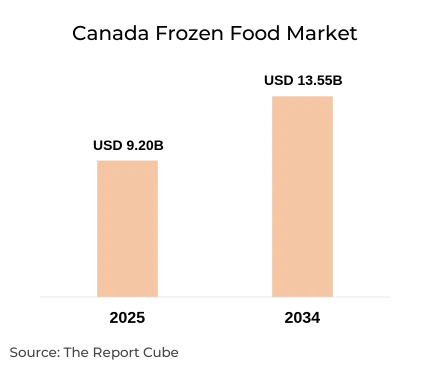
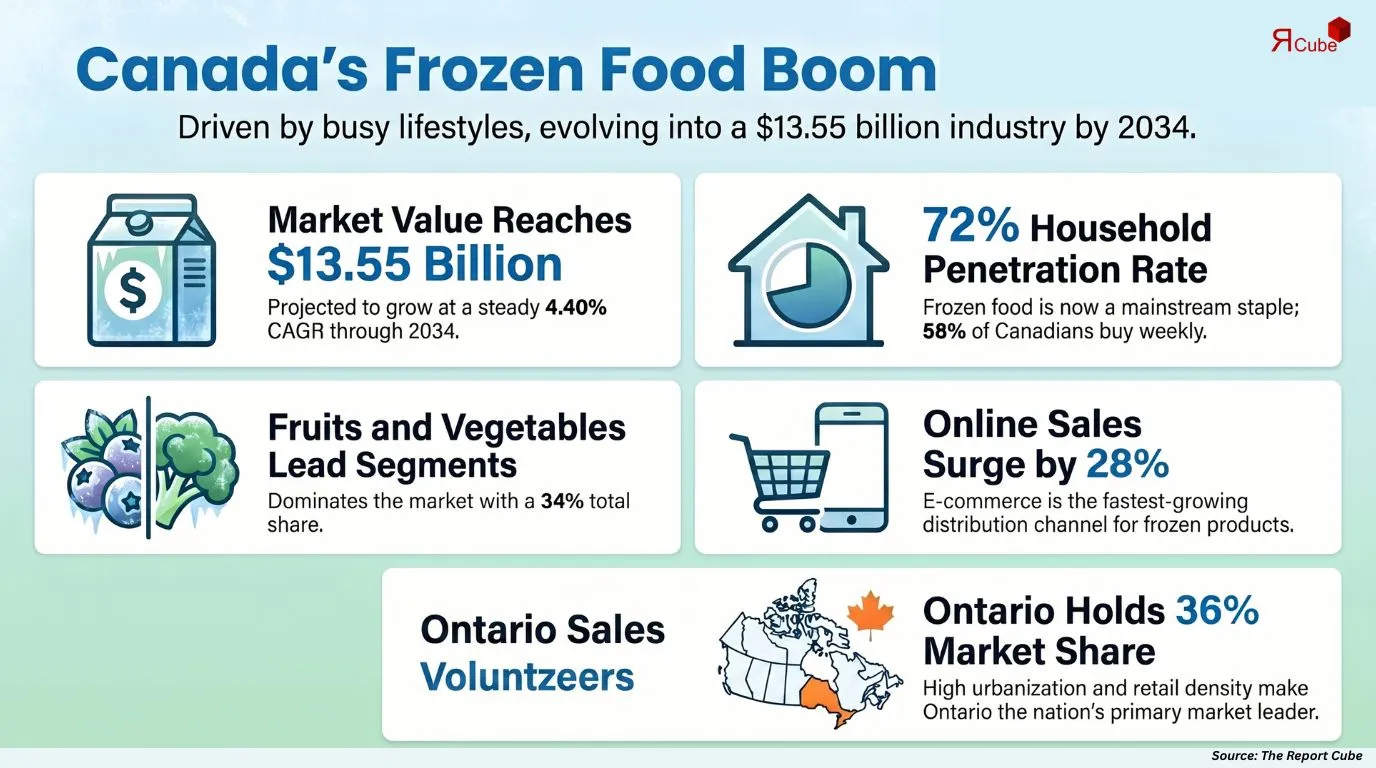
The Canada Frozen Food Market is anticipated to register a CAGR of 4.40% during 2026-2034. The market size was valued at USD 9.2 billion in 2025 and is projected to reach USD 13.55 billion by 2034. The steady expansion of the market reflects evolving consumer lifestyles, increasing demand for convenient meal solutions, and rising penetration of frozen products across both urban and semi-urban households in Canada.
Frozen food consumption has become an integral part of Canadian dietary habits, driven by time-constrained consumers, dual-income households, and growing acceptance of frozen formats without compromising quality or nutrition. Technological advancements in freezing techniques such as individual quick freezing have significantly improved product texture, shelf life, and nutritional retention, boosting consumer confidence. In 2024, frozen food penetration in Canadian households exceeded 72%, highlighting its mainstream adoption.
Additionally, the expansion of modern retail infrastructure, private-label frozen offerings, and the rapid growth of online grocery platforms are supporting consistent market growth. Foodservice operators and HoReCa segments are also contributing meaningfully to demand, particularly for frozen bakery, seafood, and ready meals. With rising focus on food waste reduction and cost-efficient meal planning, frozen food products are expected to maintain strong relevance across Canada through 2034.
Canada Frozen Food Market Recent Developments
- 2025: McCain Foods expanded its plant-based frozen portfolio targeting health-conscious Canadian consumers.
- 2025: Maple Leaf Foods introduced new frozen ready meal lines focused on high-protein nutrition.
Government Initiatives & Policies
- Canada Food Policy: Federal initiative promoting sustainable, safe, and accessible food systems.
- Safe Food for Canadians Regulations: Regulatory framework ensuring food safety and quality standards.
Canada Frozen Food Market Dynamics
Key Driver: Rising Demand for Convenient and Long-Shelf-Life Food Products
The increasing need for convenient, ready-to-use food solutions is a primary driver of the Canada Frozen Food Market. Busy work schedules, urbanization, and changing household structures have increased reliance on frozen meals, vegetables, and proteins. Over 58% of Canadian consumers now purchase frozen food weekly, citing reduced preparation time and minimized food waste as key benefits. Frozen products also provide cost stability during periods of inflation, making them attractive to price-sensitive households. The ability to store food for extended periods without compromising safety or taste continues to support sustained market demand.
https://www.thereportcubes.com/report-store/indonesia-online-grocery-market
Industry Trends: Premiumization and Clean-Label Frozen Foods
A notable trend shaping the Canada Frozen Food Market is the shift toward premium and clean-label offerings. Consumers are increasingly seeking frozen foods with simple ingredients, reduced preservatives, and transparent labeling. Premium frozen ready meals and gourmet bakery products have recorded double-digit growth over the past three years. Manufacturers are responding by investing in high-quality raw materials, innovative recipes, and sustainable packaging. This trend is particularly strong among younger consumers and health-conscious families, driving product differentiation and higher margins within the market.
Major Challenge: Perception Issues Around Freshness and Nutrition
Despite technological advancements, lingering perceptions that frozen foods are less fresh or nutritious than fresh alternatives remain a challenge. Some consumers associate frozen products with higher sodium levels or lower quality ingredients. Addressing these concerns requires continuous consumer education and marketing investments. Additionally, fluctuations in cold storage and logistics costs can impact profitability for manufacturers and distributors. Ensuring consistent quality across the supply chain remains critical to overcoming these barriers.
Opportunity: Growth of Online Grocery and Foodservice Demand
The rapid expansion of online grocery platforms presents a significant opportunity for the Canada Frozen Food Market. Frozen products are well-suited for e-commerce due to standardized packaging and predictable storage requirements. Online frozen food sales grew by over 28% between 2021 and 2024. Additionally, increasing demand from foodservice operators, including quick-service restaurants and institutional catering, is creating new revenue streams. Suppliers offering customized frozen solutions for commercial clients are well-positioned to capitalize on this growth.
Canada Frozen Food Market Segment-wise Analysis
By Product Type:
- Frozen Fruits & Vegetables
- Frozen Meat & Poultry
- Frozen Seafood
- Frozen Ready Meals
- Frozen Bakery Products
- Frozen Desserts
Frozen fruits and vegetables lead the segment, accounting for approximately 34% of the total market share in 2025. High nutritional retention, versatility, and competitive pricing drive strong household demand. This sub-segment benefits from consistent usage across residential and foodservice sectors, making it the most stable contributor to overall revenue.
By Distribution Channel:
- Supermarkets & Hypermarkets
- Convenience Stores
- Online Retail
- Foodservice & HoReCa
Supermarkets and hypermarkets dominate distribution, holding nearly 52% market share. These outlets offer extensive frozen food assortments and private-label options, attracting value-conscious consumers. However, online retail is the fastest-growing channel, supported by improved cold-chain logistics and changing shopping behaviors.
Need insights for a specific region within this market?
Request Regional DataRegional Projection of Canada Frozen Food Industry
- Ontario
- Quebec
- British Columbia
- Alberta
- Rest of Canada
Ontario leads the Canada Frozen Food Market with an estimated 36% market share. The province benefits from a dense population base, advanced retail infrastructure, and strong foodservice demand. High urbanization levels and widespread availability of frozen products across retail formats continue to reinforce Ontario’s leadership position through the forecast period.
Why Choose This Report?
- Provides a comprehensive overview of the overall market analysis, encompassing key trends and risk assessment.
- Provides accurate, up-to-date insights into market size, segmentation, and growth opportunities.
- Gives deep understanding of consumer preferences and purchasing behavior.
- Delivers competitive analysis and benchmarking of leading players.
- Consolidates comprehensive market intelligence for efficient decision-making.
- Facilitates customized segmentation and strategic planning.
- Identifies market challenges and untapped opportunities.
- Provides insights based on real consumer data and search trends.
Table of Contents
- Introduction
- Objective of the Study
- Frozen Food Definition
- Market Segmentation
- Study Variables
- Research Methodology
- Secondary Data Points
- Breakdown of Secondary Sources
- Primary Data Points
- Breakdown of Primary Interviews
- Secondary Data Points
- Executive Summary
- Market Dynamics
- Drivers
- Challenges
- Opportunity Assessment
- Recent Trends and Developments
- Regulatory and Policy Landscape
- Canada Frozen Food Market Overview (2026–2034)
- Market Size, By Value (USD Billion)
- Market Share, By Product Type
- Frozen Fruits & Vegetables
- Frozen Meat & Poultry
- Frozen Seafood
- Frozen Ready Meals
- Frozen Bakery Products
- Frozen Desserts
- Market Share, By Freezing Technique
- Individual Quick Freezing (IQF)
- Blast Freezing
- Plate Freezing
- Others
- Market Share, By Distribution Channel
- Supermarkets & Hypermarkets
- Convenience Stores
- Online Retail
- Foodservice & HoReCa
- Market Share, By End User
- Residential
- Commercial
- Market Share, By Packaging Type
- Bags & Pouches
- Boxes
- Trays
- Others
- Market Share, By Company
- Competition Characteristics
- Revenue Shares & Analysis
- Market Share, By Region
- Ontario Frozen Food Market
- Market Size, By Value
- Market Share, By Product Type
- Market Share, By Distribution Channel
- Quebec Frozen Food Market
- Market Size, By Value
- Market Share, By Product Type
- Market Share, By Distribution Channel
- British Columbia Frozen Food Market
- Market Size, By Value
- Market Share, By Product Type
- Market Share, By Distribution Channel
- Alberta Frozen Food Market
- Market Size, By Value
- Market Share, By Product Type
- Market Share, By Distribution Channel
- Rest of Canada Frozen Food Market
- Market Size, By Value
- Market Share, By Product Type
- Market Share, By Distribution Channel
- Ontario Frozen Food Market
- Competitive Outlook and Company Profiles
- McCain Foods
- Company Overview
- Frozen Food Portfolio
- Strategic Alliances/Partnerships
- Recent Developments
- Maple Leaf Foods
- Company Overview
- Frozen Food Portfolio
- Strategic Alliances/Partnerships
- Recent Developments
- Conagra Brands
- Company Overview
- Frozen Food Portfolio
- Strategic Alliances/Partnerships
- Recent Developments
- General Mills
- Company Overview
- Frozen Food Portfolio
- Strategic Alliances/Partnerships
- Recent Developments
- Dr. Oetker Canada
- Company Overview
- Frozen Food Portfolio
- Strategic Alliances/Partnerships
- Recent Developments
- Others
- Company Overview
- Business Segments
- Strategic Alliances/Partnerships
- Recent Developments
- McCain Foods
- Contact Us / Disclaimer
Top Key Players & Market Share Outlook
- McCain Foods
- Maple Leaf Foods
- Conagra Brands
- General Mills
- Dr. Oetker Canada
- Others
Frequently Asked Questions






