



Build Your Custom Market Intelligence Report
Customize Your ReportMalaysia Halal Cosmetics Market Key Highlights
By Product Type:
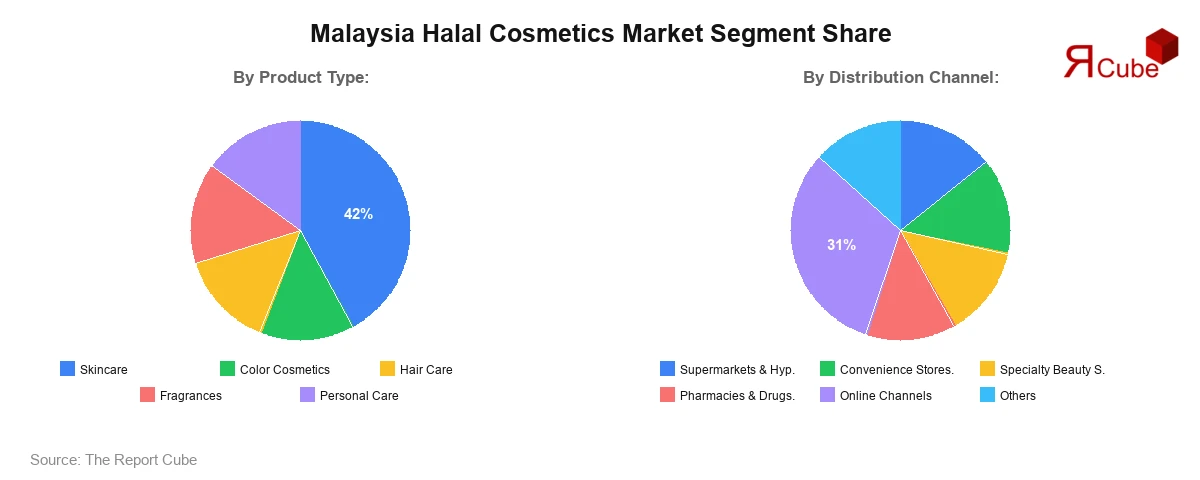
Skincare segment lead the market, with around 42% share.
By Category:
Mass Halal Cosmetics segment dominate the market, accounting for nearly 64% of total revenue.
Regional Outlook:
Central region dominates the Malaysia halal cosmetics market, with around 38% share.
Malaysia Halal Cosmetics Market Insights & Analysis
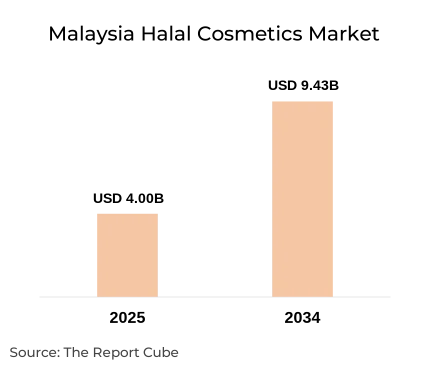
The Malaysia Halal Cosmetics Market is anticipated to register a 10.0% during 2026-2034. the market size was valued at USD 4.0 billion in 2025 and is projected to reach USD 9.43 billion by 2034. Malaysia continues to position itself as a global leader in halal beauty innovation, supported by strong regulatory frameworks, a high Muslim consumer base, and expanding international demand for halal-certified personal care products. The country’s cosmetics ecosystem combines manufacturing expertise, halal compliance infrastructure, and government-backed initiatives that promote ethical beauty production.
The growing awareness of halal-certified ingredients and ethical beauty standards is reshaping consumer preferences across Malaysia. Consumers increasingly prefer cosmetic formulations that comply with Islamic principles while also offering dermatological safety and sustainable sourcing. Market research indicates that nearly 72% of Malaysian Muslim consumers consider halal certification as a decisive factor when selecting skincare and beauty products. This shift has encouraged domestic companies to invest in halal R&D laboratories, ingredient traceability systems, and transparent manufacturing practices.
Government-backed halal development programs and export promotion initiatives are also accelerating industry expansion. Malaysia remains one of the largest exporters of halal beauty products in Southeast Asia, with growing trade links to Indonesia, the Middle East, and Europe. Industry data suggests that halal cosmetics exports from Malaysia increased by nearly 12% in 2025, driven by rising demand for halal-certified skincare and personal care products.
Technological innovation is further shaping the competitive landscape. Brands are integrating biotechnology-based ingredients, plant-derived actives, and halal-compliant preservatives to create high-performance cosmetic products. Digital retail channels and influencer-driven marketing campaigns are also playing a vital role in expanding product awareness among younger consumers. As halal beauty becomes associated with ethical, clean, and safe cosmetics, Malaysia’s halal cosmetics industry is expected to strengthen its regional leadership during the forecast period.
Malaysia Halal Cosmetics Market Impact Analysis
| Factor | Type | Specific Impact on Market | Magnitude | Business Implication |
|---|---|---|---|---|
| Rising Consumer Halal Awareness | Consumer | 75% actively seek halal-certified products | High | Obtain JAKIM certification to capture awareness-driven |
| JAKIM Regulatory Framework | Regulatory | MS 2200:2008 compliance mandatory for certification | High | Ensure ingredient sourcing meets strict halal standards |
| Natural & Organic Product Demand | Consumer | Organic personal care projected at RM 1.8 billion | High | Develop clean-label formulations with tropical botanicals |
| Non-Halal Brand Competition | Competitive | Non-halal brands control 55% overall market share | High | Differentiate through ethical values and halal positioning |
| E-commerce & Digital Expansion | Market | Online platforms accelerate reach and consumer education | Medium | Leverage digital marketing and QR traceability features |
| Growing Muslim Population | Market | Projected to reach 22 million consumers in Malaysia | High | Innovate product lines tailored to demographic expansion |
| Supply Chain Complexity | Market | Difficulty sourcing halal-certified raw materials | Medium | Build partnerships with certified ingredient suppliers |
| Export Opportunities (Middle East) | Market | Premium halal cosmetics demand in UAE and Saudi Arabia | High | Target halal-luxury segment with first-mover advantage |
| Social Media Influence | Consumer | Beauty trends drive skincare product dominance | Medium | Collaborate with influencers for brand visibility growth |
| Skin-First Makeup Trend (2026) | Technological | Shift toward color products with skincare benefits | Medium | Develop hybrid formulations merging makeup and skincare |
Malaysia Halal Cosmetics Market Dynamics
Key Driver: Growing Consumer Preference for Halal Certified Personal Care Products
The rising preference for halal-certified cosmetics among Muslim consumers remains one of the most powerful growth drivers of the Malaysia Halal Cosmetics Market. Malaysia has a Muslim population exceeding 60% of the total population, and consumers increasingly prioritize products that comply with halal standards. Halal certification ensures that cosmetic ingredients and production processes meet Islamic principles, which include restrictions on certain animal-derived ingredients and alcohol-based compounds.
Consumer surveys conducted in 2025 show that over 70% of Malaysian Muslim consumers actively check halal labels before purchasing cosmetics. This demand has expanded beyond traditional skincare and into categories such as color cosmetics, fragrances, and hair care products. Halal certification also appeals to non-Muslim consumers who associate halal products with safety, hygiene, and ethical production standards.
Retailers have responded by increasing shelf space dedicated to halal-certified beauty brands. Major retail chains across Malaysia reported double-digit growth in halal cosmetic product sales during 2024–2025. Furthermore, international halal certification recognition has enabled Malaysian brands to expand exports to the Middle East and Southeast Asian markets, further strengthening industry growth.
Book your FREE 30-minute expert consultation today
Contact UsIndustry Trends: Rise of Clean Beauty and Ethical Ingredient Transparency
One of the most visible trends shaping the Malaysia Halal Cosmetics Market is the increasing demand for clean beauty and ingredient transparency. Consumers are becoming more conscious of product ingredients and their potential impact on health and the environment. Halal cosmetics align naturally with the clean beauty movement because halal certification requires strict ingredient verification and contamination control.
Cosmetic companies are increasingly developing formulations based on botanical extracts, plant-derived oils, and cruelty-free ingredients. Ingredients such as argan oil, aloe vera, and green tea extracts have gained significant popularity within halal skincare products. Market data suggests that over 60% of newly launched halal skincare products in Malaysia during 2025 highlighted natural or organic ingredients.
Digital transparency tools are also emerging as a key trend. Some beauty brands now provide QR codes on packaging that allow consumers to trace ingredient origins and manufacturing details. This transparency helps strengthen consumer trust and brand credibility. Clean beauty positioning combined with halal certification has helped Malaysian cosmetic brands differentiate themselves in competitive regional markets.
Major Challenge: Supply Chain Complexity and Ingredient Certification
Maintaining halal integrity across complex cosmetic supply chains remains a key challenge for manufacturers. Cosmetic formulations often contain dozens of ingredients sourced from global suppliers, including emulsifiers, preservatives, fragrances, and pigments. Ensuring that each ingredient complies with halal requirements requires extensive documentation and supplier verification processes.
The halal certification process involves detailed audits of production facilities, ingredient sourcing, and storage practices. Manufacturers must demonstrate that products are free from non-halal substances and contamination risks. This process can increase operational costs and extend product development timelines.
Small and medium-sized cosmetic manufacturers sometimes face difficulties in securing halal-certified raw materials at competitive prices. In addition, international ingredient suppliers may not always provide halal certification documentation that aligns with Malaysian regulatory standards. These challenges can slow down product launches and create barriers for emerging brands entering the halal cosmetics sector.
Opportunity: Expanding Export Potential for Malaysian Halal Beauty Brands
The expanding global demand for halal-certified cosmetics presents a significant opportunity for Malaysian beauty manufacturers. The global Muslim population exceeds 1.9 billion people, creating a substantial consumer base for halal personal care products. Malaysia is widely recognized as a global hub for halal certification and regulatory expertise, giving local brands a strong credibility advantage in international markets.
Export demand is particularly strong in Southeast Asia, the Middle East, and parts of Europe where Muslim consumer populations continue to grow. Malaysian halal cosmetic exports to Indonesia and the United Arab Emirates recorded notable increases in 2025 as retailers sought certified halal beauty products.
Government export promotion programs and halal industry development initiatives are helping local companies expand their international footprint. Trade fairs, halal industry expos, and cross-border e-commerce platforms are allowing Malaysian beauty brands to reach global consumers more efficiently. As halal cosmetics gain recognition as safe, ethical, and sustainable products, export opportunities are expected to increase steadily over the coming years.
Malaysia Halal Cosmetics Market Segment-wise Analysis
By Product Type:
- Skincare
- Creams & Lotions
- Serums & Essences
- Cleansers & Toners
- Sun Care
- Others
- Color Cosmetics
- Face Makeup
- Eye Makeup
- Lip Products
- Nail Products
- Others
- Hair Care
- Shampoo
- Conditioner
- Hair Treatment & Serum
- Styling Products
- Others
- Fragrances
- Perfumes
- Body Mists
- Deodorants
- Others
- Personal Care
- Bath & Shower
- Oral Care
- Deodorants & Antiperspirants
- Others
The skincare segment holds the largest share in the Malaysia Halal Cosmetics Market, accounting for nearly 42% of total market revenue in 2025. Skincare products such as creams, serums, cleansers, and sun care formulations represent essential components of daily beauty routines for Malaysian consumers. Rising awareness about skin health, environmental damage, and anti-aging solutions has driven demand for halal-certified skincare products that offer both performance and religious compliance.
Halal skincare brands are focusing on formulations that combine natural botanical ingredients with dermatological innovation. Popular ingredients include hyaluronic acid, niacinamide, and plant-derived antioxidants that improve hydration and skin repair. Malaysian consumers increasingly prefer lightweight skincare products suitable for humid tropical climates, encouraging brands to develop fast-absorbing gels and water-based moisturizers.
Local brands have also strengthened their product portfolios through halal-certified anti-aging serums, brightening creams, and acne treatment solutions. Retail sales data indicates that halal-certified facial serums experienced nearly 15% growth in Malaysia during 2025. The segment’s strong growth outlook is supported by continuous product innovation and increasing consumer awareness regarding skincare routines.
By Distribution Channel:
- Supermarkets & Hypermarkets
- Convenience Stores
- Specialty Beauty Stores
- Pharmacies & Drugstores
- Online Channels
- Others
Online channels represent the fastest-growing distribution channel in the Malaysia Halal Cosmetics Market, capturing nearly 31% of total sales in 2025. The rapid expansion of e-commerce platforms and social commerce networks has significantly transformed how consumers discover and purchase beauty products. Malaysian consumers increasingly rely on online platforms to compare product reviews, ingredient details, and halal certifications before making purchasing decisions.
Beauty influencers and social media marketing have played a significant role in accelerating online cosmetic sales. Platforms such as Instagram, TikTok, and e-commerce marketplaces allow brands to showcase tutorials, product demonstrations, and user testimonials that drive consumer engagement.
Online distribution also enables smaller halal beauty brands to reach nationwide audiences without investing heavily in physical retail infrastructure. Subscription-based skincare services, online beauty consultations, and personalized product recommendations are becoming popular among younger consumers. The convenience of doorstep delivery combined with frequent promotional campaigns continues to strengthen online sales across the halal cosmetics sector.
Regional Projection of Malaysia Halal Cosmetics Industry
- Northern
- Central
- Southern
- East
- Others
The Central region dominates the Malaysia Halal Cosmetics Market, holding approximately 38% of total market share in 2025. This region includes major metropolitan areas such as Kuala Lumpur and Selangor, which serve as Malaysia’s commercial and retail hubs. High population density, higher disposable income levels, and strong retail infrastructure have contributed to strong cosmetics demand across the Central region.
The presence of major shopping malls, beauty retailers, and specialty cosmetic stores has made halal beauty products widely accessible to urban consumers. Retail chains and pharmacy networks have expanded their halal beauty product offerings in response to growing demand from Muslim consumers seeking certified products.
In addition to strong retail presence, the Central region hosts many cosmetic manufacturers, research laboratories, and distribution centers that support the halal beauty industry. Government-backed halal certification bodies and testing laboratories located in this region further strengthen Malaysia’s regulatory ecosystem. As urban consumers continue to prioritize ethical and halal-certified beauty products, the Central region is expected to maintain its market leadership during the forecast period.
Need insights for a specific region within this market?
Request Regional DataMalaysia Halal Cosmetics Industry Regional Analysis
The Malaysia halal cosmetics industry varies significantly across regions due to diverse economic activity, Muslim population density, and retail infrastructure.
| Region | Demand Level | Key Areas | System Dominance | Core Demand Logic | Growth Nature |
|---|---|---|---|---|---|
| Central (Selangor, KL, Putrajaya) | Extremely High | Kuala Lumpur, Selangor | Premium & mass skincare | Urban high-income & retail infrastructure | Market leadership segment |
| Northern (Penang, Kedah, Perlis, Perak) | High | Penang, Kedah | Natural halal products | Tourism & local manufacturing hubs | Production-driven growth |
| Southern (Johor, Melaka, N.Sembilan) | Very High | Johor Bahru, Melaka | Bath, body & fragrance | Cross-border trade & halal manufacturing | Export-focused expansion |
| East (Sabah, Sarawak, Labuan) | Medium | Kota Kinabalu, Kuching | Essential halal cosmetics | Emerging consumer awareness & distribution | Penetration-stage growth |
| Others (Pahang, Terengganu, Kelantan) | Medium to High | Kuantan, Kota Bharu | Traditional & affordable | High Muslim population & religious adherence | Faith-driven consumption |
Government Initiatives & Policies
- Malaysia Halal Industry Master Plan 2030 (HIMP 2030): The Malaysian government introduced HIMP 2030 to strengthen halal product development including halal cosmetics manufacturing, export growth, and innovation ecosystems across Malaysia.
- Halal Development Corporation SME Halal Certification Program: This initiative supports local beauty manufacturers with halal certification, compliance training, and export readiness programs to strengthen Malaysia’s halal cosmetics industry.
Malaysia Halal Cosmetics Market Recent Developments
- 2025: Wipro Unza appointed TBWA Malaysia as its lead creative agency for a two-year strategic partnership covering fragrance and kids categories. The collaboration focuses on strengthening brand positioning for products such as Carrie Junior, Enchanteur, Romano, and Dashing while expanding marketing reach within Malaysia’s halal-aligned beauty and personal care sector.
- 2025: Cosmoderm launched BioPeel+ Clear Pads GlowRevive containing 8% AHA, PHA, and TXA as part of its exfoliating skincare innovation portfolio. The company promoted the launch through nationwide Watsons retail activations, strengthening product visibility and reinforcing Cosmoderm’s commitment to halal-compliant skincare innovation in Malaysia.
- 2025: Eng Kah Enterprise released its quarterly financial report for the period ending December 2025, highlighting strong manufacturing performance and increasing demand for OEM and ODM services from halal beauty brands across Southeast Asia. The report emphasizes the company’s expanding role as a formulation and manufacturing partner within the regional halal cosmetics supply chain.
Why Choose This Report?
- Provides a comprehensive overview of the overall market analysis, encompassing key trends, consumer behavior analysis, and risk assessment to support strategic decision-making.
- Provides accurate, up-to-date insights into market size, segmentation, and emerging opportunities, helping to minimize risk & capitalizing on growth.
- Gives deep understanding of target audience preferences, investment habits, and communication channels for enhanced product development & marketing effectiveness.
- Delivers competitive analysis & benchmarking, uncovering the strengths & weaknesses of market competitors to guide strategies.
- Consolidate comprehensive market intelligence, reducing reasoning & streamlining research efforts.
- Facilitates customized market segmentation & risk mitigation strategies, fine-tuned to the business objectives.
- Aids in identifying both market challenges & untapped opportunities within the industry to drive long-term business growth.
- Provides valuable information based on actual customer data & search trends.
Table of Contents
- Introduction
- Objective of the Study
- Product and Category Definition
- Market Segmentation
- Study Variables
- Research Methodology
- Secondary Data Points
- Breakdown of Secondary Sources
- Primary Data Points
- Breakdown of Primary Interviews
- Secondary Data Points
- Executive Summary
- Market Dynamics
- Drivers
- Challenges
- Opportunity Assessment
- Recent Trends and Developments
- Regulatory and Policy Landscape
- Malaysia Halal Cosmetics Market Overview (2021–2034)
- Market Size, By Value (USD Billion)
- Market Share, By Product Type
- Skincare
- Creams & Lotions
- Serums & Essences
- Cleansers & Toners
- Sun Care
- Others
- Color Cosmetics
- Face Makeup
- Eye Makeup
- Lip Products
- Nail Products
- Others
- Hair Care
- Shampoo
- Conditioner
- Hair Treatment & Serum
- Styling Products
- Others
- Fragrances
- Perfumes
- Body Mists
- Deodorants
- Others
- Personal Care
- Bath & Shower
- Oral Care
- Deodorants & Antiperspirants
- Others
- Skincare
- Market Share, By Category
- Mass Halal Cosmetics
- Premium Halal Cosmetics
- Market Share, By Gender
- Female
- Male
- Unisex
- Market Share, By Distribution Channel
- Supermarkets & Hypermarkets
- Convenience Stores
- Specialty Beauty Stores
- Pharmacies & Drugstores
- Online Channels
- Others
- Market Share, By Region
- Northern
- Central
- Southern
- East
- Others
- Market Share, By Company
- Revenue Shares & Analysis
- Competitive Landscape
- Northern Malaysia Halal Cosmetics Market
- Market Size, By Value (USD Billion/Million)
- Market Share, By Product Type
- Market Share, By Category
- Market Share, By Gender
- Market Share, By Distribution Channel
- Central Malaysia Halal Cosmetics Market
- Market Size, By Value (USD Billion/Million)
- Market Share, By Product Type
- Market Share, By Category
- Market Share, By Gender
- Market Share, By Distribution Channel
- Southern Malaysia Halal Cosmetics Market
- Market Size, By Value (USD Billion/Million)
- Market Share, By Product Type
- Market Share, By Category
- Market Share, By Gender
- Market Share, By Distribution Channel
- East Malaysia Halal Cosmetics Market
- Market Size, By Value (USD Billion/Million)
- Market Share, By Product Type
- Market Share, By Category
- Market Share, By Gender
- Market Share, By Distribution Channel
- Competitive Outlook and Company Profiles
- SimplySiti
- Company Overview
- Product Portfolio
- Strategic Alliances/Partnerships
- Recent Developments
- Wipro Unza
- Company Overview
- Product Portfolio
- Strategic Alliances/Partnerships
- Recent Developments
- Ivy Beauty Corporation
- Company Overview
- Product Portfolio
- Strategic Alliances/Partnerships
- Recent Developments
- Clara International
- Company Overview
- Product Portfolio
- Strategic Alliances/Partnerships
- Recent Developments
- Nurraysa Global
- Company Overview
- Product Portfolio
- Strategic Alliances/Partnerships
- Recent Developments
- Southern Lion
- Company Overview
- Product Portfolio
- Strategic Alliances/Partnerships
- Recent Developments
- Obsess Cosmetics
- Company Overview
- Product Portfolio
- Strategic Alliances/Partnerships
- Recent Developments
- SO.LEK Cosmetics
- Company Overview
- Product Portfolio
- Strategic Alliances/Partnerships
- Recent Developments
- Orkid Cosmetics
- Company Overview
- Product Portfolio
- Strategic Alliances/Partnerships
- Recent Developments
- Eng Kah Enterprise
- Company Overview
- Product Portfolio
- Strategic Alliances/Partnerships
- Recent Developments
- Sky Resources
- Company Overview
- Product Portfolio
- Strategic Alliances/Partnerships
- Recent Developments
- Zelcos Laboratory
- Company Overview
- Product Portfolio
- Strategic Alliances/Partnerships
- Recent Developments
- Breena Beauty
- Company Overview
- Product Portfolio
- Strategic Alliances/Partnerships
- Recent Developments
- Cosmoderm
- Company Overview
- Product Portfolio
- Strategic Alliances/Partnerships
- Recent Developments
- Alliance Cosmetics
- Company Overview
- Product Portfolio
- Strategic Alliances/Partnerships
- Recent Developments
- Intercosmetic Asia
- Company Overview
- Product Portfolio
- Strategic Alliances/Partnerships
- Recent Developments
- CL Cosmetic
- Company Overview
- Product Portfolio
- Strategic Alliances/Partnerships
- Recent Developments
- Others
- SimplySiti
- Contact Us and Disclaimer
Top Key Players & Market Share Outlook
- SimplySiti
- Wipro Unza
- Ivy Beauty Corporation
- Clara International
- Nurraysa Global
- Southern Lion
- Obsess Cosmetics
- SO.LEK Cosmetics
- Orkid Cosmetics
- Eng Kah Enterprise
- Sky Resources
- Zelcos Laboratory
- Breena Beauty
- Cosmoderm
- Alliance Cosmetics
- Intercosmetic Asia
- CL Cosmetic
Frequently Asked Questions






