



Build Your Custom Market Intelligence Report
Customize Your ReportMalaysia Online Grocery Delivery Market Key Highlights
By Service Type:
On-Demand Delivery segment leads the market, with around 42% market share.
By Platform Type:
Third-Party Marketplaces segment dominates the market, accounting for nearly 46% of total revenue.
Regional Outlook:
Central region dominates the Malaysia online grocery delivery market, with around 48% market share.
Malaysia Online Grocery Delivery Market Insights & Analysis
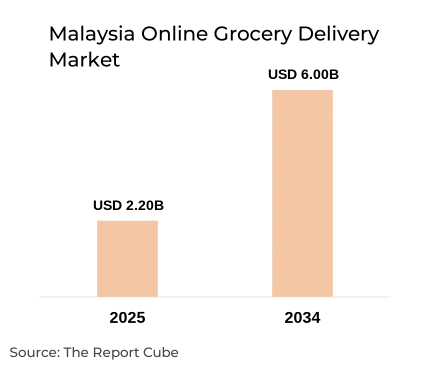
The Malaysia Online Grocery Delivery Market is anticipated to register a CAGR of 11.8% during 2026-2034. the market size was valued at USD 2.20 billion in 2025 and is projected to reach USD 6.00 billion by 2034. Online grocery delivery has become an integral component of Malaysia’s rapidly evolving digital retail landscape. The growing penetration of smartphones, high internet connectivity, and increasing consumer preference for convenience-based shopping have collectively accelerated the adoption of online grocery platforms across the country. Major cities such as Kuala Lumpur, Petaling Jaya, and Penang are witnessing strong demand for same-day and on-demand grocery delivery services as urban consumers prioritize time efficiency and seamless digital experiences.
Investment momentum in Malaysia’s e-commerce infrastructure is further shaping the expansion of the online grocery ecosystem. Digital platforms are increasingly integrating logistics optimization, AI-based demand forecasting, and warehouse automation to ensure faster order fulfillment. Retailers and delivery platforms are also forming strategic partnerships with supermarkets and specialty food retailers to strengthen supply chains and expand product assortments. Platforms such as GrabMart and Pandamart have rapidly increased dark store networks across urban areas to meet the rising demand for ultra-fast grocery delivery. As consumer expectations shift toward quicker deliveries and broader product availability, retailers are investing heavily in micro-fulfillment centers and last-mile logistics technologies.
The market is also benefiting from Malaysia’s rising digital payments adoption and supportive government policies aimed at expanding the country’s digital economy. Mobile wallets, contactless payments, and integrated loyalty programs have simplified the online checkout process, encouraging repeat purchases and higher order frequencies. At the same time, online grocery platforms are focusing on personalization strategies, subscription models, and bundled offers to increase customer retention. With growing middle-class income levels and busy urban lifestyles, the online grocery delivery model is steadily transitioning from a convenience service to a routine shopping channel for Malaysian households.
Malaysia Online Grocery Delivery Market Dynamics
Key Driver: Rising Urbanization and Convenience-Driven Consumer Behavior
The rapid pace of urbanization across Malaysia is one of the primary forces fueling demand for online grocery delivery services. With more than 78% of Malaysia’s population living in urban areas, consumers increasingly seek shopping solutions that save time and reduce travel to physical supermarkets. Busy work schedules, traffic congestion in metropolitan areas, and growing digital familiarity have encouraged consumers to rely on mobile apps and online platforms for daily grocery purchases. Many households now prefer ordering groceries through apps that allow them to compare prices, explore promotions, and schedule deliveries within hours.
Online grocery platforms have responded to these shifting habits by offering flexible delivery windows, curated product recommendations, and loyalty rewards programs that make the experience both convenient and cost-effective. On-demand grocery services have particularly gained traction among young professionals and dual-income households who value speed and reliability. Additionally, retailers are introducing express delivery services that promise groceries within 30 to 90 minutes, strengthening consumer trust in digital grocery platforms. As urban lifestyles continue evolving and consumers prioritize convenience, online grocery delivery is expected to remain one of the fastest-growing segments within Malaysia’s digital retail ecosystem.
Book your FREE 30-minute expert consultation today
Contact UsIndustry Trends: Expansion of Quick Commerce and Dark Store Networks
A notable trend shaping the Malaysia online grocery delivery market is the rise of quick commerce models supported by strategically located micro-fulfillment centers and dark stores. These facilities are designed to process online orders rapidly without the constraints of traditional retail storefront operations. By placing inventory closer to densely populated neighborhoods, delivery platforms can significantly reduce delivery times while improving order accuracy and inventory control.
Several online grocery providers are expanding their dark store infrastructure in major cities including Kuala Lumpur, Johor Bahru, and Penang. These fulfillment hubs enable platforms to offer ultra-fast deliveries under two hours while maintaining a wide selection of fresh produce, packaged foods, and household essentials. At the same time, technology integration such as route optimization algorithms and AI-driven demand forecasting is improving delivery efficiency. Consumers increasingly expect faster fulfillment times, and companies are responding by redesigning logistics networks to ensure reliable same-day delivery capabilities. This shift toward quick commerce models is redefining consumer expectations and pushing the industry toward higher service efficiency.
Major Challenge: Operational Complexity and Last-Mile Delivery Costs
While the online grocery delivery market in Malaysia is expanding rapidly, operational challenges remain a significant hurdle for many service providers. Grocery delivery requires careful coordination of inventory management, temperature-controlled logistics, and efficient last-mile delivery networks. Fresh products such as fruits, vegetables, dairy, and seafood require special handling and timely transportation to maintain quality, making logistics management more complex than standard e-commerce deliveries.
Last-mile delivery costs also represent a major operational concern. Delivering groceries quickly often requires dedicated fleets of drivers, optimized delivery routes, and high levels of order accuracy. In areas with heavy traffic congestion or dispersed suburban populations, delivery efficiency may decline and operational costs can increase. Many companies are investing in route optimization software, predictive demand analytics, and shared delivery networks to improve efficiency. Balancing fast delivery speeds with sustainable operational costs will remain an important challenge for companies seeking long-term profitability in Malaysia’s competitive online grocery delivery landscape.
Opportunity: Growth of Digital Payment Ecosystems and Subscription Models
Malaysia’s expanding digital payment ecosystem is opening new opportunities for online grocery delivery platforms to improve customer engagement and drive higher order values. The widespread adoption of mobile wallets, contactless payments, and digital banking services has simplified online transactions and reduced friction during the checkout process. Consumers increasingly appreciate the ability to complete purchases quickly through integrated payment solutions embedded within grocery delivery apps.
Subscription-based grocery models are also emerging as an attractive opportunity for retailers and delivery platforms. Subscription programs allow customers to schedule recurring deliveries of frequently purchased items such as pantry staples, beverages, and household essentials. These programs create predictable demand for retailers while offering customers convenience and cost savings through bundled pricing and exclusive promotions. As digital payments become more common and consumers seek more personalized shopping experiences, subscription-driven grocery delivery services are expected to expand significantly across Malaysia.
Malaysia Online Grocery Delivery Market Segment-wise Analysis
By Service Type:
- On-Demand Delivery
- Scheduled Delivery
- Click-and-Collect
- Subscription Boxes
- Bulk and Wholesale Delivery
On-Demand Delivery holds the leading position in the Malaysia online grocery delivery market, accounting for approximately 42% of the market share in 2025. The popularity of this segment is closely linked to the rapid expansion of quick commerce platforms and consumer demand for immediate delivery services. Urban consumers increasingly expect groceries to arrive within a short timeframe, often within two hours of placing an order. This convenience has made on-demand delivery the preferred option for households that require fresh produce, snacks, or daily essentials without visiting physical supermarkets.
Platforms such as GrabMart and Pandamart have invested heavily in micro-fulfillment centers and dark store infrastructure to support this rapid delivery model. These facilities allow companies to stock frequently purchased items closer to residential areas, enabling faster order processing and dispatch. Additionally, the integration of real-time inventory tracking and predictive analytics helps platforms maintain product availability while minimizing stockouts. As consumer expectations continue shifting toward instant fulfillment, on-demand delivery is expected to remain the most influential service category within the market.
By Platform Type:
- Third-Party Marketplaces
- Retailer-Owned Apps
- Web Portals
- Social Commerce Channels
Third-Party Marketplaces represent the dominant platform category in Malaysia’s online grocery delivery market, capturing nearly 46% of total revenue share. These platforms bring together multiple retailers, supermarkets, and specialty grocery brands within a single application, offering consumers an extensive product selection and convenient delivery options. Their success largely stems from strong logistics networks, integrated digital payment systems, and established user bases across Southeast Asia.
Consumers benefit from the ability to compare prices across multiple grocery retailers within one platform, making purchasing decisions easier and more transparent. Additionally, third-party marketplaces frequently offer promotional discounts, loyalty points, and bundled deals that encourage higher order volumes. For grocery retailers, partnering with these platforms reduces the need to invest heavily in their own logistics infrastructure while expanding access to a wider customer base. As more consumers shift toward multi-vendor platforms for everyday purchases, third-party marketplaces are likely to maintain their leadership in the Malaysian online grocery delivery sector.
Regional Projection of Malaysia Online Grocery Delivery Industry
- Northern
- Central
- Southern
- East
- Others
The Central region leads the Malaysia online grocery delivery market with an estimated 48% market share, primarily driven by the concentration of major urban centers such as Kuala Lumpur, Selangor, and Putrajaya. These cities host a large population of digitally connected consumers who regularly use mobile applications for daily shopping and food delivery services. High population density combined with strong logistics infrastructure makes the region ideal for rapid grocery delivery operations.
Central Malaysia also hosts the headquarters and major distribution hubs of several leading grocery retailers and delivery platforms, enabling faster order processing and efficient supply chain coordination. The presence of advanced transportation networks and modern warehousing facilities further strengthens delivery efficiency in the region. In addition, consumers in urban areas tend to adopt digital services earlier than those in rural regions, contributing to higher online grocery adoption rates. As the digital economy expands and urban populations grow, the Central region is expected to remain the dominant hub for online grocery delivery services in Malaysia.
Government Initiatives & Policies
- Malaysia Digital Economy Blueprint (MyDIGITAL): Malaysian government program supporting digital commerce, logistics innovation, and SME digitalisation, accelerating online grocery adoption across the country.
- National E-Commerce Strategic Roadmap 2.0 (NESR 2.0): Government initiative strengthening e-commerce infrastructure, digital payments, and logistics networks to expand online retail ecosystems including grocery delivery services.
Malaysia Online Grocery Delivery Market Recent Developments
- 2025: GrabMart expanded its presence in Malaysia after Grab Holdings announced the acquisition of supermarket chain Everrise. The move strengthens GrabMart’s grocery supply network and accelerates the development of its on-demand grocery delivery ecosystem across Malaysian cities.
- 2025: Jaya Grocer significantly increased its digital presence through full integration with the GrabMart ecosystem. Following the digitisation of its stores, the company reported a tenfold increase in online grocery sales and a 20-percentage-point improvement in order fulfillment rates.
- 2025: Mydin Express expanded its e-commerce capabilities through collaboration with logistics partner Delyva, enabling both standard delivery and rapid on-demand grocery services while extending its online retail reach across multiple Malaysian regions.
Need insights for a specific region within this market?
Request Regional DataWhy Choose This Report?
- Provides a comprehensive overview of the overall market analysis, encompassing key trends, consumer behavior analysis, and risk assessment to support strategic decision-making.
- Provides accurate, up-to-date insights into market size, segmentation, and emerging opportunities, helping to minimize risk & capitalizing on growth.
- Gives deep understanding of target audience preferences, investment habits, and communication channels for enhanced product development & marketing effectiveness.
- Delivers competitive analysis & benchmarking, uncovering the strengths & weaknesses of market competitors to guide strategies.
- Consolidate comprehensive market intelligence, reducing reasoning & streamlining research efforts.
- Facilitates customized market segmentation & risk mitigation strategies, fine-tuned to the business objectives.
- Aids in identifying both market challenges & untapped opportunities within the industry to drive long-term business growth.
- Provides valuable information based on actual customer data & search trends.
Table of Contents
- Introduction
- Objective of the Study
- Product and Category Definition
- Market Segmentation
- Study Variables
- Research Methodology
- Secondary Data Points
- Breakdown of Secondary Sources
- Primary Data Points
- Breakdown of Primary Interviews
- Secondary Data Points
- Executive Summary
- Market Dynamics
- Drivers
- Challenges
- Opportunity Assessment
- Recent Trends and Developments
- Regulatory and Policy Landscape
- Malaysia Online Grocery Delivery Market Overview (2021-2034)
- Market Size, By Value (USD Billion)
- Market Share, By Service Type
- On‑Demand Delivery
- Scheduled Delivery
- Click‑and‑Collect
- Subscription Boxes
- Bulk and Wholesale Delivery
- Market Share, By Platform Type
- Third‑Party Marketplaces
- Retailer‑Owned Apps
- Web Portals
- Social Commerce Channels
- Market Share, By Product Type
- Fresh Produce
- Meat and Seafood
- Dairy and Eggs
- Bakery and Snacks
- Pantry Staples
- Beverages
- Frozen Foods
- Health and Organic Products
- Household and Personal Care
- Baby and Pet Care
- Market Share, By Order Value
- Low‑Ticket Orders
- Mid‑Ticket Orders
- High‑Ticket Orders
- Market Share, By Delivery Time Window
- Under Two Hours
- Same‑Day Delivery
- Next‑Day Delivery
- Two‑Day Delivery and Above
- Market Share, By Payment Mode
- Digital Wallets
- Debit and Credit Cards
- Cash on Delivery
- Bank Transfers and Others
- Market Share, By Customer Type
- Household Customers
- Small Businesses and Offices
- Foodservice and Hospitality
- Others
- Market Share, By Region
- Northern
- Central
- Southern
- East
- Others
- Market Share, By Company
- Revenue Shares and Analysis
- Competitive Landscape
- Northern Malaysia Online Grocery Delivery Market
- Market Size, By Value (USD Billion/Million)
- Market Share, By Service Type
- Market Share, By Platform Type
- Market Share, By Product Type
- Market Share, By Customer Type
- Central Malaysia Online Grocery Delivery Market
- Market Size, By Value (USD Billion/Million)
- Market Share, By Service Type
- Market Share, By Platform Type
- Market Share, By Product Type
- Market Share, By Customer Type
- Southern Malaysia Online Grocery Delivery Market
- Market Size, By Value (USD Billion/Million)
- Market Share, By Service Type
- Market Share, By Platform Type
- Market Share, By Product Type
- Market Share, By Customer Type
- East Malaysia Online Grocery Delivery Market
- Market Size, By Value (USD Billion/Million)
- Market Share, By Service Type
- Market Share, By Platform Type
- Market Share, By Product Type
- Market Share, By Customer Type
- Competitive Outlook and Company Profiles
- Lotus's Malaysia
- Company Overview
- Product Portfolio
- Strategic Alliances/Partnerships
- Recent Developments
- GrabMart
- Company Overview
- Product Portfolio
- Strategic Alliances/Partnerships
- Recent Developments
- Pandamart
- Company Overview
- Product Portfolio
- Strategic Alliances/Partnerships
- Recent Developments
- Jaya Grocer
- Company Overview
- Product Portfolio
- Strategic Alliances/Partnerships
- Recent Developments
- Shopee Supermarket
- Company Overview
- Product Portfolio
- Strategic Alliances/Partnerships
- Recent Developments
- Lazada RedMart
- Company Overview
- Product Portfolio
- Strategic Alliances/Partnerships
- Recent Developments
- Village Grocer (Bites)
- Company Overview
- Product Portfolio
- Strategic Alliances/Partnerships
- Recent Developments
- Mydin Express
- Company Overview
- Product Portfolio
- Strategic Alliances/Partnerships
- Recent Developments
- AEON Online
- Company Overview
- Product Portfolio
- Strategic Alliances/Partnerships
- Recent Developments
- B.I.G. (Ben's Independent)
- Company Overview
- Product Portfolio
- Strategic Alliances/Partnerships
- Recent Developments
- HappyFresh
- Company Overview
- Product Portfolio
- Strategic Alliances/Partnerships
- Recent Developments
- BigBox Asia
- Company Overview
- Product Portfolio
- Strategic Alliances/Partnerships
- Recent Developments
- Potboy Groceries
- Company Overview
- Product Portfolio
- Strategic Alliances/Partnerships
- Recent Developments
- Signature Market
- Company Overview
- Product Portfolio
- Strategic Alliances/Partnerships
- Recent Developments
- Everleaf
- Company Overview
- Product Portfolio
- Strategic Alliances/Partnerships
- Recent Developments
- Organic4U
- Company Overview
- Product Portfolio
- Strategic Alliances/Partnerships
- Recent Developments
- Lalamove (Buy for You)
- Company Overview
- Product Portfolio
- Strategic Alliances/Partnerships
- Recent Developments
- Others
- Lotus's Malaysia
- Contact Us and Disclaimer
Top Key Players & Market Share Outlook
- Lotus's Malaysia
- GrabMart
- Pandamart
- Jaya Grocer
- Shopee Supermarket
- Lazada RedMart
- Village Grocer (Bites)
- Mydin Express
- AEON Online
- B.I.G. (Ben's Independent)
- HappyFresh
- BigBox Asia
- Potboy Groceries
- Signature Market
- Everleaf
- Organic4U
- Lalamove (Buy for You)
Frequently Asked Questions