



Build Your Custom Market Intelligence Report
Customize Your ReportJapan Plasma Derived Therapeutics Market Key Highlights
By Product Type:
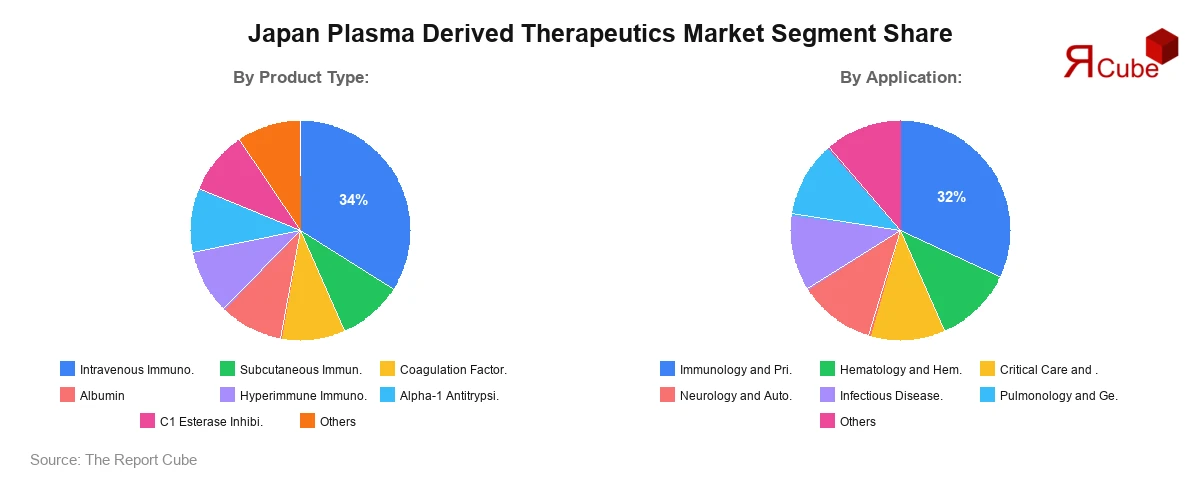
Intravenous Immunoglobulin (IVIG) segment leads the market with nearly 34% share.
By Application:
Immunology and Primary Immunodeficiency segment dominates the market with around 32% of revenue.
Regional Outlook:
Honshu region dominates the Japan Plasma Derived Therapeutics market with approximately 68% share.
Japan Plasma Derived Therapeutics Market Insights & Analysis
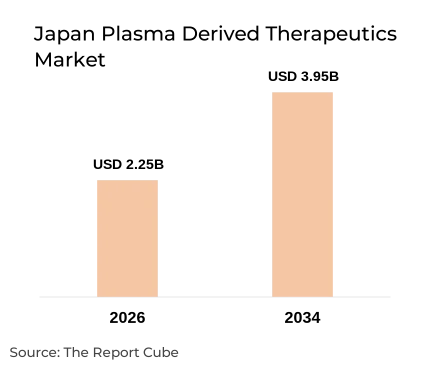
The Japan Plasma Derived Therapeutics Market is anticipated to register a CAGR of around 7.3% during the forecast period 2026-2034. The market size is valued at USD 2.25 billion in 2026 and is projected to reach USD 3.95 billion by 2034. Growth is strongly supported by Japan’s aging population, rising prevalence of chronic immune disorders, and increasing demand for biologics in critical care. Government-backed initiatives aimed at strengthening domestic plasma supply chains have created a more resilient ecosystem, reducing reliance on imports while improving treatment accessibility.
Investment activity in plasma fractionation and biologics manufacturing has expanded significantly. Leading companies such as Takeda Pharmaceutical and CSL Behring have enhanced their production capabilities, focusing on high-value therapies like immunoglobulins and coagulation factors. In addition, advancements in plasma collection technologies and cold chain logistics have improved efficiency across the value chain. Japan’s emphasis on safety, traceability, and quality control has elevated the standard of plasma-derived therapeutics, positioning the country as a technologically advanced and reliable market within the Asia-Pacific region.
Japan Plasma Derived Therapeutics Market Dynamics
Key Driver: Rising Demand for Immunoglobulin Therapies in Aging Population
Japan’s rapidly aging population is a central factor driving demand for plasma-derived therapeutics. By 2025, over 29% of the population was aged 65 or older, significantly increasing the incidence of immune deficiencies and neurological disorders. Immunoglobulin therapies such as IVIG and SCIG are widely used to treat these conditions, leading to steady growth in demand.
In addition, improved diagnosis rates for rare diseases have expanded the treatment pool. Healthcare providers are increasingly prescribing plasma-based biologics for long-term management of chronic conditions. This trend is further supported by Japan’s universal healthcare system, which ensures broader access to high-cost biologics, strengthening overall market growth.
Book your FREE 30-minute expert consultation today
Contact UsIndustry Trends: Expansion of Domestic Plasma Fractionation and Self-Sufficiency Initiatives
Japan is actively working toward achieving self-sufficiency in plasma-derived products. The consolidation of plasma fractionation under national organizations has streamlined production and improved supply chain coordination. This approach ensures consistent quality and reduces dependence on imported plasma.
Another notable trend is the integration of advanced biotechnology in plasma processing. Companies are investing in next-generation fractionation techniques that improve yield and reduce waste. Digital tracking systems for plasma donations have also enhanced transparency, allowing for better inventory management and regulatory compliance across the country.
Major Challenge: Limited Plasma Donation Rates and Supply Constraints
One of the major challenges in the Japan plasma derived therapeutics market is the limited availability of plasma due to lower donation rates compared to Western countries. Cultural factors and strict donor eligibility criteria contribute to this constraint, creating supply-demand imbalances.
Additionally, the cost of plasma collection and processing remains high. Maintaining strict safety standards and cold chain logistics increases operational expenses. These factors collectively impact pricing and limit the scalability of plasma-derived therapies, especially in high-demand therapeutic areas.
Opportunity: Growth in Rare Disease Treatment and Advanced Biologics
The increasing focus on rare diseases presents a significant opportunity for market expansion. Plasma-derived therapies are essential in treating conditions such as hemophilia, alpha-1 antitrypsin deficiency, and hereditary angioedema. As awareness and screening improve, the patient base continues to expand.
Furthermore, ongoing research in biologics and personalized medicine is opening new avenues for innovation. Companies are exploring targeted therapies that enhance treatment efficacy while reducing side effects. This shift toward precision medicine is expected to drive long-term growth and attract investment in Japan’s plasma therapeutics sector.
Japan Plasma Derived Therapeutics Market Segment-wise Analysis
By Product Type:
- Intravenous Immunoglobulin (IVIG)
- Subcutaneous Immunoglobulin (SCIG)
- Coagulation Factors
- Albumin
- Hyperimmune Immunoglobulins
- Alpha-1 Antitrypsin
- C1 Esterase Inhibitor
- Others
The Intravenous Immunoglobulin (IVIG) segment dominates the Japan plasma derived therapeutics market with an estimated 34% share. IVIG remains the cornerstone treatment for immune deficiencies and neurological disorders due to its rapid therapeutic action and broad clinical applications. Hospitals across Japan rely heavily on IVIG for managing autoimmune diseases and critical care cases. The segment has also benefited from continuous improvements in purification processes, ensuring higher safety and efficacy standards.
By Application:
- Immunology and Primary Immunodeficiency
- Hematology and Hemophilia
- Critical Care and Trauma
- Neurology and Autoimmune Disorders
- Infectious Disease Prophylaxis
- Pulmonology and Genetic Disorders
- Others
Immunology and Primary Immunodeficiency leads the application segment with around 32% market share. The growing incidence of immune disorders and improved diagnostic capabilities have significantly increased treatment adoption. Healthcare providers prioritize early intervention using immunoglobulin therapies, which has enhanced patient outcomes and reduced hospitalization rates. Continuous advancements in diagnostic tools further support the growth of this segment.
Regional Projection of Japan Plasma Derived Therapeutics Industry
- Hokkaido
- Honshu
- Shikoku
- Kyushu
Honshu dominates the Japan plasma derived therapeutics market with approximately 68% share, driven by its dense population and concentration of advanced healthcare facilities. Major cities such as Tokyo and Osaka host leading hospitals, research centers, and pharmaceutical companies, creating a strong demand for plasma-derived therapies.
The region also benefits from well-established logistics infrastructure, ensuring efficient distribution of temperature-sensitive biologics. Continuous investment in healthcare infrastructure and innovation further strengthens Honshu’s leading position in the market.
Government Initiatives & Policies
- Japan Blood Services Strengthening Program (2025): Focuses on improving domestic plasma collection and ensuring self-sufficiency in plasma-derived therapies through advanced fractionation systems and nationwide donor mobilization initiatives.
- Pharmaceutical and Medical Device Act (PMDA) Reforms 2025: Updated regulatory framework accelerates approval timelines for biologics and plasma-derived therapeutics, improving patient access and encouraging innovation in rare disease treatments.
Japan Plasma Derived Therapeutics Industry Recent Developments
- 2025: Japan Blood Products Organization strengthened domestic plasma fractionation operations to improve national self-sufficiency and ensure consistent supply of high-quality plasma-derived therapies across Japan.
- 2025: Grifols expanded its plasma-derived portfolio with fibrinogen launch, enhancing product mix and supporting global demand, including growing therapeutic needs in Japan.
- 2025: Octapharma AG expanded plasma collection networks, improving supply capabilities and supporting increased availability of immunoglobulins and specialty therapies in Japan.
Need insights for a specific region within this market?
Request Regional DataWhy Choose This Report?
- Provides a comprehensive overview of the overall market analysis, encompassing key trends, consumer behavior analysis, and risk assessment to support strategic decision-making.
- Provides accurate, up-to-date insights into market size, segmentation, and emerging opportunities, helping to minimize risk & capitalizing on growth.
- Gives deep understanding of target audience preferences, investment habits, and communication channels for enhanced product development & marketing effectiveness.
- Delivers competitive analysis & benchmarking, uncovering the strengths & weaknesses of market competitors to guide strategies.
- Consolidate comprehensive market intelligence, reducing reasoning & streamlining research efforts.
- Facilitates customized market segmentation & risk mitigation strategies, fine-tuned to the business objectives.
- Aids in identifying both market challenges & untapped opportunities within the industry to drive long-term business growth.
- Provides valuable information based on actual customer data & search trends.
Table of Contents
- Introduction
- Objective of the Study
- Product and Category Definition
- Market Segmentation
- Study Variables
- Research Methodology
- Secondary Data Points
- Breakdown of Secondary Sources
- Primary Data Points
- Breakdown of Primary Interviews
- Secondary Data Points
- Executive Summary
- Market Dynamics
- Drivers
- Challenges
- Opportunity Assessment
- Recent Trends and Developments
- Regulatory and Policy Landscape
- Japan Plasma Derived Therapeutics Market Overview (2021-2034)
- Market Size, By Value (USD Billion)
- Market Share, By Product Type
- Intravenous Immunoglobulin (IVIG)
- Subcutaneous Immunoglobulin (SCIG)
- Coagulation Factors
- Factor VIII
- Factor IX
- Prothrombin Complex Concentrates (PCC)
- Von Willebrand Factor Concentrates
- Albumin
- Hyperimmune Immunoglobulins
- Rabies Immunoglobulin
- Tetanus Immunoglobulin
- Hepatitis B Immunoglobulin
- Varicella Zoster Immunoglobulin
- Other Hyperimmune Immunoglobulins
- Alpha-1 Antitrypsin
- C1 Esterase Inhibitor
- Others
- Market Share, By Application
- Immunology and Primary Immunodeficiency
- Hematology and Hemophilia
- Critical Care and Trauma
- Neurology and Autoimmune Disorders
- Infectious Disease Prophylaxis
- Pulmonology and Genetic Disorders
- Others
- Market Share, By End User
- Hospitals
- Specialty Clinics
- Ambulatory Surgical Centers
- Home Care Settings
- Others
- Market Share, By Source of Plasma
- Recovered Plasma
- Source Plasma
- Others
- Market Share, By Route of Administration
- Intravenous
- Subcutaneous
- Intramuscular
- Others
- Market Share, By Region
- Hokkaido
- Honshu
- Shikoku
- Kyushu
- Market Share, By Company
- Revenue Shares and Analysis
- Competitive Landscape
- Hokkaido Plasma Derived Therapeutics Market
- Market Size, By Value (USD Billion/Million)
- Market Share, By Product Type
- Market Share, By Application
- Market Share, By End User
- Market Share, By Source of Plasma
- Market Share, By Route of Administration
- Honshu Plasma Derived Therapeutics Market
- Market Size, By Value (USD Billion/Million)
- Market Share, By Product Type
- Market Share, By Application
- Market Share, By End User
- Market Share, By Source of Plasma
- Market Share, By Route of Administration
- Shikoku Plasma Derived Therapeutics Market
- Market Size, By Value (USD Billion/Million)
- Market Share, By Product Type
- Market Share, By Application
- Market Share, By End User
- Market Share, By Source of Plasma
- Market Share, By Route of Administration
- Kyushu Plasma Derived Therapeutics Market
- Market Size, By Value (USD Billion/Million)
- Market Share, By Product Type
- Market Share, By Application
- Market Share, By End User
- Market Share, By Source of Plasma
- Market Share, By Route of Administration
- Competitive Outlook and Company Profiles
- CSL Behring
- Company Overview
- Product Portfolio
- Strategic Alliances/Partnerships
- Recent Developments
- Kedrion Biopharma Inc
- Company Overview
- Product Portfolio
- Strategic Alliances/Partnerships
- Recent Developments
- Octapharma AG
- Company Overview
- Product Portfolio
- Strategic Alliances/Partnerships
- Recent Developments
- Grifols
- Company Overview
- Product Portfolio
- Strategic Alliances/Partnerships
- Recent Developments
- Biotest AG
- Company Overview
- Product Portfolio
- Strategic Alliances/Partnerships
- Recent Developments
- Japan Blood Products Organization
- Company Overview
- Product Portfolio
- Strategic Alliances/Partnerships
- Recent Developments
- Baxter International
- Company Overview
- Product Portfolio
- Strategic Alliances/Partnerships
- Recent Developments
- LFB Group
- Company Overview
- Product Portfolio
- Strategic Alliances/Partnerships
- Recent Developments
- KM Biologics
- Company Overview
- Product Portfolio
- Strategic Alliances/Partnerships
- Recent Developments
- Takeda Pharmaceutical Company Limited
- Company Overview
- Product Portfolio
- Strategic Alliances/Partnerships
- Recent Developments
- Others
- CSL Behring
- Contact Us and Disclaimer
Top Key Players & Market Share Outlook
- CSL Behring
- Kedrion Biopharma Inc
- Octapharma AG
- Grifols
- Biotest AG
- Japan Blood Products Organization
- Baxter International
- LFB Group
- KM Biologics
- Takeda Pharmaceutical Company Limited
Frequently Asked Questions






