



Build Your Custom Market Intelligence Report
Customize Your ReportPhilippines Telehealth Market Key Highlights
By Component:
Software Platforms segment lead the market, with around 46% share.
By Application:
Teleconsultation segment dominate the market, accounting for nearly 41% of total revenue.
Regional Outlook:
Luzon region dominates the Philippines telehealth market, with around 58% share.
Government Initiatives & Policies
- Philippines Department of Health Digital Health Strategic Framework (2025 Update): The Department of Health expanded its digital health strategy to strengthen nationwide telemedicine services, health information exchange, and remote consultations to support the Universal Health Care Act and improve healthcare access in underserved regions.
- PhilHealth Konsulta Program Expansion (2025): The Philippine Health Insurance Corporation broadened its Konsulta package by integrating teleconsultation coverage and digital health services, allowing members to access remote primary care consultations through accredited telemedicine providers.
Philippines Telehealth Market Insights & Analysis
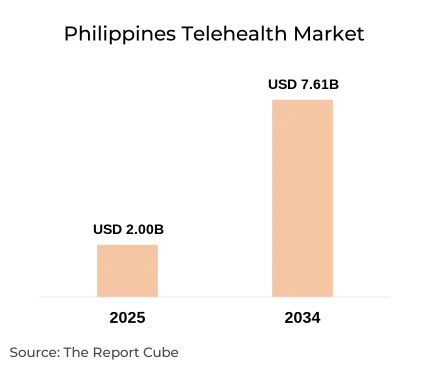
The Philippines Telehealth Market is anticipated to register a 16.0% CAGR during 2026–2034. The market size was valued at USD 2.0 billion in 2025 and is projected to reach USD 7.61 billion by 2034. The telehealth landscape in the Philippines is evolving rapidly as digital health platforms bridge long-standing gaps in healthcare accessibility across the archipelago. The country’s geography—spread across more than 7,600 islands—has historically created challenges for in-person healthcare delivery. Telehealth solutions now offer a practical and scalable way to connect patients with physicians, pharmacists, and healthcare providers without the burden of travel. As smartphone penetration surpassed 80% of the population in 2025 and mobile internet connectivity expanded significantly, teleconsultation and digital healthcare services began to move from niche offerings to mainstream healthcare solutions.
Investment momentum has also accelerated in recent years. Digital healthcare companies and hospital networks are allocating substantial resources to telemedicine infrastructure, patient management platforms, and AI-enabled health analytics. Platforms such as KonsultaMD, mWell, and Doctor Anywhere PH have expanded services that combine video consultations, e-prescriptions, and integrated diagnostics booking. The integration of telehealth with the country’s Universal Health Care Act is another factor shaping growth. By connecting government health programs, insurance providers, and private healthcare networks through digital platforms, telehealth services can support preventive care, chronic disease management, and follow-up consultations. As a result, telehealth in the Philippines is gradually transitioning from an emergency pandemic solution into a permanent healthcare delivery model that prioritizes convenience, affordability, and nationwide accessibility.
Philippines Telehealth Market Dynamics
Key Driver: Expanding Internet Access and Mobile Health Adoption Across the Philippines
One of the strongest forces accelerating the telehealth market in the Philippines is the rapid expansion of mobile connectivity and digital literacy among the population. By 2025, over 85 million Filipinos were active internet users, and the majority accessed the internet primarily through smartphones. This shift toward mobile-first connectivity has made telehealth services significantly more accessible to both urban and rural populations. In regions where healthcare infrastructure is limited, teleconsultation through mobile apps allows patients to receive medical advice without traveling long distances to hospitals or clinics.
Healthcare providers are also recognizing the efficiency of digital consultations. Physicians can serve more patients through virtual visits while reducing waiting times and clinic congestion. Telehealth platforms now provide integrated systems that include appointment scheduling, digital prescriptions, health monitoring, and payment gateways. These features simplify the patient journey and encourage continued use of telemedicine services. Furthermore, the Philippines faces a persistent shortage of healthcare professionals in remote areas, with physician-to-population ratios significantly below global standards. Telehealth bridges this gap by allowing specialists based in metropolitan cities to consult patients nationwide. As more Filipinos grow comfortable with digital platforms for banking, shopping, and government services, healthcare is naturally following the same digital pathway.
Book your FREE 30-minute expert consultation today
Contact UsIndustry Trends: Integration of Telehealth Ecosystems and Digital Health Platforms
A defining trend shaping the Philippines telehealth market is the emergence of integrated digital health ecosystems that combine multiple healthcare services within a single platform. Instead of offering only teleconsultation, modern telehealth platforms now connect patients with pharmacies, diagnostic centers, hospitals, and home care services. This ecosystem approach simplifies healthcare access and improves coordination among providers. Companies are building digital superapps that enable users to schedule doctor consultations, purchase medications, book laboratory tests, and track health records in one place.
Artificial intelligence and data analytics are also becoming integral to telehealth platforms. AI-powered symptom checkers, predictive analytics, and automated triage systems help prioritize patients based on urgency and health risk factors. These tools allow healthcare providers to allocate medical resources more efficiently. Another emerging trend involves partnerships between telehealth companies and health maintenance organizations (HMOs). Through these collaborations, teleconsultation services are increasingly included as part of insurance packages, making digital healthcare more affordable for Filipinos. Additionally, remote patient monitoring technologies are gaining traction among patients managing chronic diseases such as hypertension and diabetes. Devices that track vital signs can transmit data directly to physicians, enabling timely medical interventions and improving long-term health outcomes.
Major Challenge: Infrastructure Gaps and Digital Health Integration Limitations
While telehealth adoption is rising rapidly, infrastructure disparities across the Philippines remain a significant challenge for market growth. Many rural communities still experience inconsistent internet connectivity, which limits the effectiveness of video-based consultations. In areas with unstable bandwidth, healthcare providers must rely on voice calls or SMS-based services that offer fewer diagnostic capabilities. These connectivity challenges can affect the quality of remote consultations and restrict the full potential of digital healthcare solutions.
Another challenge involves interoperability between healthcare systems. Hospitals, clinics, and telehealth platforms often operate with separate electronic health record systems, making data sharing difficult. Without seamless integration, physicians may lack access to complete patient histories during teleconsultations, which can affect clinical decision-making. Data privacy and cybersecurity concerns also require careful management. As telehealth platforms collect large volumes of sensitive medical information, providers must invest heavily in secure digital infrastructure to comply with health data protection regulations. Addressing these structural and technological gaps will be essential for the long-term sustainability of the telehealth ecosystem in the Philippines.
Opportunity: Expanding Telehealth Access in Rural and Underserved Communities
One of the most promising opportunities within the Philippines telehealth market lies in expanding digital healthcare access to rural and underserved communities. Millions of Filipinos live in remote provinces where hospitals and medical specialists are scarce. Telehealth platforms provide a scalable solution that allows patients in these areas to consult with doctors without traveling to major cities. As telecommunications companies continue expanding 4G and 5G coverage across the archipelago, telehealth services are expected to reach a much broader population.
Government healthcare reforms are also creating new opportunities for telemedicine providers. Programs connected to the Universal Health Care Act aim to strengthen primary healthcare services and improve patient monitoring. Telehealth platforms can support these initiatives by enabling remote follow-ups, digital prescriptions, and chronic disease management. Employers are another emerging market segment. Many corporations in the Philippines are incorporating telehealth subscriptions into employee wellness programs, allowing workers to access medical consultations without leaving the workplace. This trend reduces absenteeism and improves productivity while expanding the telehealth user base. Over time, these developments will transform telemedicine into a core component of everyday healthcare services in the Philippines.
Philippines Telehealth Market Segment-wise Analysis
By Component:
- Software Platforms
- Services
- Hardware
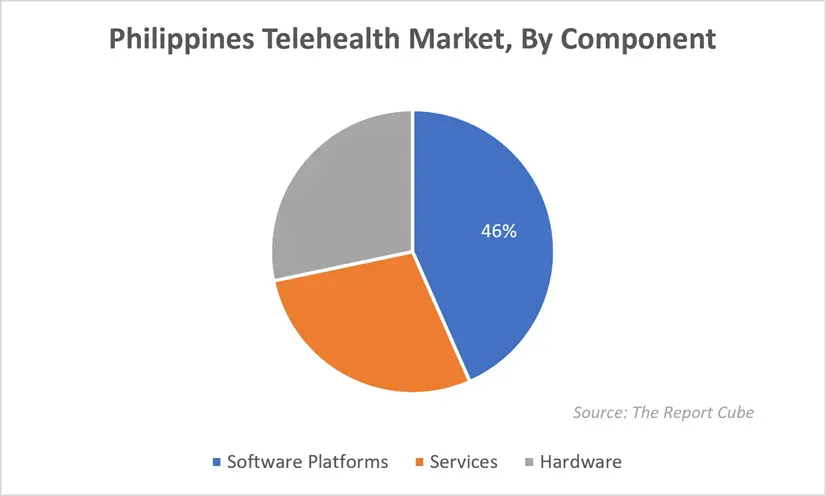
The software platforms segment dominates the Philippines telehealth market, accounting for nearly 46% of the total market share in 2025. Telehealth platforms serve as the foundation of digital healthcare services, enabling video consultations, electronic health records, appointment scheduling, and integrated payment systems. The rising adoption of mobile healthcare applications has significantly boosted the demand for software-based telemedicine solutions. Filipino consumers increasingly prefer using mobile applications that allow them to consult physicians, receive prescriptions, and monitor health conditions without visiting physical clinics.
Healthcare providers also rely on telehealth platforms to streamline administrative workflows and improve patient engagement. Software solutions support secure patient data storage, automated appointment management, and teletriage features that help prioritize urgent cases. Several major healthcare organizations in the Philippines are integrating telehealth software with hospital information systems, creating unified digital healthcare networks. As telemedicine continues expanding beyond simple consultations to include diagnostics, prescription services, and remote monitoring, the importance of scalable software platforms will continue to grow across the country.
By Application:
- Teleconsultation
- Remote Patient Monitoring
- Telepharmacy
- Mental Health Services
- Women’s Health Services
- Chronic Disease Management
- Emergency Teletriage
- Others
The teleconsultation segment leads the application category with approximately 41% market share in 2025. Teleconsultation services have become the most widely used telehealth solution in the Philippines because they address immediate healthcare needs with minimal infrastructure requirements. Patients can connect with general practitioners or specialists through video calls, audio calls, or messaging platforms. This accessibility is particularly valuable for individuals living in remote areas where medical facilities may be several hours away.
Teleconsultation platforms are also expanding their capabilities by integrating electronic prescriptions, digital medical records, and pharmacy delivery services. These additions allow patients to complete the entire healthcare journey within a single digital ecosystem. Mental health consultations and follow-up visits for chronic conditions are also increasingly conducted online, further boosting demand for teleconsultation services. As healthcare providers continue building trust in digital consultations, this segment is expected to remain the largest contributor to the overall telehealth market.
Regional Projection of Philippines Telehealth Industry
- Luzon
- Visayas
- Mindanao
Luzon holds the largest share of the Philippines telehealth market, accounting for approximately 58% of the total market in 2025. The region includes Metro Manila, which serves as the country’s economic and healthcare hub. Major hospitals, digital health startups, and technology providers are concentrated in this region, creating a strong ecosystem for telehealth innovation and adoption. High internet penetration and widespread smartphone usage also support the rapid expansion of telemedicine services across Luzon.
The presence of leading healthcare networks and telehealth providers in Metro Manila allows residents to access a broad range of digital health services, including specialist consultations, remote diagnostics, and integrated pharmacy delivery. Government health programs and insurance partnerships are also more widely implemented in Luzon compared to other regions. However, telehealth providers are increasingly targeting expansion into the Visayas and Mindanao regions to address healthcare access challenges. As digital infrastructure improves across these regions, telemedicine services are expected to play a critical role in reducing healthcare disparities throughout the Philippines.
Philippines Telehealth Market Recent Developments
- 2025: KonsultaMD was acquired by Metro Pacific Health Tech Corp., strengthening the digital healthcare ecosystem led by mWell. The acquisition expanded nationwide teleconsultation coverage and positioned the combined platform as one of the largest telehealth service networks in the Philippines.
- 2025: mWell (Metro Pacific) introduced the Philippines’ first fully digital Health ID platform, enabling patients to store prescriptions, laboratory results, and health records within a single secure mobile application to improve healthcare coordination.
- 2025: Doctor Anywhere PH expanded its telehealth services by offering online consultations covered under partner HMOs and insurance providers, allowing members to access 24/7 virtual consultations and medicine delivery.
- 2025: SeeYouDoc showcased its AI-powered hospital information management system called Lyanna at the International Exhibition of Inventions Geneva 2025, demonstrating integrated telemedicine and electronic health record capabilities.
- 2025: HealthNow continued the rollout of its unified health superapp integrating teleconsultation, diagnostics booking, e-pharmacy services, and home healthcare solutions to strengthen digital health adoption in the Philippines.
Need insights for a specific region within this market?
Request Regional DataWhy Choose This Report?
- Provides a comprehensive overview of the overall market analysis, encompassing key trends, consumer behavior analysis, and risk assessment to support strategic decision-making.
- Provides accurate, up-to-date insights into market size, segmentation, and emerging opportunities, helping to minimize risk & capitalizing on growth.
- Gives deep understanding of target audience preferences, investment habits, and communication channels for enhanced product development & marketing effectiveness.
- Delivers competitive analysis & benchmarking, uncovering the strengths & weaknesses of market competitors to guide strategies.
- Consolidate comprehensive market intelligence, reducing reasoning & streamlining research efforts.
- Facilitates customized market segmentation & risk mitigation strategies, fine-tuned to the business objectives.
- Aids in identifying both market challenges & untapped opportunities within the industry to drive long-term business growth.
- Provides valuable information based on actual customer data & search trends.
Table of Contents
- Introduction
- Objective of the Study
- Product and Category Definition
- Market Segmentation
- Study Variables
- Research Methodology
- Secondary Data Points
- Breakdown of Secondary Sources
- Primary Data Points
- Breakdown of Primary Interviews
- Secondary Data Points
- Executive Summary
- Market Dynamics
- Drivers
- Challenges
- Opportunity Assessment
- Recent Trends and Developments
- Regulatory and Policy Landscape
- Philippines Telehealth Market Overview (2018-2034)
- Market Size, By Value (USD Billion)
- Market Share, By Component
- Software Platforms
- Services
- Hardware
- Market Share, By Application
- Teleconsultation
- Remote Patient Monitoring
- Telepharmacy
- Mental Health Services
- Women’s Health Services
- Chronic Disease Management
- Emergency Teletriage
- Others
- Market Share, By Delivery Mode
- Mobile Apps
- Web-based Portals
- Call Center and SMS
- Integrated Hospital Systems
- Market Share, By End User
- Individual Consumers
- Hospitals and Clinics
- Health Maintenance Organizations (HMOs)
- Employers and Corporates
- Others
- Market Share, By Mode of Consultation
- Video Consultation
- Audio Consultation
- Chat and Asynchronous Messaging
- Market Share, By Region
- Luzon
- Visayas
- Mindanao
- Market Share, By Company
- Revenue Shares and Analysis
- Competitive Landscape
- Luzon Telehealth Market
- Market Size, By Value (USD Billion/Million)
- Market Share, By Component
- Market Share, By Application
- Market Share, By Delivery Mode
- Market Share, By End User
- Visayas Telehealth Market
- Market Size, By Value (USD Billion/Million)
- Market Share, By Component
- Market Share, By Application
- Market Share, By Delivery Mode
- Market Share, By End User
- Mindanao Telehealth Market
- Market Size, By Value (USD Billion/Million)
- Market Share, By Component
- Market Share, By Application
- Market Share, By Delivery Mode
- Market Share, By End User
- Competitive Outlook and Company Profiles
- KonsultaMD
- Company Overview
- Product Portfolio
- Strategic Alliances/Partnerships
- Recent Developments
- mWell (Metro Pacific)
- Company Overview
- Product Portfolio
- Strategic Alliances/Partnerships
- Recent Developments
- Doctor Anywhere PH
- Company Overview
- Product Portfolio
- Strategic Alliances/Partnerships
- Recent Developments
- Medgate Philippines
- Company Overview
- Product Portfolio
- Strategic Alliances/Partnerships
- Recent Developments
- NowServing (SeriousMD)
- Company Overview
- Product Portfolio
- Strategic Alliances/Partnerships
- Recent Developments
- HealthNow (Viber-led)
- Company Overview
- Product Portfolio
- Strategic Alliances/Partnerships
- Recent Developments
- AIDE Philippines
- Company Overview
- Product Portfolio
- Strategic Alliances/Partnerships
- Recent Developments
- MyPocketDoctor
- Company Overview
- Product Portfolio
- Strategic Alliances/Partnerships
- Recent Developments
- SeeYouDoc
- Company Overview
- Product Portfolio
- Strategic Alliances/Partnerships
- Recent Developments
- Kindred (Women's Health)
- Company Overview
- Product Portfolio
- Strategic Alliances/Partnerships
- Recent Developments
- PhilCare (HMO Telemed)
- Company Overview
- Product Portfolio
- Strategic Alliances/Partnerships
- Recent Developments
- Maxicare (Videoconsult)
- Company Overview
- Product Portfolio
- Strategic Alliances/Partnerships
- Recent Developments
- MediLinx Network
- Company Overview
- Product Portfolio
- Strategic Alliances/Partnerships
- Recent Developments
- Zennya Health
- Company Overview
- Product Portfolio
- Strategic Alliances/Partnerships
- Recent Developments
- Agimat Health
- Company Overview
- Product Portfolio
- Strategic Alliances/Partnerships
- Recent Developments
- BizBox (e-Health)
- Company Overview
- Product Portfolio
- Strategic Alliances/Partnerships
- Recent Developments
- Lifeline 16-911
- Company Overview
- Product Portfolio
- Strategic Alliances/Partnerships
- Recent Developments
- Others
- KonsultaMD
- Contact Us and Disclaimer
Top Key Players & Market Share Outlook
- KonsultaMD
- mWell (Metro Pacific)
- Doctor Anywhere PH
- Medgate Philippines
- NowServing (SeriousMD)
- HealthNow (Viber-led)
- AIDE Philippines
- MyPocketDoctor
- SeeYouDoc
- Kindred (Women's Health)
- PhilCare (HMO Telemed)
- Maxicare (Videoconsult)
- MediLinx Network
- Zennya Health
- Agimat Health
- BizBox (e-Health)
- Lifeline 16-911
Frequently Asked Questions






