



Build Your Custom Market Intelligence Report
Customize Your ReportMalaysia Automotive Electronics Market Key Highlights
By Application:
Safety Electronics segment leads the market, with around 24% market share.
By Vehicle Type:
Passenger Vehicles segment dominates the market, accounting for nearly 64% of total revenue.
Regional Outlook:
Central region dominates the Malaysia automotive electronics market, with around 42% market share.
Government Initiatives & Policies
- Malaysia National Automotive Policy (NAP) 2030: Strategic framework supporting electric mobility, connected vehicles, and local automotive electronics manufacturing expansion.
- Malaysia Semiconductor Strategy (NSS) 2024–2030: Government initiative aimed at strengthening semiconductor manufacturing, automotive chips, and electronics supply chains within Malaysia.
Malaysia Automotive Electronics Market Insights & Analysis
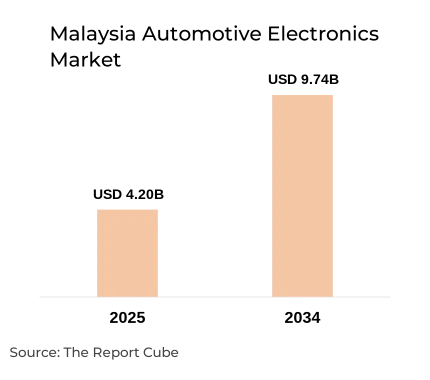
The Malaysia Automotive Electronics Market is anticipated to register a CAGR of 9.8% during 2026–2034. The market size was valued at USD 4.2 billion in 2025 and is projected to reach USD 9.74 billion by 2034. Automotive electronics are rapidly becoming the backbone of modern vehicles as cars evolve from mechanical machines into software-defined mobility platforms. In Malaysia, this transformation is visible through increasing adoption of advanced electronic systems such as powertrain controllers, driver assistance systems, connected infotainment platforms, and semiconductor-based sensors that enhance safety, performance, and comfort.
Malaysia holds a strategic position in Southeast Asia’s automotive electronics ecosystem due to its mature semiconductor manufacturing infrastructure and strong automotive supply chains. The country hosts over 50 global semiconductor companies and contributes nearly 13% of global chip packaging and testing output, which directly benefits the automotive electronics segment. Government-led programs supporting electric vehicles, smart mobility solutions, and semiconductor manufacturing are accelerating the demand for automotive electronics components such as electronic control units, sensors, and power semiconductors. Additionally, the rise of electric vehicles and hybrid powertrains is reshaping component demand, as EVs contain nearly 2–3 times more semiconductor content compared to conventional vehicles.
Local automotive manufacturers and suppliers are increasingly integrating advanced electronics to meet global safety regulations and consumer expectations. Companies such as Betamek Berhad, APM Automotive, and global suppliers including Bosch and DENSO have expanded engineering capabilities in Malaysia to develop infotainment systems, vehicle sensors, and control modules. Investment inflows from international semiconductor manufacturers also support innovation across the automotive electronics value chain. As connected vehicles, ADAS technologies, and EV platforms expand across ASEAN markets, Malaysia is emerging as a key regional hub for automotive electronics design, manufacturing, and export activities.
Malaysia Automotive Electronics Market Dynamics
Key Driver: Growing Integration of Advanced Safety and Connectivity Technologies
The increasing integration of advanced safety technologies is one of the primary forces accelerating the Malaysia automotive electronics market. Over the last decade, vehicle manufacturers have moved from basic mechanical safety mechanisms toward intelligent electronic safety systems capable of preventing accidents before they occur. Technologies such as anti-lock braking systems, electronic stability control, adaptive cruise control, and blind spot detection are rapidly becoming standard features across passenger vehicles sold in Malaysia. Government regulations and consumer awareness regarding road safety are pushing automakers to install more sensors, control units, and advanced driver assistance systems within vehicles.
Automotive electronics content per vehicle has increased significantly. Industry estimates indicate that electronics account for nearly 40% of a modern vehicle’s total value, compared to less than 20% two decades ago. In electric and hybrid vehicles, this share can exceed 50% due to battery management systems, electric powertrain controllers, and high-performance semiconductors required for energy management. Malaysia’s role as a semiconductor hub strengthens this growth trend because many automotive chips and sensors used in global vehicles are packaged and tested within the country.
Consumer demand is also shaping this trend. Malaysian drivers increasingly expect vehicles to deliver smartphone-like connectivity, digital displays, and smart infotainment systems that integrate navigation, media, and telematics services. Automakers are responding by embedding multiple electronic control units and high-speed communication networks within vehicles. This technological shift is steadily expanding the market for automotive electronics components across Malaysia’s automotive manufacturing ecosystem.
Book your FREE 30-minute expert consultation today
Contact UsIndustry Trends: Rapid Expansion of Electric Vehicles and Semiconductor Manufacturing
The rapid emergence of electric mobility is reshaping Malaysia’s automotive electronics landscape. Electric vehicles require significantly higher levels of electronic content compared with traditional internal combustion vehicles. Systems such as battery management controllers, inverter modules, electric motor control units, and power semiconductors form the core of EV technology. As Malaysia accelerates EV adoption through tax incentives and infrastructure investments, the demand for these advanced electronic components is rising steadily.
Another defining trend is the strengthening of Malaysia’s semiconductor manufacturing capacity. The country has become a vital node in the global electronics supply chain, particularly in semiconductor assembly, packaging, and testing. Many global chipmakers are expanding operations in Malaysia to meet the rising demand for automotive-grade semiconductors used in electric vehicles and connected mobility systems. Silicon carbide power devices, microcontrollers, and automotive sensors are gaining strategic importance because they enable higher efficiency power electronics and improved vehicle performance.
At the same time, vehicle architecture is evolving toward centralized computing platforms. Instead of dozens of small independent control units, automakers are beginning to adopt domain-based or zonal architectures where powerful processors manage multiple vehicle functions simultaneously. This shift increases demand for high-performance processors, networking modules, and integrated sensor platforms. Malaysian electronics manufacturers are adapting by investing in advanced electronics design, system integration, and automotive-grade semiconductor production.
Major Challenge: Complex Supply Chains and Rising Semiconductor Requirements
While the automotive electronics market in Malaysia shows strong growth potential, it also faces operational challenges related to complex supply chains and technological dependencies. Automotive electronic systems rely heavily on specialized semiconductor chips that must meet strict reliability standards. During the global semiconductor shortage between 2021 and 2023, vehicle production worldwide experienced disruptions due to limited chip availability. Although supply conditions have improved, the industry remains vulnerable to fluctuations in semiconductor production capacity and global demand cycles.
Another challenge involves the increasing complexity of electronic systems within vehicles. Modern vehicles can contain more than 100 electronic control units interconnected through high-speed networks such as CAN, LIN, and Ethernet. Managing this complexity requires advanced software integration, cybersecurity protections, and rigorous testing processes. Automotive electronics suppliers must invest significantly in research, engineering expertise, and validation systems to ensure product reliability and regulatory compliance.
Cost pressures also affect smaller local suppliers. Automotive electronics components require high levels of precision manufacturing, specialized materials, and advanced semiconductor technologies. Smaller manufacturers may struggle to match the investment capacity of multinational suppliers, creating barriers for scaling operations. Addressing these challenges will require continued government support, strong collaboration between semiconductor and automotive industries, and strategic investments in engineering talent and advanced manufacturing capabilities.
Opportunity: Malaysia Emerging as Southeast Asia’s Automotive Electronics Innovation Hub
Malaysia’s well-established electronics manufacturing ecosystem positions the country as a strong candidate to become a regional innovation hub for automotive electronics. With over five decades of semiconductor industry development, Malaysia possesses a deep talent pool in electronics engineering, chip packaging, and system integration. This expertise provides a foundation for developing advanced automotive electronic systems required for connected vehicles and electric mobility.
Growing collaboration between global automotive suppliers and Malaysian technology firms is opening new avenues for innovation. Multinational companies are expanding research and development centers within Malaysia to design automotive sensors, power electronics modules, and embedded vehicle software systems. Local suppliers are also participating more actively in global supply chains by manufacturing infotainment systems, electronic modules, and sensor assemblies used by major car manufacturers across Asia.
The rise of smart mobility technologies such as vehicle-to-everything communication, autonomous driving sensors, and artificial intelligence-based driver assistance systems presents another major opportunity. These technologies rely heavily on advanced semiconductor components, high-performance processors, and sophisticated electronic architectures. Malaysia’s semiconductor expertise provides a competitive advantage in supplying these critical technologies. As regional automotive production continues to grow, Malaysia’s automotive electronics sector is well positioned to capture a larger share of the global mobility technology market.
Malaysia Automotive Electronics Market Segment-wise Analysis
By Application:
- Powertrain Electronics
- Safety Electronics
- Body Electronics
- Infotainment and Connectivity
- Chassis Electronics
- Advanced Driver Assistance Systems
- Lighting Electronics
- Sensors and Power Devices
- Others
Safety electronics represents the leading segment within Malaysia’s automotive electronics market, accounting for nearly 24% of total market revenue in 2025. This dominance reflects the increasing adoption of electronic safety systems across passenger vehicles and commercial fleets. Technologies such as anti-lock braking systems, electronic stability control, airbag control modules, and driver assistance systems have become standard requirements for modern vehicles. Global automotive safety standards and ASEAN vehicle safety programs are encouraging manufacturers to integrate these systems across entry-level and mid-range vehicle models.
Modern vehicles increasingly rely on sensor-based safety systems that continuously monitor driving conditions. Radar sensors, camera modules, and electronic control units analyze real-time data to detect obstacles, maintain vehicle stability, and prevent collisions. Advanced driver assistance technologies such as lane departure warning and adaptive cruise control are expanding rapidly within Malaysia’s passenger vehicle segment. As vehicles move toward semi-autonomous capabilities, the number of electronic safety components installed per vehicle continues to increase. This ongoing transition ensures that safety electronics will remain a central growth driver in Malaysia’s automotive electronics ecosystem.
By Vehicle Type:
- Passenger Vehicles
- Light Commercial Vehicles
- Heavy Commercial Vehicles
- Electric Vehicles
Passenger vehicles account for the largest share of Malaysia’s automotive electronics market, representing approximately 64% of total revenue. The country’s automotive industry is heavily dominated by passenger car production, supported by domestic manufacturers such as Perodua and Proton as well as international automakers operating regional manufacturing facilities. These vehicles incorporate numerous electronic systems including infotainment platforms, body control modules, safety sensors, and powertrain control units.
Consumer demand for comfort, safety, and digital connectivity features is significantly increasing the electronic content within passenger cars. Features such as touchscreen displays, digital dashboards, wireless connectivity, and smartphone integration have become essential selling points in new vehicle models. Additionally, the introduction of hybrid and electric passenger vehicles is accelerating the adoption of advanced electronic power management systems. As Malaysia’s middle-class population continues to grow and vehicle ownership rises, passenger vehicles will remain the dominant segment driving demand for automotive electronics components.
Regional Projection of Malaysia Automotive Electronics Industry
- Northern
- Central
- Southern
- East
- Others
The Central region leads the Malaysia automotive electronics market, accounting for approximately 42% of industry revenue. This region includes major industrial hubs such as Selangor and Kuala Lumpur, where numerous automotive assembly plants, electronics manufacturing facilities, and semiconductor companies operate. The concentration of advanced manufacturing infrastructure and logistics networks makes the Central region a strategic location for automotive electronics production and supply chain operations.
Several global automotive electronics suppliers maintain engineering and manufacturing facilities in this region to serve both domestic and export markets. The presence of semiconductor fabrication plants, testing facilities, and electronics component manufacturers enables efficient integration across the automotive electronics supply chain. Additionally, strong transportation infrastructure, skilled engineering talent, and government industrial development programs further support the region’s dominance in automotive electronics manufacturing.
As Malaysia continues to attract foreign direct investment in semiconductor production and electric vehicle technologies, the Central region is expected to strengthen its leadership position. Future investments in advanced chip manufacturing, research centers, and automotive innovation clusters will further enhance Malaysia’s role as a key automotive electronics hub within Southeast Asia.
Malaysia Automotive Electronics Market Recent Developments
- 2025: Infineon Technologies commenced an additional RM30 billion investment to build the world’s largest 200mm silicon carbide power fabrication facility at Kulim Hi-Tech Industrial Park in Kedah. The project strengthens Malaysia’s semiconductor ecosystem for electric vehicles and involves a vendor development program engaging more than 130 Malaysian SMEs.
- 2025: Betamek Berhad secured a six-year supply agreement from Perodua through its subsidiary Betamek Electronics (M) Sdn Bhd. The contract, beginning December 2025, involves supplying electronic components for a new vehicle model and is expected to generate nearly RM176 million in revenue.
- 2025: Robert Bosch expanded its automotive electronics engineering operations in Southeast Asia, strengthening research capabilities related to vehicle sensors, connectivity modules, and driver assistance technologies used in next-generation vehicles.
- 2025: DENSO (Malaysia) announced enhancements to its local manufacturing lines focused on advanced electronic control units and automotive sensors, supporting rising demand from ASEAN vehicle manufacturers.
- 2025: NXP Semiconductors strengthened partnerships with automotive OEMs and suppliers in Southeast Asia to accelerate development of secure automotive microcontrollers and radar processing chips for connected vehicles.
Need insights for a specific region within this market?
Request Regional DataWhy Choose This Report?
- Provides a comprehensive overview of the overall market analysis, encompassing key trends, consumer behavior analysis, and risk assessment to support strategic decision-making.
- Provides accurate, up-to-date insights into market size, segmentation, and emerging opportunities, helping to minimize risk & capitalizing on growth.
- Gives deep understanding of target audience preferences, investment habits, and communication channels for enhanced product development & marketing effectiveness.
- Delivers competitive analysis & benchmarking, uncovering the strengths & weaknesses of market competitors to guide strategies.
- Consolidate comprehensive market intelligence, reducing reasoning & streamlining research efforts.
- Facilitates customized market segmentation & risk mitigation strategies, fine-tuned to the business objectives.
- Aids in identifying both market challenges & untapped opportunities within the industry to drive long-term business growth.
- Provides valuable information based on actual customer data & search trends.
Table of Contents
- Introduction
- Objective of the Study
- Product and Category Definition
- Market Segmentation
- Study Variables
- Research Methodology
- Secondary Data Points
- Breakdown of Secondary Sources
- Primary Data Points
- Breakdown of Primary Interviews
- Secondary Data Points
- Executive Summary
- Market Dynamics
- Drivers
- Challenges
- Opportunity Assessment
- Recent Trends and Developments
- Regulatory and Policy Landscape
- Malaysia Automotive Electronics Market Overview (2021-2034)
- Market Size, By Value (USD Billion)
- Market Share, By Application
- Powertrain Electronics
- Engine Control Units
- Transmission Control Units
- Fuel Injection Systems
- Electric Powertrain Controllers
- Safety Electronics
- Airbag Control Units
- Anti-lock Braking Systems
- Electronic Stability Control
- Advanced Driver Assistance Systems
- Body Electronics
- Body Control Modules
- Lighting Systems
- Climate Control Systems
- Power Seats and Windows
- Infotainment and Connectivity
- Head Units
- Audio Systems
- Display Systems
- Telematics Control Units
- Navigation Systems
- Chassis Electronics
- Electronic Suspension Systems
- Steering Electronics
- Brake Control Modules
- Advanced Driver Assistance Systems
- Adaptive Cruise Control
- Lane Departure Warning
- Blind Spot Detection
- Parking Assistance
- Lighting Electronics
- LED Headlamps
- Rear Combination Lamps
- Interior Lighting Modules
- Sensors and Power Devices
- Position Sensors
- Pressure Sensors
- Current and Power Devices
- Others
- Powertrain Electronics
- Market Share, By Vehicle Type
- Passenger Vehicles
- Light Commercial Vehicles
- Heavy Commercial Vehicles
- Electric Vehicles
- Market Share, By Component
- Electronic Control Units
- Semiconductors
- Sensors
- Actuators
- Displays
- Wiring and Connectors
- Others
- Market Share, By Region
- Northern
- Central
- Southern
- East
- Others
- Market Share, By Company
- Revenue Shares and Analysis
- Competitive Landscape
- Northern Malaysia Automotive Electronics Market
- Market Size, By Value (USD Billion/Million)
- Market Share, By Application
- Market Share, By Vehicle Type
- Market Share, By Component
- Central Malaysia Automotive Electronics Market
- Market Size, By Value (USD Billion/Million)
- Market Share, By Application
- Market Share, By Vehicle Type
- Market Share, By Component
- Southern Malaysia Automotive Electronics Market
- Market Size, By Value (USD Billion/Million)
- Market Share, By Application
- Market Share, By Vehicle Type
- Market Share, By Component
- East Malaysia Automotive Electronics Market
- Market Size, By Value (USD Billion/Million)
- Market Share, By Application
- Market Share, By Vehicle Type
- Market Share, By Component
- Competitive Outlook and Company Profiles
- DENSO
- Company Overview
- Product Portfolio
- Strategic Alliances/Partnerships
- Recent Developments
- Robert Bosch
- Company Overview
- Product Portfolio
- Strategic Alliances/Partnerships
- Recent Developments
- Continental Temic
- Company Overview
- Product Portfolio
- Strategic Alliances/Partnerships
- Recent Developments
- Infineon Technologies
- Company Overview
- Product Portfolio
- Strategic Alliances/Partnerships
- Recent Developments
- Aptiv (formerly Delphi)
- Company Overview
- Product Portfolio
- Strategic Alliances/Partnerships
- Recent Developments
- NXP Semiconductors
- Company Overview
- Product Portfolio
- Strategic Alliances/Partnerships
- Recent Developments
- STMicroelectronics
- Company Overview
- Product Portfolio
- Strategic Alliances/Partnerships
- Recent Developments
- onsemi
- Company Overview
- Product Portfolio
- Strategic Alliances/Partnerships
- Recent Developments
- Renesas Electronics
- Company Overview
- Product Portfolio
- Strategic Alliances/Partnerships
- Recent Developments
- APM Automotive
- Company Overview
- Product Portfolio
- Strategic Alliances/Partnerships
- Recent Developments
- Clarion (Forvia)
- Company Overview
- Product Portfolio
- Strategic Alliances/Partnerships
- Recent Developments
- ZF TRW
- Company Overview
- Product Portfolio
- Strategic Alliances/Partnerships
- Recent Developments
- SMR Automotive
- Company Overview
- Product Portfolio
- Strategic Alliances/Partnerships
- Recent Developments
- Vishay Intertechnology
- Company Overview
- Product Portfolio
- Strategic Alliances/Partnerships
- Recent Developments
- Osram (ams OSRAM)
- Company Overview
- Product Portfolio
- Strategic Alliances/Partnerships
- Recent Developments
- Betamek Berhad
- Company Overview
- Product Portfolio
- Strategic Alliances/Partnerships
- Recent Developments
- Lear Corporation
- Company Overview
- Product Portfolio
- Strategic Alliances/Partnerships
- Recent Developments
- Others
- DENSO
- Contact Us and Disclaimer
Top Key Players & Market Share Outlook
- DENSO (Malaysia)
- Robert Bosch
- Continental Temic
- Infineon Technologies
- Aptiv (formerly Delphi)
- NXP Semiconductors
- STMicroelectronics
- onsemi
- Renesas Electronics
- APM Automotive
- Clarion (Forvia)
- ZF TRW
- SMR Automotive
- Vishay Intertechnology
- Osram (ams OSRAM)
- Betamek Berhad
- Lear Corporation
Frequently Asked Questions






