




Build Your Custom Market Intelligence Report
Customize Your ReportIndonesia Islamic Fintech Market Key Highlights
By Islamic Fintech Type:
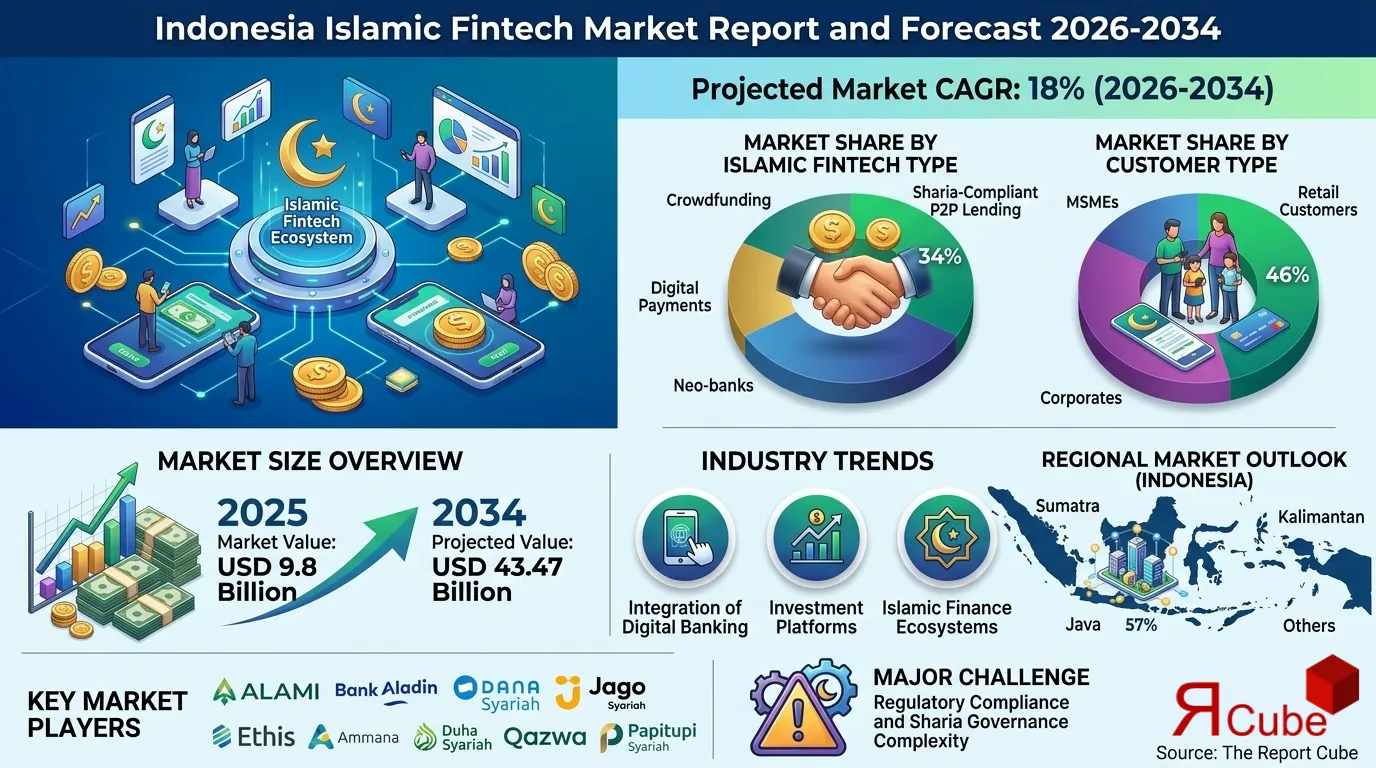
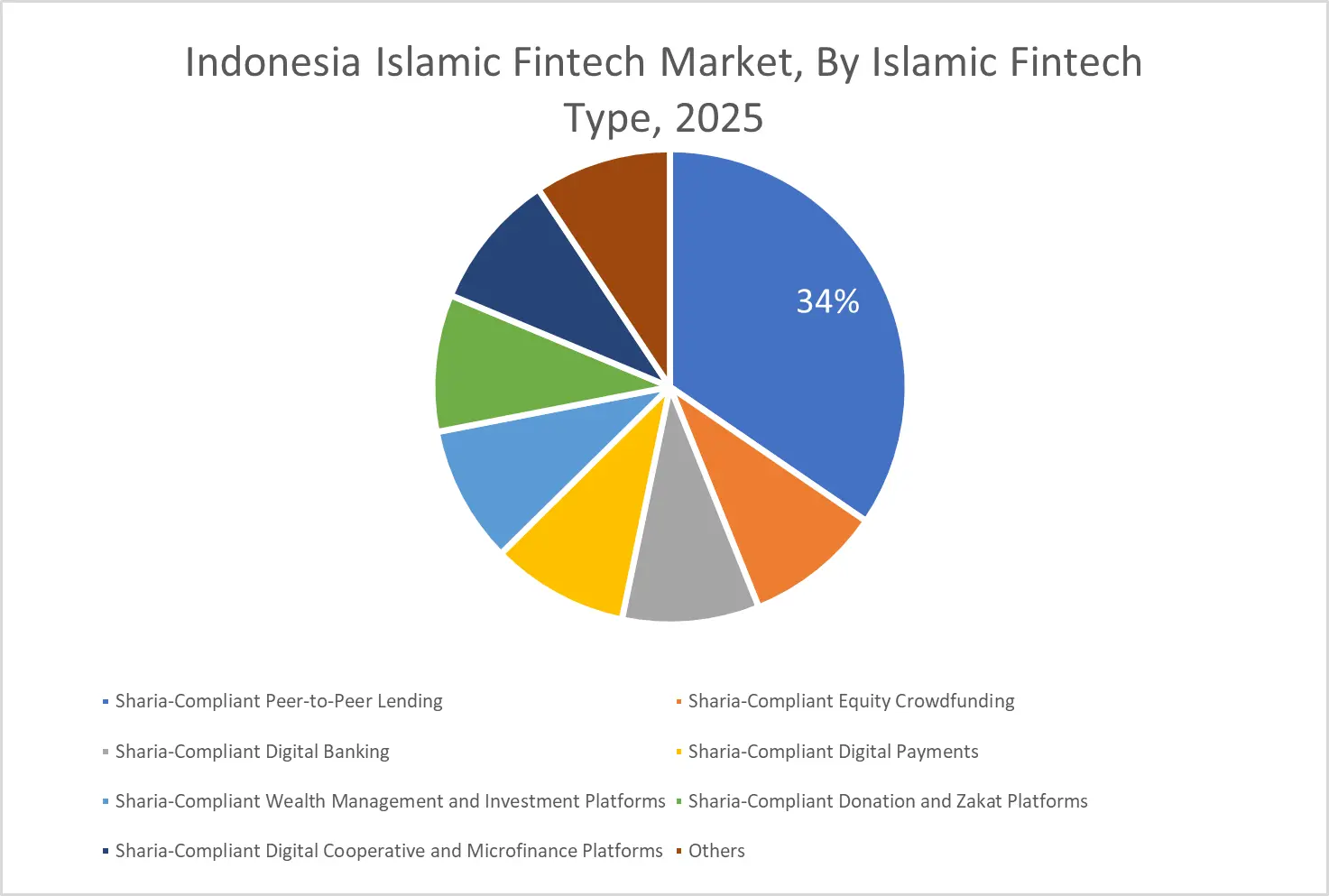
Sharia-Compliant Peer-to-Peer Lending segment leads the market, with around 34% share.
By Customer Type:
Retail Customers segment dominate the market, accounting for nearly 46% of total revenue.
Regional Outlook:
Java region dominates the Indonesia islamic fintech market, with around 57% share.
Government Initiatives & Policies
- Indonesia National Sharia Economy and Finance Masterplan (MEKSI) 2019–2024 continuation programs: The Indonesian government continues expanding Islamic financial inclusion through digital Islamic banking, fintech regulations, and halal ecosystem integration.
- OJK Digital Financial Innovation Regulation (POJK No. 13/POJK.02/2023): Indonesia’s Financial Services Authority introduced updated digital finance and fintech regulations that include sharia-compliant fintech platforms and Islamic crowdfunding services.
Indonesia Islamic Fintech Market Insights & Analysis
The Indonesia Islamic Fintech Market is anticipated to register a CAGR of 18% during 2026-2034. the market size was valued at USD 9.8 billion in 2025 and is projected to reach USD 43.47 billion by 2034. Indonesia represents the world’s largest Muslim-majority nation with more than 240 million Muslims, making it one of the most promising markets for sharia-compliant digital financial services. Islamic fintech platforms in the country combine financial technology with Islamic finance principles such as profit-sharing, asset-backed financing, and prohibition of interest-based lending.
Over the last few years, Indonesia has witnessed strong investment momentum in Islamic fintech companies. Venture capital investments in sharia-compliant fintech startups increased significantly between 2023 and 2025 as investors recognized the scalability of digital Islamic financial platforms. Platforms focusing on peer-to-peer financing for micro and small enterprises are expanding rapidly due to high MSME demand for ethical and accessible funding. According to Indonesia’s Ministry of Cooperatives and SMEs, the country hosts more than 65 million MSMEs, many of which remain underserved by traditional banking institutions.
Digital payment ecosystems and Islamic investment platforms are also contributing to market expansion. Mobile wallets and digital zakat platforms have integrated sharia-compliant financial services into everyday financial activities such as donations, bill payments, and wealth management. The adoption of smartphone-based financial services continues to accelerate in Indonesia, with mobile internet penetration exceeding 78% by 2025. As fintech platforms integrate Islamic banking services, wealth management tools, and crowdfunding mechanisms, the Indonesia Islamic fintech market is evolving into a comprehensive digital financial ecosystem designed to support inclusive and ethical financial participation.
Government support and regulatory clarity further strengthen market growth. Indonesia’s Financial Services Authority (OJK) has implemented fintech sandbox programs and licensing frameworks that encourage innovation while maintaining compliance with Islamic financial principles. Islamic fintech firms are also collaborating with Islamic banks to expand financing capabilities and increase financial inclusion in rural areas. With strong demographic demand, supportive regulation, and rapid digital adoption, Indonesia is emerging as one of the global leaders in Islamic fintech innovation.
Indonesia Islamic Fintech Market Dynamics
Key Driver: Rising Demand for Sharia-Compliant Financial Services Among Indonesia’s Muslim Population
One of the most significant drivers of the Indonesia Islamic fintech market is the increasing demand for financial services that comply with Islamic principles. Indonesia’s Muslim population represents nearly 87% of the country’s total population, creating a large consumer base seeking financial products that avoid interest-based transactions and promote ethical investment practices. Many Indonesian consumers prefer financial products that align with religious values, including profit-and-loss sharing structures and asset-backed financing mechanisms.
The rise of Islamic fintech platforms enables financial inclusion for millions of individuals who were previously underserved by traditional banking institutions. According to the Indonesian Financial Services Authority, nearly 49% of adults in rural areas still lack access to formal financial services. Islamic fintech platforms are addressing this gap by offering digital lending, microfinance services, and crowdfunding platforms that support entrepreneurs and small businesses. Peer-to-peer lending platforms focusing on MSME financing have experienced rapid adoption because they offer simplified application processes and faster loan approvals.
Additionally, the integration of digital banking and mobile payment services has accelerated adoption among younger consumers. Indonesia has one of the fastest-growing digital economies in Southeast Asia, supported by strong smartphone penetration and expanding internet infrastructure. As digital literacy increases, Islamic fintech providers are developing user-friendly mobile platforms that offer sharia-compliant savings, financing, and investment solutions. These factors collectively contribute to the strong growth trajectory of the Indonesia Islamic fintech market.
Book your FREE 30-minute expert consultation today
Contact UsIndustry Trends: Integration of Digital Banking, Investment Platforms, and Islamic Finance Ecosystems
The Indonesia Islamic fintech market is witnessing a growing trend toward integrated financial ecosystems that combine multiple financial services within a single digital platform. Islamic fintech companies are increasingly offering diversified services that include digital banking, investment platforms, zakat donation systems, and peer-to-peer financing tools. This integrated ecosystem approach improves user engagement and increases platform loyalty among consumers seeking comprehensive financial management solutions.
Another key industry trend is the expansion of sharia-compliant digital investment platforms. Retail investors are showing growing interest in halal investment opportunities such as Islamic mutual funds, sukuk bonds, and sharia-compliant stock portfolios. Robo-advisory platforms are emerging to simplify investment management for younger investors by offering automated portfolio recommendations aligned with Islamic financial principles. These digital investment services allow consumers to participate in wealth creation while maintaining religious compliance.
Collaboration between fintech startups and Islamic banks is also shaping the market landscape. Traditional Islamic financial institutions are partnering with fintech companies to expand their digital capabilities and reach new customer segments. Banks are integrating fintech technologies such as API-based financial services and embedded finance solutions to deliver faster, more efficient financial services. As these collaborations expand, Indonesia’s Islamic fintech sector is evolving into a sophisticated digital financial infrastructure that supports both consumer and business financial needs.
Major Challenge: Regulatory Compliance and Sharia Governance Complexity
One of the major challenges in the Indonesia Islamic fintech market is maintaining consistent compliance with both financial regulations and Islamic legal principles. Islamic fintech platforms must ensure that their financial products comply with sharia law, which requires oversight from Islamic scholars and regulatory authorities. Establishing a reliable sharia governance framework requires continuous monitoring, certification processes, and compliance audits, which can increase operational complexity for fintech companies.
Fintech companies must also navigate Indonesia’s evolving regulatory environment for digital finance. The Indonesian Financial Services Authority regularly updates fintech regulations to ensure consumer protection and financial stability. These regulatory requirements include licensing procedures, capital requirements, risk management standards, and reporting obligations. For startups and early-stage fintech firms, meeting these compliance requirements can require significant financial and operational resources.
Another challenge relates to consumer awareness and education. Although Islamic finance is widely recognized in Indonesia, many consumers still lack a detailed understanding of the differences between conventional fintech products and sharia-compliant financial services. Islamic fintech providers must invest in consumer education initiatives, marketing campaigns, and financial literacy programs to build trust and encourage adoption. Addressing these regulatory and awareness challenges will be essential for sustaining long-term growth in the Indonesia Islamic fintech market.
Opportunity: Expansion of MSME Financing and Digital Zakat Platforms
The Indonesia Islamic fintech market presents strong opportunities in MSME financing and digital charity platforms. Micro, small, and medium enterprises contribute more than 60% of Indonesia’s GDP and employ a large share of the national workforce. However, many MSMEs face difficulties accessing traditional bank loans due to strict collateral requirements and lengthy approval processes. Islamic peer-to-peer financing platforms provide alternative funding options through profit-sharing arrangements and asset-backed financing models.
Digital zakat and charity platforms represent another major growth opportunity. Indonesia is one of the world’s largest zakat markets, with annual zakat potential estimated at more than USD 20 billion. Islamic fintech platforms are digitizing zakat payments, enabling individuals to donate through mobile applications and online platforms. These systems improve transparency and efficiency in the distribution of charitable funds.
In addition, fintech companies are developing integrated financial ecosystems that combine zakat, sadaqah, waqf donations, and social crowdfunding services. These platforms allow users to support social development projects, disaster relief programs, and community initiatives directly through digital platforms. As social finance continues to gain importance in Indonesia, Islamic fintech platforms are positioned to play a central role in modernizing charitable financial systems.
Indonesia Islamic Fintech Market Segment-wise Analysis
By Islamic Fintech Type:
- Sharia-Compliant Peer-to-Peer Lending
- Sharia-Compliant Equity Crowdfunding
- Sharia-Compliant Digital Banking
- Sharia-Compliant Digital Payments
- Sharia-Compliant Wealth Management and Investment Platforms
- Sharia-Compliant Donation and Zakat Platforms
- Sharia-Compliant Digital Cooperative and Microfinance Platforms
- Others
Sharia-compliant peer-to-peer lending holds the leading position in the Indonesia Islamic fintech market, accounting for approximately 34% of the total market share in 2025. The growth of this segment is largely driven by the increasing demand for financing among micro and small enterprises across the country. Islamic P2P lending platforms provide alternative financing mechanisms that comply with Islamic principles by adopting profit-sharing structures and asset-backed financing models. These platforms reduce reliance on traditional banking loans while offering flexible financing options for entrepreneurs.
Indonesia’s MSME sector plays a crucial role in driving demand for Islamic P2P financing. According to government statistics, MSMEs contribute more than 61% of Indonesia’s national GDP and represent nearly 97% of total employment. However, many small businesses face barriers in accessing conventional banking credit. Islamic fintech platforms address this financing gap by offering faster loan approvals and simplified application procedures through digital platforms. As fintech adoption continues to grow among entrepreneurs and small business owners, the peer-to-peer lending segment is expected to maintain its dominant position in the market.
By Customer Type:
- Retail Customers
- Micro and Small Enterprises
- Medium Enterprises
- Non-Profit and Religious Organizations
Retail customers represent the largest customer segment in the Indonesia Islamic fintech market, accounting for approximately 46% of total revenue share in 2025. The rapid adoption of smartphone-based financial services has made Islamic fintech platforms more accessible to individual consumers seeking convenient and ethical financial solutions. Retail users increasingly rely on mobile applications for digital payments, sharia-compliant investments, savings accounts, and charitable donations.
The growth of this segment is strongly supported by Indonesia’s expanding digital economy and increasing internet penetration. Mobile banking and fintech platforms enable consumers to access financial services without visiting physical bank branches, improving financial accessibility across urban and rural areas. Retail investors are also showing growing interest in Islamic investment platforms offering sharia-compliant mutual funds and stock portfolios. As digital financial literacy improves among Indonesian consumers, the retail segment is expected to remain a key contributor to the growth of the Indonesia Islamic fintech market.
Regional Projection of Indonesia Islamic Fintech Industry
- Sumatra
- Java
- Kalimantan
- Sulawesi
- Nusa Tenggara
- Maluku
- Papua
Java dominates the Indonesia Islamic fintech market with an estimated market share of nearly 57% in 2025. The region hosts Indonesia’s largest urban population centers, including Jakarta, Surabaya, and Bandung, which serve as major financial and technological hubs. These cities provide advanced digital infrastructure, high internet penetration, and strong startup ecosystems that support the growth of fintech companies. As a result, many Islamic fintech startups establish their headquarters and operational centers in Java.
Java’s economic dominance also contributes to its leading position in the Islamic fintech market. The island accounts for more than half of Indonesia’s national GDP and hosts a large concentration of businesses and financial institutions. Consumers in this region demonstrate high adoption of digital payment systems, online investment platforms, and mobile banking services. Fintech companies often pilot new digital financial services in Java before expanding to other regions. With its advanced financial infrastructure and large consumer base, Java is expected to remain the leading regional market for Islamic fintech services in Indonesia.
Indonesia Islamic Fintech Market Recent Developments
- 2025: ALAMI acquired the sharia-compliant rural bank BPRS Cempaka Al-Amin in a deal valued at around USD 10 million. The acquisition enhances ALAMI’s Islamic banking license capabilities and supports deeper financial inclusion for underserved Muslim communities.
- 2025: LinkAja Syariah expanded its Islamic digital wallet services by integrating zakat and waqf payment systems, enabling millions of users to donate through secure mobile payment infrastructure.
- 2025: Ammana expanded its sharia-compliant peer-to-peer lending platform by introducing specialized financing products for halal SMEs in sectors such as agriculture, halal food production, and Islamic fashion.
- 2025: Investree Sharia strengthened its Islamic financing ecosystem by launching new digital SME financing programs designed to support halal-certified businesses across Indonesia’s growing halal economy.
Need insights for a specific region within this market?
Request Regional DataWhy Choose This Report?
- Provides a comprehensive overview of the overall market analysis, encompassing key trends, consumer behavior analysis, and risk assessment to support strategic decision-making.
- Provides accurate, up-to-date insights into market size, segmentation, and emerging opportunities, helping to minimize risk & capitalizing on growth.
- Gives deep understanding of target audience preferences, investment habits, and communication channels for enhanced product development & marketing effectiveness.
- Delivers competitive analysis & benchmarking, uncovering the strengths & weaknesses of market competitors to guide strategies.
- Consolidate comprehensive market intelligence, reducing reasoning & streamlining research efforts.
- Facilitates customized market segmentation & risk mitigation strategies, fine-tuned to the business objectives.
- Aids in identifying both market challenges & untapped opportunities within the industry to drive long-term business growth.
- Provides valuable information based on actual customer data & search trends.
Table of Contents
- Introduction
- Objective of the Study
- Product and Category Definition
- Market Segmentation
- Study Variables
- Research Methodology
- Secondary Data Points
- Breakdown of Secondary Sources
- Primary Data Points
- Breakdown of Primary Interviews
- Secondary Data Points
- Executive Summary
- Market Dynamics
- Drivers
- Challenges
- Opportunity Assessment
- Recent Trends and Developments
- Regulatory and Policy Landscape
- Indonesia Islamic Fintech Market Overview (2021-2034)
- Market Size, By Value (USD Billion)
- Market Share, By Islamic Fintech
- Sharia-Compliant Peer-to-Peer Lending
- Consumer Financing
- Micro, Small, and Medium Enterprise Financing
- Productive Asset Financing
- Sharia-Compliant Equity Crowdfunding
- Startup and SME Equity
- Real Estate and Property Crowdfunding
- Sharia-Compliant Digital Banking
- Retail Digital Banking
- Micro and SME Digital Banking
- Digital Savings and Investment Accounts
- Sharia-Compliant Digital Payments
- Retail Payments
- Bill Payments
- Merchant Payments
- Sharia-Compliant Wealth Management and Investment Platforms
- Sharia Mutual Fund Platforms
- Sharia Stock and Securities Investment Platforms
- Robo-Advisory and Micro-Investment Platforms
- Sharia-Compliant Donation and Zakat Platforms
- Online Zakat Platforms
- Sadaqah and Waqf Platforms
- Crowdfunding for Social Projects
- Sharia-Compliant Digital Cooperative and Microfinance Platforms
- Digital Baitul Maal wat Tamwil Platforms
- Digital Cooperative Savings and Loans
- Others
- Sharia-Compliant Peer-to-Peer Lending
- Market Share, By Customer Type
- Retail Customers
- Micro and Small Enterprises
- Medium Enterprises
- Non-Profit and Religious Organizations
- Market Share, By Deployment and Platform
- Mobile Application
- Web-Based Platform
- API and Embedded Finance
- Market Share, By Business Model
- Profit and Loss Sharing
- Mark-Up Financing
- Service-Based and Fee-Based
- Donation-Based and Reward-Based
- Market Share, By Region
- Sumatra
- Java
- Kalimantan
- Sulawesi
- Nusa Tenggara
- Maluku
- Papua
- Market Share, By Company
- Revenue Shares and Analysis
- Competitive Landscape
- Sumatra Indonesia Islamic Fintech Market
- Market Size, By Value (USD Billion/Million)
- Market Share, By Islamic Fintech
- Market Share, By Customer Type
- Market Share, By Deployment and Platform
- Market Share, By Business Model
- Java Indonesia Islamic Fintech Market
- Market Size, By Value (USD Billion/Million)
- Market Share, By Islamic Fintech
- Market Share, By Customer Type
- Market Share, By Deployment and Platform
- Market Share, By Business Model
- Kalimantan Indonesia Islamic Fintech Market
- Market Size, By Value (USD Billion/Million)
- Market Share, By Islamic Fintech
- Market Share, By Customer Type
- Market Share, By Deployment and Platform
- Market Share, By Business Model
- Sulawesi Indonesia Islamic Fintech Market
- Market Size, By Value (USD Billion/Million)
- Market Share, By Islamic Fintech
- Market Share, By Customer Type
- Market Share, By Deployment and Platform
- Market Share, By Business Model
- Nusa Tenggara Indonesia Islamic Fintech Market
- Market Size, By Value (USD Billion/Million)
- Market Share, By Islamic Fintech
- Market Share, By Customer Type
- Market Share, By Deployment and Platform
- Market Share, By Business Model
- Maluku Indonesia Islamic Fintech Market
- Market Size, By Value (USD Billion/Million)
- Market Share, By Islamic Fintech
- Market Share, By Customer Type
- Market Share, By Deployment and Platform
- Market Share, By Business Model
- Papua Indonesia Islamic Fintech Market
- Market Size, By Value (USD Billion/Million)
- Market Share, By Islamic Fintech
- Market Share, By Customer Type
- Market Share, By Deployment and Platform
- Market Share, By Business Model
- Competitive Outlook and Company Profiles
- ALAMI
- Company Overview
- Product Portfolio
- Strategic Alliances/Partnerships
- Recent Developments
- Bank Aladin
- Company Overview
- Product Portfolio
- Strategic Alliances/Partnerships
- Recent Developments
- Dana Syariah
- Company Overview
- Product Portfolio
- Strategic Alliances/Partnerships
- Recent Developments
- Jago Syariah
- Company Overview
- Product Portfolio
- Strategic Alliances/Partnerships
- Recent Developments
- Ethis
- Company Overview
- Product Portfolio
- Strategic Alliances/Partnerships
- Recent Developments
- Ammana
- Company Overview
- Product Portfolio
- Strategic Alliances/Partnerships
- Recent Developments
- Duha Syariah
- Company Overview
- Product Portfolio
- Strategic Alliances/Partnerships
- Recent Developments
- Qazwa
- Company Overview
- Product Portfolio
- Strategic Alliances/Partnerships
- Recent Developments
- Papitupi Syariah
- Company Overview
- Product Portfolio
- Strategic Alliances/Partnerships
- Recent Developments
- Kitabisa
- Company Overview
- Product Portfolio
- Strategic Alliances/Partnerships
- Recent Developments
- Shafira
- Company Overview
- Product Portfolio
- Strategic Alliances/Partnerships
- Recent Developments
- Investree Sharia
- Company Overview
- Product Portfolio
- Strategic Alliances/Partnerships
- Recent Developments
- BMT Digital
- Company Overview
- Product Portfolio
- Strategic Alliances/Partnerships
- Recent Developments
- Ajaib Syariah
- Company Overview
- Product Portfolio
- Strategic Alliances/Partnerships
- Recent Developments
- Bibit (Sharia)
- Company Overview
- Product Portfolio
- Strategic Alliances/Partnerships
- Recent Developments
- LinkAja Syariah
- Company Overview
- Product Portfolio
- Strategic Alliances/Partnerships
- Recent Developments
- Kapital Boost
- Company Overview
- Product Portfolio
- Strategic Alliances/Partnerships
- Recent Developments
- Others
- ALAMI
- Contact Us and Disclaimer
Top Key Players & Market Share Outlook
- ALAMI
- Bank Aladin
- Dana Syariah
- Jago Syariah
- Ethis
- Ammana
- Duha Syariah
- Qazwa
- Papitupi Syariah
- Kitabisa
- Shafira
- Investree Sharia
- BMT Digital
- Ajaib Syariah
- Bibit (Sharia)
- LinkAja Syariah
- Kapital Boost
Frequently Asked Questions






