




Build Your Custom Market Intelligence Report
Customize Your ReportChina Proteomics Market Key Highlights
By Technology Platform:
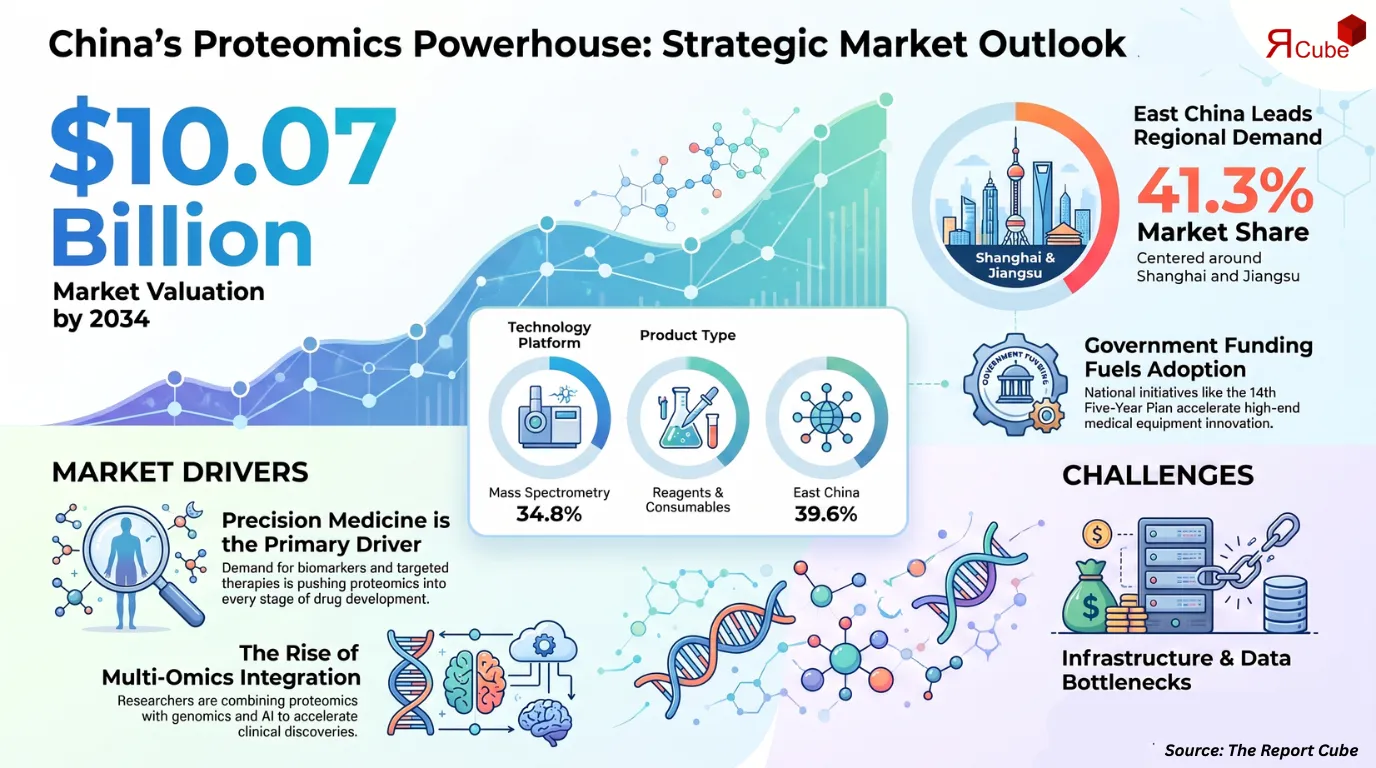
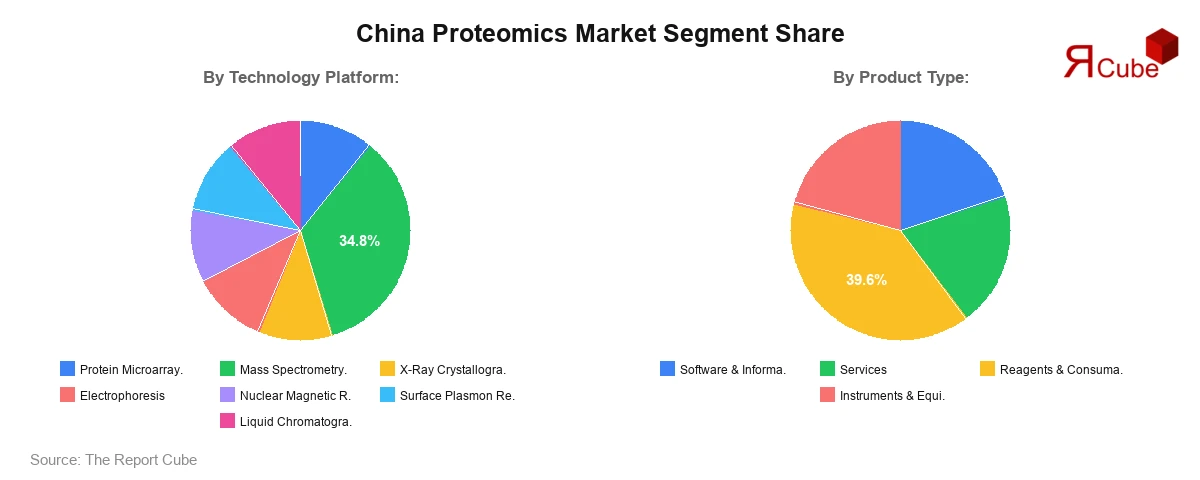
Mass Spectrometry segment leads the market with approximately 34.8% share.
By Product Type:
Reagents & Consumables segment dominates the market with nearly 39.6% of total revenue.
Regional Outlook:
East China dominates the China Proteomics Market with around 41.3% market share.
China Proteomics Market Insights & Analysis
The China Proteomics Market is anticipated to register a CAGR of around 11.1% during the forecast period of 2026-2034. The market size is valued at USD 4.34 billion in 2026 and is projected to reach USD 10.07 billion by 2034. The market continues to gain momentum as China strengthens its capabilities in precision medicine, translational research, and innovative drug development. Proteomics has become an integral component of modern biomedical research because it enables comprehensive analysis of protein expression, structure, and function, providing valuable insights that cannot be obtained through genomic studies alone. Pharmaceutical manufacturers, biotechnology companies, academic institutions, and hospital research centers are expanding investments in high-throughput proteomics technologies to improve disease diagnosis, therapeutic target discovery, and biomarker validation. Rising demand for biologics, antibody-drug conjugates, cell therapies, and protein-based diagnostics is further supporting the adoption of advanced analytical platforms, including mass spectrometry, liquid chromatography, protein microarrays, and bioinformatics software across China's rapidly evolving life sciences ecosystem.
Continuous government support for biotechnology innovation has created a favorable environment for proteomics research and commercialization. National initiatives promoting precision healthcare, combined with sustained funding for major protein science centers and biomedical research institutes, have significantly strengthened domestic research capabilities. China has also emerged as an important destination for multinational life science companies seeking research partnerships, technology collaborations, and clinical development opportunities. Recent investments in spatial proteomics, artificial intelligence-assisted protein analysis, and multi-omics integration are accelerating scientific discoveries while improving laboratory productivity. The growing number of oncology clinical trials, increasing prevalence of chronic diseases, and rising focus on personalized treatment strategies continue to generate demand for advanced proteomics instruments, reagents, analytical software, and specialized research services, positioning the China Proteomics Market for sustained long-term growth.
China Proteomics Market Impact Analysis
| Factor | Type | Specific Impact on Market | Magnitude | Business Implication |
|---|---|---|---|---|
| Government Life Sciences Funding | Regulatory | State programs expand proteomics labs and core facilities | High | Supports rapid adoption of advanced proteomics platforms |
| Precision Medicine Initiatives | Market | National focus on targeted therapies raises proteomics use | High | Drives demand for biomarkers and clinical proteomic assays |
| Growth in Biopharma and CROs | Competitive | Domestic firms invest heavily in proteomics based R&D work | High | Creates volume demand for reagents, kits and instruments |
| Technology Advances in Mass Spectrometry | Technological | Improved detection sensitivity enables complex protein studies | Medium | Encourages upgrades from legacy platforms to new systems |
| Rising Burden of Chronic Diseases | Market | Higher incidence of cancer boosts need for diagnostics | Medium | Expands clinical demand for proteomics based test panels |
| Academic Industry Collaborations | Environmental | Joint projects accelerate translation of proteomic research | Medium | Strengthens pipelines for new diagnostic and drug targets |
| Competition from Global Vendors | Competitive | International firms offer integrated proteomics solutions | Medium | Requires localization, pricing and service differentiation |
China Proteomics Market Dynamics
Key Driver: Strong Investment in Precision Medicine and Innovative Biopharmaceutical Development
China's healthcare and biotechnology sectors are placing greater emphasis on precision medicine, creating sustained demand for advanced proteomics technologies. Protein profiling has become an essential step in identifying disease-specific biomarkers, validating therapeutic targets, and improving patient stratification during clinical research. Pharmaceutical companies developing monoclonal antibodies, antibody-drug conjugates, recombinant proteins, and cell-based therapies increasingly incorporate proteomics throughout the drug development process to improve efficacy and reduce development risks. The expansion of oncology, immunology, and rare disease research programs has further accelerated procurement of high-resolution analytical platforms capable of delivering reproducible protein characterization and quantitative analysis.
Government-backed research funding continues to reinforce this growth trajectory. Institutions such as the National Center for Protein Sciences and leading medical universities are expanding laboratory infrastructure through investments in mass spectrometry systems, chromatography platforms, automation technologies, and bioinformatics capabilities. These initiatives encourage collaboration among universities, hospitals, contract research organizations, and biotechnology companies, strengthening domestic scientific expertise while attracting international partnerships. As China's pharmaceutical industry shifts toward high-value biologics and precision therapeutics, proteomics will remain a foundational technology supporting innovation across research, clinical development, and commercial manufacturing.
Industry Trends: Spatial Proteomics and Multi-Omics Integration Reshape Biomedical Research
Research organizations across China are increasingly adopting integrated multi-omics approaches that combine proteomics with genomics, transcriptomics, metabolomics, and advanced computational biology. This comprehensive research strategy enables scientists to better understand complex disease mechanisms, identify clinically relevant biomarkers, and accelerate precision medicine initiatives. Modern bioinformatics platforms supported by cloud computing and artificial intelligence are improving the speed, scalability, and reproducibility of protein data analysis, allowing researchers to generate meaningful biological insights from highly complex datasets. These technological advances are expanding the practical applications of proteomics across clinical diagnostics, pharmaceutical research, agricultural biotechnology, and environmental sciences.
Spatial proteomics has also become an important area of investment within China's life sciences sector. Advanced imaging technologies capable of mapping protein expression while preserving tissue architecture are improving the understanding of tumor biology, immune responses, and neurodegenerative diseases. Recent deployment of spatial proteomics platforms at major national research centers demonstrates growing confidence in next-generation protein analysis technologies. As additional research institutes and hospitals adopt these solutions, demand for specialized instruments, analytical software, laboratory consumables, and technical services is expected to rise steadily throughout the forecast period.
Book your FREE 30-minute expert consultation today
Contact UsMajor Challenge: High Infrastructure Costs and Bioinformatics Capacity Constraints
Although proteomics technologies continue to advance rapidly, the substantial capital investment required for sophisticated analytical equipment remains a significant barrier to broader market adoption. High-performance mass spectrometers, nuclear magnetic resonance systems, X-ray crystallography platforms, and automated liquid chromatography instruments involve considerable acquisition, maintenance, calibration, and operational costs. Smaller hospitals, regional laboratories, and emerging biotechnology companies often face budget limitations that restrict access to these advanced technologies. Continuous expenditure on laboratory consumables, quality assurance, instrument servicing, and technical training further increases the total cost of ownership.
Managing large-scale proteomics datasets presents another operational challenge for research institutions. Protein analysis generates highly complex datasets that require advanced computational infrastructure and experienced bioinformatics professionals for accurate interpretation. Demand for specialists capable of integrating proteomics with genomics and clinical information continues to outpace workforce availability in several research centers. Improving data standardization, analytical reproducibility, and cross-platform compatibility will remain essential to support broader commercialization and clinical implementation of proteomics technologies across China's healthcare and biotechnology industries.
Opportunity: Expanding Clinical Applications and Domestic Biotechnology Innovation Create New Revenue Streams
Clinical adoption of proteomics is expanding beyond academic research into hospital diagnostics, disease monitoring, and personalized treatment planning. Healthcare providers are increasingly evaluating protein biomarkers for the early detection of cancer, cardiovascular disorders, infectious diseases, autoimmune conditions, and metabolic abnormalities. Growing demand for precision diagnostics is encouraging hospitals and diagnostic laboratories to invest in advanced protein analysis platforms capable of delivering reliable and clinically actionable results. These developments are expected to generate long-term opportunities for manufacturers of proteomics instruments, laboratory reagents, analytical software, and specialized diagnostic solutions.
China's rapidly expanding biotechnology ecosystem provides another strong foundation for future market growth. Domestic pharmaceutical companies, innovative biotechnology startups, and contract research organizations continue to increase investment in biologics research, protein therapeutics, vaccine development, and antibody engineering. Strategic collaborations with global technology providers are accelerating knowledge transfer while improving access to advanced analytical capabilities. As regulatory reforms encourage pharmaceutical innovation and commercialization of high-value biologics, demand for comprehensive proteomics services and integrated research platforms is expected to strengthen across the country's life sciences industry through 2034.
China Proteomics Market Segment-wise Analysis
By Technology Platform:
- Protein Microarray
- Mass Spectrometry
- X-Ray Crystallography
- Electrophoresis
- Nuclear Magnetic Resonance (NMR) Spectroscopy
- Surface Plasmon Resonance (SPR)
- Liquid Chromatography
Mass Spectrometry accounted for approximately 34.8% of the China Proteomics Market in 2026, making it the leading technology platform. The technology is extensively used for protein identification, quantitative analysis, post-translational modification studies, and biomarker discovery across pharmaceutical companies, biotechnology firms, academic laboratories, and clinical research institutes. Its capability to deliver highly accurate, high-throughput, and reproducible protein profiling has made it indispensable for precision medicine and next-generation drug discovery. China's expanding investment in biologics, antibody-drug conjugates, and cell therapy research has further accelerated demand for advanced mass spectrometry systems equipped with automation and high-resolution analytical capabilities.
Leading research organizations, including the National Center for Protein Sciences in Beijing and major universities across Shanghai and Jiangsu, continue to strengthen proteomics infrastructure by acquiring sophisticated mass spectrometry platforms. Domestic pharmaceutical manufacturers are also integrating proteomics into every stage of drug development, from target validation to clinical biomarker assessment, to improve development efficiency and regulatory success. Growing collaborations between Chinese research institutes and global life science companies have expanded access to cutting-edge analytical technologies and technical expertise. As multi-omics research, clinical proteomics, and personalized healthcare programs continue to expand nationwide, mass spectrometry is expected to maintain its dominant position throughout the forecast period.
By Product Type:
- Software & Informatics Tools
- Protein Structure Prediction Software
- Proteome Data Analysis Software
- Bioinformatics Databases & Repositories
- Pathway & Network Analysis Platforms
- Quantification & Statistical Analysis Tools
- Services
- Structural Proteomics Services
- Custom Assay Development Services
- Protein Identification & Characterization
- Biomarker Discovery & Validation Services
- Protein Production & Purification Services
- Bioinformatics & Data Analysis Services
- Quantitative Proteomics Services
- Reagents & Consumables
- Immunoassay Reagents
- Microarray Reagents
- Electrophoresis Reagents
- Sample Preparation Reagents
- Stable Isotope Labeling Reagents
- Crystallography Reagents
- Chromatography Consumables
- Others
- Instruments & Equipment
- SPR Instruments
- Electrophoresis Systems
- Mass Spectrometers
- X-Ray Crystallography Systems
- NMR Spectrometers
- Liquid Chromatography Systems
- Microarray Scanners & Arrayers
- Others (Centrifuges, Homogenizers, Cell Disruption Systems)
Reagents & Consumables represented nearly 39.6% of total market revenue, making them the largest product category in the China Proteomics Market. Unlike capital equipment, these products are consumed during every stage of proteomics workflows, including sample preparation, protein extraction, separation, labeling, purification, chromatography, electrophoresis, and immunoassays. Continuous laboratory operations across pharmaceutical companies, contract research organizations, hospitals, and academic institutes generate recurring demand for high-quality reagents and consumables. The increasing number of clinical studies, biomarker discovery projects, and biologics development programs has further strengthened procurement across China's rapidly growing life sciences sector.
Domestic manufacturers are expanding production capabilities while improving product quality to reduce reliance on imported laboratory consumables. At the same time, international suppliers continue investing in localized manufacturing, distribution networks, and technical support services to meet increasing customer demand. The adoption of automated proteomics platforms and high-throughput analytical systems has also increased the consumption of specialized chromatography columns, isotope labeling reagents, assay kits, and sample preparation products. As biomedical research activities continue to expand and pharmaceutical innovation accelerates across China, recurring purchases of reagents and consumables are expected to remain a stable source of revenue throughout the forecast period.
Regional Projection of China Proteomics Industry
- North China
- Northeast China
- East China
- South Central China
- Southwest China
- Northwest China
East China held approximately 41.3% of the China Proteomics Market in 2026, making it the country's leading regional market. The region benefits from a highly developed biotechnology ecosystem centered around Shanghai, Jiangsu, Zhejiang, and Anhui, where leading pharmaceutical manufacturers, biotechnology companies, academic institutions, and research hospitals are concentrated. East China is home to several nationally recognized innovation centers that actively support proteomics research through government funding, advanced laboratory infrastructure, and collaborative research programs. Strong demand for biomarker discovery, precision diagnostics, and biologics development has encouraged continuous investment in high-resolution mass spectrometry, liquid chromatography, and bioinformatics platforms.
The region also attracts substantial domestic and foreign investment because of its mature pharmaceutical manufacturing base, skilled scientific workforce, and well-established clinical research network. Numerous multinational life science companies have established research and application centers in East China to collaborate with local universities, hospitals, and biotechnology enterprises. Ongoing expansion of precision medicine initiatives, oncology research, and multi-omics programs continues to increase the adoption of advanced proteomics technologies across both public and private institutions. Supported by favorable government policies, strong research commercialization capabilities, and sustained innovation in biotechnology, East China is expected to retain its market leadership throughout the 2026-2034 forecast period.
Need insights for a specific region within this market?
Request Regional DataChina Proteomics Market Regional Analysis
China’s proteomics market shows strong regional variation, led by biotech, pharma, and academic clusters.
| Region | Demand Level | Key Areas | System Dominance | Core Demand Logic | Growth Nature |
|---|---|---|---|---|---|
| North China | High | Beijing, Tianjin, Hebei | Mass spec, reagents | Top research hubs, pharma HQs | Innovation-led growth |
| Northeast China | Medium | Shenyang, Harbin, Dalian | Reagents, sample prep | State labs, legacy industry | Slow but steady upgrades |
| East China | Very High | Shanghai, Suzhou, Hangzhou | Mass spec, LC-MS, software | Biopharma, CROs, hospitals | Fastest commercial scale-up |
| South Central China | High | Guangzhou, Shenzhen, Wuhan | Reagents, automation | Clinical research, biotech | Broadening adoption |
| Southwest China | Medium | Chengdu, Chongqing, Kunming | Reagents, mid-range systems | Public health, university labs | Policy-supported growth |
| Northwest China | Low | Xian, Urumqi, Lanzhou | Basic tools, reagents | Limited labs, distance costs | Niche expansion only |
Government Initiatives & Policies
- China Precision Medicine Initiative (2025-2026): The Chinese government continues expanding investments in precision medicine through national research programs supporting genomics, proteomics, biomarker discovery, and multi-omics innovation. The initiative strengthens disease research, clinical translation, and advanced biotechnology development across leading research institutions.
- 14th Five-Year Plan for Bioeconomy Development (Implementation Continued in 2025-2026): China continues implementing its Bioeconomy Development Plan to accelerate biotechnology innovation, high-end medical equipment, precision diagnostics, and life sciences research, creating long-term opportunities for proteomics technologies and related analytical platforms.
China Proteomics Industry Recent Developments
- 2026: ISBER, BBCMBA, and BGI partnered to host the 2026 ISBER Annual Meeting & Exhibits in Shenzhen, bringing together global experts in biobanking, biospecimen management, precision medicine, and multi-omics research. The collaboration is expected to strengthen international scientific partnerships while accelerating investments in proteomics infrastructure, biomarker discovery, and advanced life science research across China.
- 2025: Minghui Pharmaceutical entered an exclusive licensing agreement valued at up to USD 198.8 million with Qilu Pharmaceutical for the development and commercialization of the B7-H3-targeted antibody-drug conjugate MHB088C across Greater China. The agreement is expected to expand demand for clinical proteomics services, protein target characterization, and biomarker validation throughout oncology drug development.
- 2025: Syncell established its first commercial distribution network in China by appointing Cold Spring Biotech as its distributor while installing the Microscoop spatial proteomics platform at the National Center for Protein Sciences in Beijing. The deployment strengthens China's spatial proteomics capabilities and is anticipated to increase adoption of advanced proteomics instruments and analytical services across academic and clinical research laboratories.
Why Choose This Report?
- Provides a comprehensive overview of the overall market analysis, encompassing key trends, consumer behavior analysis, and risk assessment to support strategic decision-making.
- Provides accurate, up-to-date insights into market size, segmentation, and emerging opportunities, helping organizations minimize business risks while capitalizing on future growth prospects.
- Gives a deep understanding of target audience preferences, investment patterns, technology adoption, and communication channels for enhanced product development and marketing effectiveness.
- Delivers competitive analysis and benchmarking, uncovering the strengths, strategies, and market positioning of leading competitors to support informed business planning.
- Consolidates comprehensive market intelligence into a single report, reducing research efforts and improving operational efficiency for decision-makers.
- Facilitates customized market segmentation and practical risk mitigation strategies that align with evolving business objectives and long-term investment priorities.
- Helps identify both existing market challenges and untapped business opportunities to support sustainable growth across the China proteomics industry.
- Provides valuable insights based on industry developments, technology trends, customer demand patterns, and market intelligence to support confident strategic decisions.
Table of Contents
- Introduction
- Objective of the Study
- Product and Category Definition
- Market Segmentation
- Study Variables
- Research Methodology
- Secondary Data Points
- Breakdown of Secondary Sources
- Primary Data Points
- Breakdown of Primary Interviews
- Secondary Data Points
- Executive Summary
- Market Dynamics
- Emerging Opportunities
- Adoption Trends
- Demand Drivers
- Disruption Analysis (Challenges)
- Industry Analysis & Strategic Insights
- Supply/Value Chain Analysis
- Pricing Analysis
- Go-To-Market (GTM) Strategy
- BCG Matrix
- Recent Trends and Developments
- Import and Export Analysis
- Regulatory and Policy Landscape
- Region-wise Policies
- Government Initiatives
- China Proteomics Market Overview and Forecast Analysis (2021-2034)
- Market Size, By Value, By Growth Rate (CAGR/USD Billion)
- Market Share, By Technology Platform
- Protein Microarray
- Mass Spectrometry
- X-Ray Crystallography
- Electrophoresis
- Nuclear Magnetic Resonance (NMR) Spectroscopy
- Surface Plasmon Resonance (SPR)
- Liquid Chromatography
- Market Share, By Product Type
- Software & Informatics Tools
- Protein Structure Prediction Software
- Proteome Data Analysis Software
- Bioinformatics Databases & Repositories
- Pathway & Network Analysis Platforms
- Quantification & Statistical Analysis Tools
- Services
- Structural Proteomics Services
- Custom Assay Development Services
- Protein Identification & Characterization
- Biomarker Discovery & Validation Services
- Protein Production & Purification Services
- Bioinformatics & Data Analysis Services
- Quantitative Proteomics Services
- Reagents & Consumables
- Immunoassay Reagents
- Microarray Reagents
- Electrophoresis Reagents
- Sample Preparation Reagents
- Stable Isotope Labeling Reagents
- Crystallography Reagents
- Chromatography Consumables
- Others
- Instruments & Equipment
- SPR Instruments
- Electrophoresis Systems
- Mass Spectrometers
- X-Ray Crystallography Systems
- NMR Spectrometers
- Liquid Chromatography Systems
- Microarray Scanners & Arrayers
- Others (Centrifuges, Homogenizers, Cell Disruption Systems)
- Software & Informatics Tools
- Market Share, By Application
- Environmental Proteomics
- Clinical Diagnostics
- Drug Discovery & Development
- Agricultural & Food Science
- Fundamental & Academic Research
- Market Share, By End Users
- Academic & Research Institutes
- Biotechnology Companies
- Food & Beverage Companies
- Hospitals & Diagnostic Laboratories
- Pharmaceutical Companies
- Contract Research Organizations (CROs)
- Others
- Market Share, By Region
- North
- Northeast
- East
- South Central
- Southwest
- Northwest
- Market Share, By Company
- Revenue Shares & Analysis
- Competitive Landscape
- North China Proteomics Market Overview and Forecast Analysis (2021-2034)
- Market Size, By Value, By Growth Rate (CAGR/USD Billion/Million)
- Market Share, By Technology Platform
- Market Share, By Product Type
- Market Share, By Application
- Market Share, By End Users
- Northeast China Proteomics Market Overview and Forecast Analysis (2021-2034)
- Market Size, By Value, By Growth Rate (CAGR/USD Billion/Million)
- Market Share, By Technology Platform
- Market Share, By Product Type
- Market Share, By Application
- Market Share, By End Users
- East China Proteomics Market Overview and Forecast Analysis (2021-2034)
- Market Size, By Value, By Growth Rate (CAGR/USD Billion/Million)
- Market Share, By Technology Platform
- Market Share, By Product Type
- Market Share, By Application
- Market Share, By End Users
- South Central China Proteomics Market Overview and Forecast Analysis (2021-2034)
- Market Size, By Value, By Growth Rate (CAGR/USD Billion/Million)
- Market Share, By Technology Platform
- Market Share, By Product Type
- Market Share, By Application
- Market Share, By End Users
- Southwest China Proteomics Market Overview and Forecast Analysis (2021-2034)
- Market Size, By Value, By Growth Rate (CAGR/USD Billion/Million)
- Market Share, By Technology Platform
- Market Share, By Product Type
- Market Share, By Application
- Market Share, By End Users
- Northwest China Proteomics Market Overview and Forecast Analysis (2021-2034)
- Market Size, By Value, By Growth Rate (CAGR/USD Billion/Million)
- Market Share, By Technology Platform
- Market Share, By Product Type
- Market Share, By Application
- Market Share, By End Users
- Competitive Analysis, 2026
- Market Share of Key Players
- Competitive Mapping for Each Segment and Companies Operating Regionally
- North China Proteomics Companies Share & Competitive Analysis, 2026
- Northeast China Proteomics Companies Share & Competitive Analysis, 2026
- East China Proteomics Companies Share & Competitive Analysis, 2026
- South Central China Proteomics Companies Share & Competitive Analysis, 2026
- Southwest China Proteomics Companies Share & Competitive Analysis, 2026
- Northwest China Proteomics Companies Share & Competitive Analysis, 2026
- Company Profile (Partial List)
- GE HealthCare Technologies Inc.
- Company Overview
- Product Portfolio
- Strategic Alliances/Partnerships
- Recent Developments
- Thermo Fisher Scientific Inc.
- Company Overview
- Product Portfolio
- Strategic Alliances/Partnerships
- Recent Developments
- Promega Corporation
- Company Overview
- Product Portfolio
- Strategic Alliances/Partnerships
- Recent Developments
- Merck KGaA
- Company Overview
- Product Portfolio
- Strategic Alliances/Partnerships
- Recent Developments
- Agilent Technologies, Inc.
- Company Overview
- Product Portfolio
- Strategic Alliances/Partnerships
- Recent Developments
- Illumina, Inc.
- Company Overview
- Product Portfolio
- Strategic Alliances/Partnerships
- Recent Developments
- Danaher Corporation
- Company Overview
- Product Portfolio
- Strategic Alliances/Partnerships
- Recent Developments
- Bruker Corporation
- Company Overview
- Product Portfolio
- Strategic Alliances/Partnerships
- Recent Developments
- Roche Holding AG
- Company Overview
- Product Portfolio
- Strategic Alliances/Partnerships
- Recent Developments
- Bio-Rad Laboratories, Inc.
- Company Overview
- Product Portfolio
- Strategic Alliances/Partnerships
- Recent Developments
- Others (Partial List)
- GE HealthCare Technologies Inc.
- Contact Us and Disclaimer
Top Key Players & Market Share Outlook
- GE HealthCare Technologies Inc.
- Thermo Fisher Scientific Inc.
- Promega Corporation
- Merck KGaA
- Agilent Technologies, Inc.
- Illumina, Inc.
- Danaher Corporation
- Bruker Corporation
- Roche Holding AG
- Bio-Rad Laboratories, Inc.
- Others
Frequently Asked Questions






